When to hike in Armenia: month-by-month guide
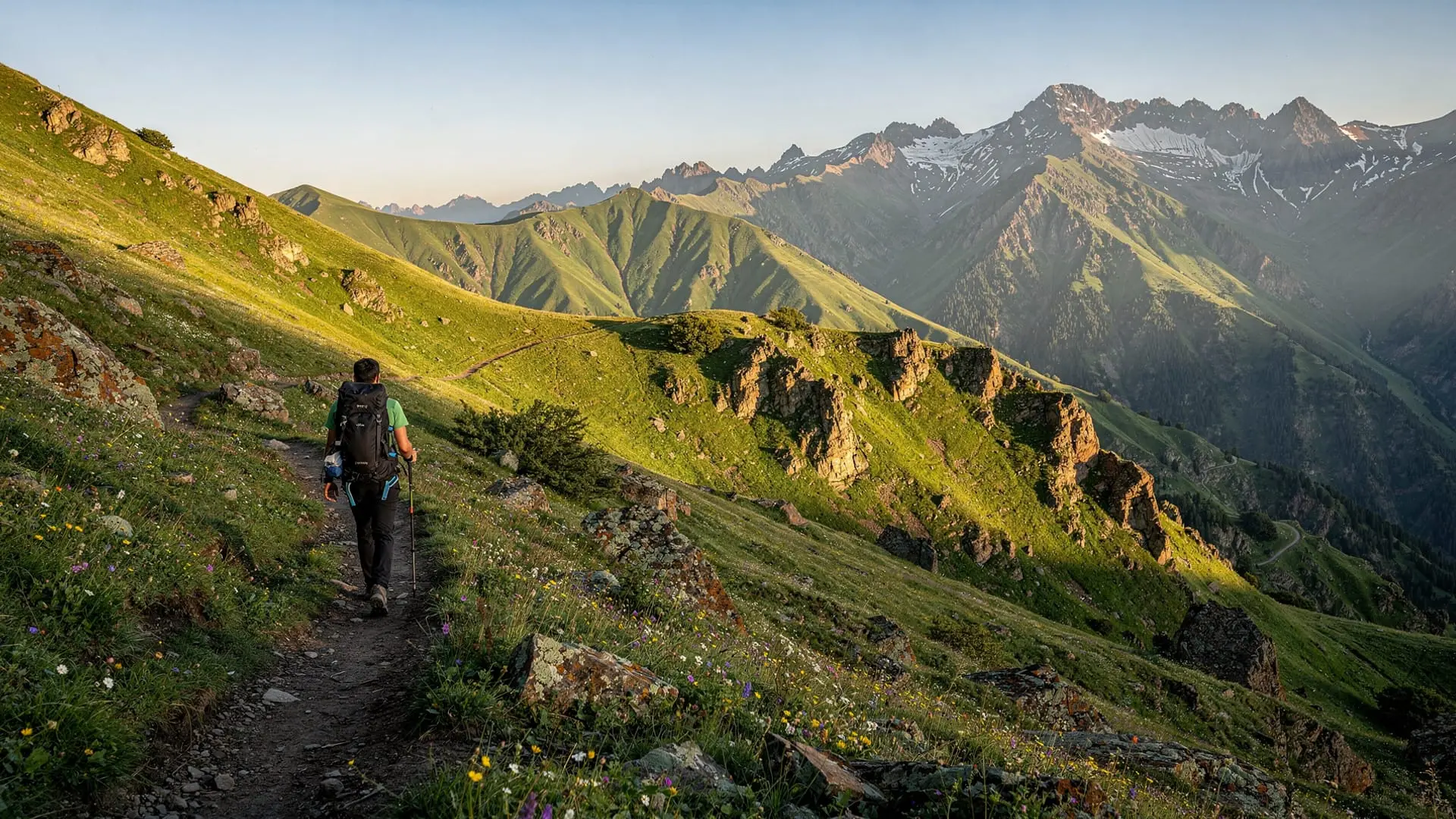
Armenia’s hiking calendar at a glance
Armenia is a remarkably compact country with dramatic altitude variation — from the Araratian plain at 800m to the summit of Aragats at 4090m — which means hiking conditions vary enormously by elevation, region, and month. The same week that brings perfect weather for a Dilijan forest walk can still see snow lingering on the Aragats northern peak. Planning a hiking trip requires thinking in altitudinal zones as much as calendar months.
The good news: Armenia has a generous hiking window. Low-altitude routes (below 1800m) are walkable from April through October. Mid-altitude routes (1800–2800m) suit May through September. High alpine routes (above 2800m, including all Aragats peaks and the Geghama plateau) are best from mid-June to mid-September, with a narrow shoulder either side.
| Best overall month | September |
| Best for alpine wildflowers | Late June–mid-July |
| High alpine window | Mid-June to mid-September |
| Low-altitude window | April–October |
| Avoid for mountain hiking | November–March |
Month-by-month breakdown
January and February: strictly for specialists
Yerevan: -2°C to 5°C. Snow possible.
Highlands: -15°C to -5°C. Deep snow above 1500m.
Hikeable: Roads to most highland destinations are closed or dangerous.
January and February are ski months, not hiking months. Tsaghkadzor ski resort operates on packed powder. The Tatev cable car (Wings of Tatev) runs on most days and the monastery is accessible, as is Khor Virap in the Araratian plain. But trails above the snowline are for experienced winter mountaineers with full equipment only.
March: transition month
Yerevan: 3°C to 12°C. Wildflowers beginning.
Highlands: Snowmelt begins at lower elevations.
Hikeable: Valley routes near Yerevan; Garni gorge trail; Khor Virap surroundings.
March starts cold but the trajectory is upward. The Garni gorge (Symphony of Stones) and the Azat river valley trails become walkable in the second half of the month. Monasteries at low altitude — Khor Virap, Geghard — are accessible and uncrowded. The high routes remain firmly closed.
April: wildflower season begins
Yerevan: 8°C to 18°C. Apricot blossom.
Highlands: Up to 1800m, trails begin to clear.
Hikeable: Kasakh gorge, Garni gorge, low Kotayk and Lori routes.
April is one of the most visually beautiful months in Armenia — apricot trees blossom on the Araratian plain, wild peonies and orchids emerge in the Vayots Dzor hills, and the monasteries emerge from winter quiet to spring colour. For hiking, it is a good month for low and mid-altitude routes. The Kasakh gorge trail between Hovhannavank and Saghmosavank is excellent in April. Above 2000m, snow remains. Aragats is firmly inaccessible.
May: the outdoor season opens
Yerevan: 12°C to 23°C. Comfortable, occasional rain.
Highlands: Trails up to 2400m clearing; Dilijan and Tavush excellent.
Hikeable: Dilijan National Park, Bjni–Tsaghkadzor traverse, Kasakh gorge, Janapar trail (Tavush section), Lori trails.
May is the start of the main hiking season for most visitors. The Dilijan National Park trails are at their most beautiful — the beech forest canopy unfolds in luminous spring green, wildflowers carpet the floor, and birdlife is at its most active. The Bjni–Tsaghkadzor traverse is an ideal May hike.
Higher routes (Aragats, Geghama plateau) are not yet accessible without snow equipment. Wait for mid-June for alpine terrain.
June: the highland window opens
Highlands: Up to 3400m clearing by late June. Lake Kari road opens (typically second half of June).
Hikeable: All low and mid routes; Aragats southern peak from mid-June onward; Azhdahak late June onward; upper TCT sections.
June is the first month when the full spectrum of Armenian hiking becomes available. The Aragats road to Lake Kari opens — typically in the second half of June — and the southern peak becomes accessible. Wildflowers at altitude are spectacular in June: the alpine meadows around Lake Kari and the Geghama plateau bloom with Caucasian alpine species that will be gone by August.
A guided Aragats southern summit day hike is an excellent June activity — early enough in the season to catch alpine wildflowers, with snow clearing from the trail.
July: peak season
Highlands: All routes open. Long days (sunrise ~5:30am, sunset ~8:30pm).
Caution: Afternoon thunderstorms develop by 1–3pm in mountains. Start all summit hikes before 7am.
Hikeable: Everything. Peak season crowds on Aragats weekends.
July offers the widest range of options. All four Aragats peaks, the Geghama plateau, the Khustup approach from Kapan, and every Dilijan trail are walkable. The main constraint is afternoon weather: convective storms develop in the mountains most days. The discipline of early starts (6–7am from high-altitude bases) is essential for any serious summit day.
The Aragats northern summit guided tour is best done in July or early August when the glacier remnants are at their smallest and the weather window is longest.
August: height of summer
Similar to July but slightly more stable in Syunik and Geghama. The Khustup sunrise hike from Kapan is excellent in August. The Transcaucasian Trail Syunik sections are at their best. Dilijan and Tavush forest hikes can feel humid in the lower sections — start early.
September: the best month
Highlands: Excellent conditions across all elevations. Weather more stable. Temperatures cooler (10–20°C in highlands).
Special factor: Autumn colour begins in Tavush forests from late September.
Hikeable: Everything, with excellent conditions.
September is the consensus best hiking month in Armenia. Afternoon storms are less frequent and less severe than July–August. Visibility improves as summer haze clears. The forests of Dilijan and Tavush begin their extraordinary autumn colour transformation from late September — the beech forest turns bronze and gold in a display that rivals anything in the Caucasus.
The Janapar Trail northern section through Tavush is at its finest in September. All Aragats peaks remain accessible until the road closes (typically early October). The Bjni–Tsaghkadzor traverse in late September, with the beech forest colouring, is one of the finest autumn walks in the country.
October: the last mountain window
Highlands: Snow can arrive at any time above 2500m from mid-October. Lake Kari road typically closes October 1–15.
Forest trails: Excellent conditions. Peak autumn colour in Tavush.
Hikeable: Low and mid-altitude routes; high alpine routes closing.
Early October is still excellent for forest hiking — arguably the most beautiful time visually in Dilijan and Lori. The Dilijan National Park hikes are at their most photogenic. Above 2500m, the window closes rapidly; Aragats becomes inaccessible for standard day hikers.
November and December: off-season
Conditions: Cold, short days, potential snow from 1000m upward.
Hikeable: Valley routes only; best for monastery visits rather than hiking.
November sees most highland trails close due to weather unreliability. Tsaghkadzor ski season begins in December.
Elevation zones summary
| Zone | Altitude | Season |
|---|---|---|
| Lowland / valley | below 1500m | April–October |
| Forest / mid-altitude | 1500–2200m | May–October |
| Alpine meadow | 2200–3000m | June–September |
| High alpine / summit | 3000m+ | mid-June–mid-September |
Region-specific notes
Dilijan / Tavush: Best April–October, peak beauty in May (wildflowers) and September–October (autumn colour). Lush and green all summer.
Aragatsotn / Aragats: Alpine routes from mid-June to early October. Low routes (monasteries, Kasakh gorge) from April. Road to Lake Kari: typically open late June to early October.
Syunik / Khustup: High routes from June to September. The Mount Khustup trek is best July–September.
Lori (Haghpat / TCT): Trails from April; most pleasant May–October. The Transcaucasian Trail Lori section from May.
Geghama / Azhdahak: June to September only. Snow lingers late on the Geghama plateau; don’t rush the season.
Snow and road access: what to check before going
The critical road openings to monitor:
- Lake Kari (Aragats) road: typically opens mid-June, closes October 1–15. Check locally before driving up.
- Geghama plateau tracks: typically passable June–September. 4WD required regardless of season.
- TCT Syunik high passes: June–October. Check transcaucasiantrail.org for current reports.
Combining hiking with other Armenia experiences
Hikers visiting in September can combine mountain days with the Areni grape harvest festival (typically first or second weekend of October) in Vayots Dzor — combining the best hiking season with Armenia’s finest food and wine event. The Vayots Dzor wine route guide covers that extension.
Spring hikers (April–May) pair hiking well with monastery visits — the monasteries are at their most beautiful in spring light, and the low-altitude trails that link sites like Hovhannavank and Saghmosavank are at their greenest.
Frequently asked questions about Armenia hiking seasons
Can I hike in Armenia in winter?
You can hike low-altitude valley routes (Garni gorge, Khor Virap area) in winter, and the Tatev cable car runs through winter to the monastery. But mountain hiking above 1500m in winter requires proper cold-weather equipment, and most trails are snow-covered and poorly marked. It is not recommended for typical visitors. Tsaghkadzor skiing is the winter outdoor activity of choice.
Is August a bad month to hike in Armenia?
Not bad — just hot and occasionally stormy. The key is altitude: hiking in Dilijan forest or above 2500m on Aragats is pleasant in August. Hiking the Araratian plain or low valleys in August is uncomfortable in the midday heat. Schedule hikes early in the morning.
When do alpine wildflowers peak on Aragats?
Late June to mid-July is the peak for alpine wildflowers on and around Lake Kari and the Aragats caldera. By August the flowers are past peak. If wildflowers are a priority, aim for the June opening of the Lake Kari road.
Is the hiking Armenia vs Georgia guide useful for planning season timing?
Yes — the comparison covers how the seasons align or differ between the two countries, which is particularly useful for travellers planning a combined Caucasus hiking trip.
What hiking insurance do I need for Armenia?
Standard travel insurance with mountain rescue cover is recommended for any highland hiking in Armenia. Helicopter rescue exists but is expensive and not guaranteed; mountain rescue is less organised than in Western Europe. Always file your intended route with your accommodation host before heading into remote terrain.
Is it possible to hike in Armenia without a guide?
Yes, for low- and mid-altitude marked trails like Dilijan National Park or the Kasakh gorge, self-guided hiking is straightforward with a downloaded offline map. For Aragats summits, the Geghama plateau, or the Khustup approach from Kapan, a local guide is strongly recommended — trail marking is inconsistent, weather changes fast, and mobile signal is unreliable above 2,500m.
How crowded do the popular trails get in peak season?
Dilijan National Park and the Kasakh gorge see meaningful weekend traffic from Yerevan residents in July and August, though nothing approaching Western European alpine crowding. Aragats gets busiest on July and August weekends when guided groups cluster around the same summit windows; a weekday hike avoids most of it.
Planning your Armenia hiking trip: practical timing
Arriving from Europe
Most European travellers arrive at Zvartnots International Airport (EVN) in Yerevan. Direct flights operate from Vienna, Paris CDG, Rome Fiumicino, Frankfurt, Amsterdam, and Athens, among others. The flight from most western European cities is 4–5 hours. Summer flights fill up and prices rise — book at least 6 weeks in advance for July–August travel. September travellers typically find better prices and excellent weather.
Visa: EU, US, UK, Canadian, and Australian citizens can enter Armenia visa-free for 180 days in any 365-day period. No advance application required. E-visa is available for nationalities that need it (via evisa.mfa.am).
First days and acclimatisation
Yerevan sits at 900m — already moderate altitude compared to sea-level European cities. For high-altitude hiking (3000m+), spending 2–3 nights in Yerevan before any summit attempt provides useful natural acclimatisation. Adding a night in Dilijan (1500m) or Byurakan (1400m) the day before an Aragats summit day further reduces altitude sickness risk.
Combining hiking with other Armenia experiences
The advantage of Armenia’s compact geography is that hiking rarely requires sacrificing other experiences:
- Spring hiking + wildflower monasteries: April–May hiking at Kasakh gorge and Dilijan pairs beautifully with monastery visits — the medieval religious sites are at their most photogenic in spring light and wildflower frames.
- Summer hiking + wine: June–September hiking in the highlands pairs with Vayots Dzor wine visits in the south. The Vayots Dzor wine route sits 2–3 hours south of the main hiking zones.
- Autumn hiking + harvest festival: September–October Dilijan forest hikes overlap with the Areni wine festival (typically first weekend of October) — a natural combination for a week-long trip.
- Winter hiking + ski: November–March low-altitude valley hikes (Garni gorge, Kasakh gorge) pair with Tsaghkadzor skiing — the only season when both activities are realistically combined.
Budget for hiking in Armenia
Armenia is one of the most affordable hiking destinations in Europe and the Caucasus. Rough costs for an independently organised hiking day:
- Marshrutka from Yerevan to trailhead: 500–1,500 AMD (1.20–3.70 EUR)
- Taxi from small town to trailhead: 2,000–8,000 AMD (5–20 EUR)
- National park entry fee (Dilijan): 1,000 AMD (2.50 EUR)
- Guesthouse accommodation on trail: 5,000–12,000 AMD (12–30 EUR) with breakfast
- Restaurant meal in trail towns: 2,000–6,000 AMD (5–15 EUR)
Guided day tours from Yerevan typically cost 15,000–40,000 AMD (36–100 EUR) per person depending on group size and itinerary. Multi-day private tours are proportionally more expensive but still cheap by Western European standards.
For reference: the 410 AMD = 1 EUR exchange rate (April 2026) makes Armenia approximately half the price of Western Europe for equivalent services.
Key trailheads from Yerevan: distances and times
| Destination | Distance from Yerevan | Drive time | Marshrutka option |
|---|---|---|---|
| Kasakh gorge (Hovhannavank) | 50 km | 50 min | No direct; taxi from Aparan |
| Dilijan | 95 km | 1h 45min | Yes, Kilikia station |
| Lake Kari (Aragats) | 100 km | 1h 30min | No; taxi from Aparan |
| Bjni village | 35 km | 40 min | No direct; taxi from Hrazdan |
| Kapan (Khustup) | 330 km | 4h 30min | Yes, limited schedule |