Armenia's mountain lakes: Sevan, Parz, Kari
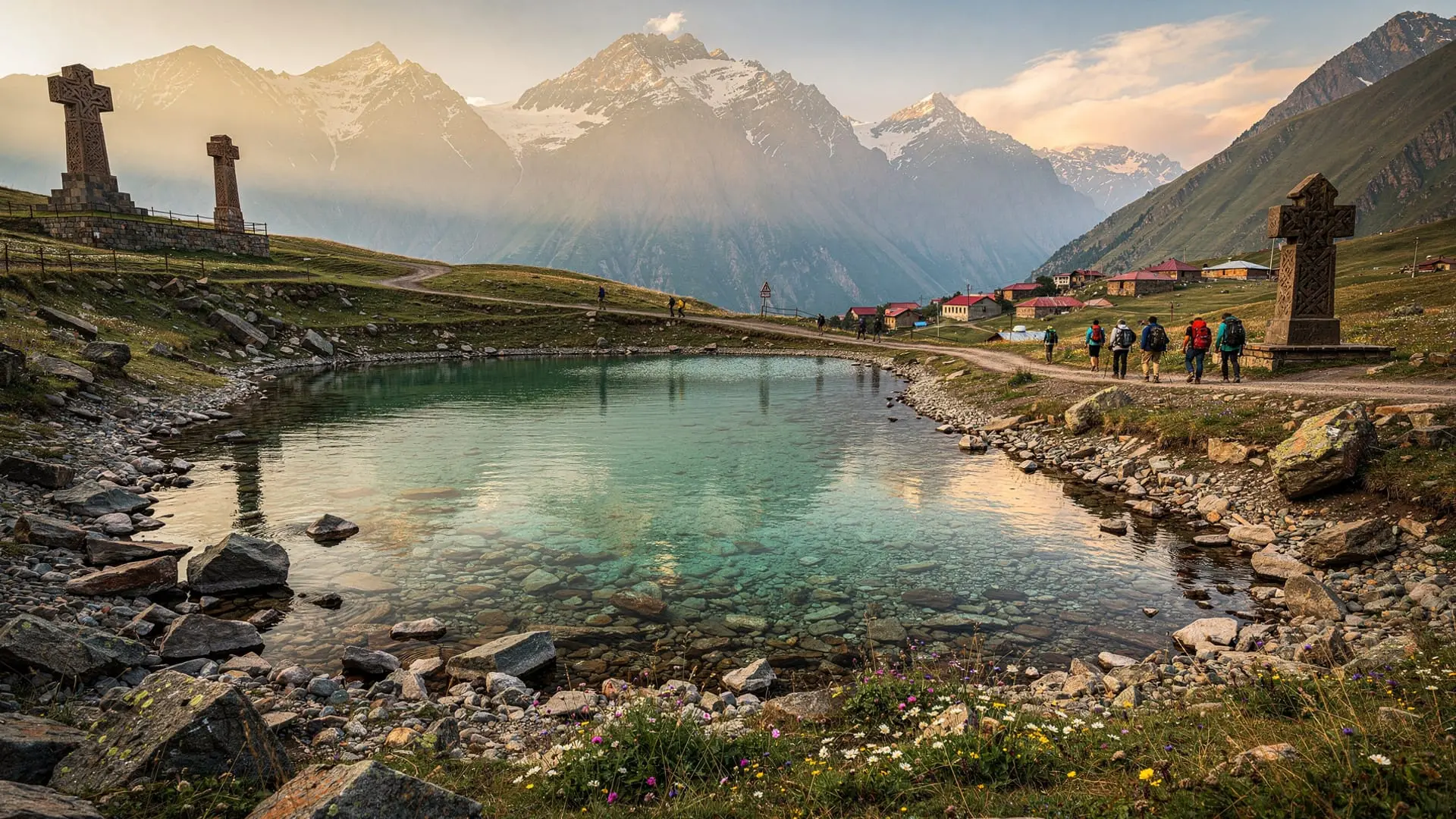
Three lakes, three completely different worlds
Armenia is a landlocked country that has historically been defined as much by its inland waters as by its mountains. Lake Sevan dominates the national imagination — it appears on everything from Soviet-era tourism posters to modern AMD banknotes — but Sevan is not Armenia’s only lake worth knowing. Two other bodies of water offer experiences that Sevan cannot: the intimate forest setting of Lake Parz in Dilijan National Park, and the raw high-alpine environment of Lake Kari on the southern slopes of Mount Aragats at 3,190 metres.
Visiting all three in combination reveals something important about how radically different Armenia’s landscapes are within very short distances. Sevan (1,900 m) and Kari (3,190 m) are separated by about 80 km by road, yet the ecosystems could not be more different — one is a warm-season beach destination, the other is snow-free only from late June to early September.
| Where | Gegharkunik (Sevan), Tavush (Parz), Aragatsotn (Kari) |
| Best combined trip | 2 days from Yerevan (Sevan+Dilijan/Parz, then Kari separately) |
| Getting there | Car recommended; Kari needs 4WD or capable AWD |
| Open season | Sevan/Parz year-round (best May–Oct); Kari late June–early Sept only |
| Cost | Free lake access; guided day tours from around 15,000–30,000 AMD/person |
Comparing the three lakes
| Lake Sevan | Lake Parz | Lake Kari | |
|---|---|---|---|
| Altitude | 1,900 m | ~1,300 m | 3,190 m |
| Character | Vast open water, beach season | Small forest-mirror lake | High-alpine crater lake |
| From Yerevan | 65 km, 1h15 | 95+7 km, ~2h | 80+30 km, 2.5–3.5h |
| Access | Paved road | Paved road | 4WD/AWD, unsealed track |
| Best for | Swimming, monastery views | Family day, forest hikes | Serious hikers, Aragats summit |
Lake Sevan: the heart of the country
At 1,242 km² and 1,900 m altitude, Lake Sevan is the dominant geographical feature of central Armenia and the entire Gegharkunik province takes its character from it. The lake is large enough to create its own microclimate — summer temperatures on the shore are 8–10°C cooler than Yerevan, which is why the entire capital migrates here in July and August.
The key attraction beyond the water itself is Sevanavank monastery, perched on the rocky peninsula that was an island before the Soviet water diversion. The 9th-century church complex, reached by about 180 stone steps, offers the best panoramic lake view on the western shore.
The lake is also the setting for the complex story of the ishkhan trout — an endemic salmonid that is critically endangered due to the same Soviet engineering projects that lowered the water level. Understanding this story adds depth to visiting.
Best time to visit: June–September for swimming and boating; May and October for photography and solitude; winter for snow-covered monastery views.
From Yerevan: 65 km, 1 hour 15 minutes.
Book a private Lake Sevan and Sevanavank full-day tour from YerevanLake Parz: the forest mirror
Lake Parz is the opposite of Sevan in almost every dimension. Where Sevan is vast and open, Parz (which means “clear” in Armenian) is small and enclosed. Where Sevan’s shores are exposed to mountain wind, Parz sits within a bowl of old-growth hornbeam and oak forest that reflects perfectly in the calm water on windless mornings.
The lake is 7 km from Dilijan, one of Armenia’s most charming towns, inside Dilijan National Park. The activity infrastructure at the lake — rowing boats, a zip line, horse rides, a café — is modest but well-suited to families and casual visitors. The real appeal is the forest: the Dilijan national park protects some of the largest remaining Caucasian mixed forest in the South Caucasus, and Lake Parz sits at the heart of it.
Hikers can use the lake as a base point for trails to Goshavank and Haghartsin monasteries — both accessible on foot through the park in 3–4 hours from the lake. This makes Parz the hub for a full day of forest hiking that most visitors who drive through Dilijan never discover.
Best time to visit: April–May for spring flowers; September–October for autumn colour. Summer is excellent but busier.
From Yerevan: 95 km to Dilijan, then 7 km more to the lake — total about 2 hours.
See the complete Lake Parz guide for full logistics and activity details.
Lake Kari: the high alpine reward
Lake Kari (also spelled Qari — “snow” in Armenian) sits in a crater-like depression at 3,190 metres on the southern slope of Mount Aragats, which at 4,090 m is the highest mountain in Armenia. The lake is small — roughly 300 metres across — and dark, surrounded by volcanic rock and often with remnant snowfields on its upper shore well into July.
Getting there requires a four-wheel-drive vehicle or a very capable AWD car. The road from the paved highway at Ohanavan village climbs steeply on an unsealed track for about 30 km to the lake — the approach alone, passing through the Armenian Alphabet Monument at Artashavan and the Amberd fortress on the way up, is one of the most dramatic drives in the country.
The lake itself is the staging point for hikes to the southern summit of Aragats (4,022 m) — the most accessible of Aragats’ four peaks. The southern summit can be reached in 2–3 hours from the lake by fit walkers without technical equipment (in summer), making it one of the few 4,000 m peaks in the world that ordinary hikers can reach without climbing gear. The northern summit (4,090 m) and the traverse of all four peaks are significantly harder.
At the lake shore there is a small research station (the Cosmic Ray Research Station) operated by Yerevan Physics Institute. The buildings are modest Soviet-era structures that feel entirely appropriate at this altitude — functional, weatherbeaten, and somehow proud.
Open season: Typically late June to early September, weather-dependent. The road may be snowbound into late June and can close again with early September snowfall.
From Yerevan: 80 km to Ohanavan, then 30 km on mountain road — total 2.5–3.5 hours depending on conditions.
Book a day tour from Yerevan covering Amberd fortress, Mount Aragats slopes, and Lake KariCombining all three: a 2-day itinerary
Visiting Sevan, Parz, and Kari in combination is feasible as a 2-day trip from Yerevan for those with a car. Here is a logical sequence:
Day 1 — Sevan and Dilijan:
- Morning: Drive to Lake Sevan (65 km, 1h15). Visit Sevanavank, boat trip, lunch by the lake.
- Afternoon: Continue northeast through the Sevan-Dilijan tunnel to Dilijan (30 more km, 30 minutes). Check in at Hotel Old Dilijan Complex or a guesthouse. Evening walk through Dilijan’s old quarter.
Day 2 — Lake Parz and a detour toward Aragats:
- Morning: Taxi or drive to Lake Parz (7 km from Dilijan). 2 hours at the lake — boat hire, lakeside walk.
- Late morning: Return to Yerevan via Tsaghkadzor (note: this is not a direct route — return to Yerevan first, then detour north if visiting Kari). Alternatively, spend the afternoon at Dilijan National Park trails.
Lake Kari as a separate day: Kari is best visited as a dedicated day trip westward from Yerevan via Ohanavan (80 km), not as part of a Sevan-Dilijan loop. The combination of Amberd fortress, the Armenian Alphabet Monument, and Lake Kari/Aragats summit attempt makes a full and rewarding day.
For those with only one day: Sevan + Dilijan (including Parz) is the classic combination and very doable. Kari requires a separate day.
Smaller lakes worth knowing
Armenia has over 100 named lakes, and while most are remote and require significant hiking or off-road driving to reach, a few deserve mention:
Lake Arpi (Shirak province): Near the Georgian border at 2,000 m altitude, Arpi is Armenia’s second-largest lake and a significant wetland for migratory birds. It is not a tourist destination but is mentioned in birding guides.
Akna Lake and others (Gegharkunik): Several small lakes dot the Gegham highlands east of Yerevan. Reachable by 4WD in summer, they offer spectacular volcanic landscape. Azhdahak volcano (3,598 m) has a small crater lake that fills seasonally.
Lake Sev (Vayots Dzor): A small alpine lake in the mountains above Jermuk, accessible on foot or by 4WD. Remote and rarely visited.
Frequently asked questions about Armenia’s mountain lakes
Can I visit Lake Sevan and Lake Parz in one day?
Yes, with a car. The drive from Lake Sevan to Dilijan takes about 30 minutes through the Sevan-Dilijan tunnel. Spending 2–3 hours at Sevan (including Sevanavank) and 1.5–2 hours at Lake Parz makes for a full but manageable day from Yerevan.
What altitude is Lake Kari?
3,190 metres above sea level. At this altitude, altitude sickness is a real possibility for visitors coming directly from sea level. Acclimatise in Yerevan (1,000 m) for at least one full day before attempting a summit hike from Kari. Symptoms — headache, nausea, fatigue — typically appear within a few hours at altitude.
Is there accommodation near Lake Kari?
No accommodation at or near Lake Kari itself. The closest overnight options are Yerevan (80 km, 2.5 h) or the small guesthouses in Ohanavan village. Most visitors do Lake Kari as a day trip.
What is the best month to visit all three lakes?
July combines good conditions for all three: Sevan is at peak beach season, Parz is fully operational, and Kari is reliably accessible (the road is usually open from late June). September is better for photography but Kari can become inaccessible with early snow.
Are the lakes safe for wild camping?
Lake Sevan: camping at Shorzha and informal beach spots is tolerated. Lake Parz: camping in the national park requires a permit and is not generally encouraged near the lake itself — the park is seriously maintained. Lake Kari: informal camping on the volcanic slopes around the lake is practiced by hikers; no formal sites exist but no enforcement either.
Can I swim in all three lakes?
Lake Sevan is the only one genuinely set up for swimming, with warm-season water reaching about 22°C at the shallow beaches near Sevan town. Lake Parz allows wading but is cold and mainly used for boating rather than swimming. Lake Kari’s water is near-freezing even in summer, fed by snowmelt, and swimming is not realistic or advisable at that altitude.
Which lake is best for a family with young children?
Lake Parz, without much competition. The paved circular path, gentle paddleboats, picnic tables, and small café make it manageable for very young children, and the 40-minute walk around the lake is achievable for most kids. Lake Sevan’s beaches work for families too, though supervision matters given open water. Lake Kari is not suitable for young children given the altitude and the demanding access road.
Photography across the three lakes
Each lake has a distinct photographic character and benefits from different approach:
Lake Sevan: Scale is the challenge. The lake is so large that standard lenses cannot capture it — use a wide angle (16–24mm on full frame) from the Sevanavank peninsula for the lake-and-monastery combination. For the intense blue water colour, shoot on clear days between 9 AM and noon. The peninsula after rainfall, when the air has been scrubbed clean, produces the deepest colour.
Lake Parz: Reflection photography at dawn, before any wind disturbs the surface. The forest canopy reflection in the calm water requires a calm, still morning and a low angle from a boat or the shoreline. A telephoto lens isolates the colour layers — dark water, reflected forest, strip of sky.
Lake Kari: Dramatic and stark. The volcanic rock surrounding the lake frames it naturally. Wide-angle shots including the snowfields and the Aragats peaks above work best. Time of day matters less at this altitude — the quality of the mountain light is consistently good above the haze layer that sometimes obscures lower altitudes.
Geology connecting the three lakes
A geological thread connects all three lakes that is worth knowing:
Lake Sevan occupies a tectonic basin formed by the same tectonic activity (collision of the Arabian and Eurasian plates) that built the Armenian highlands. It is a classic graben lake — dropped into a rift zone.
Lake Kari occupies a volcanic crater depression on Aragats — a classic maar or post-caldera lake type, formed when volcanic activity ceased and the depression filled with water.
Lake Parz is a karst-influenced forest lake in a river-capture basin — a different process entirely, involving the dissolution and collapse of underlying limestone formations over geological time.
Three different geological formation mechanisms within 100 km of each other, each producing a lake with a completely different character. This is what makes Armenia’s compactness as a country so interesting for the scientifically curious traveller — enormous geological and biological variety within a very small space.
Planning the three lakes as part of a wider Armenia itinerary
If you are building a longer Armenia trip, the three lakes slot naturally into different sections:
Sevan: Day 2 or 3 from Yerevan — combine with Garni and Geghard on a long day, or with Dilijan for an overnight.
Parz: Day 3 or 4 — as part of a Dilijan overnight or a Sevan-Dilijan-Parz day circuit.
Kari: A dedicated Aragats day — best as a 7th or 8th day when you have already covered the closer Yerevan-area sites. Combine with Amberd fortress and the Alphabet Monument.
The Armenia classic 7-day itinerary incorporates Sevan and Parz. The Armenia comprehensive 10-day itinerary adds Kari and Aragats. Hikers extending toward the Aragats highlands should also check the Armenia hiking best season guide for exactly when the Lake Kari road opens each year.