Why May and October are Armenia's secret seasons
The insider’s secret that is not really a secret
Experienced travellers to the Caucasus know something that the standard “best months” articles do not always emphasise: the headline peak season in most Caucasus destinations is not actually when the experience is best. It is when the most people come.
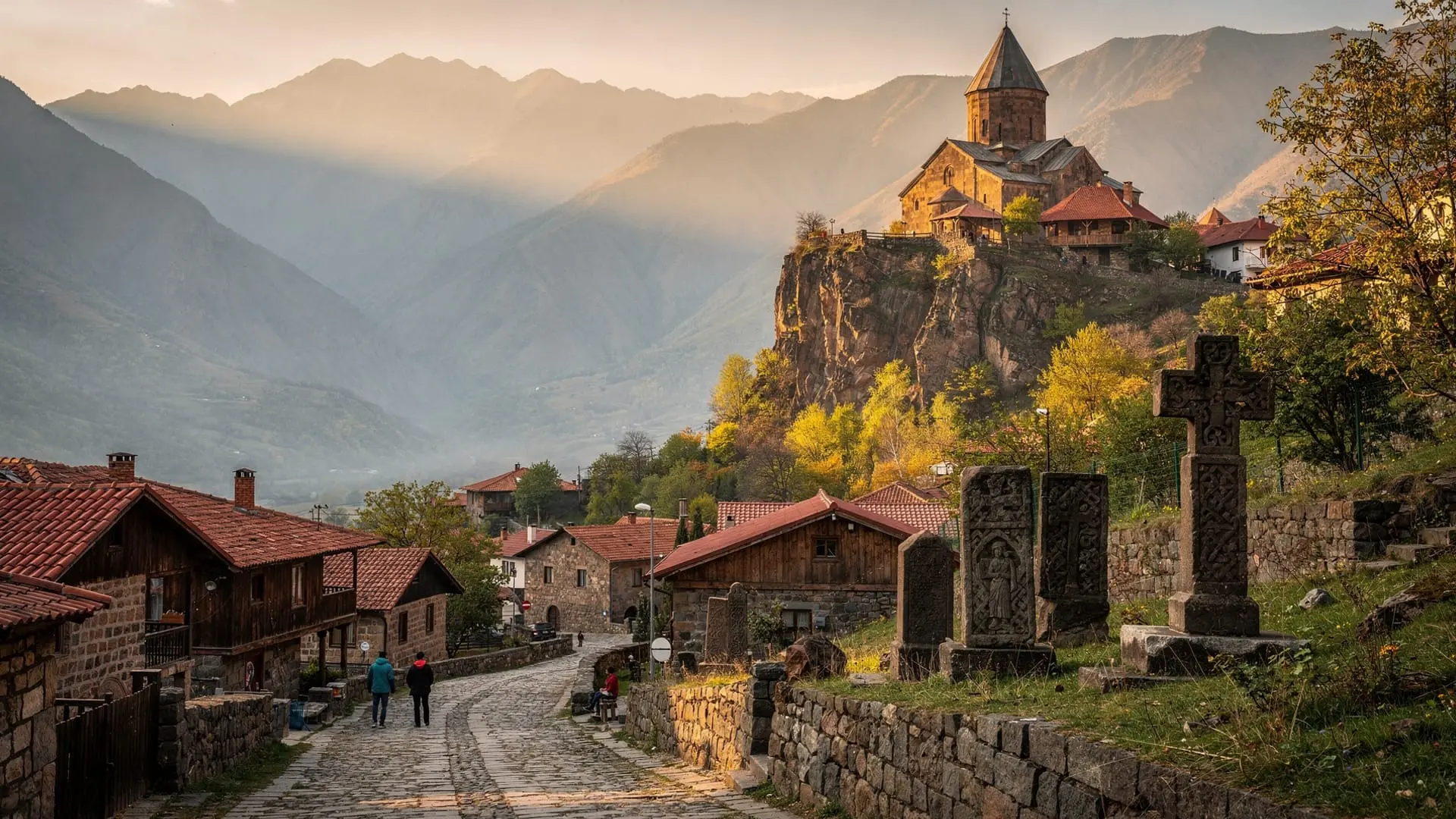
In Armenia, July and August bring the highest visitor numbers, the highest prices, and the most uncomfortable conditions in Yerevan. The country’s genuinely best experiences — hiking in wildflower meadows, watching the grape harvest, visiting monasteries in amber light with no one else there — happen in May and October.
These two months share a set of qualities that makes them not just good alternatives to peak season, but arguably superior to it for almost any type of Armenia traveller.
| Best months | May and October |
| Temperature | 8–23°C in Yerevan, cooler in the mountains |
| Price vs July peak | around 15–25% lower |
| Standout events | Wildflowers (May), Areni Wine Festival & foliage (October) |
| Booking lead time | 3–6 weeks; 8 weeks for Areni festival weekend |
What May and October have in common
Temperature sweet spot
Both months hit the temperature range that most human bodies are happiest in for sustained outdoor activity:
- May: 12–23°C in Yerevan; cooler in the mountains
- October: 8–22°C in Yerevan; cooler in the mountains
Neither month produces the 35°C summer afternoons that turn Yerevan into an endurance test for midday sightseers. In both months, you can stand in the forecourt at Garni or walk up to Sevanavank at 14:00 without suffering.
Lower tourist numbers
The Wings of Tatev cable car in July requires arriving at 08:00 to avoid long queues. In May and October, you can arrive at 10:00 and walk straight on. This is true across the board: monasteries that are crowded in summer are quiet in shoulder season, tour groups that fill guesthouses in August are absent in October, and prices at popular accommodation drop 15–25%.
Photography conditions
The light in May and October is categorically better for photography than summer:
- May: Lower sun angle than summer, longer golden hours, soft green landscapes
- October: Golden autumn light, low sun all day, amber foliage
Summer’s overhead midday light is harsh for exterior architecture photography. A monastery in May morning light or October afternoon light looks completely different — richer, more dimensional, more alive.
The exclusive experiences
Each shoulder season offers something that simply does not exist at any other time:
- May: Wildflower peak on Aragats and the Aragatsotn plateau, apricot blossom in the Ararat Valley (April–early May), Lake Sevan’s post-winter clarity
- October: Wine harvest and Areni Wine Festival, autumn foliage in Tavush, post-summer clarity for Ararat views
These are not compensations for missing summer — they are reasons to choose these months specifically.
May in detail: the best single month
Why May consistently tops the list
Among regular Armenia travellers, May comes up more often than any other month as the single best time to visit. The reasons stack:
Perfect hiking weather: Temperatures ideal for all-day outdoor activity. Aragats southern summit becomes hikeable in late May. Dilijan trails are green and clear. Kasakh gorge near Hovhannavank is at its most photogenic.
Wildflower season at its peak: The combination of Aragatsotn plateau poppies, mountain meadow wildflowers, and forest-edge species in bloom creates landscapes that photograph dramatically against Armenia’s volcanic terrain. This is the month photographers specifically target.
No crowds: Tourist groups that dominate popular sites in July–August have not yet arrived. Khor Virap on a May morning might have 15 visitors; in July it has 150. The experience is not comparable.
All sites accessible: Unlike winter (when some roads are difficult) or the heat of late summer (when water-dependent sites feel strained), May is the month when everything in Armenia is open, accessible, and operating normally.
Apricot blossom window extends into early May: In particularly late years, apricot orchards in the Ararat Valley carry blossom into the first week of May. Even after the blossom has gone, the trees are in fresh leaf and the valley is intensely green.
Budget-friendly: Accommodation prices in May are 10–20% below July–August rates. This is significant for multi-week trips.
May itinerary skeleton
Yerevan days 1–2: Republic Square, Northern Avenue, Cascade, Matenadaran, evening dining
Day 3: Garni, Geghard, Symphony of Stones — the classic in comfortable spring weather
Day 4: Khor Virap (morning for best Ararat views) + Noravank afternoon
Day 5: Aragats hike (southern summit reachable in late May) or Amberd + Armenian Alphabet Monument
Day 6: Lake Sevan + Sevanavank — stunning in May clarity
Day 7: Dilijan + Haghartsin — forests in full spring green
October in detail: the harvest month
Why October is the best return trip
Travellers who visit Armenia in both spring and autumn often describe October as deeper — the country reveals a different layer of itself. Where May is fresh and expansive, October is rich and intimate.
Wine harvest atmosphere: Late September through mid-October, the Areni and Vayots Dzor region is in the middle of harvest. Winery visits in October have a vibrancy that off-season visits lack — the winemaker is present, the juice is fermenting, the whole region smells of ripe Areni Noir.
Areni Wine Festival: The first weekend of October is the Armenian wine calendar’s main event. Dozens of producers gather in Areni village, the red canyon backdrop, folk music, and festive atmosphere. A genuinely Armenian experience with a tourist dimension that does not overwhelm it.
Tavush foliage: The forests of Dilijan and Ijevan go golden in October with a speed and intensity that rivals any European autumn destination. Haghartsin monastery in mid-October, surrounded by amber foliage, is one of the most photographed scenes in Armenia.
Ararat clarity: After the summer haze, October air is clean. Ararat appears in its full magnitude from Khor Virap on clear October mornings — often the clearest views of the year. The mountain’s lower flanks are greening as summer heat recedes.
Crowd dynamics: The post-summer crowd drop in October is significant. The Areni festival weekend is the one exception — that weekend is crowded. But everywhere else in October, the country returns to local rhythms.
October itinerary skeleton
Yerevan days 1–2: Arrive, city exploration, Vernissage weekend market if Saturday
Day 3: Khor Virap (morning Ararat view) + Noravank (afternoon ochre canyon light)
Day 4: Areni winery visits + Yeghegnadzor (Selim caravanserai if time)
Day 5: Areni Wine Festival (if first October weekend) or Tatev day trip
Day 6: Dilijan + Haghartsin in autumn colour + Lake Parz
Day 7: Sevan + Sevanavank under October sky + return to Yerevan
The comparative table
| Factor | May | July (peak) | October |
|---|---|---|---|
| Yerevan temperature | 12–23°C | 20–35°C | 8–22°C |
| Accommodation prices | Lower | Highest | Lower |
| Wings of Tatev queues | Short | 45–60 min | Short |
| Ararat visibility | Excellent | Hazy by 10:00 | Excellent |
| Wildflowers | Peak | Finished | Finished |
| Wine harvest | No | No | Peak |
| Autumn foliage | No | No | Peak |
| Hiking comfort | Excellent | Mountain only | Excellent |
| Tourist crowds | Low | High | Low–moderate |
When shoulder season edges into peak
May in Yerevan is busy on weekends — the city comes alive with outdoor café culture and locals enjoying the spring. This is not a tourist crowd problem; it is the city operating at its best. International tourist numbers in May are still comfortably below July levels.
October becomes crowded specifically during Areni Wine Festival weekend — accommodation in Vayots Dzor province sells out, and the festival site itself is busy. This is a feature, not a bug, for those specifically wanting the festival atmosphere. Simply book further ahead and manage expectations around that weekend.
How shoulder season compares to peak: the full breakdown
Wings of Tatev queues
In July and August, the Wings of Tatev cable car — the world’s longest reversible aerial tramway at 5.7 km — requires arriving by 08:00 to avoid queues exceeding 45–60 minutes. By mid-morning in peak season, the system is operating at capacity and wait times become unpredictable. The base station has minimal shade; waiting in 30°C heat with young children is genuinely unpleasant.
In May and October, the cable car operates normally and you can arrive at 10:00–10:30 without queuing. The experience of arriving at Tatev Monastery after a 12-minute flight over the Vorotan gorge is identical — but without the crowd processing through the monastery courtyard behind you. In October, the surrounding forests are in full colour change, visible from the cable car; this is one of the most photographed views in Armenia and the most dramatic version of it.
Lake Sevan: beach scene vs. tranquil water
July and August transform the northern shores of Lake Sevan into a beach destination. Sevan town’s beaches fill with families; the lakeside restaurants are booked solid on weekends; watersports equipment rental is active. The water temperature reaches its warmest (18–22°C for swimming). If beach Armenia is what you want, July–August is genuinely better.
In May, Lake Sevan has post-winter clarity — the water a deep, almost impossible blue at 1,900 metres altitude, cold for swimming but visually extraordinary. Sevanavank monastery, on its narrow peninsula above the lake, is visited by dozens rather than hundreds. In October, the clarity returns after summer’s algae bloom fades; the surrounding hills go golden, and the monastery visit is again quiet and unhurried. Hotel prices on the lake drop 20–30% against summer rates.
Monastery access: practical differences
Road access to high-altitude sites is smoother in shoulder season than in either winter or peak summer. The Geghard monastery road, which can be difficult with ice in January–February, is fully clear from April through November. The trail access to Amberd fortress on the slopes of Aragats, sometimes obstructed by snow into April, opens reliably in May.
The key distinction vs. July–August is not access but experience: in shoulder season you share Geghard, Noravank, and Khor Virap with dozens of visitors rather than hundreds. At Khor Virap on a July Sunday morning, tour buses park three deep in the lot. On a May Tuesday, you might be one of fifteen people at the fortress walls watching Ararat emerge from morning haze.
Detailed comparison: May vs early June vs mid-September vs October
| Factor | May | Early June | Mid-Sept | October |
|---|---|---|---|---|
| Yerevan daytime temp | 12–23°C | 16–27°C | 18–28°C | 8–22°C |
| Mountain temp (Aragats/Tatev) | 5–15°C | 10–20°C | 12–22°C | 3–15°C |
| Precipitation risk | Moderate | Low | Low | Moderate |
| International tourist numbers | Low | Moderate | Moderate | Low–moderate |
| Hotel prices vs July peak | −15 to −20% | −5 to −10% | −10% | −20 to −25% |
| Wings of Tatev wait time | Under 10 min | 10–20 min | 15–20 min | Under 10 min |
| Ararat visibility morning | Excellent | Good | Excellent | Excellent |
| Wildflowers Aragats | Peak | Fading | Finished | Finished |
| Areni wine harvest | No | No | Starting | Peak |
| Tavush/Dilijan foliage | Fresh green | Full green | Turning | Peak amber |
| Sevan swimming | Cold | Cool | Warm | Cold |
| Direct flights from EU | Good | Full | Full | Good |
| Flight price vs summer | −25 to −35% | −10 to −15% | −10 to −15% | −25 to −35% |
Key takeaway: Early June and mid-September are transitional months that share some peak characteristics (higher prices and modest crowds) without the full disadvantages of July–August. They are fine choices. But May and October are categorically different — they combine low prices, small crowds, and their own exclusive seasonal experiences.
Seasonal photography: what to target in each month
May photography
Golden hour: In May, sunrise in Yerevan falls around 05:45–06:30. The low morning angle on Khor Virap’s monastery-and-Ararat composition is flattest (most dimensional) in May, when the air is clean and the fields around Khor Virap are green rather than summer-brown. Shoot Khor Virap the morning after arrival; the light is almost never as good in July.
Wildflower Aragats: The Aragats plateau poppies and mountain wildflowers at 2,000–3,000 metres peak in late May. The volcanic moonscape of Aragats punctuated by intense red poppies is one of the most striking landscapes in Armenia and rarely photographed well because it requires showing up in a two-week window.
Forest greens Dilijan: Haghartsin monastery in May fresh green is a different visual subject from October amber — darker, cooler, more intimate. The contrast of medieval stone against vivid spring forest is particularly strong in early May.
Apricot orchards: The Ararat Valley apricot trees (Armenia’s national fruit) carry blossom from late March into early May. In warm years, early May still shows petals; at minimum the trees are in fresh leaf with young fruit forming — the valley is intensely green against the volcanic soil.
October photography
Autumn foliage Tavush: Haghartsin in mid-October, surrounded by amber and red deciduous forest, is the single most photogenic monastery composition in Armenia. The monastery’s medieval stone against autumn colour is the image most associated with Armenia autumn photography. Best light: mid-morning (09:30–11:00) when the sun is high enough to illuminate the forest but not yet overhead.
Areni canyon light: The red limestone canyon framing Noravank monastery is at its most dramatic in autumn — the late-afternoon light (after 15:00) turns the rock the same deep ochre as the leaves. October afternoons at Noravank produce the most colour-saturated version of a composition that is beautiful year-round.
Long shadows: October’s sun angle is low all day, meaning shadows are long from 08:00 until sunset. Every monastery, every fortress, every mountain — all are rendered in three dimensions rather than flattened by overhead summer light.
Ararat in October: The mountain’s lower slopes, greening after summer, provide the visual contrast that the brown summer flanks lack. October views of Ararat from Khor Virap or from the Artashat road consistently produce richer images than summer views.
The traveller type who should book May or October
Almost everyone. The only travellers for whom peak summer (July–August) is genuinely better are:
- Those specifically coming for Lake Sevan swimming (July–August has the warmest water)
- Those locked into European school holiday schedules
- Those whose primary interest is Yerevan nightlife (which is at its most active in summer)
For everyone else — including first-time visitors, hikers, photographers, wine enthusiasts, monastery visitors, and budget travellers — May or October outperforms peak summer on almost every metric.
Shoulder season by traveller interest
Hikers: May is the stronger month — snowmelt has cleared most trails by mid-May, wildflowers peak, and temperatures stay comfortable for full-day routes. Aragats and the Dilijan trail network are both at their best. October works too, but daylight is shorter and higher trails can see early snow by late month.
Wine enthusiasts: October, without question — harvest, the Areni festival, and active wineries make this the only month that delivers the full wine-country experience. See the wine grapes and Areni Noir guide for background before visiting.
Photographers: Both months reward differently, as covered above, but if choosing one: October’s amber Dilijan forests and clear Ararat mornings edge out May’s wildflowers for sheer variety of subject matter in a single trip.
Families: May is generally easier — school holidays haven’t started, so sites are calmer, and the weather suits full days out without the heat management that July requires. October half-term breaks bring a smaller secondary bump in family travel, still far below summer levels.
Budget travellers: October offers the deepest discounts, particularly outside the Areni festival weekend, when Vayots Dzor and Dilijan accommodation both run at their yearly lows.
Practical shoulder season planning
Booking lead times:
- May: Book 3–4 weeks ahead for Yerevan; 4–6 weeks for Dilijan popular guesthouses
- October: Book 4–6 weeks ahead for Yerevan; 8 weeks minimum for Areni Wine Festival weekend accommodation in Vayots Dzor
Weather variability: May can bring rain (pack a waterproof). October can bring early cold and rain in the second half of the month. Neither is as reliable as a clear summer day, but neither produces the oppressive heat of July.
Operating hours: All major sites are fully open in May and October. No closures or reduced schedules.
Direct flights: Less frequent than summer, but European carriers (Wizz Air, Ryanair, Air France, Lufthansa) fly Yerevan year-round. May and October seats are typically 20–40% cheaper than summer.
Combining with a longer Caucasus trip: Both months suit pairing Armenia with a Georgia leg, since the overland Yerevan–Tbilisi route runs on a normal schedule and border conditions are stable outside winter snow closures. A 10–14 day shoulder-season trip covering both countries is a genuinely comfortable pace, avoiding the rushed feel of a single-country week.
Where the price drop is biggest
Not every destination discounts equally between peak and shoulder season. Dilijan shows the largest swing — its handful of boutique guesthouses sell out in August at premium rates, then drop up to 30% in May and October once demand eases. Vayots Dzor (Areni, Yeghegnadzor) follows a similar pattern outside the wine festival weekend, when rural guesthouses run 20–25% below summer. Yerevan hotels move less dramatically, typically 15–20%, because the capital has enough inventory to absorb demand shifts. Tatev and Goris guesthouses in Syunik see modest 10–15% swings, since the region already runs quieter than the Yerevan day-trip circuit. If budget is the deciding factor, shoulder-season Dilijan and Vayots Dzor deliver the sharpest value gains — see the Dilijan vs Jermuk comparison and the Vayots Dzor wine route guide for planning.
How locals experience these months
May and October are not just quieter for visitors — they are when Armenians themselves are most active outdoors. May weekends bring Yerevan families to Republic Square cafés and to Sevan and Dilijan for the season’s first picnics. October is harvest season across the country, not only in wine regions: apple and pomegranate picking happens in home orchards nationwide, and Yerevan’s markets fill with the year’s best produce. Travelling in shoulder season means sharing sites with Armenians enjoying their own country at its best, rather than with other tour groups — a genuinely different atmosphere from the international-heavy crowds of July and August. The Armenia travel guide has the fuller cultural picture if this is your first trip.
Khor Virap, Areni, Noravank and Jermuk wine day tourFrequently asked questions about shoulder season in Armenia
Is May or October better for a first visit to Armenia?
Both are excellent. May gives better hiking conditions and the wildflower spectacle. October gives the wine harvest and autumn foliage. If you can only pick one: May for first-timers who want to cover the full country, October for first-timers with a wine or photography focus.
How does shoulder season compare to November or April in terms of value?
November and April (early) are even cheaper and less crowded. But they come with trade-offs: April’s weather is variable with more rain and some roads still difficult; November is genuinely off-season with shorter days and limited activity. May and October represent the best value-to-quality ratio — not the absolute cheapest, but the point where the price discount is largest relative to the experience quality.
Do guesthouses in rural Armenia stay open in October?
Yes. Guesthouses in Dilijan, Goris, Jermuk, and around Areni are fully open throughout October. Some close by late November or December. For shoulder season (May and October), rural accommodation is available and often excellent — family-run guesthouses in October have a particular warmth as the season winds down.
Is the GYG tour selection as wide in shoulder season?
Essentially yes. The core day tour program from Yerevan (Garni/Geghard, Khor Virap/Noravank, Tatev, Sevan/Dilijan, Etchmiadzin) operates year-round. Some niche tours reduce frequency in November–March. May and October have full tour availability.
How much cheaper are hotels in May and October vs. peak summer?
Budget 15–25% lower than July–August rates for comparable accommodation in Yerevan. In Dilijan (where boutique guesthouses sell out in August), savings can reach 30%. In Vayots Dzor, rural guesthouses are 20–25% cheaper outside harvest festival weekends. The exception: Areni Wine Festival weekend (first weekend of October) often sees Vayots Dzor accommodation priced at or above summer rates due to demand concentration.
Does the Wings of Tatev cable car operate in October?
Yes. The Wings of Tatev operates year-round in normal weather, with possible closure for maintenance in November (the exact dates change annually — check the Tatev resort website before visiting). In October it operates on a standard daily schedule. Note that winter closures and bad-weather days occasionally occur in November–March; October is reliably operational.
What should I pack for Armenia in May and October?
Both months require layering. May: light hiking clothes for day activities, a mid-layer fleece for mornings and evenings, a waterproof shell (rain is moderate probability in May), sun protection for open highland sites. October: warmer layers needed, especially for Tatev (1,400m) and Gyumri (1,500m), where October evenings can reach 3–8°C. A wool mid-layer and a windproof shell cover most scenarios. Rain probability increases in late October. See the seasonal packing list for a full breakdown by month.
Is shoulder season a good time for a wine-focused trip?
October is the better of the two for wine specifically — harvest is underway and the Areni Wine Festival falls on the first weekend of the month. May is too early for harvest, though wineries are open for tastings year-round. For a wine-first itinerary, build the trip around late September to mid-October and combine it with the Vayots Dzor wine route.
Should I choose May or October if I also want to visit Georgia?
Either works well for a combined Armenia–Georgia trip, since both countries share a similar shoulder-season pattern. October has the edge for scenery (Georgia’s Kazbegi and Svaneti regions turn similarly golden), while May offers better hiking conditions in both countries before summer heat sets in. See the Armenia–Georgia combined trip guide for routing.