Armenia's thermal springs: where to soak
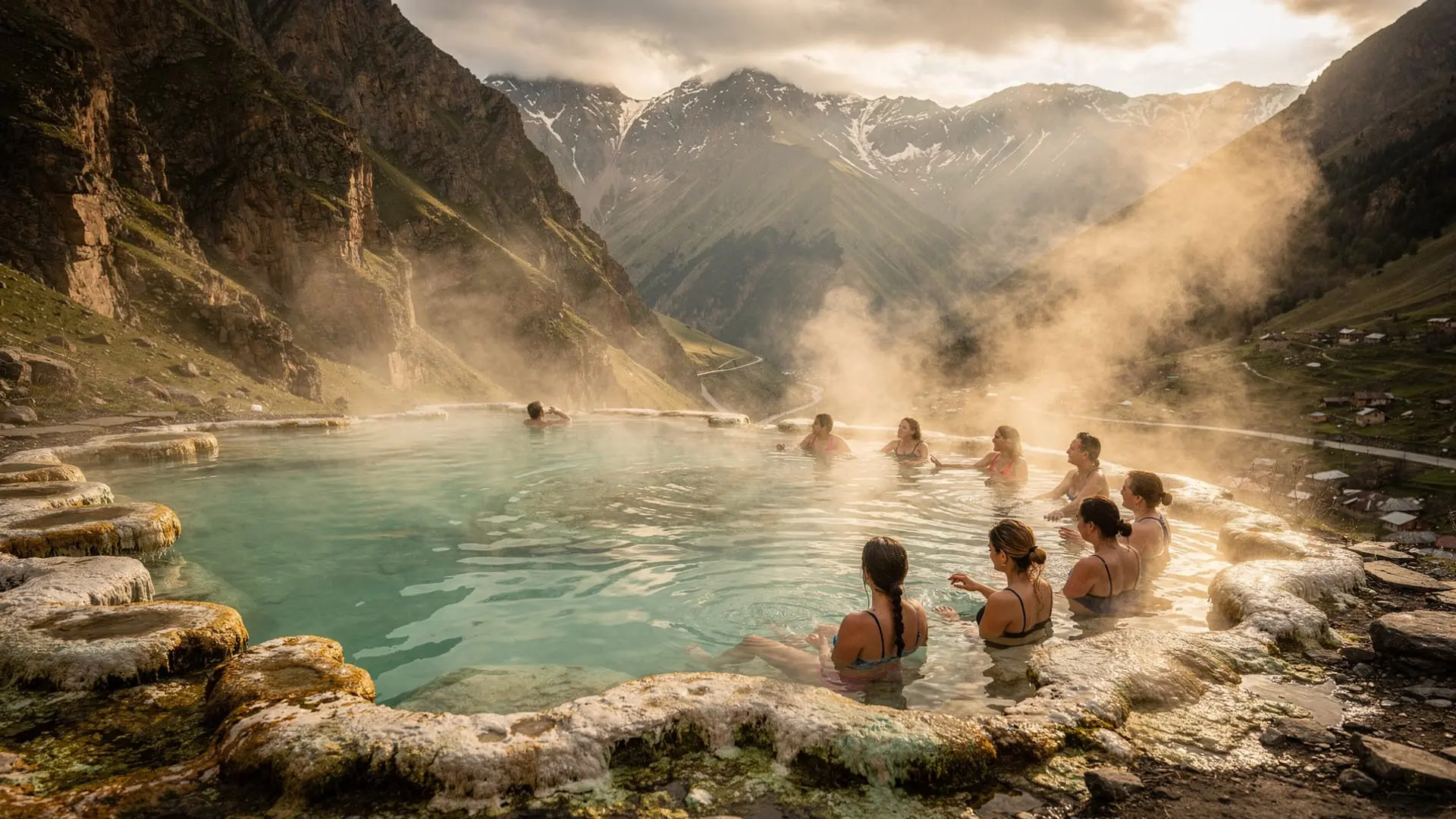
A geothermally active country hiding its hot springs
Armenia sits on the collision zone between the Eurasian and Arabian tectonic plates — the same geological boundary that produced Mount Ararat, Mount Aragats, and the Gegham volcanic highlands. This geology does more than build mountains: it heats groundwater. Natural hot springs and thermal mineral water sources exist across the country, from the famous facilities at Jermuk to informal pools in the Lori forests, and from commercial developments near Yerevan to wild springs in the Syunik wilderness that require a 4WD and some determination to reach.
This guide maps the thermal spring landscape of Armenia for visitors interested in soaking, bathing, and the wellness traditions that have grown up around these waters.
| Flagship site | Jermuk (30–65°C, developed spa town) |
| Closest to Yerevan | Hankavan, 80 km / around 1h30 |
| Cost | Free public gallery (Jermuk) to moderate spa fees |
| Best combined with | Tatev, Noravank, Haghpat/Sanahin |
| Season | Jermuk and Hankavan year-round; Lori/Syunik springs seasonal |
Jermuk: the flagship
Jermuk is covered extensively in the spa and thermal waters guide and the waterfall and mineral gallery guide. In brief: the most developed thermal wellness destination in Armenia, with a full range of facilities from the free public mineral water gallery to supervised medical balneology. Springs at 30–65°C. Open year-round, with reduced winter hours. The reference point against which all other Armenian thermal experiences are measured.
Getting there: 175 km from Yerevan, 2.5–3 hours by car.
Book a Jermuk tour combining the waterfall, mineral gallery, and Tatev ropewayHankavan: the accessible hot spring near Yerevan
Hankavan is a small mountain village in Kotayk province, about 80 km north of Yerevan, with a natural thermal spring complex that has been developed into a small bathing facility. The springs emerge at temperatures around 30–35°C and the water has a moderate mineral content — less distinctive than Jermuk but genuinely therapeutic and considerably closer to Yerevan.
The Hankavan spring facility is modest — an outdoor pool complex in a forest setting, basic changing facilities, and a café. It is a popular weekend destination for Yerevan residents wanting a quick thermal soak without the long drive to Jermuk.
Temperature: 30–35°C at source, maintained at pool temperature Altitude: ~1,900 m Open season: Year-round (outdoor pool cooling significantly in winter but heated by the spring flow) Distance from Yerevan: 80 km, about 1 hour 30 minutes Access: By car via Aparan; no regular marshrutka service
Hankavan is easily combined with the Tsaghkadzor ski resort (20 km away) for a ski-and-soak day in winter.
Best season to soak
Thermal springs are, counterintuitively, at their most appealing outside the summer heat. Jermuk in July and August is pleasant thanks to its 2,080 m altitude, but a hot spring soak is a much stronger draw in spring or autumn, when the contrast between the cool mountain air and the warm mineral water is at its most satisfying. Winter is the classic season for Hankavan and Jermuk both — arriving with snow on the ground and stepping into 36–40°C water is the experience these springs are built for. See the Armenia winter travel guide for combining a soak with a snow-season trip, or the shoulder season guide for the spring/autumn case.
Arzakan springs: closest to Yerevan
Several small thermal spring operations exist within 40–50 km of Yerevan in the Kotayk highlands. The Arzakan area (near the village of Arzakan, about 35 km north of Yerevan) has a number of informal bathing spots fed by lukewarm springs in the forest. The temperatures are lower than Jermuk or Hankavan (typically 22–28°C) and the facilities are basic to non-existent — in some places just a concrete pool built around a natural spring.
These springs attract local Armenians rather than tourists and have a certain rough authenticity. They are not in guidebooks but are findable through local knowledge or the Armenian outdoor community on Facebook.
Lori province: forest hot springs near Alaverdi
The Debed River canyon in Lori province passes through some of the geologically active zones associated with the Greater Caucasus mountain front, and several thermal spring sites exist in the canyon and its tributaries. The best-known are in the vicinity of Alaverdi, accessible from the Haghpat/Sanahin area.
These springs are in various states of development — some have been incorporated into small guest houses that advertise hot spring baths, others are informal pools maintained by local communities. The temperature range is typically 28–38°C, mineral content varies.
Combining with Lori monasteries: Alaverdi is 200 km from Yerevan and the natural base for visiting Haghpat and Sanahin UNESCO monasteries. A guesthouse with thermal pool in the area allows a perfect combination of medieval Armenian cultural heritage and natural wellness — one of the more distinctive experiences available in Lori.
Practical note: No formal tourist operation currently advertises the Alaverdi thermal springs prominently. Ask at accommodation in Alaverdi or in the Sanahin village area.
Vayots Dzor: springs beyond Jermuk
The Vayots Dzor highlands that contain Jermuk are geologically active across a wider area than just the town. Several smaller spring sites exist in the Arpa valley area:
Gndevaz hot springs: A small thermal spring near the village of Gndevaz, about 30 km from Jermuk, used locally for bathing. Less developed than Jermuk but genuinely hot (approximately 40°C at source).
Arpi springs: Near Arpi village, also in Vayots Dzor, with springs that have been used by local communities for generations. Informal access.
These sites require local knowledge to find — the best approach is to ask your accommodation in Jermuk or Vayk about current access.
Book a 5-day Armenia tour combining wine tasting, Jermuk hot springs, and cultural sitesSyunik: remote springs in the south
Syunik province in the deep south has several thermal spring sites that are almost entirely off the tourist map. The geology of the Zangezur range produces both volcanic hot springs and cold mineral springs.
Near Kapan: Several spring sites exist in the mountains above Kapan, used by local residents. These are informal outdoor pools or natural rock basins rather than developed facilities. A local guide in Kapan can direct you to the nearest accessible ones.
The Vayq area: The market town of Vayk is in a geologically active valley, and a few spring operations have opened nearby catering primarily to the domestic market.
International thermal spa tourism context
Armenia’s thermal springs exist in a regional context where Georgia (Borjomi/Bakuriani, Tskhaltubo) and Iran (Sarein, Tabriz area) have more developed thermal tourism infrastructure. Within this regional comparison:
- Armenia’s advantage: Less crowded, lower prices, the combination of thermal springs with outstanding cultural heritage in the same trip
- Armenia’s disadvantage: Less developed infrastructure, variable quality of spa facilities, and the Jermuk facilities specifically have not reached the quality of Georgia’s best thermal resorts
For visitors interested in the Caucasus wellness circuit, combining Jermuk in Armenia with Tskhaltubo in Georgia (known for its radon-radium waters in grand Soviet-era baths) is a distinctive regional option. The Georgian border crossing at Bagratashen (near Alaverdi) makes a combined Armenia-Georgia thermal route entirely feasible.
Planning your thermal spring visit
For a day trip
Jermuk mineral gallery + waterfall: From Yerevan, this is a 5-hour round trip drive. Feasible for the most dedicated, but better as an overnight.
Hankavan: This is the realistic day trip thermal option from Yerevan — 80 km each way, plenty of time for soaking plus lunch.
For 1–2 nights
Jermuk: The proper way to experience it. Two nights gives you the gallery, the waterfall, one spa session, and time to breathe the mountain air.
Lori area springs + monasteries: Combine with Haghpat and Sanahin for a Lori wellness and culture overnight.
For 5+ days
The full Armenia wellness circuit is covered in the Armenia wellness itinerary guide.
What to pack for a soak
A thermal spring trip needs less gear than it might seem. Bring a swimsuit, flip-flops or water shoes (developed pools can have rough surfaces, informal springs almost always do), a towel — Jermuk’s hotels provide them but Hankavan and informal sites often do not — and a change of clothes for after. Layering matters more than swimwear choice: winter soaks mean walking from a warm changing area to a hot pool through freezing air, so a warm robe or oversized jacket for the transition makes the experience far more comfortable. If visiting informal springs in Lori or Syunik, bring your own bottled water and snacks, since these sites rarely have facilities nearby.
Etiquette at Armenian thermal sites
Commercial facilities like Jermuk and Hankavan operate on standard spa etiquette — quiet voices, no glass containers poolside, and standard changing-room norms. At informal springs used by local communities, a more careful approach helps: these are shared local resources, not tourist facilities, so arriving respectfully, keeping groups small, and not treating the site as a photo backdrop for a crowd goes a long way. If a local family or group is already soaking, it is normal in Armenia to share the pool rather than expect exclusive use — a brief greeting and a willingness to make space is the accepted approach.
Frequently asked questions about Armenia’s thermal springs
Are Armenia’s thermal springs safe to bathe in?
The commercial facilities (Jermuk sanatoriums, Hankavan) test their water regularly and are considered safe by Armenian health standards. Wild springs and informal pools have no testing — the waters are generally safe to soak in but not guaranteed.
What temperature are the springs?
Ranges widely by site. Jermuk: 30–65°C (bathing at 36–40°C). Hankavan: 30–35°C. Arzakan: 22–28°C. The hotter springs are diluted or cooled before entering bathing pools.
Are the springs good for skin conditions?
Some visitors with psoriasis and eczema report benefit from sulfurous springs. The evidence is primarily anecdotal — no controlled clinical trials have been conducted on most specific Armenian spring sites. The high mineral content of the stronger Jermuk springs is documented but therapeutic claims should be treated with appropriate skepticism.
Do I need a medical certificate to use the springs?
No, for commercial bathing facilities. The formal medical balneological programme at Jermuk’s registered clinic requires a medical intake, but hotel spa pools and informal spring pools do not.
Which spring is best for first-time visitors?
Jermuk for the full experience. Hankavan for the easiest access from Yerevan. The Lori springs for combining with a cultural itinerary in the north.
Can I visit a thermal spring as a day trip from Yerevan?
Yes, but only Hankavan realistically works as a single-day round trip — 80 km each way leaves comfortable time for soaking and lunch. Jermuk is a 5-hour round-trip drive alone, so while technically possible in a very long day, it is far better as an overnight stay that lets you actually relax rather than rush back.
Do I need to book Jermuk’s spa facilities in advance?
The free public mineral water gallery needs no booking. Hotel spa pools and the formal balneological programme benefit from advance booking, particularly on weekends and during the winter ski season when Jermuk sees combined spa-and-slope traffic from nearby resorts. Booking a day or two ahead is generally sufficient outside major holidays.
The science of balneotherapy: what the evidence says
Armenian balneotherapy — the medical use of mineral water baths and drinking cures — sits in a scientifically interesting position. The Soviet health system invested heavily in researching it, producing a substantial literature. The European and American medical consensus is more cautious.
What the evidence supports:
- Warm water immersion (thermal bathing at 37–40°C) demonstrably reduces muscle tension, lowers cortisol levels, and improves sleep quality. This effect is independent of mineral content — a hot bath at home produces some of the same benefit.
- High-mineral drinking water can affect gut pH and may benefit some digestive conditions. The evidence is strongest for certain peptic conditions. General claims about “detoxification” or “immune boosting” are not well-supported.
- Cold-warm contrast bathing (alternating hot springs with cold plunge pools) has evidence for improved circulation and subjective wellbeing in healthy adults.
- The placebo and environmental effect is real and not dismissible — being in a mountain environment, sleeping well, eating fresh food, and reducing work stress has measurable health benefits. Attributing these entirely to the mineral water chemistry misses the larger therapeutic context.
The honest position: a stay at Jermuk or Hankavan is genuinely good for most people. The specific claims about particular spring compositions curing specific diseases are not well-validated. Enjoy the waters for what is demonstrably true — they are relaxing, they taste interesting, they are part of a distinctive cultural tradition, and the mountain environment around them is genuinely beautiful.
The economic geography of Armenian thermal springs
Armenia’s thermal spring locations are distributed according to geological logic (they occur at zones of volcanic activity and tectonic fault lines) but the economic development around them has been uneven. Jermuk was developed by Soviet central planning; Hankavan benefited from proximity to the Tsaghkadzor tourism corridor; the Lori and Syunik springs remain largely undeveloped because they are in areas that did not attract Soviet-era infrastructure investment.
This creates an interesting opportunity for future development — and for visitors who want to get ahead of the tourist infrastructure. The Lori springs in particular, combined with Haghpat and Sanahin monasteries, form a compelling wellness and heritage corridor that is essentially unmarketed to international visitors. A boutique guesthouse with thermal pools near Alaverdi, combined with monastery day visits, would be the most distinctive wellness offering in the Caucasus. As of 2026, it does not quite exist yet — but the ingredients are all there.
Practical guide: comparing the three main thermal spring sites
| Criteria | Jermuk | Hankavan | Lori springs |
|---|---|---|---|
| Spring temperature | 30–65°C | 30–35°C | 28–38°C |
| Development level | High (sanatoriums, gallery) | Medium (pool facility) | Low (informal) |
| Distance from Yerevan | 175 km (2.5h) | 80 km (1.5h) | 200+ km (3h) |
| Best combined with | Tatev, Noravank, wine | Tsaghkadzor skiing | Haghpat, Sanahin |
| Minimum stay | 2 nights | Day trip | Overnight |
| Price level | Moderate | Budget | Very budget / informal |
| Year-round? | Yes (reduced winter) | Yes | Seasonal |
Responsible soaking: environmental considerations
Armenia’s thermal springs are natural resources under varying degrees of pressure from overuse and development. Some considerations for responsible visitors:
At Jermuk: The mineral water gallery is a shared resource — do not monopolise specific fountain taps. The springs are not unlimited; the aquifer recharge rate is finite and the town’s population of regular users has historical priority.
At informal springs: Do not introduce soap, shampoo, or other products into open natural springs that are not designed for bathing with additives. The downstream effects on aquatic ecosystems are real even when the quantities seem small.
Development pressure: Several Syunik and Vayots Dzor spring sites have been subject to proposals for commercial development. Local environmental advocates argue that some proposed developments would damage aquifer recharge zones. Being an informed visitor — choosing existing facilities over new mega-resort developments — supports the more sustainable end of this argument.
The future of Armenian thermal tourism
Armenian thermal tourism is at an early stage of development relative to its natural resource base. Several scenarios are possible:
The Georgia model: Develop large-scale international facilities targeting medical wellness tourism from Russia, the Middle East, and diaspora markets. Higher revenue but potentially homogenising.
The boutique model: Small, high-quality facilities integrated into the existing landscape and cultural heritage, targeting European wellness tourists willing to pay premium prices for authentic experiences. Lower volume but potentially more sustainable.
The current trajectory: A mixed picture — the Jermuk Armenia Hotel represents the boutique-leaning development, while some proposed larger projects would follow the mass-tourism model.
As a visitor, your choice of where to stay and how much to pay sends signals about which model is viable. Staying at the Armenia Hotel rather than the cheapest available option supports the higher-quality end of the development spectrum.