Armenia wellness itinerary: 5 days unwinding
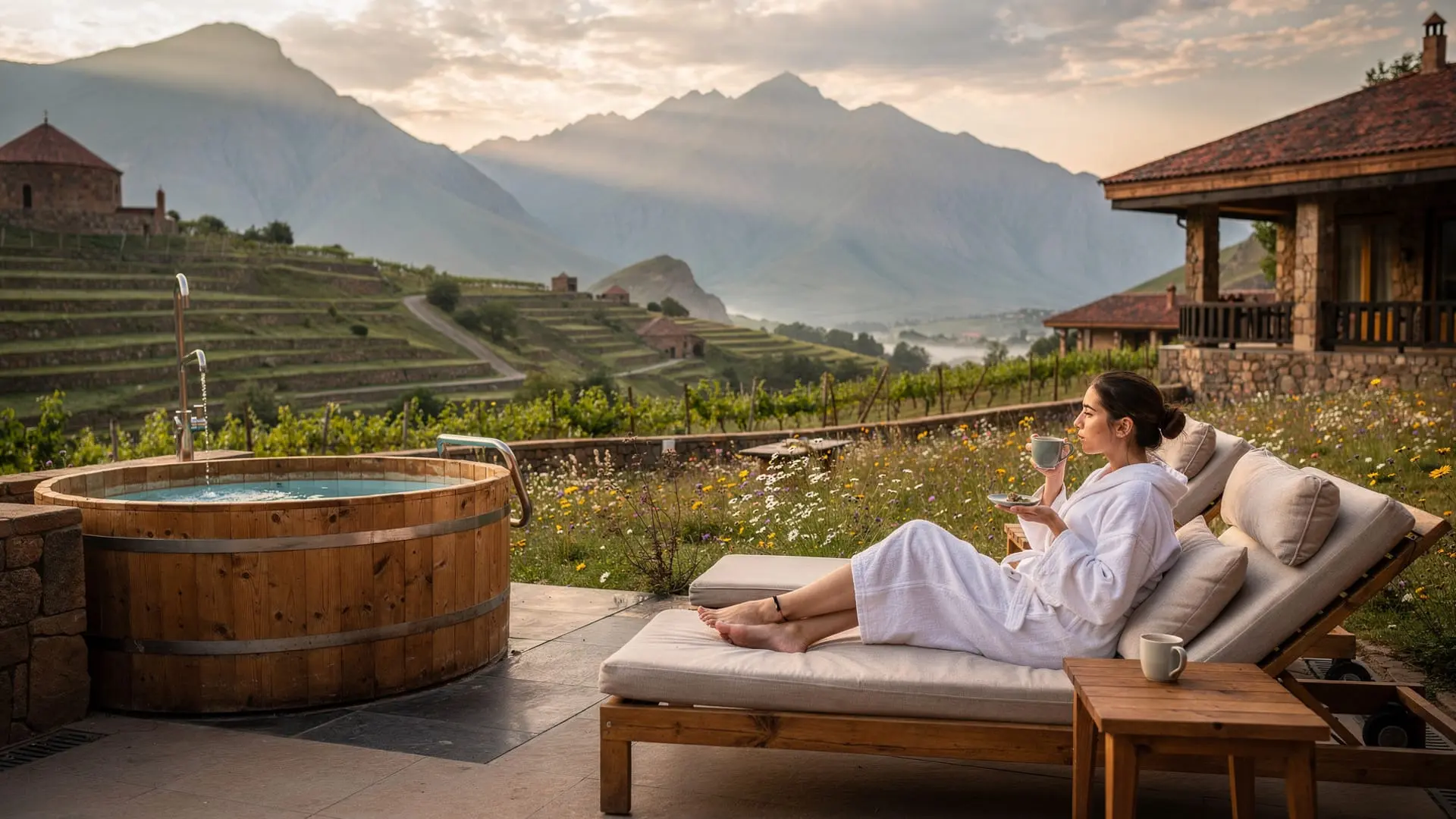
The gentle art of choosing where to slow down
A wellness trip to Armenia requires a different planning logic than a cultural sightseeing tour. The goal is not to maximise the number of monasteries visited — it is to find the combination of natural environment, good food, physical activity, and restoration that leaves you feeling better at the end than the beginning.
Armenia delivers this combination better than many more famous wellness destinations. The country has natural thermal springs at Jermuk, exceptional forest environments at Dilijan National Park, clean mountain air throughout, genuinely nourishing food that does not require a wellness label, and the kind of historical weight — ancient churches, medieval monasteries in mountain gorges — that provides the same grounding effect as meditation if you let it.
This 5-day itinerary is designed for the visitor who wants to experience Armenia’s wellness landscape without sacrificing the cultural experiences that make Armenia distinctive. It is not a fast itinerary — it has rest built in, and deliberately avoids packing every hour.
| Where | Yerevan, Dilijan, Jermuk, Tatev — a loop of around 700–750 km |
| Cost | Around 480–1,150 EUR per person for accommodation, food, activities and transport |
| Time needed | 5 days (extendable to 7, reducible to 3) |
| Getting around | Best with a rental car; private transfers or guided tours work without one |
| Best time | May–October; winter is possible with adjustments |
Day-by-day summary
| Day | Base | Focus |
|---|---|---|
| 1 | Yerevan | Arrival, Cascade walk, first dinner |
| 2 | Dilijan | Lake Sevan stop, Sevanavank, Lake Parz |
| 3 | Dilijan → Jermuk | Haghartsin monastery, drive south |
| 4 | Jermuk | Mineral springs, spa, waterfall walk |
| 5 | Jermuk → Yerevan | Wings of Tatev cable car, Tatev monastery, return |
Day 1: Yerevan arrival and first evening
Arrive in Yerevan (Zvartnots Airport, 15 km from the city centre). Direct flights from Vienna, Paris CDG, Frankfurt, Athens, Rome FCO, and Amsterdam operate year-round.
Check in: The Republica Hotel (Yerevan, central location, excellent breakfast, ~90–130 EUR per night) or a smaller boutique guesthouse in the Kond neighbourhood. Avoid rushing to fill the first afternoon.
First evening: Walk the Cascade — the monumental stairway complex in the northern part of the city, free to climb, with contemporary art installations and a view of the pink tuff city below and Ararat (weather permitting) beyond. End at one of the cafés or restaurants in the Cascade neighbourhood: Sherep (upscale Armenian cuisine), Lavash (traditional, excellent), or Achajour (contemporary Armenian).
Why this day matters for wellness: Arrival days set the tone. Resist the urge to pack in sightseeing. Let your body land, eat a good meal, walk somewhere beautiful, and sleep early.
Dinner recommendation: Lavash restaurant, central Yerevan. Traditional Armenian food — lavash baked in tonir, grilled meats, fresh herbs, local wines. The food is genuinely good and grounding after a flight.
Day 2: Drive north to Dilijan
Morning: Early breakfast, then drive northeast from Yerevan to Dilijan (95 km, 1 hour 45 minutes). If you do not have a car, a taxi from Yerevan (~15,000–20,000 AMD) or a marshrutka (~800–900 AMD, 2 hours from Kilikia station) both work.
On the way: Stop at Lake Sevan (25 km before Dilijan, a 30-minute detour from the main road). Walk up to Sevanavank monastery — 10–15 minutes on foot — for the panoramic lake view and the 9th-century church. The monastery in the morning, before tour buses arrive, has a quiet that is rare in summer.
Arrive Dilijan by noon. Check in to Hotel Old Dilijan Complex or a guesthouse in the old quarter.
Afternoon: Walk to Lake Parz (7 km from town — taxi ~1,000–1,500 AMD, or 2-hour forest walk if you want the full immersion). Hire a rowing boat for 30 minutes. Walk the lake circuit. Sit on the bank.
Evening: Return to Dilijan old quarter for dinner at one of the traditional restaurants. The cuisine in Dilijan leans toward forest ingredients — mushroom soup, grilled trout, fresh-baked bread.
Accommodation: Hotel Old Dilijan Complex (~130–180 EUR), or a guesthouse (~25–40 EUR) for a more intimate experience.
Book a guided tour from Yerevan covering Sevan, Dilijan, and Lake ParzDay 3: Morning at Haghartsin, afternoon departure to Jermuk
Morning: Drive or taxi (8 km, ~1,000–2,000 AMD) to Haghartsin monastery — a 12th-century complex set deep in the national park forest. Plan 1.5–2 hours. The monastery is one of the finest in Tavush province and the forest approach is exceptional. Quiet, rarely overcrowded except in peak summer.
Late morning: Return to Dilijan for a late breakfast or early lunch. The Hotel Old Dilijan Complex kitchen is worth the sit-down.
Midday: Drive south to Jermuk (175 km from Dilijan via Yerevan is the safe winter route; in summer, the mountain road via Vardenis/Lake Sevan south shore/Martuni is scenic but longer — ~220 km, 3.5 hours). Most drivers go via Yerevan (~2 hours Dilijan to Yerevan, then 2.5 hours Yerevan to Jermuk, total ~4.5 hours including brief stops).
Arrive Jermuk late afternoon. Check in to Armenia Hotel or a mid-range guesthouse.
First evening at Jermuk: Walk to the mineral water gallery before dinner (typically open until 20:00) and try the springs. Light dinner — your body needs rest more than stimulation on a travel day.
Day 4: The Jermuk day — thermal waters and the waterfall
This is the heart of the wellness itinerary.
Morning (8:00–9:00): Return to the mineral water gallery at opening time. The early morning crowd of local residents drinking their prescribed amounts is one of the most genuine scenes in Armenian wellness culture. Try 2–3 different springs. Buy a cup if you did not yesterday.
Mid-morning (9:00–12:00): Book a morning spa session at the Armenia Hotel spa or sanatorium — a thermal mineral bath, a massage, or both. A mineral bath session at 38°C for 20–30 minutes is the classic Jermuk experience, and the effect on muscle tension and sleep quality is real. Allow 2–3 hours for the spa session including transition time.
Lunch (12:00–13:30): Eat at a Jermuk restaurant — the mid-range options on the main boulevard serve good Armenian highland food. Local trout is excellent here; so is the shashlik (grilled meat) if you are not overloaded from previous days.
Afternoon (13:30–16:30): Walk to the Jermuk waterfall. The 15–20 minute path through the pine forest is the gentlest form of forest therapy available in Vayots Dzor. Spend time at the viewing platforms. The sound of falling water and the cold spray at the base of the falls are restorative in a physical way that is hard to describe but easy to feel.
Evening: Early dinner, early bed. The mountain air at 2,080 m accelerates sleep. This is the point of the Jermuk itinerary.
Book a guided Jermuk and Tatev day tour — waterfall, mineral gallery, and Wings of Tatev ropewayDay 5: Tatev monastery and return to Yerevan
Morning: Check out of Jermuk. Drive south and southeast via Vayk toward Tatev (100 km from Jermuk, approximately 1.5–2 hours). The road passes through the spectacular Arpa valley gorge.
Tatev: Arrive at the Wings of Tatev cable car lower station (Halidzor). The 12-minute cable car crossing the Vorotan gorge is one of the most dramatic single experiences in Armenia — 5,752 metres, 320 metres of descent, mountain views in every direction. The Tatev monastery complex at the top: 9th century, on a basalt cliff above a 1,000-metre gorge. Full details in the Tatev complete guide. Allow 2–2.5 hours including the cable car rides.
Return: Drive north via Goris and then northwest back toward Yerevan (270 km from Tatev to Yerevan, approximately 4 hours with a break). Arrive Yerevan for late evening departure, or add a night in Yerevan for a final dinner.
Final dinner in Yerevan: If time permits, end the trip at Tavern Yerevan (traditional Armenian, near the old centre, excellent) or Gusto (Italian-Armenian fusion, Yerevan Boulevard).
Practical notes for the full itinerary
Total driving distance: Approximately 700–750 km over 5 days — manageable and never tedious because the scenery is consistently beautiful.
With or without a car: This itinerary is designed for self-drivers. Without a car, each section requires either a private transfer or a guided tour. The Jermuk section specifically is difficult without a car.
Budget:
- Accommodation (5 nights): 200–600 EUR depending on category
- Food (5 days): 80–150 EUR
- Activities (spa, cable car, entrance fees): 50–100 EUR
- Transport (car rental or transfers): 150–300 EUR
- Total: 480–1,150 EUR per person for a solo traveller; significantly lower per person for couples
Best season: May–October for this itinerary. Winter is possible but the Dilijan forest is bare, the Tatev road can be challenging, and the wellness tone is more austere.
Variations on the itinerary
Extend to 7 days: Add 2 nights in Yerevan at the beginning for city exploration — the Matenadaran manuscript museum, the Cascade, the GUM market food hall, a day trip to Garni and Geghard.
Add Noravank: On the drive south from Yerevan to Jermuk, detour via Khor Virap (30 minutes from Yerevan) and Noravank monastery in the red canyon (110 km from Yerevan). Adds 2 hours but includes two of Armenia’s most beautiful sites.
Reduce to 3 days: Dilijan (1 night) and Jermuk (1 night) with Tatev as a long day, returning to Yerevan on day 3. Intense but possible.
Winter version: Swap Dilijan for Tsaghkadzor (skiing), keep Jermuk (thermal baths), skip Tatev (road conditions in winter) or replace with a Sevanavank snow visit. The Tsaghkadzor vs Jermuk winter guide compares the two in more detail for a cold-season version of this trip.
Forest-focused version: If the forest environment matters more than the thermal baths, spend an extra night in Dilijan and add the Dilijan National Park hikes guide trails rather than rushing to Jermuk — several dedicated Dilijan wellness retreats also run multi-day programmes if you would rather not self-plan that portion. The Lake Sevan to Dilijan day trip guide is useful if you want to treat Day 2 as its own standalone excursion rather than a drive-through stop.
Southern extension: Travellers with an extra day can extend past Tatev into the Khndzoresk and Tatev southern loop, which adds the swinging bridge and cave village of Khndzoresk to the Tatev cable car day — a good fit for anyone who wants one more dose of dramatic landscape before returning to Yerevan.
Frequently asked questions about the Armenia wellness itinerary
Is this itinerary suitable for solo travellers?
Yes. Guesthouses in Dilijan and Jermuk are welcoming to solo travellers. The spa facilities work perfectly for one person. The drive is manageable solo with downloaded offline maps. The main adjustment is cost — accommodation prices per night don’t reduce much for solo occupancy.
Can I do this without a car?
Partially. The Yerevan to Dilijan leg is easy by marshrutka. Dilijan to Jermuk requires either a private transfer (~20,000–30,000 AMD) or an organised tour. Jermuk to Tatev and back to Yerevan requires either a tour or private car. Organising this without a car is possible but requires more planning lead time.
What is the minimum age for the Jermuk spa treatments?
Hotel spa pools generally accept all ages. The mineral water drinking gallery is suitable for all ages. Formal hydrotherapy treatments at the balneological clinic typically recommend 16+ or with parental consent. Always check with the specific facility.
Is it possible to do the itinerary in reverse?
Yes — Tatev on the way south, Jermuk in the middle, Dilijan on the way back. This works equally well logistically and has the advantage of getting the biggest cultural site (Tatev) out of the way early when you have the most energy.
Do I need to book the Jermuk spa treatments in advance?
For the main sanatorium and hotel spa facilities, yes, especially in July and August when domestic Armenian visitors also come for the springs. The mineral water drinking gallery itself does not require booking — it is open to anyone — but a specific massage or hydrotherapy slot at a named clinic should be reserved a few days ahead, ideally before you leave Yerevan.
The wellness philosophy behind this itinerary
A note on what “wellness” means in an Armenian travel context, because it differs from the wellness-industry meaning that has saturated the travel market:
This itinerary does not involve cold plunges, breathwork sessions, or plant medicine ceremonies. What it involves is:
Movement that matters: Forest walking is not a workout — it is a form of attention. The forest at Lake Parz, the forest path to the Jermuk waterfall, the approach to Haghartsin through the national park — these are walks that engage the senses rather than the cardiovascular system, and the effect is accumulative.
Eating food that is good for you because it is what people in this place have always eaten, not because it has been optimised for a wellness market. Armenian matzoon (fermented dairy), fresh herbs, grilled meat, legume dishes, and seasonal vegetables are the foods of a centuries-old cuisine evolved for the highland climate and available resources.
Encountering history at depth: Standing in a 9th-century monastery that has been in continuous use for over a millennium, in a landscape that has been Armenian longer than most nations have existed, produces a form of perspective that is one of the most effective antidotes to contemporary anxiety. This is not mystical — it is simply the effect of scale.
Thermal water and its genuine benefits: Not as a cure for specific conditions, but as a genuinely pleasurable experience of a natural mineral environment that has been part of this landscape for millions of years. The Jermuk springs exist entirely independently of wellness culture. They are geological. They are real.
What to buy in Armenia for the wellness traveller
If you want to take some of the Armenian wellness experience home:
Jermuk mineral water: The bottled version is available in every Armenian supermarket and some specialist stores internationally. Buy a case in Yerevan before departure.
Armenian dried herbs: The highland herb collections — mountain thyme (urc), oregano (chabri), and the dried herb mixes from the Dilijan and Gegham areas — make extraordinary teas that genuinely recall the landscape.
Armenian brandy: A small bottle of well-aged Armenian brandy (Ararat, Noy, or Ashtarak-Kat brands; 10-year minimum for quality; buy at supermarkets rather than the Vernissage flea market) is the appropriate liquid memory of an Armenian trip.
Dried fruit and nuts: The apricots, mulberries, cornelian cherries, and walnuts from Armenian producers (available at the GUM market in Yerevan and at roadside stalls throughout the country) are genuinely exceptional. The Armenian apricot (the country’s claimed origin species) is the most famous.
What to pack for a wellness-focused trip
For the thermal springs: a swimsuit and flip-flops for the Jermuk gallery and spa sessions, plus a light robe or sarong for moving between treatment rooms — most hotels provide towels but not swimwear. For the forest walks: sturdy trainers or light hikers (the Lake Parz and Haghartsin paths are unpaved but not technical), a light rain shell even in summer since mountain weather shifts quickly, and a reusable water bottle. For the altitude: Jermuk sits at 2,080m and even Dilijan is around 1,500m, so layers matter more than in Yerevan — evenings are notably cooler than the capital even in July. For the monasteries: modest clothing (shoulders and knees covered) is expected at Tatev, Haghartsin, and Sevanavank, as at any active Armenian Apostolic church.
A note on costs and honest expectations
The prices quoted throughout this itinerary reflect a good standard of travelling well in Armenia without extravagance. Armenia is not a backpacker destination in the Southeast Asia sense — there is less infrastructure for rock-bottom budget travel. It is also not a luxury destination in the Maldives sense. It is a mid-range destination with occasional excellent luxury options (the Marriott Tsaghkadzor, the Hotel Old Dilijan Complex, some Yerevan boutique hotels) and genuine value at the mid-range level.
The wellness itinerary specifically tends toward mid-range accommodation because the quality of your lodging matters more on a rest-focused trip than on a fast-paced cultural tour. Book ahead for the key nights (Dilijan and Jermuk especially), confirm the spa appointments in advance, and leave some mornings deliberately unscheduled.