Armenia in winter: complete travel guide
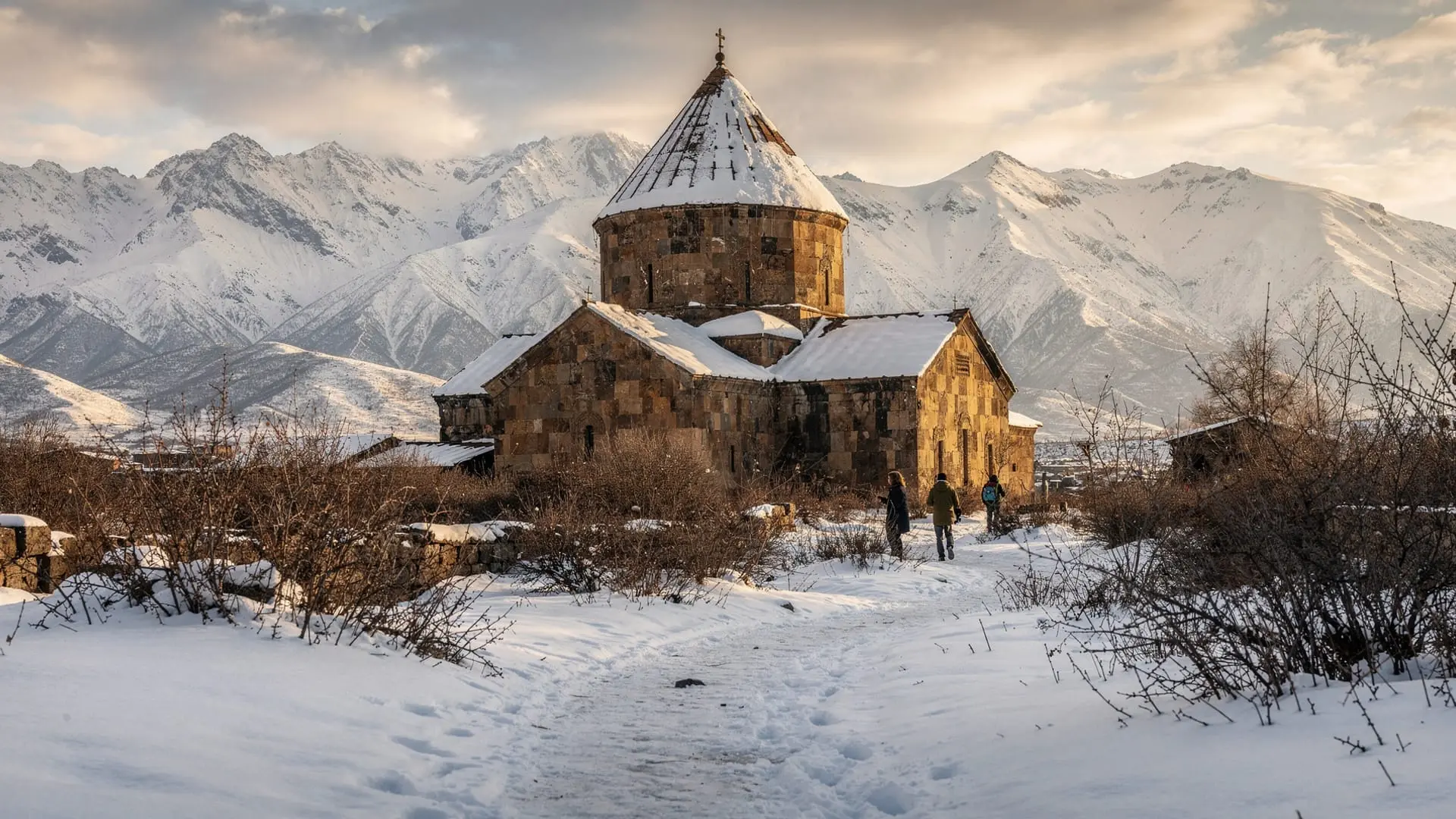
The honest case for visiting Armenia in winter
Most Armenia travel content is written as if the country only exists from May through October. That is reasonable — spring and autumn are genuinely the best seasons for variety, and summer brings the beaches and boat trips on Lake Sevan. But winter Armenia is a real and rewarding option that the tourism industry has been underserving.
The honest case for winter: skiing at one of the cheapest functional ski resorts in the region, monasteries covered in snow that produce photographs nothing like their summer equivalents, an entirely authentic Armenian Christmas on January 6 that has nothing to do with Western commercial holiday culture, prices that are noticeably lower than peak season, and Yerevan at its most local — cafés full of residents rather than tour groups, restaurants where you eat with families rather than other travellers.
The honest case against: some of the best day-trip sites have icy access roads in January–February (Geghard can be slick, the Aragats summit road is closed), the temperature in Yerevan hovers around 0–5°C most days, and the cultural itinerary is reduced compared to the full open season. If your Armenia must-list includes Areni wine tasting on warm evenings, Sevan beaches, or summit hiking on Aragats, winter is not your time.
This guide treats both honestly.
| Where | Yerevan, Tsaghkadzor, Khor Virap, Etchmiadzin, Lake Sevan |
| Cost | 20–28 EUR/day backpacker, 50–75 EUR/day mid-range |
| Time needed | 4–7 days covers the winter-specific highlights well |
| Getting there | Marshrutka, self-drive with winter tyres, or organised day tours |
| Best time | December–March; January–February for peak ski conditions and Armenian Christmas |
What to do in winter
Ski Tsaghkadzor
The centrepiece of winter tourism in Armenia. Tsaghkadzor ski resort is 50 km from Yerevan, accessible by marshrutka or car in about an hour, and offers 27 km of pistes on a genuine alpine mountain. Day pass ~10,000 AMD (~25 EUR), rentals included for ~6,000–8,000 AMD more. See the complete ski resort guide and the prices and passes breakdown.
The resort is open December through March, with January–February being peak season. The skiing is genuinely good for beginners and intermediates. Advanced skiers will cover the marked runs within two days and need off-piste to be satisfied — which exists in powder conditions.
See the monasteries in snow
The monastic heritage that defines Armenia’s tourist identity looks different in winter — often better, in the right conditions. The combination of ancient stone darkened by centuries and fresh white snow is extraordinarily photogenic and carries a weight that the crowded summer version sometimes lacks.
Best winter monastery experiences:
Sevanavank: The 9th-century monastery on Lake Sevan’s peninsula, with the partially frozen or snow-covered lake behind it, is one of the most powerful winter images in the country. The lake sometimes freezes partially at the edges in January–February — extraordinary to see.
Khor Virap: On a clear winter day, the view of Ararat from Khor Virap monastery is actually better than in summer — the winter atmosphere produces clearer air and the mountain’s snowcapped profile is at its most dramatic. The road to Khor Virap is well-maintained and accessible year-round.
Noravank: The red canyon walls above Noravank monastery take on a different character when dusted with snow — the contrast of red and white against blue winter sky is spectacular. Road conditions are generally good but verify before driving in heavy snowfall.
Geghard: The famous cave monastery near Garni is open year-round, but the road can be icy in January–February. Approach with care on a standard car or take a 4WD. Once there, the gorge in winter has an austere beauty entirely different from its summer character.
Experience Armenian Christmas (January 6)
Armenian Christmas falls on January 6 — this is not a curiosity but a theological and historical position. The Armenian Apostolic Church follows the ancient Christian calendar on which Christmas and Epiphany are the same feast day. This is unrelated to the Orthodox/Gregorian calendar difference — it reflects the Armenian church’s early separation from Rome and Constantinople, preserving the original Eastern tradition.
See our full Armenian Christmas guide for the traditions, food, and etiquette in detail. In practice, Yerevan on January 6 and the days around it has a genuinely festive atmosphere: church services at Etchmiadzin and Yerevan’s churches are full (St. Gregory the Illuminator Cathedral especially), families gather for elaborate meals including dolma, gata (sweet bread), and khorovats, and the city has a warmth that the pre-January period lacks.
For travellers interested in experiencing authentic religious culture, attending a Christmas liturgy at Etchmiadzin Cathedral — the mother church of the Armenian Apostolic Church, 25 km from Yerevan — is one of the most distinctive experiences in Armenian cultural tourism.
Practical note: January 6 is a public holiday. Most restaurants and some shops are closed or operating reduced hours. Book restaurants in advance for the evening of January 6.
Book a winter day tour combining Tsaghkadzor skiing and Lake Sevan snow sceneryYerevan in winter: what the city offers
Yerevan in winter strips away the tourist-facing layer and reveals the city as it actually is. This is either a pro or a con depending on what you are looking for:
What’s open: The State Historical Museum, the Matenadaran manuscript repository, the Parajanov Museum, the National Gallery, all the main restaurants and cafés (which are more atmospheric with Yerevan residents in them than with tour groups). The Republic Square fountains are off but the square itself is often covered in a light snow.
What’s different: The evening restaurant scene has a cosier character in winter — Armenians dress up for evening dinners more in winter than summer, and the mix of brandy, mulled wine, and elaborate food at a table with local families has a particular atmosphere.
What’s reduced: Most outdoor activities are limited. The Vernissage flea market operates year-round but is quieter. Day trips to distant sites (Tatev, southern Armenia) require more planning due to road conditions.
Temperature: Yerevan typically sees -2 to 7°C from December through February, with the coldest nights hitting -10°C in rare cold snaps. It rarely snows significantly in the city itself — the elevation (900–1,000 m) is not quite high enough for reliable snowfall in the city, though higher suburbs do see snow.
The snow experience at Mount Aragats
Even without skiing at Tsaghkadzor, the guided snow experience tours to the lower slopes of Mount Aragats represent an excellent winter day out. See the dedicated Aragats winter snow experience guide for full details. The combination of the Armenian Alphabet Monument, Amberd fortress in deep snow, and the Aragats massif above makes for one of Armenia’s most memorable winter photographs.
Book a guided snow experience tour to Mount AragatsWhat is difficult or closed in winter
Tatev Monastery and Wings of Tatev: The cable car runs year-round, but the drive to Tatev (250 km from Yerevan) on the mountain roads of Syunik province requires care in January–February. Snow chains are advisable for the approach road. The monastery itself is open. See the Tatev complete guide for winter logistics.
Geghard Monastery: The road can be icy in deep winter — drive carefully or use a 4WD. The monastery itself is open year-round.
Lake Kari and upper Aragats: Closed from November until late June due to snowpack.
Areni wine country: The Vayots Dzor wine route is technically accessible but most wineries operate reduced winter hours or by appointment only. Noravank monastery and the Areni area are accessible but quieter.
Sevan swimming: Closed. The lake is beautiful but very cold — see the Lake Sevan complete guide for what remains open around the lake in winter, including Sevanavank itself.
Haghpat and Sanahin (Lori): Both remain open and are among the most atmospheric winter monastery visits in Armenia, though the Lori gorge access roads warrant caution in heavy snow — see the Haghpat and Sanahin UNESCO monasteries guide for the full visiting details.
Packing for winter Armenia
Essential:
- Insulated waterproof boots (temperature-rated to -15°C for mountain excursions)
- Thermal base layer (top and bottom)
- Down or synthetic-fill insulated jacket
- Hat covering ears, warm gloves
- Waterproof outer layer (snow and rain)
- Sunglasses (snow glare at altitude)
For ski days:
- Ski/snowboard socks (can buy in resort but bring from home for fit)
- Neck gaiter or balaclava for upper lifts
- Hand warmers for cold days
For city days:
- Smart-casual layer for evenings in Yerevan restaurants (Armenians dress well for dinner)
- Light fleece or wool mid-layer
Budget advantages of winter travel
Armenia is already one of the cheaper destinations in the region. In winter, prices drop further:
- Hotels: 15–25% lower than summer peak in Yerevan; more significant reductions at Lake Sevan (though most lake accommodation closes)
- Guides and tours: Lower demand means more negotiating room on private tour prices
- Flights: Yerevan is reachable year-round from major European hubs (Vienna, Paris CDG, Frankfurt, Athens, Rome FCO, Amsterdam) but winter flights are often significantly cheaper than summer
The budget day figure in Armenia winter:
- Backpacker: 20–28 EUR
- Mid-range: 50–75 EUR
- Comfort: 100–160 EUR
Frequently asked questions about Armenia in winter
Is it safe to drive in Armenia in winter?
Yes, with appropriate preparation. Main roads (M1 to Tsaghkadzor, road to Khor Virap, Yerevan-Gyumri highway) are maintained and usually passable without chains. Mountain roads to sites like Amberd, Geghard, and the higher Tavush sites require more caution and 4WD in heavy snow conditions. Always check conditions before setting out.
When is Armenian Christmas?
January 6. This is both Christmas and Epiphany combined in the Armenian Apostolic calendar. The preceding day (January 5) is Christmas Eve, and the New Year celebrations (January 1, which Armenia also celebrates, having adopted the Gregorian calendar) are separate from the Christmas traditions. Liturgical services on January 6 are open to all visitors at Etchmiadzin Cathedral and Armenian Apostolic churches across the country.
Is Yerevan cold in winter?
By European standards, moderately. January average: -2°C to 5°C, with occasional colder spells. Snow in the city centre is rare but possible. The cold is dry rather than the damp cold of northern European winters, which many visitors find more comfortable. Altitude (900–1,000 m in the city) means clear, bright days are common even in January.
What is the best winter itinerary for 7 days?
Days 1–2: Yerevan (museums, restaurants, optional Etchmiadzin). Day 3: Tsaghkadzor skiing. Day 4: Aragats snow experience. Day 5: Khor Virap and Noravank (road permitting). Day 6: Lake Sevan and Sevanavank in snow. Day 7: Yerevan departure day/additional city time.
Does Jermuk operate in winter?
Jermuk’s spa operations run year-round but at reduced capacity in winter. The waterfall and mineral water gallery are accessible. The town is quieter than summer. For a Jermuk winter spa break, see Jermuk spa and thermal waters guide.
Getting around Armenia in winter
Winter travel logistics in Armenia require some adjustment from the summer model:
Marshrutkas: Continue to operate year-round on most main routes. The Yerevan to Tsaghkadzor route sees increased frequency in ski season. The Yerevan to Dilijan route runs year-round. Services to smaller villages and secondary destinations may be reduced.
Self-driving: Winter tyres or chains are essential from November for mountain routes. The M-10 to Lake Sevan and the M-1 north to Tsaghkadzor are maintained and usually passable. Secondary roads — Amberd access, Geghard road in deep winter, the Selim Pass — require 4WD or chains and judgment about conditions.
GG Taxi in winter: The Armenian taxi app works year-round in Yerevan. For long-distance transfers, negotiate fixed prices — the app handles this but verify the driver has a winter-capable vehicle for mountain routes.
Organised tours: Winter day tours from Yerevan handle all transport logistics and are strongly recommended for first-time winter visitors who want the peace of mind of not having to make road condition judgments.
Checking road conditions before a winter day trip
Because so much of this guide hinges on road access, it is worth being specific about how to actually check conditions rather than guessing. Yerevan accommodation staff are usually the most reliable source — most guesthouses and hotels field this question daily in winter and know current conditions on the routes to Geghard, Amberd, and Tsaghkadzor. Local tour operators and taxi drivers are a second good source, particularly ones who run the route regularly. Armenian road authorities do not maintain a reliably updated English-language road-conditions website, so on-the-ground local knowledge remains more useful than searching online. As a rule of thumb: the main highways (Yerevan–Tsaghkadzor, Yerevan–Khor Virap, Yerevan–Gyumri) are treated and maintained; secondary mountain roads (Garni–Geghard, the Amberd approach, the Goris–Halidzor descent to Tatev) are the ones that warrant a same-day check, especially within 24–48 hours of fresh snowfall.
Food and restaurants in winter Armenia
The Armenian food culture in winter has a character distinct from summer:
Warming dishes: Khashlama (slow-cooked lamb with vegetables), spas (yoghurt-wheat soup), and the various bean and lentil soups that Armenian cuisine does brilliantly — these are winter foods eaten with relish in winter. The grilled meat culture (khorovats) continues year-round but shifts indoors.
Mulled wine and brandy: Armenian mulled wine (wine warmed with spices, often with a clementine) appears in restaurants from November. Armenian brandy (cognac-method aged spirit) is drunk at room temperature or slightly warmed.
Restaurant atmosphere: The best Yerevan restaurants in winter have the warm, amber light and heavy curtain atmosphere that feels genuinely cosy after cold streets. Sherep, Lavash, Sayat-Nova, and Tavern Yerevan all do this well.
Armenian New Year (January 1) and the holiday season
New Year’s Eve is the biggest celebration in Armenia’s secular calendar — and it is thoroughly modern rather than traditional. Yerevan’s Republic Square hosts a concert and fireworks. Restaurants are fully booked weeks in advance. Hotels charge peak rates for December 31 through January 2.
Practical advice: Book accommodation and restaurants for December 30–January 2 at least one month in advance. Prices are higher than any other winter date. If you want a quieter experience, arrive January 3–5 — prices drop immediately and the city is calm again before Armenian Christmas (January 6) adds another round of activity.
Winter vs shoulder season: an honest comparison
| Factor | Winter (Dec–Mar) | Shoulder (Apr–May, Sep–Oct) |
|---|---|---|
| Prices | Lowest of the year (except New Year week) | Moderate |
| Crowds | Minimal | Low to moderate |
| Site access | Some roads weather-dependent | Nearly everything open |
| Photography | Dramatic snow scenes, clear air | Green landscapes, fewer logistics |
| Activities | Skiing added, hiking removed | Full range of hiking and outdoor activity |
| Best for | Budget, skiing, Armenian Christmas | First-time visitors wanting maximum flexibility |
If this is a first Armenia trip and flexibility matters more than a specific winter experience, shoulder season remains the safer choice. If skiing or Armenian Christmas specifically draws you, winter is worth planning around deliberately — our 3-day winter ski itinerary is a practical starting template.