Caving in Armenia: Magellan cave & beyond
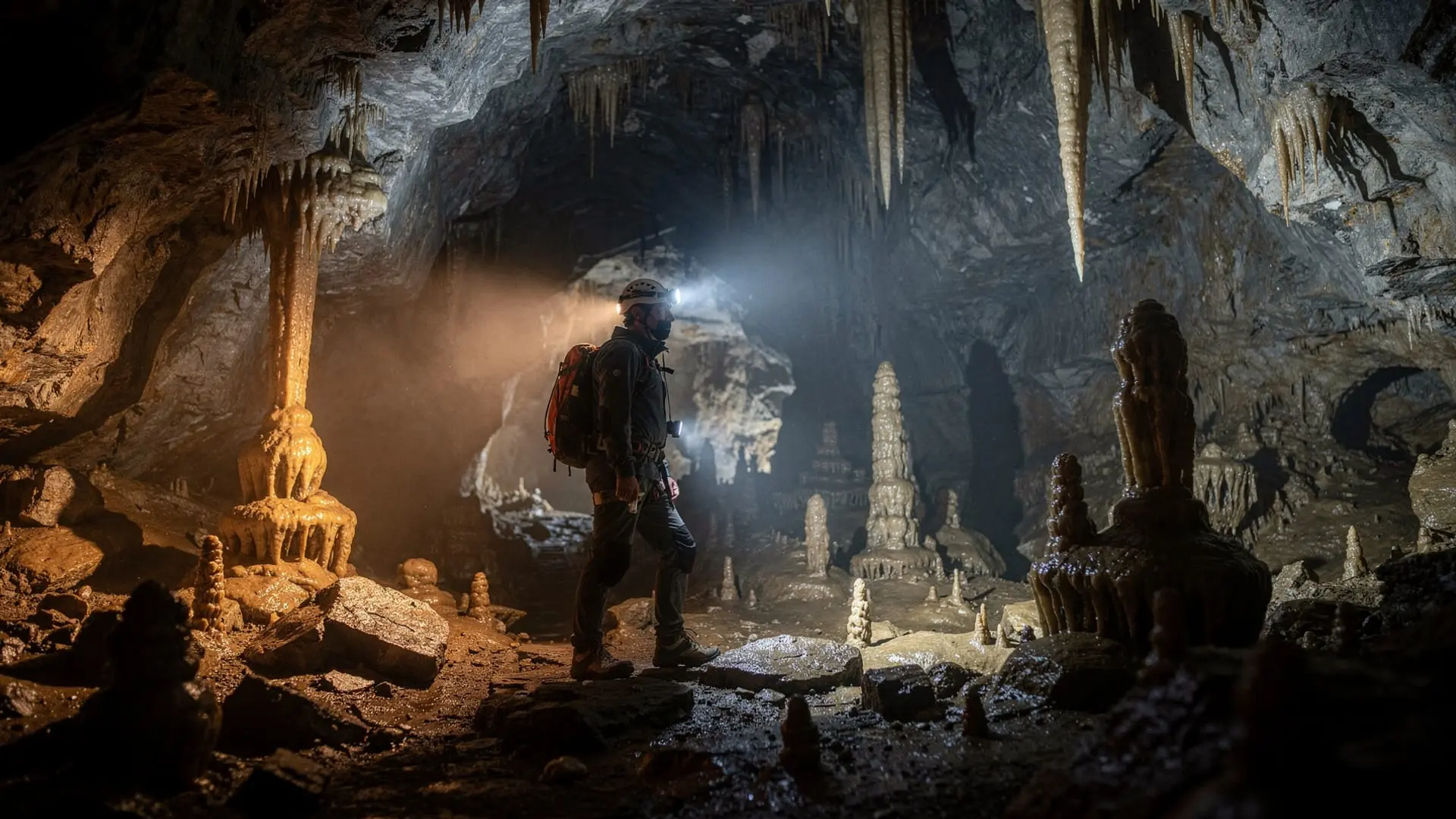
Most visitors come to Vayots Dzor for wine and monasteries, then discover almost by accident that the province also holds Armenia’s only developed show cave. Magellan Cave near Areni is a modest, low-key attraction rather than a spectacular one, but paired with the archaeological Areni-1 site next door it turns a wine-and-monastery day into something genuinely different.
| Where | Magellan Cave, 5 km south of Areni village, Vayots Dzor |
| Cost | around 5,000 AMD (~12 EUR) per person |
| Time needed | 35-minute guided tour; half a day with Areni-1 and Noravank |
| Getting there | Self-drive or organised tour from Yerevan (110 km, ~1.5 hrs); no direct marshrutka |
| Best time | Year-round (12°C inside); book ahead in July–August |
Underground Armenia: a less-explored dimension
Armenia’s geological identity is volcanic — the country sits on the collision zone between the Eurasian and Arabian plates, producing everything from the shield volcano of Aragats to the ancient lava flows of the Gegham highlands. But beneath the volcanic surface, older limestone formations and karst processes have created cave systems throughout Vayots Dzor and Syunik provinces that are only beginning to be systematically explored and documented.
For visitors interested in caving, Armenia currently offers one well-developed tourist cave (Magellan, near Areni), one archaeologically famous cave (Areni-1, the Areni Cave or “Bird Cave”), and a background of more serious cave systems that are accessible only to technical spelunkers with Armenian caving club connections. This guide covers what the tourist experience delivers and where serious cavers can go deeper.
Magellan Cave: Armenia’s tourist caving destination
Magellan Cave is a limestone cave in the Arpa River valley near Areni, in Vayots Dzor province — the same area known for the Areni-1 archaeological site and the Vayots Dzor wine route. The cave was opened to tourists relatively recently and represents a genuine expansion of what the Areni/Vayots Dzor area offers beyond its wine and monastery attractions.
The tour: The standard guided tour of Magellan Cave takes approximately 35 minutes and follows a lit pathway through the main chambers. The cave features stalactites, stalagmites, flowstone formations, and in the wetter sections, active drip formations that are still growing. The lighting is modest rather than theatrical — there is none of the coloured-light spectacle of heavily commercialised European show caves — which works in the cave’s favour aesthetically.
Ticket price: 5,000 AMD per person (~12 EUR) as of 2026.
Group size: Tours run with groups of up to 15–20 people, typically at fixed departure times (usually every 60–90 minutes in peak season). Arrive early or book ahead in summer.
Physical requirements: The tour is accessible to anyone who can walk on uneven ground and does not have significant problems with confined spaces. The lowest sections require bending down briefly. No crawling or climbing is involved.
Temperature: The cave interior is approximately 12°C year-round — bring a layer even in summer. Wet sections can make the floor slippery; wear shoes with grip.
Book your Magellan Cave entrance ticket near AreniThe formation and geology
Magellan Cave formed in a Cretaceous-era limestone massif that outcrops above the Arpa River valley. The limestone was deposited in a shallow marine environment roughly 100 million years ago and subsequently uplifted and folded by the tectonic collision that created the Armenian highlands. Rainwater percolating through the fractured limestone over hundreds of thousands of years dissolved the rock from below, creating the current cave system.
The cave is named “Magellan” by the local operators who developed it for tourism — a name chosen partly for its international recognition value rather than any historical connection. The cave was not known to science until explorers began systematically documenting Vayots Dzor’s geology in the 2000s.
The speleothem formations (stalactites and stalagmites) in the main chambers are in active growth phase — the cave is wet enough that formations are continuing to develop. Some sections show particularly fine crystalline calcite, including a notable flow curtain in the middle chamber that is among the best-developed in accessible Armenian caves.
Combining Magellan with Areni and Noravank
Magellan Cave is ideally positioned for combination with the two other major attractions of Vayots Dzor:
Areni village and wineries: 5 km from the cave. The Areni region is Armenia’s wine heartland, with multiple small wineries offering tastings, and the annual Areni Wine Festival (first Saturday of October) drawing visitors from across the country.
Noravank monastery: 10 km from Areni, Noravank is one of the most dramatically positioned monasteries in Armenia — a 14th-century complex built into a red canyon with near-vertical cliffs on three sides. See Noravank monastery guide.
Areni-1 Cave (the Bird Cave): The archaeologically famous cave that contained the world’s oldest known leather shoe (5,500 years old), the world’s oldest winery (6,100 years old), and human skulls with remarkably preserved brain tissue. This cave is open to visitors, though the experience is informal and varies by season — see below.
Book a full day trip from Yerevan covering Khor Virap, Areni-1 Cave, and Noravank monasteryAreni-1 cave: the archaeologist’s cave
Areni-1 is not a tourist cave in the conventional sense — there are no guided tours, no lighting, and no infrastructure. It is an active archaeological site that has yielded finds of global importance since excavations began in 2007. What it offers visitors is the chance to stand in the entrance of a cave where humans were pressing wine before any recorded Egyptian civilization existed.
Location: In the Noravank canyon, about 1 km before the Noravank monastery entrance gate, on the left of the canyon road.
Access: Walk-in, free, during daylight. The cave mouth is visible from the road — a large opening in the red canyon wall.
What to see: The entrance chamber is substantial but the inner sections are dark, low, and not safely navigable without a torch and knowledge of the layout. The archaeological excavation grid is marked but active digs only occur in summer research seasons.
What was found here:
- A winery with a wine press, fermentation vat, storage jars, and grape seeds dated to 4100 BCE — the oldest wine production evidence yet discovered
- A leather shoe (5,500 years old) in perfect preservation, stuffed with grass — now in Yerevan’s History Museum
- Human skulls placed in deliberately arranged positions, with traces of preserved brain tissue
- Weaving artifacts and pottery spanning thousands of years of continuous use
For a full account of the archaeological significance, see Armenia wine country overview.
Magellan Cave vs Areni-1: which to prioritise
Visitors with limited time in Vayots Dzor often ask which of the two caves matters more. They serve different interests, so the honest answer is “both, if you can” — but here’s how they compare:
| Magellan Cave | Areni-1 Cave | |
|---|---|---|
| What it is | Developed show cave, lit pathway | Active archaeological site, unlit |
| Duration | 35 minutes, guided | 10–20 minutes, self-guided |
| Cost | ~5,000 AMD | Free |
| Appeal | Geology, formations | World’s oldest winery & shoe |
| Physical demands | Uneven ground, one low section | Flat entrance chamber only |
| Best for | Anyone curious about caves | History and archaeology fans |
If you only have an hour in the area, most visitors find Areni-1’s story — a working winery from 4100 BCE — more memorable than the cave formations at Magellan, even though Magellan is the more polished visitor experience.
Where to combine with wine and hiking
Beyond Noravank and the Selim Caravanserai already covered above, Vayots Dzor rewards visitors who stay a full day. The Vayots Dzor wine route links several family wineries within a short drive of Areni, and hikers with an extra afternoon can add the Smbataberd fortress hike, a ridge-top ruin with sweeping views over the valley. Those building a longer trip around wine country specifically may want the dedicated 5-day Armenia wine route itinerary, which uses Areni and Vayots Dzor as its anchor. For the best conditions underground and above ground alike, check the best time to visit Armenia guide — spring and autumn keep the Arpa valley green without the peak-summer crowds at Noravank.
Beyond Magellan: caves for serious cavers
Armenia has a developing speleological community. The country’s karst geology in Syunik and Vayots Dzor conceals cave systems that are still being explored and mapped. For visitors with technical caving experience wanting to go beyond the tourist cave:
Magil Cave (Syunik): One of the most extensive cave systems documented in Armenia, with passages extending to significant depth. Access requires contact with Armenian caving clubs and appropriate technical equipment.
Goravor Cave (Vayots Dzor): A horizontal cave system in the Arpa valley area with moderate technical demands and impressive formations. Some sections have been informally visited by adventure tourists but there is no formal tourist operation.
Armenia Speleological Society: The national body for cave exploration, based in Yerevan. Their website and social media are the best starting points for connecting with local cavers who can advise on access and appropriate expertise requirements.
Practical information for Magellan Cave
- Getting there: 5 km south of Areni village, signed from the main road. Areni is 110 km from Yerevan (1.5 hours by car). No direct marshrutka to the cave — most visitors combine with an organised tour or drive.
- Admission: 5,000 AMD (~12 EUR) per person
- Tour duration: 35 minutes
- Opening hours: Typically 10:00–17:00 in peak season, reduced hours or by arrangement off-season — verify before visiting
- What to wear: Warm layer (12°C inside), non-slip shoes, headlamp useful but not required (tour is lit)
- Photography: Allowed inside the cave
Frequently asked questions about caving in Armenia
Is Magellan Cave suitable for people with claustrophobia?
The main chambers are reasonably large and the paths are well-lit. Brief low sections exist but no prolonged crawling. People with mild claustrophobia generally find it manageable. Those with severe claustrophobia may want to reconsider.
Is Areni-1 Cave the same as Magellan Cave?
No. They are different caves. Areni-1 (the Bird Cave / “Gorge of Eagles” cave) is the famous archaeological site with the world’s oldest winery. Magellan Cave is a separately developed karst cave with speleothems, opened for tourist visits as a separate attraction. They are about 10–15 km apart.
Can I visit Magellan Cave in winter?
The cave maintains a constant 12°C year-round regardless of season. Winter access depends on operator availability — call ahead or check online to confirm tours are running in the specific week you plan to visit.
What other caves are open to tourists in Armenia?
Magellan Cave is currently the only purpose-developed tourist cave in Armenia with regular guided tours. Areni-1 can be visited informally. The development of additional tourist cave operations in Syunik and Vayots Dzor is a topic of discussion in Armenian tourism planning, but no additional sites were operational as of April 2026.
Do I need to book in advance for Magellan Cave?
In peak summer, booking or arriving before tour times is advisable. In shoulder season and winter, walk-ins are generally accommodated. The cave has limited capacity per tour and in July–August the popular afternoon slots can fill.
Can I do Magellan Cave as a day trip from Yerevan without a car?
Yes, though not by public transport alone. There is no direct marshrutka to the cave itself — see the marshrutka guide for how minibus routes generally work in Armenia. Most independent travellers either rent a car (see renting a car in Armenia) or join an organised southern-Armenia day trip that already includes Areni and Noravank.
Is Magellan Cave worth it if I’ve already seen European show caves?
If you have visited heavily developed show caves in Slovenia, France or Spain, Magellan Cave will feel modest — the appeal here is less the cave itself than the combination with Areni-1’s archaeology and Vayots Dzor’s wine country in one uncrowded afternoon.
Vayots Dzor as a destination context
Magellan Cave sits within a province that deserves to be known for much more than a single attraction. Vayots Dzor (Valley of Woe — a name suggesting historical suffering but belied by the extraordinary beauty of the landscape) is the wine heartland of Armenia, the location of Noravank monastery, and the gateway to Jermuk. A visit to the cave is almost always part of a wider Vayots Dzor day.
The Arpa River valley: The river that drains the Vayots Dzor highlands is one of the most scenic river corridors in Armenia. The road from Areni south toward Jermuk follows the Arpa through a series of narrowing gorges, past medieval bridges, and beneath canyon walls that change colour from rose to ochre to dark basalt as you travel.
The Selim Caravanserai: One of the best-preserved medieval caravanserais in Armenia, built in 1332 on the Silk Road pass between the Arpa valley and Lake Sevan. Approached by a highland track (passable in summer with a standard car), the building stands alone at 2,400 m altitude — a stone hall with perfectly preserved interior proportions, sitting in an empty landscape with no other structure visible in any direction. Free to enter, always open. One of the most atmospheric sites in all of Vayots Dzor.
Noravank monastery: 15 km from Areni in a dramatically narrow red canyon. The 14th-century monastery complex, with its two-storey church of St. Astvatsatsin, is architecturally among the most sophisticated in Armenia. The canyon walls rise directly above the monastery — the red rock framing the pale stone buildings.
The Areni-1 Cave archaeological significance in brief
For visitors who want the archaeological context in more detail before visiting Areni-1:
The cave was used by humans continuously from approximately 6200 BCE to 2000 BCE — a 4,000-year period of occupation that encompassed the Chalcolithic (Copper Age) and early Bronze Age. The finds fall into several categories:
Winemaking complex: A complete winemaking installation was discovered in the front chamber — a large flat stone wine press (8 square metres), a clay fermentation vat below it, large storage jars (pithoi), and grape seeds, grape skins, dried grape clusters, and a cup. Dated to approximately 4100 BCE, this is the oldest evidence of winemaking technology in the world, predating Egyptian and Mesopotamian wine production evidence.
Leather artefacts: The leather shoe found in 2008 (5,500 years old, in perfect preservation due to the dry, cool cave environment) was a slip-on moccasin type, stuffed with grass. Its preservation is attributed to the even temperature and low humidity of the Areni-1 cave environment. The shoe is now at the History Museum of Armenia in Yerevan.
Human remains: Several skulls were found placed in deliberate positions, some containing preserved dried brain tissue — an extraordinary preservation that has allowed DNA extraction and analysis. The genetic evidence indicates the people buried at Areni-1 are direct ancestors of modern Armenians.
The site is an ongoing excavation — a joint Armenian-American-Irish team returns periodically for new digging seasons. The implications for the history of human civilisation in the Caucasus are still being worked through in the scholarly literature.