Dilijan: wellness & retreat options
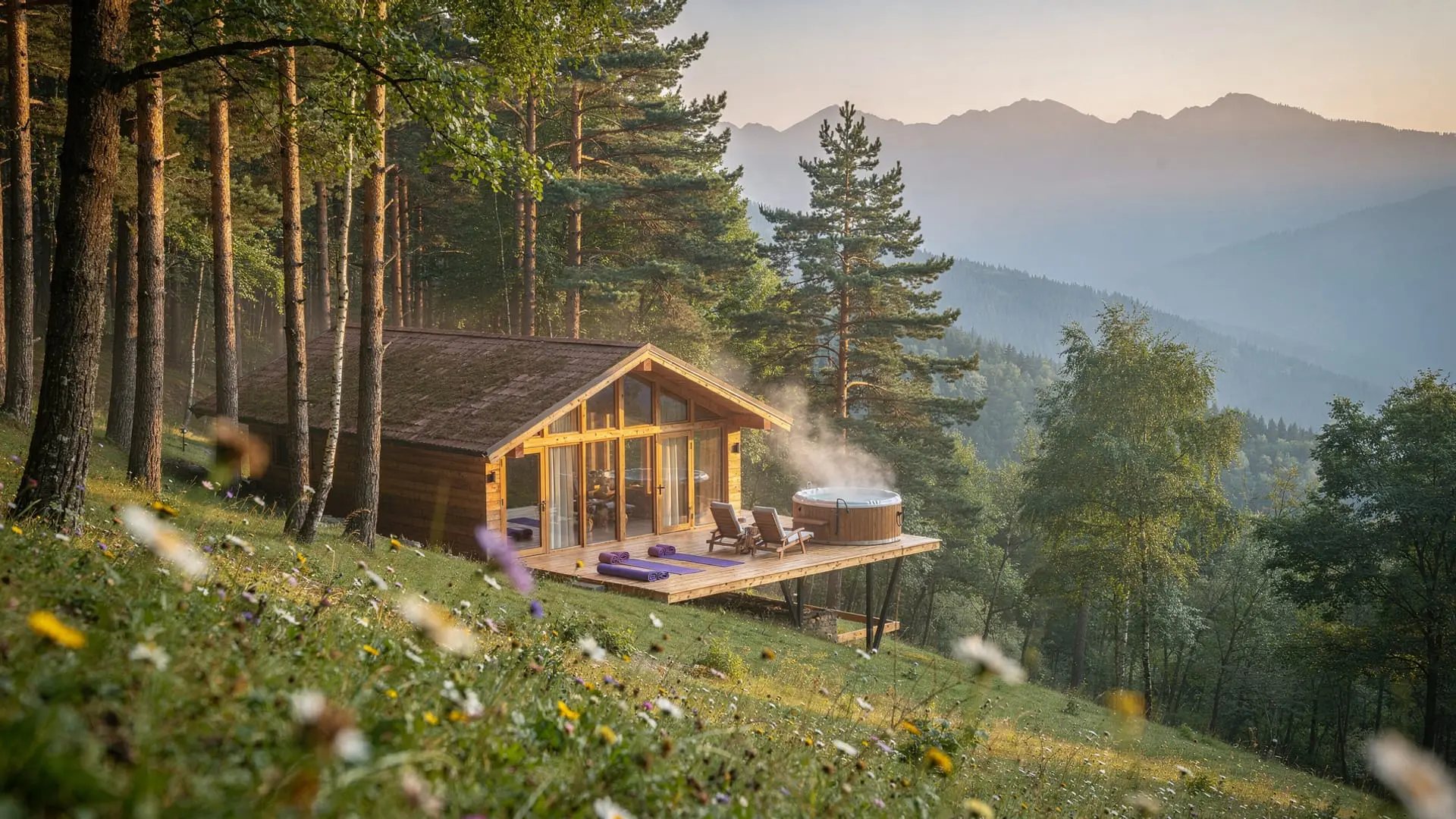
The forest town that breathes differently
Dilijan has been called the “Armenian Switzerland” since the Soviet era — a comparison that refers less to physical resemblance than to the cultural meaning of both places in their national contexts: a mountain town defined by clean air, forest, and the idea of restoration. Soviet-era Armenians came to Dilijan to recover from urban stress, and the forest around the town — dense mixed hornbeam and oak at 1,200–1,600 m altitude — was considered medically beneficial.
| Where | Dilijan, Tavush province, 95 km from Yerevan |
| Cost | Guesthouses 15–40 EUR/night; Hotel Old Dilijan 120–200 EUR/night |
| Time needed | 2 nights minimum; 3–4 nights for a proper rhythm |
| Getting there | Car via Sevan-Dilijan tunnel (1h45) or marshrutka from Kilikia (~2h) |
| Best time | May–October; year-round for a quieter, cooler retreat |
The science supports the intuition. Forest environments at altitude produce genuinely measurable effects: reduced cortisol levels, lower blood pressure, improved sleep quality. The Japanese concept of “shinrin-yoku” (forest bathing) has been validated by controlled studies; Dilijan’s National Park provides exactly the environment those studies describe.
In 2026, Dilijan is not a wellness industry hub in the way that Bali or Thailand are. There are no luxury wellness resorts offering 10-day detox programmes. What it has is something arguably better: genuine natural environment, increasingly thoughtful accommodation, a small yoga and retreat community that has grown around the UWC Dilijan school, and the proximity of Lake Parz and Haghartsin for the combination of natural beauty and medieval spiritual heritage.
The natural wellness offer: forest and altitude
The most significant wellness asset in Dilijan is the national park forest that surrounds it. Dilijan National Park (240 km²) protects one of the largest remaining areas of Caucasian mixed forest in the South Caucasus — oak, hornbeam, beech, ash, and wild fruit trees in a canopy dense enough to filter light into something green and cool on the hottest summer days.
Forest walking: Marked trails ranging from 2 km (Lake Parz circuit) to 12 km (Parz to Goshavank) start directly from the town or from the lake. The National Park entrance (500 AMD) is 3 km from the town centre.
Altitude: Dilijan sits at 1,210 m, the surrounding forest trails reach 1,500–1,600 m. This altitude is high enough to notice the air quality — noticeably cleaner and crisper than Yerevan — without being high enough to cause acclimatisation issues.
Bird sound environment: The forest around Dilijan has one of the richest soundscapes in Armenia — woodpeckers, nightingales, cuckoos, and in early morning, a layered complexity of birdsong that has its own restorative quality. The dawn chorus in May is extraordinary.
See the Lake Parz guide for detailed walking options.
Wellness accommodation in Dilijan
Hotel Old Dilijan Complex
The premier accommodation in Dilijan, built into the 19th-century merchant quarter of the old town. The complex consists of restored stone buildings on a cobblestone street, with rooms that manage to be both historically respectful and genuinely comfortable. The attached spa has a swimming pool, sauna, and massage treatments.
Wellness features: Pool, sauna, forest proximity, quiet old quarter setting Price range: 120–200 EUR per night (higher end for Dilijan) Best for: Couples, small group retreats, visitors wanting a comfortable but historically grounded base
Tufenkian Avan Dilijan
Part of the Armenian Tufenkian Heritage brand (also known for the Tufenkian Avan Dzoraget hotel in Lori), this small boutique hotel in the Dilijan area emphasises Armenian heritage and natural environment. The facilities are more modest than the Marriott-tier but the character and food quality are excellent.
Price range: 80–130 EUR per night Best for: Visitors who want an authentic Armenian character in their accommodation
Smaller guesthouses and apartments
Dilijan has a growing number of smaller guesthouses (15–40 EUR per night) offering rooms in family homes, often with home-cooked breakfasts and direct connection to local knowledge about the forest trails and seasonal activities. These are generally excellent value and the most intimate experience of Dilijan.
Book a full-day tour combining Lake Sevan and Dilijan from YerevanYoga and retreat programmes
Dilijan has a small but genuine yoga and retreat scene, driven partly by the international community around UWC Dilijan (the United World College school opened in 2014) and partly by Yerevan’s growing wellness culture, which periodically escapes the city for forest retreats.
Seasonal retreat programmes: Several Yerevan-based yoga teachers and wellness practitioners run seasonal weekend retreats in Dilijan, typically May–October. These are usually announced through Yerevan wellness community Facebook groups and Instagram accounts rather than through permanent venue websites. Searching “yoga retreat Dilijan” in Armenian wellness communities will find current offerings.
The UWC Dilijan effect: The presence of UWC has brought a cosmopolitan, international culture to the town that has supported the development of small wellness businesses — a couple of yoga studios, a forest therapy guide, and several health-conscious cafés have appeared that would not exist without this community.
Individual retreat: If you want to structure your own retreat in Dilijan — rest, walks, reading, forest time — the infrastructure supports it without formal programming. Book 3–4 nights at a guesthouse, commit to a daily forest walk, eat the excellent home cooking, and let the forest do the rest.
What makes Dilijan different from Jermuk for wellness
This is a genuine choice for wellness-minded visitors to Armenia. See also the Armenia thermal springs guide and Jermuk spa thermal waters for the full spa picture. The comparison:
| Dilijan | Jermuk | |
|---|---|---|
| Primary wellness modality | Forest, altitude, walking | Thermal springs, spa treatments |
| Atmosphere | Cultural, creative, slightly hip | Medical, Soviet heritage, quieter |
| Activities | Hiking, monasteries, culture | Soaking, waterfall, drinking cure |
| Distance from Yerevan | 95 km, 1h45 | 175 km, 2.5–3h |
| Best season | May–October (best), year-round | Year-round |
| Accommodation quality | Hotel Old Dilijan (excellent) | Armenia Hotel (good) |
| Cultural context | Old Dilijan quarter, monasteries | Soviet spa culture |
For most visitors, Dilijan is the better first choice — closer to Yerevan, more culturally interesting, and the forest wellness offer is something genuinely different from what most travellers encounter at home. Jermuk is the right choice for those specifically wanting thermal mineral water and spa treatments. The ideal Armenia wellness itinerary includes both.
Book a private tour to Lake Sevan and Dilijan spa town from YerevanThe Dilijan food scene as wellness
The food in Dilijan deserves mention in a wellness context. The best accommodation in the old quarter, and the traditional restaurants along the main street, serve what amounts to genuinely nourishing food — local dairy (matzoon, the sour Armenian yoghurt, is genuinely excellent here), forest mushrooms and wild herbs collected from the national park, grilled meats from local animals, honey from forest-forage bees, and lavash baked in the traditional tonir oven.
This is not spa cuisine — it is real Armenian food, high in protein and fresh produce, eaten at tables with views of the forested hillside. It is better for recovery and restoration than the processed food of most cities, and it tastes correspondingly good.
Practical planning for a Dilijan wellness stay
Recommended length: 2 nights minimum to actually slow down. 3–4 nights to get into a proper rhythm of morning walks, afternoon reading, forest time.
Getting there: 95 km from Yerevan, 1 hour 45 minutes by car via the Sevan-Dilijan tunnel. Marshrutkas from Kilikia station in Yerevan to Dilijan (~800–900 AMD, about 2 hours). The marshrutka drops you at the Dilijan bus station, 1 km from the old quarter centre.
Combining with Lake Parz: The lake is 7 km from town — an easy taxi or 2-hour forest walk. Budget at least one morning there.
Combining with Haghartsin monastery: 8 km from Dilijan in the national park, reachable by taxi (~1,000–2,000 AMD one way). One of the finest 12th-century monastery complexes in Armenia, set deep in forest. See the Dilijan National Park families guide for child-friendly planning.
Frequently asked questions about Dilijan wellness retreats
What kind of wellness retreat is Dilijan best suited for?
Nature-based restoration — walking, forest bathing, breathing different air, eating well, sleeping well. It is not a medical spa, not a detox centre, and not a yoga ashram. It is a beautiful mountain town where doing less produces more recovery than structured programmes.
Is there a yoga studio in Dilijan?
As of 2026, there are one or two small yoga spaces operating in Dilijan, and seasonal retreat programmes run by visiting teachers. For a permanent, daily-class yoga studio, Yerevan is the better option. For a forest yoga retreat weekend, Dilijan is ideal.
Can I get a massage in Dilijan?
Yes, at Hotel Old Dilijan Complex and at a few other hotels and guesthouses. Book in advance as capacity is limited. The massages are typically traditional Armenian or standard European relaxation massage.
Is Dilijan good for a solo traveller seeking wellness?
Excellent. The town is safe and walkable. The forest trails are well-marked enough for solo walking. The guesthouse culture is warm and welcoming to independent travellers. The combination of solitude in the forest and social meals at guesthouse tables suits solo wellness travel well.
Are there any digital detox retreats in Dilijan?
Not formally. But the combination of limited mobile signal in parts of the national park, the absence of nightlife, and the natural rhythm of forest walks and early nights means that Dilijan naturally tends toward reduced screen time. No structured programme is required.
Can Dilijan work as a short weekend wellness break, or does it need longer?
A weekend (2 nights) works if you manage expectations — you’ll get one full day of forest walking, a good night’s sleep, and a taste of the old quarter, but the deeper restorative effect that guesthouse owners and repeat visitors describe tends to build over 3–4 nights. If time is limited, prioritise one unhurried morning at Lake Parz over trying to fit in Haghartsin, Goshavank, and the Old Town in a single weekend.
Does Dilijan wellness travel work well combined with Yerevan city time?
Yes, and it’s the most common pattern — a few days in Yerevan for museums, food and nightlife, then 2–3 nights in Dilijan as the deliberate slow-down before flying home. The contrast is part of the appeal: Yerevan’s energy makes Dilijan’s quiet feel earned rather than simply the default pace of the trip.
The Armenian concept of rest: “hankisutyun”
Armenians have a word — hankisutyun (հանգստություն) — that translates approximately as “rest” or “quiet” but carries more weight than either English word. It implies a wholeness of rest that involves not just the body but the mind, a state of being at peace with one’s surroundings. The Soviet-era practice of taking a formal rest cure (otpusk in Russian, but hankisutyun in the Armenian cultural inflection) was built around this concept.
Dilijan was explicitly designated as a hankisutyun destination in the Soviet period — a place where urban workers were sent to recover their wholeness. The forest, the air, the mineral spring water available in the town, and the removal from industrial Yerevan were all components of this prescription.
Understanding this concept changes how you approach Dilijan as a traveller. The town is not simply a place to base yourself while ticking off nearby monasteries. It is a place designed, at multiple levels of culture and landscape, for the specific experience of becoming restored.
The intellectual history of Dilijan
Dilijan was not only a physical rest destination. It was also a centre of Armenian intellectual culture:
The composers’ retreat: Soviet-era Armenian composers — including Aram Khachaturian and others — had dachas (summer houses) in and around Dilijan. The combination of forest quiet and the creative community that gathered here in summer produced some of the most significant Armenian music of the 20th century. The Dilijan Composers’ Union retreat buildings still exist in the forest above the town.
Writers and artists: Similar communities of Armenian writers and painters had connections to Dilijan. The town appears in Armenian literature and painting as an ideal of the natural landscape — forested, quiet, generative.
The UWC tradition: The United World College Dilijan has continued this tradition of making Dilijan a place where serious intellectual work and serious physical rest are intertwined. The school’s presence has brought in a new generation who value what the town offers in the same spirit, if different context, as the Soviet-era creators.
Comparing Dilijan with other forest wellness destinations
For visitors who have experience of other forest wellness destinations, contextualising Dilijan helps:
Black Forest, Germany: More developed infrastructure, more manicured trails. Dilijan’s forest is wilder and the wildlife more diverse.
Ijevan and Tavush more broadly: Ijevan (25 km from Dilijan) has a similar forest character and a growing wine culture (Ijevan winery, the oldest continuously operating winery in Armenia). Combining Dilijan with Tavush forest trails extends the forest experience.
Dilijan vs a Turkish mountain village: Turkish Kaçkar region or Bolu forests are sometimes compared. Dilijan’s advantage is the combination of forest and medieval cultural heritage at genuinely high concentration.
Dilijan vs Georgian Borjomi: Borjomi is more developed as a thermal spa destination. Dilijan is less thermal-spring focused but has better forest walking infrastructure and stronger cultural density. The two complement each other well on a Caucasus trip.
Practical planning: guesthouses vs hotels
The accommodation choice in Dilijan significantly shapes the experience:
Hotel Old Dilijan Complex (boutique, 120–200 EUR): Best infrastructure, best food, best location in the old quarter. Suitable for couples or small groups who want comfort and cultural immersion.
Mid-range guesthouses (25–60 EUR): More personal, often with home cooking that outperforms any restaurant, and direct access to local knowledge about the forest and the town. Suitable for solo travellers, budget-conscious pairs, and anyone who prioritises authentic connection.
Rooms in the forest (seasonal cottages, sometimes available via local rental platforms, 40–80 EUR): The most immersive option if you can find them — sleeping surrounded by the national park forest, with birds as your alarm clock, is genuinely different from any hotel experience.
All three categories are available. Booking 2–3 weeks ahead is sufficient outside August; August weekends book out faster.
Building a longer wellness route through northern Armenia
For visitors with more than a few days, Dilijan works well as one stop on a broader northern wellness loop rather than a single-destination trip. Lake Sevan, 30 km south through the tunnel, adds open water and beach time to complement the forest — see the Lake Sevan complete guide for how to combine the two without rushing either. Travellers who want to extend the “hankisutyun” theme further into hiking rather than pure rest should look at the Dilijan National Park hikes guide, which grades routes from the flat Lake Parz loop up to full-day forest traverses. Those building a dedicated wellness itinerary across the whole country will find the Armenia wellness itinerary and the Armenia thermal springs guide useful for sequencing Dilijan’s forest rest against Jermuk’s thermal soaking later in the same trip.
Is a Dilijan wellness stay right for you?
Dilijan rewards travellers who are comfortable with unstructured time. If your idea of wellness travel means a fixed daily schedule of classes, treatments and monitored programmes, the town’s loosely organised, seasonal offer may feel underwhelming — book Jermuk’s sanatoriums instead, or plan ahead to catch one of the periodic Yerevan-organised retreat weekends. If your idea of wellness is simply removing yourself from a city, walking in genuinely good forest, eating well, and sleeping better than you have in weeks, Dilijan delivers that with very little effort required from you.