Best beaches around Lake Sevan
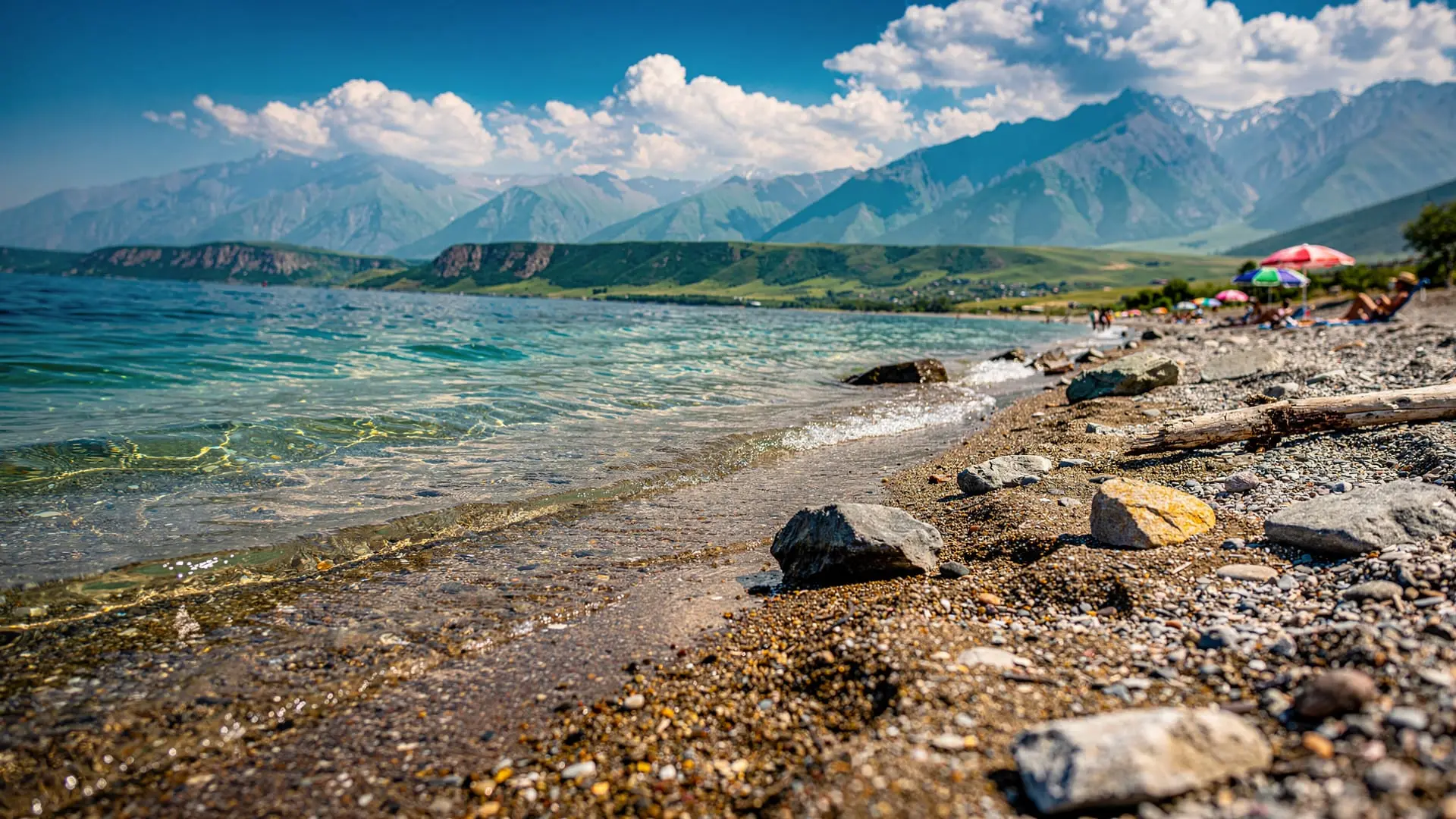
Sun, cold water, and 1,900 metres of altitude
Lake Sevan is not the Riviera. The water temperature peaks at around 22°C in the warmest July and August weeks, the shoreline is a mix of sand and rounded volcanic pebble, and the sun at 1,900 metres altitude is intense enough to burn in under an hour. But for Armenians escaping Yerevan’s summer heat — which regularly hits 35°C in July — the lake is exactly what is needed, and its beaches have been filled with families, musicians, and charcoal smoke every summer since the Soviet era.
For visitors, the beach question is more nuanced than it first appears. The lake has no single “best” beach; instead it has a set of very different shorelines that suit different travellers. This guide covers all four main beach areas with honest assessments of what each delivers.
At a glance
| Where | Western, southern and northern shores of Lake Sevan, Gegharkunik province |
| Cost | Free beach access; sunlounger/changing fees around 200–2,000 AMD |
| Time needed | Half a day for one beach; a full day combined with Sevanavank |
| Getting there | Marshrutka to Sevan town (~700 AMD) or car/taxi to the southern shore |
| Best time | Mid-June to August for water 18–22°C; weekdays for fewer crowds |
Sevan Bay: the most accessible option
Sevan Bay is the stretch of beach immediately west and south of Sevan town — the largest settlement on the lake, sitting at the northwestern end of the western shore. This is where the marshrutkas from Yerevan drop you, and where the most infrastructure is concentrated: sunlounger rentals (typically 1,000–2,000 AMD), cafés, boat trip operators, restaurants serving crayfish and smoked fish, and a promenade of sorts.
The beach itself is a mix of sand and fine pebble, sloping gently into the lake. Water depth increases slowly, making it suitable for families with young children who cannot swim confidently. There are no lifeguards at most sections, so supervision of children is the parents’ responsibility.
The honest drawback: Sevan Bay is crowded from late June through late August. On summer weekends, the atmosphere tips from lively to genuinely congested, with loud music from competing sound systems and little quiet space. If you want a peaceful swim, come on a weekday, or visit in late May or September.
Getting there: Marshrutka from Kilikia station, Yerevan — ~700 AMD, 1h15–1h30. The beach is a 10–15 minute walk from the bus station in Sevan town.
Best for: First-time visitors, families with small children, those without a car.
Tsovagyugh: warmest water, quieter atmosphere
Tsovagyugh is a village on the southeastern shore of the lake, roughly 35 km from Sevan town by road (follow the southern shore road). The shoreline here is broader and generally less crowded than Sevan Bay because it requires either a car or a direct taxi to reach. The water temperature is marginally warmer on this part of the lake — south-facing, more sheltered from the mountain wind — which makes a perceptible difference if you are sensitive to cold.
Several fish restaurants line the road above the beach, and a handful of small guesthouses have emerged in recent years to serve those wanting an overnight stay without paying Sevan town hotel prices. Freshwater crayfish are reliably available here from June through September — the restaurants cook to order and the quality is consistently good.
The beach at Tsovagyugh is mostly pebble with some sand sections, depending on where you set up. It is not manicured, but it is clean and the setting — volcanic mountains reflected in the water — is beautiful.
Getting there: By car (35 km from Sevan town, about 40 minutes along the southern shore road). By taxi from Sevan town (~2,000–3,000 AMD). No reliable marshrutka service to the village itself.
Best for: Swimmers who want warmer water, travellers with a car, a quieter alternative to Sevan Bay.
Book a private Lake Sevan and Sevanavank tour — includes stops at the lake’s best viewpointsShorzha: the camper’s beach
Shorzha is a village and beach area on the southern shore, further east than Tsovagyugh and closer to the point where the lake narrows toward its southeastern outlet. The beach here is longer and more open than at Sevan Bay, with several hundred metres of shoreline that feel genuinely spacious even in peak season.
Shorzha has been a camping destination for Armenian families for generations — you will see tents and awnings, portable grills, and children playing on the beach in configurations that suggest days-long stays rather than afternoon visits. Facilities are minimal: a handful of small kiosks selling snacks and drinks, but nothing resembling the infrastructure of Sevan Bay.
For travellers who want to camp by the lake, Shorzha is the most practical option. The shoreline is free and there are no formal campsite fees, though you should clean up meticulously — litter is a genuine problem here and responsible camping matters for the lake ecosystem.
Getting there: By car (approximately 50 km from Sevan town along the southern shore road). Occasional marshrutkas connect Shorzha village to Gavar (the provincial capital), but direct service from Yerevan does not exist.
Best for: Campers, travellers with a car who want more space, families comfortable with basic facilities.
Hayots Dzor and the northern shore: for those who like solitude
The northern shore of Lake Sevan — the stretch from the Dilijan tunnel exit westward toward Sevanavank — has informal beach access at multiple points along the road, but minimal infrastructure. The water here tends to be cooler than the southern shore, and the shoreline is rockier in many places.
What the northern shore offers is solitude. If you drive north from Sevanavank or west from the Dilijan tunnel and pull off the road at any point where the land opens toward the water, you will likely have the beach to yourself, or nearly so. This is the kind of swimming that rewards patience with a genuine experience of the lake in its natural state.
Hayots Dzor village, on the northern shore, has a couple of small restaurants and a rudimentary beach area that local families use. It is not well-signposted and requires a car with some willingness to explore.
Best for: Independent travellers with a car, solitude seekers, hikers linking lake swimming with a wider northern shore drive.
Water temperature and swimming season
| Month | Avg water temp | Swimming? |
|---|---|---|
| May | 10–13°C | Very cold, possible for the bold |
| June | 14–18°C | Cool but swimmable |
| July | 18–22°C | Best conditions |
| August | 19–22°C | Peak season |
| September | 15–18°C | Cool, still swimmable |
| October | 10–13°C | Cold — wetsuits only |
The lake sits at 1,900 m altitude, which means the UV index is significantly higher than at sea level. Use SPF 50 sunscreen even on overcast days. A hat and sunglasses are not optional luxuries here.
Practical tips for beach visits
Crowds: Weekdays are dramatically quieter than weekends from July through August. If you can visit on a Tuesday or Wednesday, the difference in atmosphere is striking.
Facilities: Sevan Bay has the most — toilets (small fee), sunlounger rental, cafés, restaurants. Tsovagyugh and Shorzha have some. The northern shore has almost none.
Food: Every beach area has vendors selling crayfish, smoked fish, and cold drinks. The crayfish in particular are genuine and fresh — do not miss them. See Sevan trout and the ishkhan ethics before ordering anything listed as “trout.”
Changing rooms: Only at Sevan Bay (basic, fee ~200 AMD).
Camping: Tolerated at Shorzha and informal northern shore spots; not permitted in the vicinity of Sevanavank.
Sevanavank combination: The monastery is 3–4 km from the Sevan Bay beach — easily combined in the same visit. Most visitors do beach in the afternoon and monastery in the morning (better light, fewer crowds). The Tsaghkadzor-Sevan day combo also makes a great circuit.
Frequently asked questions about Lake Sevan beaches
Is Lake Sevan safe for swimming?
Yes, with reasonable caution. There are no formal lifeguards at most beach sections, so supervise children. The lake deepens quickly in some sections. The water is clean — Lake Sevan has no significant industrial pollution near the main beaches — though some algal growth appears in shallower areas in late August.
Are there any entry fees for the beaches?
No formal beach entry fees. Sevan Bay is publicly accessible. You may pay for sunlounger rental or use of changing facilities (small fees, usually 200–500 AMD), but the beach itself is free.
What is the water clarity like?
Excellent. The lake has very low turbidity — its high altitude and cold temperature discourage the algae blooms that cloud lower-altitude lakes. On a clear day you can see 4–5 metres down from the surface, and the blue colour is genuine rather than enhanced.
Can you rent equipment for water sports?
Some vendors at Sevan Bay rent pedal boats and kayaks in high season. There is no sailing club or windsurfing rental currently operating. Stand-up paddleboards appeared at a couple of spots in recent summers.
How do I get to Tsovagyugh without a car?
Take a marshrutka to Sevan town, then negotiate a taxi for the 35 km drive to Tsovagyugh (expect 2,000–3,000 AMD one way). Alternatively, book a private tour that includes southern shore stops.
Sevan beach etiquette and local customs
Lake Sevan’s beaches are primarily used by Armenian families, and the culture around them is specific in ways worth knowing before you arrive:
Music: Armenians love music at the lake. Portable Bluetooth speakers, live duduk players at restaurants, and occasionally proper sound systems are common at Sevan Bay on weekends. If you want quiet, come early in the morning (before 11 AM) or choose the northern shore.
Food sharing: It is completely normal for neighbouring groups at the beach to offer food to strangers. Armenians are genuinely hospitable and beach food — crayfish, fruit, lavash — is meant to be shared. Accept graciously.
Swimming attire: Standard western swimwear is entirely acceptable. Conservative cover-ups are worn by some older Armenian women but younger generations dress as they would on a Mediterranean beach.
Children everywhere: Armenian family culture places children at the centre. Beaches are genuinely child-filled from June through August. If you are seeking a quiet adult-only beach experience, Lake Sevan in peak season is probably not it.
Vendors: Itinerant vendors walk the beach selling smoked fish, crayfish, corn, and cold drinks. The smoked fish from shore vendors is usually genuinely fresh and worth trying.
The Sevan-Dilijan scenic drive
One of the best drives in Armenia follows the northern shore of Lake Sevan from Sevan town through the Sevan-Dilijan tunnel toward Dilijan. The 30-km stretch between Sevan town and the tunnel entrance runs along the lakeside with the water immediately to the right and the Gegham range above to the left.
Several pullouts along this road offer good photography spots, particularly in early morning and late afternoon when the light hits the water at low angles. The monastery of Hayravank, perched on a cliff 25 km from Sevan town, is visible from the road — pull over and look up to the right.
This road is also the route of the classic Sevan-Dilijan day trip from Yerevan: take the northern shore highway, stop at Hayravank, continue to Dilijan for lunch, visit Lake Parz in the afternoon. See Lake Sevan and Dilijan day trip for the full logistics.
Photography at Lake Sevan beaches
The light at Sevan changes dramatically through the day:
Dawn: The most atmospheric moment. The lake is completely still, the surrounding mountains reflect in the water, and the absence of visitors means complete silence. This is when Sevanavank photographs at its best — no crowds, and the rising sun illuminating the peninsula from the east.
Morning: Good light for beach photography before the sun rises too high. The blue of the water is most saturated in morning light.
Midday: Harsh and flat for photography. Good for swimming.
Late afternoon/sunset: The mountains to the west cast long shadows across the water. If clouds are present, dramatic colour is possible. The beach community is at its most animated in late afternoon.
Golden hour: Worth planning around if photography is a priority. Positions on the northern shore or above Sevanavank offer the best angles for golden-hour lake shots.
Choosing your beach: a quick comparison
| Beach | Crowds | Facilities | Best for |
|---|---|---|---|
| Sevan Bay | Busy, especially weekends | Most — cafés, loungers, toilets | First-timers, families without a car |
| Tsovagyugh | Moderate | Fish restaurants, some guesthouses | Warmer water, a quieter alternative |
| Shorzha | Light | Minimal — a few kiosks | Camping, space to spread out |
| Hayots Dzor / northern shore | Very light | Almost none | Solitude, independent travellers with a car |
For a fuller lake overview including Sevanavank monastery and history, see the Lake Sevan complete guide.
A half-day Lake Sevan trip from Yerevan covering beach time and Sevanavank