Lake Sevan: the complete travel guide
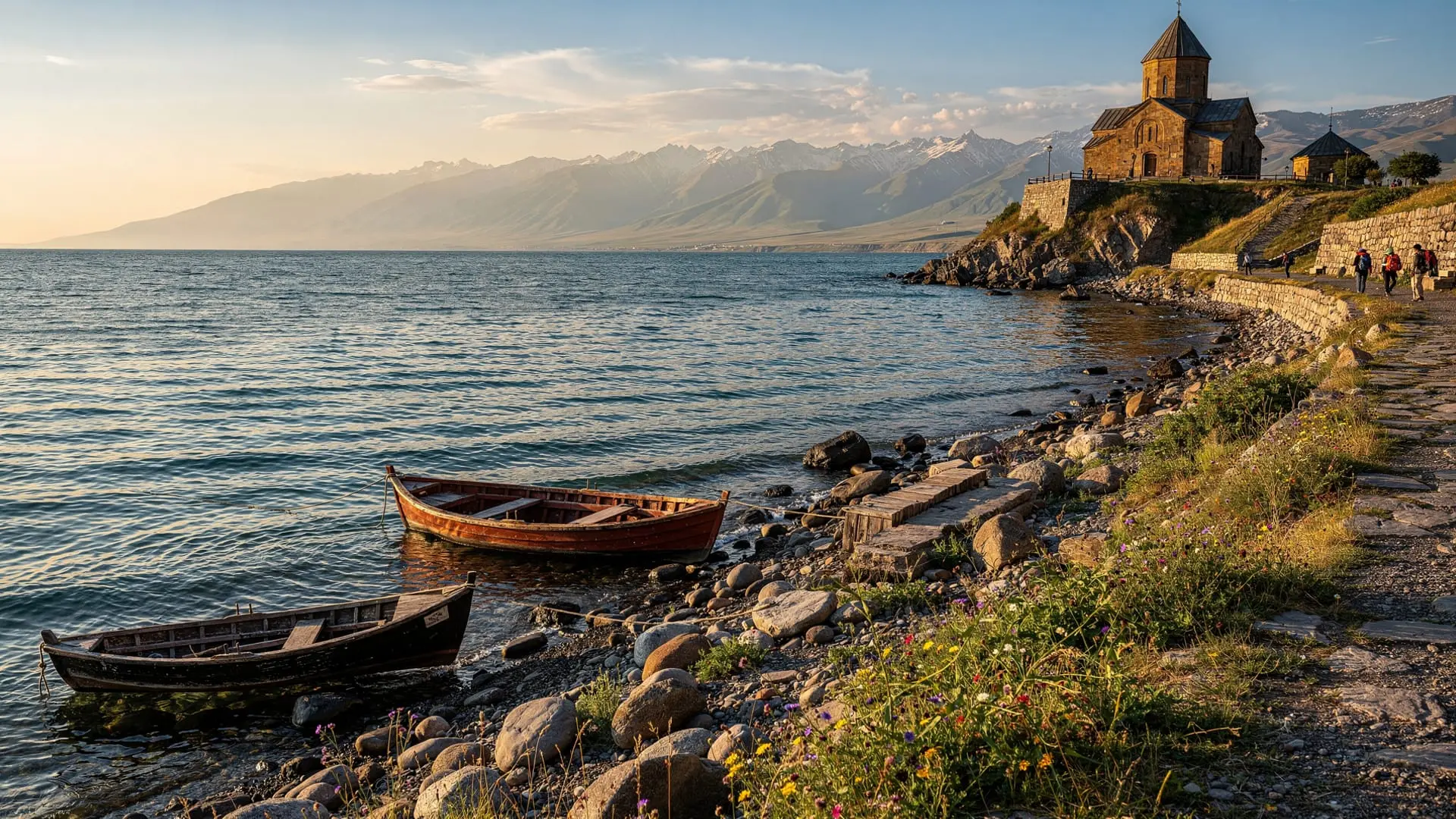
Armenia’s great blue highland
At 1,900 metres above sea level and covering 1,242 km², Lake Sevan is one of the largest high-altitude lakes in the world. The water is a shade of blue so intense it reads almost impossible in photographs — an effect of the altitude, the lack of turbidity, and the ring of dark volcanic mountains that frames it on every side. Armenians call it the “Blue Pearl,” and the name feels entirely earned.
For visitors, Sevan delivers several experiences stacked on top of each other: a medieval monastery on a rocky peninsula, sandy beaches that fill up with Yerevan families from June through August, boat trips across water cold enough to shock even in July, and tables loaded with freshwater crayfish and smoked fish at every roadside restaurant. The lake also carries an undercurrent of environmental complexity — its water level was deliberately lowered by 19 metres during the Soviet era to feed irrigation and hydroelectric projects, a wound the ecosystem is still recovering from. Understanding that story adds weight to the visit.
At a glance
| Where | Gegharkunik province, 65 km east of Yerevan, 1,900m altitude |
| Cost | Free lake access; Sevanavank ~300–500 AMD; boat trip ~2,500–4,000 AMD |
| Time needed | 4–5 hours for a day trip; overnight to see dawn without crowds |
| Getting there | 1h15 by car via the M-10, or marshrutka from Kilikia station |
| Best time | June–August for beaches; May/September for quiet and clear light |
History: a lake shaped by Soviet engineering
Lake Sevan formed in a tectonic basin roughly 25,000 years ago. For most of its history it was a closed ecosystem, fed by 28 rivers and drained by just one — the Hrazdan — making it naturally self-regulating. The Armenian Apostolic Church built Sevanavank on its peninsula around 874 AD. For centuries the monastery sat on an island; the water level was high enough to require a boat to reach it.
The Soviet transformation was dramatic. Between the 1930s and the 1980s, planners diverted the Hrazdan River to power a cascade of six hydroelectric stations and irrigate Armenia’s Ararat Valley. The lake level dropped by 19 metres between 1933 and 1990 — exposing the peninsula on which Sevanavank now sits, revealing large tracts of now-vanished lakeside forest, and causing severe ecological damage to the native fish populations, most critically the ishkhan trout.
Since Armenian independence, the trend has partially reversed. A tunnel completed in 2004 began channelling water from the Arpa River into the lake, and the level has risen nearly 3 metres. It remains far below its natural high-water mark, but the recovery is real. Visitors today see a lake that is healthier than it was in 1990, though the debate over how to balance hydroelectric production, agriculture, and ecological restoration continues.
Sevanavank: the monastery you will actually photograph
The medieval monastery of Sevanavank stands on the peninsula — formerly an island — that juts into the lake’s northwestern corner. It was founded in 874 AD by Princess Mariam, daughter of King Ashot Bagratuni, and housed a monastic community until the 19th century when Tsar Nicholas I ordered the monks removed to rebuild the hermitage as a retreat for the future Alexander II.
Two of the original three churches survive: Surb Arakelots (Holy Apostles) and Surb Astvatsatsin (Holy Mother of God). The approach on foot — roughly 180 steps up from the main road — passes Soviet-era concrete that somehow fails to diminish the view from the top: lake on three sides, mountains all around, and on a clear day the snowfields of Gegham range to the west. The interior of both churches is modest, the stone darkened by centuries of candle smoke, the khachkars outside the walls among the finest in Gegharkunik province.
Opening hours are informal; the site is effectively always accessible, though a small admission fee (typically 300–500 AMD) applies. Budget 45 minutes to an hour.
The beaches: what to expect and where to go
Lake Sevan’s water temperature reaches 20–22°C in July and August — cold by Mediterranean standards but comfortable for swimming after the initial shock. The main beaches are on the western and southern shores, within easy reach of the main road from Yerevan.
Sevan town beach (Sevan Bay): The busiest and most accessible, right in Sevan town, 65 km from Yerevan. Sand and pebble mix, lined with cafés and sunlounger rentals. Gets very crowded on summer weekends. Facilities are functional rather than refined.
Tsovagyugh: A village on the southern shore with a quieter beach and good fish restaurants. The water is slightly warmer here than on the exposed western shore.
Shorzha: Further along the southern coast, Shorzha has a longer stretch of open beach and is popular with campers. Less infrastructure than Sevan Bay but more space.
Hayots Dzor / northern shore: Several informal beach spots along the northern road, fewer crowds, rougher shoreline. Best for those with their own car.
Note: the beaches are seasonal. Outside June–August, facilities are largely closed and swimming is only for the hardy.
Book a private Lake Sevan and Sevanavank day tripBoat trips: seeing the lake from the water
From Sevan Bay, small passenger boats offer 30–45 minute lake tours throughout summer (roughly 2,500–4,000 AMD per person). Larger boats with tables and barbecue setups cater to groups. The boat trip is worth doing simply for the perspective — from the water, Sevanavank’s peninsula looks genuinely like an island, giving you a sense of what the landscape looked like before the Soviet-era water diversion.
Join a group tour combining Sevan boat trip and Sevanavank monasteryWhat to eat at Lake Sevan
The lakeside restaurant scene is built around two ingredients: freshwater crayfish (khetsgetin) and smoked fish. The crayfish — boiled in beer or plain salted water, served by the half-kilo — are genuinely excellent from June through September and cheap by any standard (roughly 2,000–3,000 AMD per 500g). You will see restaurants advertising them on signs from the highway.
Smoked whitefish (sig) and trout are also common. However, the famous ishkhan (endemic Sevan trout) is a different matter — see the dedicated guide on Sevan trout and the ishkhan ethics for a frank account of the conservation situation before ordering.
Good lunch options near the western shore include the cluster of restaurants in Sevan town and along the road to Sevanavank. For a sit-down meal with lake views, Sevan Caravanserai and the terrace restaurants around the marina are reliable mid-range choices.
Getting there
By car: Yerevan to Sevan town is 65 km, about 1 hour 15 minutes on the M-10 highway via the Sevan-Dilijan tunnel. The road is well maintained year-round.
By marshrutka: Minibuses depart Yerevan’s Kilikia bus station (Avtokayan) for Sevan town roughly every 30–45 minutes throughout the day, fare around 700–800 AMD. Journey time is 1 hour 15 minutes to 1 hour 30 minutes. No booking required.
By organised tour: Most day tours from Yerevan combine Lake Sevan with either Tsaghkadzor, Dilijan, or both. See Lake Sevan and Dilijan day trip for a combined itinerary.
When to go
June–August: Peak season. Beaches are open, boats are running, crayfish are available, Sevanavank is at its most photogenic with crowds of Armenian families. Weekends are very busy — if possible visit on a weekday.
May and September: Excellent shoulder season. The water is cool but the light is exceptional, the crowds are gone, and the monastery is quiet. September brings warm days and the beginning of autumn colour on the surrounding slopes.
October–April: Off-season. The lake is beautiful and completely empty. Snow appears on the surrounding mountains from November. The monastery is always accessible but facilities are closed. Temperatures drop sharply — expect 0–5°C in November and below freezing in January.
Combining Lake Sevan with other destinations
Lake Sevan sits at the crossroads of several popular routes:
- Sevan + Dilijan: Continue northeast through the Sevan-Dilijan tunnel (30 minutes from Sevan town) to the forested spa town of Dilijan. This is the classic lakes-and-forest day.
- Sevan + Tsaghkadzor: Head west to the ski resort town of Tsaghkadzor (45 minutes from Sevan). Good combo in both winter and summer.
- Sevan + Noratus: The village of Noratus, 10 km south of Sevan town, has Armenia’s largest surviving khachkar cemetery — over 900 medieval cross-stones in a field above the lake. Worth 30–45 minutes.
- Sevan + Hayravank: The small monastery of Hayravank, 25 km south of Sevan town, sits on a cliff above the lake with one of the finest lake views anywhere on the shore. Quiet, often empty, free.
See the Armenia mountain lakes tour guide for a full multi-lake itinerary covering Sevan, Lake Parz, and Lake Kari.
Practical information
- Admission to Sevanavank: ~300–500 AMD (free for children under 7)
- Boat trip: ~2,500–4,000 AMD per person (haggle gently in low season)
- Marshrutka Yerevan–Sevan: ~700–800 AMD
- Parking at Sevanavank: free, large car park below the steps
- ATMs: in Sevan town (Ameriabank, Inecobank)
- Swimming season: June–August (water temperature 18–22°C)
- Lake altitude: 1,900 m — UV is intense; use sunscreen even on overcast days
Frequently asked questions about Lake Sevan
How far is Lake Sevan from Yerevan?
65 km by road via the M-10 highway. The drive takes about 1 hour 15 minutes in normal traffic. Marshrutkas from Kilikia bus station run the same route in about 1 hour 30 minutes.
Can you swim in Lake Sevan?
Yes, from roughly June to mid-September. The water temperature peaks at 20–22°C in July–August. It is cold even at peak season but perfectly swimmable. Note the altitude (1,900 m) — UV exposure is stronger than at sea level, so sunscreen is essential.
Is it worth staying overnight at Lake Sevan?
For most visitors a day trip suffices. However, staying overnight lets you see the monastery at dawn before the tour buses arrive, and the sunsets over the lake in late summer are genuinely spectacular. Sevan town has several hotels ranging from guesthouses (~20–35 EUR) to mid-range lakeside hotels (~60–90 EUR). Book ahead for July–August weekends.
What fish can you eat at Lake Sevan?
Freshwater crayfish (khetsgetin) are the star — legally fished, abundant, and excellent. Sig (whitefish) and various other lake fish are also served. The native ishkhan (endemic trout) is critically endangered and legally protected; restaurants should not be serving it, but some still do — see the ishkhan ethics guide before ordering.
Is Lake Sevan accessible without a car?
Yes. Marshrutkas from Yerevan reach Sevan town frequently. From the bus station in Sevan town, Sevanavank is 3–4 km (a 10-minute taxi ride or a 40-minute walk along the lakeside). The main beaches are within walking distance of the bus station. Noratus and Hayravank are harder to reach without a car or taxi.
What is the elevation of Lake Sevan?
1,900 metres above sea level. This is roughly the same altitude as some Swiss alpine resorts, which explains the intense blue of the water and the strength of the UV. It also means temperatures at the lake run about 5–7°C cooler than Yerevan throughout the year.
How long should I spend at Lake Sevan?
On a day trip from Yerevan, budget 4–5 hours minimum: 1 hour for Sevanavank, 30–45 minutes for a boat trip, 1 hour for lunch, and time to walk a beach stretch. If combining with Dilijan or Tsaghkadzor, a full 8–9 hour day is realistic.
Wildlife and ecology of the lake
Lake Sevan’s ecosystem is a complex story of native species, introduced species, and ongoing conservation effort. Understanding the ecology deepens any visit to the lake and contextualises the environmental debates that continue to shape its future.
Native fish: Beyond the critically endangered ishkhan trout (covered extensively in the Sevan trout guide), the lake historically contained a diverse freshwater fish community. The sig (Coregonus lavaretus), introduced from northern Russia in the 1920s, is now the dominant commercial fish species.
Introduced species: Soviet-era introduction of signal crayfish (Pacifastacus leniusculus), common carp, and several other species transformed the lake’s food web. The crayfish in particular proved ecologically disruptive to native species but are now a significant part of the local food economy.
Waterbirds: Lake Sevan is an important staging point for migratory waterbirds on the Central Asian flyway. In spring and autumn, the lake hosts Armenian gulls (Larus armenicus), great crested grebes, various duck species, and wading birds. The Armenian gull — an endemic to the lake and the Armenian highlands — is listed as a species of conservation concern with a global population of around 80,000 birds.
The conservation debate: A significant ongoing debate in Armenian environmental policy involves competing priorities: hydroelectric power production (the Hrazdan cascade still generates electricity), irrigation for the Ararat valley (still needed for Armenian agriculture), and lake level recovery for ecological restoration. The lake’s current level represents a politically negotiated compromise between these interests, and environmental advocates argue the balance should shift further toward ecological restoration.
Sevan and Armenian identity
Lake Sevan occupies a specific place in Armenian cultural identity that goes beyond its practical significance. It appears in medieval poetry, in Soviet-era paintings, on the current 500 AMD coin, and in countless works of 20th-century Armenian literature as a symbol of the Armenian homeland — pure, high, enduring.
The poet Yeghishe Charents (1897–1937), one of the greatest Armenian writers of the 20th century, wrote about Sevan with a lyrical intensity that reflected the lake’s hold on the Armenian imagination. His Charents Arch — a monument above the Azat Reservoir between Yerevan and Garni — offers a famous framing view of Ararat, but many of his most affecting lines describe the “blue jewel” of the highland lake.
For diaspora Armenians visiting the homeland, Lake Sevan often carries a particular emotional weight — a landscape they may have heard described by parents or grandparents, seen in photographs, associated with a homeland that existed first in story before in physical reality. If you are travelling with Armenian-heritage friends or family, pay attention to how they respond at Sevan. It reveals something important.
Responsible tourism at Lake Sevan
The lake’s environmental sensitivity means that visitor behaviour genuinely matters here more than at many tourist sites:
Take rubbish with you: Litter is a real problem on the lake’s beaches, particularly at informal camping spots. Plastic waste in the lake harms waterbirds and fish.
Do not order ishkhan: See the dedicated guide for the full ethical context.
Respect the breeding season: The lake’s waterbird colonies use the peninsula and islands in spring (March–May). Keep distance from nesting areas.
Do not disturb the wetland margins: The reeds and shallow margins of the lake, especially on the southern shore, are important habitat. Driving vehicles into these areas is harmful and sometimes illegal.
These are small asks that collectively make a difference to the health of the ecosystem you came to experience.
Which shore should you actually visit?
Most first-time visitors default to Sevan town on the western shore because it’s where the marshrutka and the main highway arrive. It’s the right choice for a first visit — it has Sevanavank, the beach infrastructure, and the boat trips — but it’s also the most crowded. If you have a car and more time, the southern shore around Tsovagyugh and Shorzha trades some convenience for warmer water and far fewer people, while the northern shore toward the Dilijan tunnel offers near-total solitude for those willing to stop wherever the road opens toward the water.
A cross-border tour linking Tbilisi, Lake Sevan and Yerevan for travellers arriving from Georgia