Tsaghkadzor: complete ski resort guide
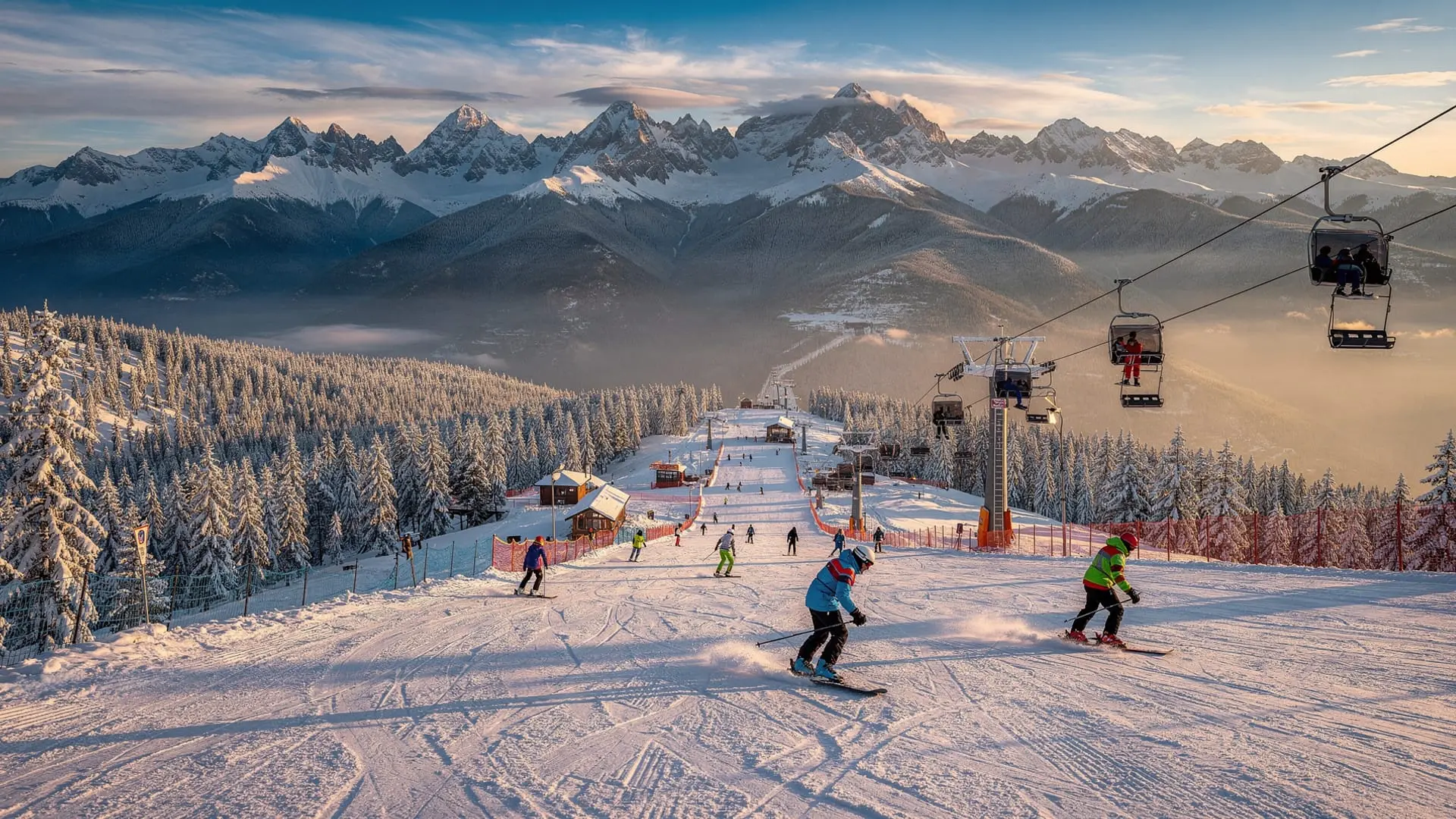
Armenia’s answer to winter tourism
Tsaghkadzor — the name means “Valley of Flowers” in Armenian — is a resort town 50 km north of Yerevan in Kotayk province. In summer it lives up to its name, with wildflowers covering the slopes above 2,000 m and hiking trails leading up toward the Tsaghkadzor peaks. But for the several months each winter when snowfall transforms the landscape, it becomes something entirely different: the only significant ski resort in the South Caucasus open to international visitors, a destination for Armenian families escaping the grey Yerevan winter, and an increasingly interesting option for European skiers seeking something genuinely different.
Tsaghkadzor is not Val d’Isère. It is a modestly scaled resort with 27 km of marked pistes, 5 chairlifts, and the infrastructure of a mid-tier Eastern European ski area — functional, honest, and cheap by western European standards. What it offers is skiing at genuine alpine altitudes (up to 2,819 m at the top lift station), a compact resort village with character, easy access from Yerevan for overnight or day trips, and a surrounding landscape of extraordinary drama. The Kotayk provincial backdrop — Kecharis monastery in the valley, the jagged ridgeline above, Mount Aragats visible to the west on clear days — is simply stunning.
| Where | Tsaghkadzor, Kotayk province, 50 km from Yerevan |
| Cost | Day pass ~10,000 AMD; rental ~5,000–9,000 AMD/day |
| Time needed | A full ski day; 2+ days to properly explore all runs |
| Getting there | Car (1h via M1), marshrutka from Kilikia, or guided day tour |
| Best time | January–February for the most reliable snow |
The mountain: lifts and pistes
Base area altitude: 1,966 m Top lift station: 2,819 m Vertical drop: 853 m Total piste length: 27 km Number of lifts: 5 chairlifts (no surface lifts as of 2026) Piste difficulty split: Approximately 40% beginner/easy, 40% intermediate, 20% advanced
The main lift system accesses the western and northern faces of Tsaghkadzor mountain. The chairlifts are modern by post-Soviet standards — two of the five were significantly upgraded after 2010. Queuing is generally not an issue except on the few peak weekend days in January when the resort is most popular with domestic visitors.
The key runs:
- Long, wide intermediate cruisers on the upper mountain are the resort’s highlight — long, rolling runs with excellent views
- A dedicated beginner area at the base of the main chairlift with gentle slope and snowmaking
- Off-piste powder under the upper ridge after fresh snow — not officially marked but well-known to local skiers
- The long run back to the base village, approximately 7 km in length when conditions allow, is one of the best long cruises at the resort
Snowmaking: Available on the primary beginner and intermediate runs. Natural snowfall typically begins in December and deepens through February before spring melting from mid-March.
Ski passes and prices (2026)
Prices at Tsaghkadzor are a genuine advantage over western European resorts:
- Day ski pass: approximately 10,000 AMD (~25 EUR) for adults
- Half-day (afternoon): approximately 7,000 AMD (~17 EUR)
- Multi-day passes: discounted per day from 3 days onward — check the Tsaghkadzor resort website for current pricing
- Child (under 12) passes: typically discounted 30–40%
- Season pass: available for significant further discount — relevant mainly for residents
For a detailed breakdown of prices including rental rates, see the dedicated Tsaghkadzor ski prices and passes guide.
Book a winter day tour combining Tsaghkadzor skiing and Lake Sevan from YerevanSki and snowboard rentals
Rental equipment is available at the base area from several independent shops. Quality has improved significantly since the early 2010s — most rental shops now offer recent-model alpine skis, snowboards, and helmets (helmets are recommended as a rental option and not included in the basic package at many shops).
Typical rental prices (2026):
- Skis + boots: ~5,000–8,000 AMD per day (~12–20 EUR)
- Snowboard + boots: ~6,000–9,000 AMD per day (~15–22 EUR)
- Helmet: ~2,000–3,000 AMD per day
- Ski poles: typically included with ski rental
Ski school: Lessons are available with local instructors, mostly in Armenian and Russian; English-speaking instruction is possible but requires specific enquiry. Group lessons are inexpensive (typically 5,000–8,000 AMD for a 2-hour session). Private lessons are available at a significant premium.
Getting to Tsaghkadzor
By car: Tsaghkadzor is 50 km from Yerevan, about 1 hour via the M1 highway north through Abovyan and Hrazdan. The mountain road up to the resort is paved but steep — snow chains or winter tyres required in January–February. The drive is part of the experience, with the mountain appearing suddenly above the residential outskirts of Hrazdan.
By marshrutka: Direct marshrutkas run from Yerevan to Tsaghkadzor from Kilikia station (~700–900 AMD, 1 hour 15 minutes). Service is more frequent on winter weekends. Confirm departure times at the station.
Day tours from Yerevan: Many operators offer ski day trips that include transport, a lift pass, and sometimes rental. These are convenient for visitors without a car.
Where to stay
Tsaghkadzor has a range of accommodation that has improved substantially since the resort upgrade investments of the 2010s:
Ski-in/ski-out: The Armenia Marriott Tsaghkadzor (opened 2012) is the best accommodation directly at the slopes, with modern rooms, a pool and spa, and the convenience of walking to the lifts. Rates run 100–180 EUR per night in ski season.
Resort town: Several smaller hotels and guesthouses in the valley below the slope base offer good value — typically 35–70 EUR per night with breakfast. The drive or shuttle to the lifts adds 10–15 minutes.
Day trip from Yerevan: Perfectly feasible given the 1-hour driving distance. Many Armenian families do this rather than staying overnight.
Book a 2-day Armenian winter getaway to Tsaghkadzor with accommodation and guided activitiesKecharis monastery: Tsaghkadzor’s cultural bonus
The monastery of Kecharis, a medieval complex from the 11th–13th centuries, sits in the valley just below the ski base area. It is one of the lesser-known but genuinely interesting monastic complexes in Kotayk province, with well-preserved khachkars and a dramatic setting with the ski slopes immediately above.
Visiting Kecharis adds real depth to a ski trip — it is easy to stop for 30–45 minutes before or after skiing, and the juxtaposition of medieval stonework and modern ski infrastructure, set against a snowy background, is distinctly Armenian.
Off the slopes: what else to do in winter
Snowshoeing: The trails above Tsaghkadzor that are hiking routes in summer become snowshoe routes in winter. Some local operators rent snowshoes and guide winter circuits.
Snowmobiles: Available for hire at the base area on peak season weekends.
Mount Aragats winter experience: The slopes of Aragats, 40 km west of Tsaghkadzor, offer a completely different winter experience — snow on a massive scale, no infrastructure, and true highland wilderness. See the Aragats winter snow experience guide.
Sevanavank in winter: Combining a Tsaghkadzor ski day with a late afternoon visit to Sevanavank monastery on Lake Sevan (20 km south of the resort) is a popular option. The monastery in snow, with the frozen or near-frozen lake behind it, is one of the most atmospheric photographs in Armenian winter tourism.
Tsaghkadzor vs other Caucasus ski resorts
For visitors considering Tsaghkadzor as part of a wider Caucasus winter trip, the comparison with Georgian resorts is relevant. Gudauri (Georgia) is the most developed ski resort in the South Caucasus — larger mountain, more modern infrastructure, and directly accessible from Tbilisi. Tsaghkadzor is smaller but: 1) cheaper, 2) more charming as a resort town, 3) easier to combine with Yerevan city tourism, and 4) more convenient for the Armenia-focused itinerary.
The Tsaghkadzor vs Jermuk winter comparison guide covers the domestic comparison between Armenia’s two main winter destinations.
Frequently asked questions about Tsaghkadzor ski resort
Is Tsaghkadzor good for beginners?
Yes. The dedicated beginner area has a gentle gradient, snowmaking, and good ski school access. The flattest runs are wide and forgiving. Most families bringing children to ski for the first time report good experiences. The resort lacks the extended nursery slopes of large Alpine resorts but has adequate space for learning the basics.
Can I ski Tsaghkadzor without a car?
Yes — marshrutkas from Yerevan run directly to the resort. The bus stop is near the valley base area. For returning late after skiing, confirm the last departure time in advance.
Is the food good at the resort?
Restaurants at the base area serve Armenian food — khorovats, soups, lavash, local beer and spirits. The Marriott has a more refined dining option. Prices are reasonable. The après-ski culture is modest compared to European resorts but exists in a low-key form.
Is Tsaghkadzor suitable for experienced skiers?
Intermediate and advanced skiers will find the on-piste terrain limited after 2–3 days. The resort is best for beginners to intermediates, or for those who want a few ski days combined with broader Armenian cultural tourism. Experienced powder skiers can find off-piste lines after snowfall but should not expect a resort primarily designed for expert terrain.
How cold is it at Tsaghkadzor in winter?
The valley (1,966 m) typically sees temperatures of -5 to -15°C in January–February, with the summit (2,819 m) considerably colder. Dress for proper alpine winter conditions. Frostbite risk exists on the exposed upper lifts in strong wind — face covering is recommended on blizzard days.
Can I rent a complete ski package (transport + pass + rental)?
Yes. Multiple operators in Yerevan offer complete day packages. Compare current prices and inclusions before booking as the packages vary considerably in what is included.
How does Tsaghkadzor’s snow reliability compare to Gudauri in Georgia?
Gudauri sits at a higher average altitude and generally has a slightly longer and more consistent natural snow season. Tsaghkadzor’s core season (January–February) is reliable, but the shoulder months (December, March) depend more on snowmaking to supplement natural cover. For a dedicated multi-week ski trip, Gudauri has the edge on raw snow reliability; for a shorter trip combined with Armenian cultural sightseeing, Tsaghkadzor’s convenience wins.
Is Tsaghkadzor worth visiting outside ski season?
Yes. In summer, the resort transforms into a hiking and mountain-air destination, with wildflower meadows above 2,000 m and trails accessible from the same base area. Kecharis monastery is worth visiting regardless of season, and the town itself retains its Soviet-era resort character year-round.
The resort’s development history
Tsaghkadzor’s ski infrastructure dates to the Soviet era, when the town was developed as a recreation destination for the Armenian SSR. Soviet athletes trained at the resort from the 1970s, and it served as a host venue for cross-country and alpine events during the Soviet sports calendar. The original infrastructure was modest — surface lifts and limited snowmaking.
The significant investment of the post-independence period — particularly in the 2010s — transformed the resort with new chairlifts, improved snowmaking, the Marriott hotel, and general upgrade of the base area. The current 5-chairlift configuration dates from this investment period.
Despite the improvement, the resort retains characteristics of a Soviet-era mountain destination in ways that are charming rather than deficient: the village below the slopes has genuine character rather than being an artificially created resort village, the food culture is Armenian rather than international, and the scale is human rather than overwhelming.
Tsaghkadzor vs Gudauri: the Caucasus ski comparison
For visitors considering both Caucasus ski resorts, the comparison is worth making directly:
Gudauri (Georgia, 2,200–3,307 m, 10+ chairlifts): Armenia’s northern neighbour has a significantly larger ski resort with more vertical, more runs, and better infrastructure for advanced skiing. It has also been through its own development boom and now has several international standard hotels and the associated price increases.
Tsaghkadzor (Armenia, 1,966–2,819 m, 5 chairlifts): Smaller, cheaper, more charming, and culturally richer in its immediate surroundings. The 50 km proximity to Yerevan is a genuine advantage — you can ski in the morning and be in one of the Caucasus’s most interesting cities by evening.
For dedicated ski tourists whose primary purpose is skiing, Gudauri is probably the better choice. For visitors who want skiing as one element of a broader Armenia cultural trip, Tsaghkadzor is ideal.
Snow reliability year to year
A fair question for anyone planning around a specific ski resort far from Europe’s established alpine belt: how reliable is Tsaghkadzor’s snow, really?
Natural snowfall is generally consistent from December through March, with the deepest, most reliable base in January and February. Because the resort sits at relatively moderate altitude by international standards (base 1,966 m, summit 2,819 m), warm spells can occasionally thin the lower-mountain snow in December or March, which is where snowmaking on the beginner and intermediate runs earns its keep. The upper mountain holds snow more reliably given its altitude and northern exposure.
Compared with Gudauri in Georgia, which sits at higher average altitude, Tsaghkadzor’s season is slightly more compressed toward the January–February core. For anyone planning a ski trip around a narrow date window, checking recent snow reports (via Armenian ski forums or the resort’s social media) a week or two ahead of travel is worth the five minutes it takes, particularly for early-December or late-March visits.
The town and its cultural assets
The resort town has a character beyond the ski infrastructure:
Kecharis monastery: The 11th–13th century complex in the valley below the ski area is one of the least-visited but genuinely beautiful monasteries in Kotayk province. The carved decoration on the main gavit rivals Noravank in quality; the khachkars are exceptional; the site is usually almost empty.
Summer hiking: Tsaghkadzor’s ski runs become hiking trails in June through September. The views from the summit station encompass the entire Kotayk highland and, on clear days, the Aragats massif to the northwest.
The Tsaghkadzor-Sevan corridor: The 20 km between Tsaghkadzor and Lake Sevan is one of the more scenic short drives in central Armenia. Combining skiing with an afternoon visit to Sevanavank in snow is a classically Armenian winter day. See the Tsaghkadzor and Sevan day combo guide for full logistics of pairing the two.