Tsaghkadzor vs Jermuk: which winter destination?
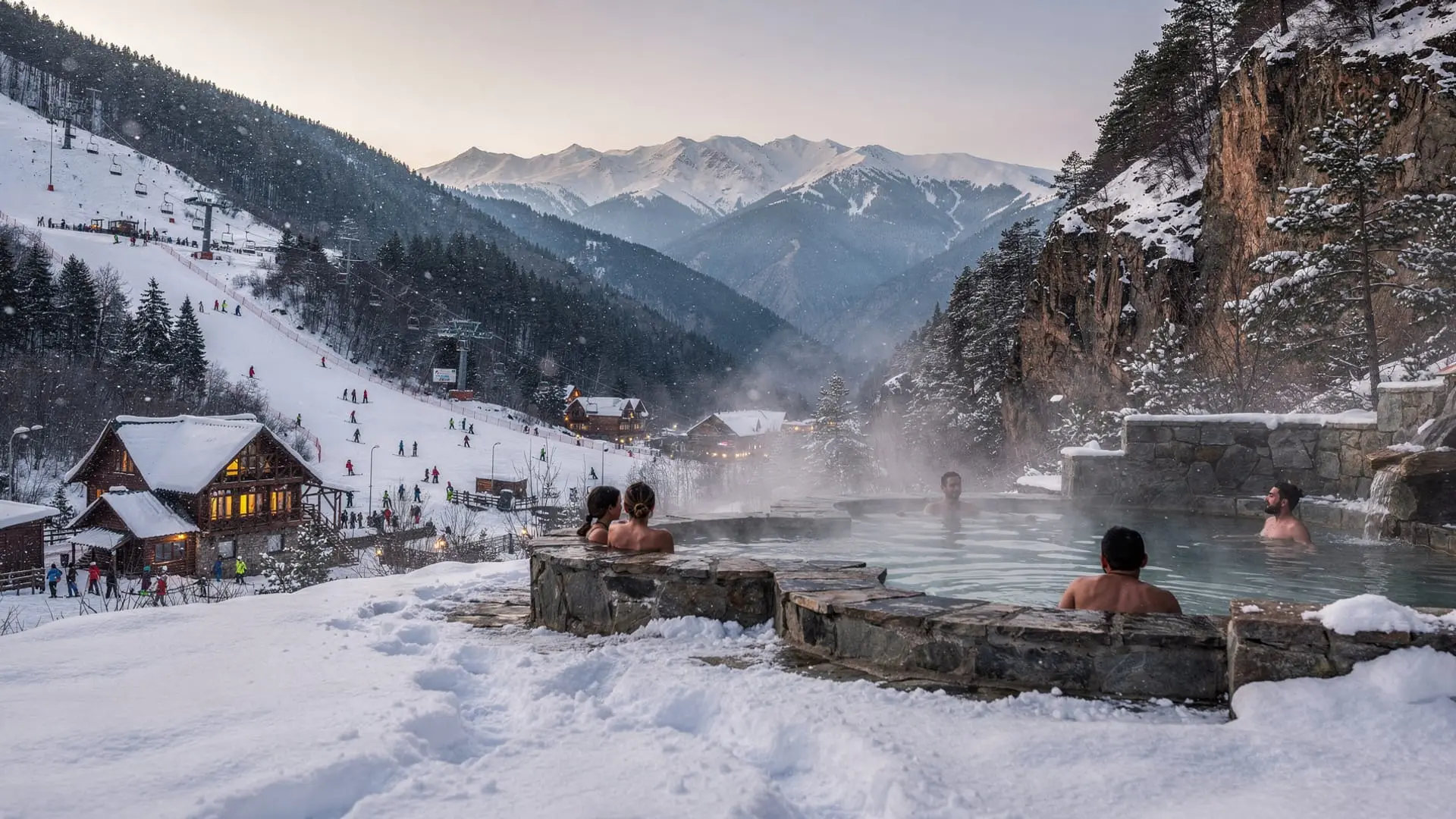
Two completely different kinds of winter escape
Armenia’s two most visited non-Yerevan destinations for winter travel are Tsaghkadzor and Jermuk. They are sometimes presented as alternatives to each other, as if choosing one means rejecting the other. This framing is misleading — they serve fundamentally different travel needs and attract different types of visitors. What they share is: both sit at high altitude (Tsaghkadzor at 1,966 m, Jermuk at 2,080 m), both have active winter seasons, and both can be combined with other Armenia highlights.
This guide compares them honestly on seven dimensions.
| Tsaghkadzor | Jermuk | |
|---|---|---|
| Where | Kotayk, 50 km from Yerevan | Vayots Dzor, 175 km from Yerevan |
| Best for | Skiing, day trips, families | Thermal spa, rest, couples |
| Time needed | Day trip or overnight | 2–3 nights |
| Getting there | Car (1h) or marshrutka | Car (2.5–3h); no direct marshrutka |
Location and access
Tsaghkadzor: 50 km north of Yerevan, 1 hour by car or marshrutka. An easy day trip or overnight stay. The highway connection is good and the resort road is well-maintained (winter tyres/chains needed in heavy snow periods).
Jermuk: 175 km southeast of Yerevan, approximately 2.5–3 hours by car through the Vayots Dzor highlands. No direct marshrutka from Yerevan — you need a car or an organised tour. The road is generally passable in winter but can be affected by snow on the Vayots Dzor mountain sections.
Verdict: Tsaghkadzor wins for convenience from Yerevan. Jermuk’s distance makes it more naturally a 2-night stay.
The ski factor
Tsaghkadzor: This is Tsaghkadzor’s primary winter identity. The resort has 5 chairlifts, 27 km of marked pistes, ski and snowboard rentals, a ski school, and all the infrastructure of a functioning alpine resort — scaled to Armenian rather than European dimensions, but entirely real. See the complete ski resort guide for everything you need to know.
Jermuk: No ski infrastructure. The town sits in a mountain valley and the surrounding highlands receive significant snowfall, but there are no lifts, no organised ski runs, and no rental shops for winter sports. In a heavy snow year, the surrounding hillsides can be accessed by snowshoers with their own equipment, but this is entirely unorganised.
Verdict: No contest. Tsaghkadzor is Armenia’s ski destination. Jermuk is not a ski resort by any definition.
Thermal waters and spa
Tsaghkadzor: The resort has the Marriott Tsaghkadzor’s spa and several hotel spas in the valley, but no natural thermal springs. The spa facilities are standard hotel amenity — pool, sauna, massage — nothing involving natural mineral water.
Jermuk: This is Jermuk’s defining identity. The town sits on one of the most significant natural thermal spring systems in the South Caucasus, with waters emerging at 30–65°C that are rich in bicarbonate, sodium, and calcium minerals. Soviet-era sanatoriums built around these springs still operate — in varying states of renovation — offering everything from simple soaking pools to medical hydrotherapy programmes. See the Jermuk spa and thermal waters guide for the full story.
Verdict: Jermuk is the clear winner for thermal spa experience. Tsaghkadzor cannot compete in this dimension.
Book a Tsaghkadzor winter ski day combined with Lake SevanScenery and atmosphere
Tsaghkadzor: In winter, a classic ski resort atmosphere — slopes, lifts, people in ski gear, après-ski in the base area restaurants, Kecharis monastery providing cultural weight in the valley. The scenery is beautiful but primarily defined by the ski mountain.
Jermuk: A distinctive Soviet-era spa town atmosphere, with a famous waterfall (the Jermuk Waterfall, visible year-round) and the mineral water drinking gallery (where visitors fill cups from different fountain spouts, each from a separate spring). The town’s architecture is a mixture of Soviet sanatorium buildings and newer hotels. In winter, with snow on the gorge walls above the waterfall and hot spring steam rising from the bathhouses, it has a genuinely atmospheric quality.
Verdict: Different atmospheres for different tastes. Tsaghkadzor feels active and sporty. Jermuk feels more contemplative and slightly melancholy in the best possible sense.
Activities beyond the main attraction
Tsaghkadzor:
- Snowshoeing above the resort
- Snowmobiles at the base area
- Kecharis monastery (10 minutes from the ski base)
- Day trips to Sevanavank/Lake Sevan (20 km)
- Combine with Yerevan day trips easily
Jermuk:
- Mineral water drinking gallery (free, open year-round)
- Jermuk Waterfall (15-minute walk from the town centre, spectacular year-round)
- Tatev Monastery combination (90 km from Jermuk, road conditions permitting)
- Selim caravanserai drive in good winter weather
- Noravank monastery (60 km away)
Price comparison
Both destinations are inexpensive by European standards, but Tsaghkadzor has more variable costs due to skiing:
| Category | Tsaghkadzor | Jermuk |
|---|---|---|
| Budget hotel per night | 20,000–35,000 AMD | 15,000–25,000 AMD |
| Mid-range hotel per night | 50,000–80,000 AMD | 35,000–60,000 AMD |
| Main activity (ski pass / spa session) | 10,000–12,000 AMD / day | 5,000–15,000 AMD / session |
| Dinner (mid-range) | 6,000–10,000 AMD | 4,000–8,000 AMD |
| Transport from Yerevan | 700–900 AMD (marshrutka) | ~15,000–25,000 AMD (taxi/car) |
Overall: Jermuk is slightly cheaper for accommodation and food. Tsaghkadzor’s ski costs add up but are still reasonable.
The transport line is the biggest structural difference: Tsaghkadzor’s cheap, frequent marshrutka connection makes it accessible on a shoestring budget, while Jermuk’s lack of direct public transport means most visitors factor in either a rental car or a private driver, adding a meaningful fixed cost regardless of how modestly you travel once there.
Who should choose each destination
Choose Tsaghkadzor if:
- You want to ski or snowboard
- You are travelling with children who will enjoy snow activities
- You only have one day in winter and want to maximise the “white mountain” experience close to Yerevan
- You are combining with a Yerevan city trip as a day or overnight excursion
Choose Jermuk if:
- You want to relax in thermal waters and spa facilities
- You are recovering from illness, injury, or physical exhaustion
- You are interested in Soviet wellness culture and want to experience it in an authentic setting
- You have 2–3 nights to spend and want a slower pace
- You are combining with Tatev monastery (Jermuk is a natural base for Tatev)
Choose both if:
- You have 5+ days in winter Armenia
- Ski two days at Tsaghkadzor, then drive south to Jermuk for two nights of thermal recovery
This is actually an excellent winter Armenia combination: active and relaxing, urban-adjacent and remote, thoroughly Armenian in character.
The road between them
Tsaghkadzor to Jermuk is not a direct or short drive — they are on opposite sides of the country’s central highlands. The most sensible route goes via Yerevan (50 km south to Yerevan from Tsaghkadzor, then 175 km southeast to Jermuk) — a total of about 225 km, 3.5–4 hours. Alternatively, a longer mountain route via Sevan and Vayots Dzor is possible with a car but adds time and winter road uncertainty.
Do not attempt to do both in one day. The logical structure is: Yerevan as base, day trip to Tsaghkadzor, then separate 2-night trip to Jermuk.
Frequently asked questions about Tsaghkadzor vs Jermuk
Can I do both on a one-week winter trip?
Yes, comfortably. Suggested structure: Days 1–2 Yerevan, Day 3 Tsaghkadzor (day trip or overnight), Days 4–6 drive south via Khor Virap/Noravank to Jermuk (2-night stay), Day 7 drive back to Yerevan via Areni. This gives you skiing, thermal baths, monastery visits, and city time in seven days.
Which is better for a romantic couple’s winter trip?
Jermuk — the thermal baths, the waterfall, the quieter atmosphere, and the spa culture create a more naturally romantic setting. Tsaghkadzor is more active/family-ski in character. That said, a night at the Marriott Tsaghkadzor with a spa visit and mountain views has undeniable appeal.
Is Jermuk accessible without a car in winter?
Difficult but possible. There are occasional marshrutkas from Yerevan to Jermuk (via Vayk) that run about 3–4 hours. More practically, hire a car in Yerevan or book a guided tour that includes transport. The driving distance and mountain road conditions make Jermuk genuinely inconvenient without a vehicle.
Does Jermuk have any snow sports?
Not in an organised sense. The surrounding hillsides receive substantial snowfall, and some visitors bring their own snowshoes for informal trekking. Cross-country skiing is theoretically possible on the plateau above town but there are no groomed trails or rental services.
Which town has better food?
Both have limited restaurant scenes by Yerevan standards. Tsaghkadzor has more options due to its larger winter tourist population, including the Marriott dining room and several Armenian grills. Jermuk’s restaurant scene is smaller but reliable — Armenian home cooking at guesthouses, and the sanatorium dining rooms serve hearty Soviet-style meals that are part of the authentic experience.
Which destination is better for a solo traveller?
Tsaghkadzor is generally easier for solo travellers thanks to the direct marshrutka connection and the sociable base-area atmosphere of a working ski resort. Jermuk works well for solo travellers specifically seeking quiet and rest, but the lack of direct public transport makes independent logistics slightly more effort.
Can I see Tatev monastery from either base?
Only from Jermuk, and even then it requires a full day. Jermuk is roughly 90 km from Tatev — a reasonable combination if you already have a car — whereas Tsaghkadzor is on the opposite side of the country from Syunik, making a Tatev pairing impractical from there.
Tsaghkadzor in depth: what the resort offers day visitors
The mountain at Tsaghkadzor breaks down into three experiential zones for day visitors:
The base area: The main activity hub with lift ticket office, rental shops, a handful of restaurants, and the beginners’ slope. This is where families with young children and first-time skiers spend most of their time. The flat valley floor provides a gentle introduction to snow activities even for non-skiers.
The mid-mountain zone (chairlifts 1–3, 2,000–2,500 m): The primary skiing terrain for intermediate skiers. Wide, well-groomed pistes on reasonable gradients, good views west toward Aragats. This is where the resort delivers most of its value.
The upper mountain (chairlifts 4–5, 2,500–2,819 m): Steeper terrain, less groomed, better powder holding after snowfall. Expert skiers spend their day here. The top station offers the most dramatic views — on clear days, all the way to Mount Ararat 80 km to the south.
The gondola (ropeway) is separate from the ski lift system and serves passengers who want the mountain views and summit platform without skiing.
Jermuk in depth: what the town offers day visitors
Jermuk’s day visitor experience breaks down differently:
The mineral water gallery (central town): The free entry experience that most day visitors do first. 45–60 minutes, multiple springs, the atmosphere of local residents doing their morning drinking cure. The most distinctively Jermuk experience.
The waterfall walk: 15–20 minutes on a paved forest path from the town centre. The Arpa River waterfall is best in spring (snowmelt peak) but impressive year-round. In winter, partial ice formations add a dramatic quality.
The spa session: Requires booking at one of the sanatorium facilities. A 1.5–2 hour spa experience including a mineral bath, sauna, and massage. The anchor of the Jermuk day for visitors specifically interested in wellness.
Lunch: A mid-range Jermuk restaurant serves better food than the price suggests — Armenian highland cooking, fresh ingredients, genuinely warm hospitality.
A full Jermuk day (gallery + waterfall + spa + lunch + gallery return visit) takes about 5–6 hours — perfect for a day trip in combination with a Yerevan-based Armenia trip, if you have a car and the energy for the 2.5-hour drive each way.
The two-destination winter week
If you have a full week in Armenia in winter, the ideal structure is to include both destinations rather than choose:
Days 1–2: Yerevan (city exploration, museums, excellent restaurants) Day 3: Tsaghkadzor (ski day from Yerevan, return to Yerevan in the evening) Day 4: Khor Virap and Noravank (southern Armenia monasteries in snow — excellent day trip) Days 5–6: Drive to Jermuk (2.5 hours), 2-night spa stay — gallery, waterfall, spa session Day 7: Return to Yerevan via Areni wine tasting, departure
This 7-day structure gives you skiing, thermal waters, city culture, ancient monasteries in winter light, and Armenian wine — a comprehensive winter Armenia experience that costs approximately 800–1,400 EUR all-in depending on accommodation category.
The Armenia winter proposition for European travellers
For European visitors, Armenia in winter requires a brief recalibration of expectations. It is not a warm-weather escape. It is not a sun holiday. What it is:
A culturally dense destination where the winter removes the tourist overlay and reveals the country as it actually is — a place where people live, where history is ongoing rather than exhibited, where the food and wine and social culture are genuinely excellent, and where the combination of ski resort, thermal spa, and snowcovered medieval monasteries offers an itinerary that does not exist anywhere else in the world in this specific form.
Direct flights from Vienna, Paris CDG, Frankfurt, Athens, Rome FCO, and Amsterdam make Yerevan accessible from most of Europe with minimal connection complexity. Winter flights are typically 30–50% cheaper than summer peak. The country is visa-free for EU, US, UK, and most Western passport holders.
The pitch, essentially: ski in Armenia, soak in volcanic thermal water, eat extraordinary food, stand inside a 9th-century monastery while snowflakes fall on the khachkars outside. It costs less than a week in the Austrian Alps without the skiing.
What each destination costs for a typical trip
Beyond the day-by-day price comparison above, here is what a realistic total trip budget looks like for each, per person:
Tsaghkadzor (1-night ski trip): Hotel (~30,000 AMD), 2-day lift pass (18,000 AMD), rental (13,000 AMD), meals (~15,000 AMD), transport from Yerevan (~1,500 AMD marshrutka round trip) — roughly 77,500 AMD (~190 EUR) for a compact overnight ski trip.
Jermuk (2-night spa trip): Hotel for 2 nights (~50,000 AMD total), spa sessions (~20,000 AMD for two visits), meals (~30,000 AMD), transport from Yerevan (~20,000 AMD taxi round trip, or less if shared) — roughly 120,000 AMD (~293 EUR) for a relaxed 2-night thermal break, reflecting the longer stay and pricier transport rather than higher daily costs.
On a per-night basis, Jermuk is the cheaper destination; the total trip cost is higher mainly because it naturally suits a longer stay and the transport is costlier without a direct marshrutka option.
Making the final choice: a summary framework
If you are still deciding between Tsaghkadzor and Jermuk as your primary Armenia winter destination, this framework helps:
I want to be active: Tsaghkadzor
I want to rest: Jermuk
I have 1 day: Tsaghkadzor (closer, faster)
I have 2–3 days: Jermuk (the full experience needs overnight)
I have children who want snow fun: Tsaghkadzor (ski school, snowmobiles, beginner slopes)
I have elderly parents who want gentle highland air: Jermuk (gentle walking, mineral waters, no ski pressure)
I am a skier first: Tsaghkadzor, and consider adding Gudauri in Georgia
I am a wellness traveller first: Jermuk, and compare with the Georgia Tskhaltubo radon baths
I want to do something genuinely unusual: Both — they are not competing. They are complementary.