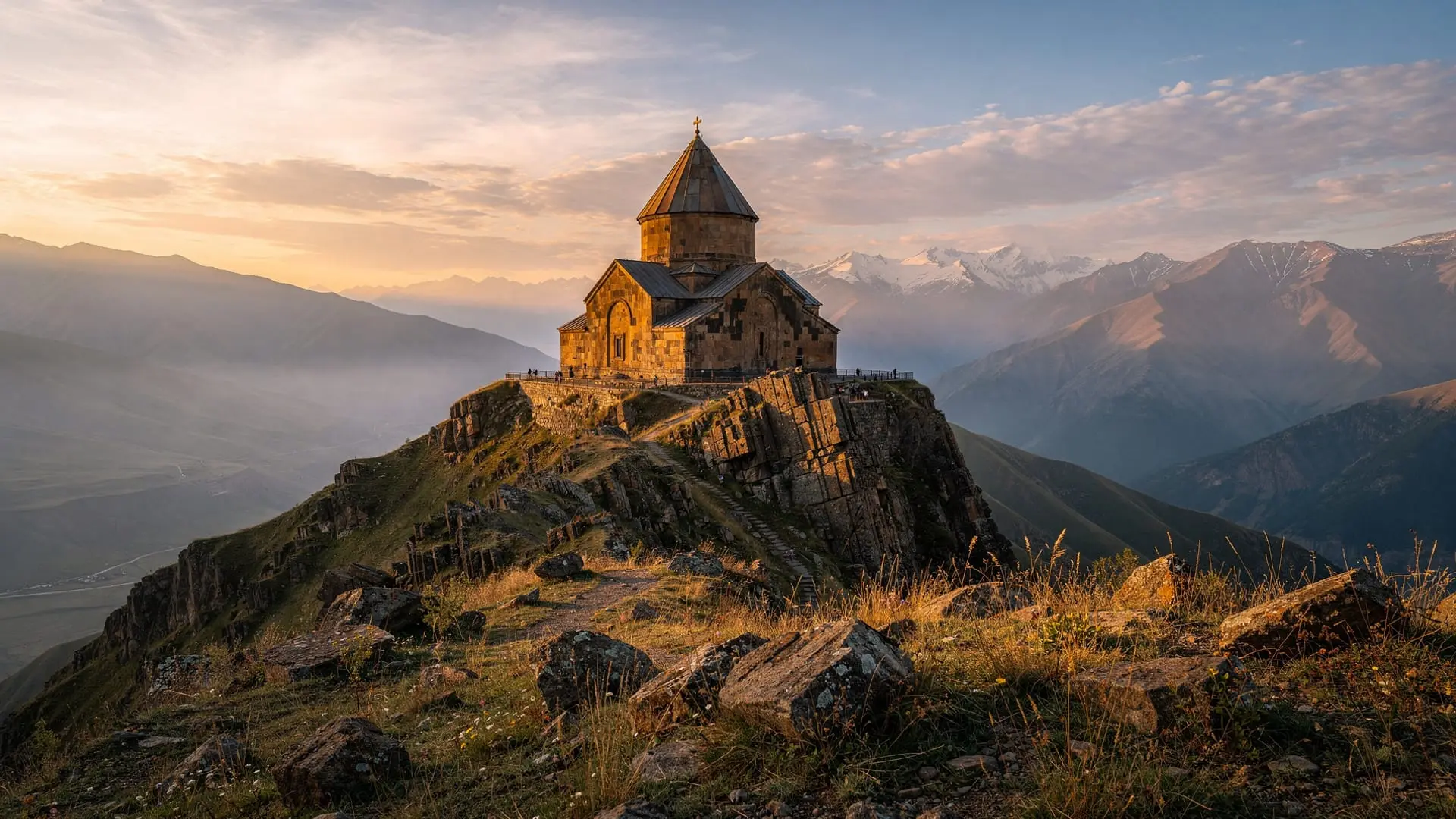
An alpine lake in Armenia’s green north
Dilijan National Park occupies a large swath of the Tavush province in northeastern Armenia — a landscape of beech and oak forest, mountain meadows, and clear rivers that feels distinctly different from the rocky, arid south. Within the park, Lake Parz (meaning “clear lake” in Armenian) is a small circular body of water at around 1,300 metres, ringed by forest. It is primarily known as a recreational destination and hiking trailhead: the lake itself is modest, but the forest setting, adventure activities, and trail connections make it one of the more versatile half-day stops in northern Armenia.
| Where | Dilijan National Park, Tavush, 10 km from Dilijan town |
| Cost | Around 500–1,000 AMD park entry; activities priced separately |
| Time needed | 1–2 hrs (lake only) to a full day (Goshavank hike) |
| Getting there | Car/taxi from Dilijan, marshrutka + taxi, or guided tour |
| Best time | May–October; October for autumn colour |
The key trail from Lake Parz leads through the forest to Goshavank monastery — a 12th-century monastic complex 10 km away in Gosh village. The trail (approximately 10 km one way through mixed forest) is one of the best marked and most scenically consistent hiking routes in the country.
Getting there from Yerevan
By car: From Yerevan, take the M4 highway northeast toward Sevan and Dilijan. After passing through the Sevan–Dilijan tunnel (the fastest route), exit toward Dilijan town. Lake Parz is approximately 10 km from Dilijan town on a paved road through the forest. Total from Yerevan: approximately 95 km, about 1 hour 45 minutes.
From Dilijan town: A taxi from Dilijan to Lake Parz costs around 2,000–3,000 AMD one way. The road is paved and accessible to all vehicle types.
By marshrutka: Regular marshrutkas from Kilikia bus station in Yerevan to Dilijan (approximately 700–900 AMD, about 1.5 hours). From Dilijan, take a local taxi to Lake Parz. Return marshrutkas from Dilijan to Yerevan run until approximately 17:00–18:00.
By guided tour: Several Yerevan operators offer Dilijan and Lake Parz day trips, often combined with Lake Sevan. The hiking route to Goshavank is covered by specialised outdoor tour operators.
What to see and do
The lake and its forest setting
Lake Parz is small — roughly circular, about 200 metres across — and the water is clear and still on calm days. The surrounding forest comes right to the water’s edge on the north side; a cleared area with basic infrastructure occupies the south shore. The visual impact is primarily the forest: dense mixed woodland of beech, hornbeam, and oak that rises steeply from the lake edge.
In October, the autumn colour is outstanding — the beech trees turn gold and amber, and the reflections in the still lake make for particularly memorable photography.
Adventure activities
The site has developed modest adventure infrastructure over recent years:
- Zip lines: two zip line runs over the lake, operated from platforms in the trees above the north shore. Prices approximately 3,000–5,000 AMD per ride
- Rowboats: available for hire on the lake in summer (July–September), approximately 2,000–3,000 AMD per 30 minutes
- Rope course: a basic forest rope course for older children and adults
- Archery: a small archery range on the south shore
None of these facilities are large-scale, and they are relatively uncrowded except on summer weekends. They make Lake Parz one of the more family-friendly destinations in the national park.
The Goshavank hiking trail
The trail from Lake Parz to Goshavank monastery is the main hiking attraction in this part of Dilijan National Park. The full route is approximately 10 km one way through continuous forest, with moderate elevation changes. It is well-marked with blue paint blazes and takes 3–4 hours at a comfortable pace.
The trail passes through some of the most undisturbed forest in Armenia, with occasional clearings and stream crossings. Goshavank, at the end, is a well-preserved 12th–13th century monastery complex in Gosh village with a small museum of medieval manuscripts.
Logistics: if you hike the full one-way trail, arrange transport back to Dilijan or Lake Parz from Gosh village. Gosh village is accessible by road from Dilijan; a taxi return costs approximately 3,000–4,000 AMD.
Shorter options: a circuit of the lake itself (30 minutes) and the lower forest trails closer to the shore (1–2 hours) are available for those not attempting the full Goshavank trail.
Dilijan National Park
Lake Parz sits within a national park covering approximately 28,000 hectares. The park protects one of the largest continuous forest areas in the South Caucasus and has significant biodiversity — bears, wolves, lynx, and over 200 bird species are recorded within its boundaries. Wildlife sightings on the Goshavank trail are possible but not common.
How long to spend
The lake and its immediate surroundings take 1–2 hours for a casual visit including a boat ride or zip line. The Goshavank trail adds 7–8 hours for the full return hike. A middle option — a 2–3 hour forest walk on the shorter lake circuit trails — suits visitors with limited time or less hiking experience.
Combined with Dilijan town (10 km, 20 minutes), allow a full half-day. Combined with Haghartsin monastery (20 km from Dilijan, reachable by road), a full Tavush day is achievable.
Combining with other sites
Dilijan town (10 km): The charming restored old quarter of Dilijan is a natural companion to Lake Parz — visit the town first, then drive up to the lake. See the Tavush province guide.
Goshavank monastery (10 km by trail, 20 km by road): The 12th-century monastery is the trail destination from Lake Parz. Accessible by car via Gosh village for those not hiking. Worth visiting independently as well.
Haghartsin monastery (20 km from Dilijan): Another well-preserved 13th-century monastery in the Tavush forests, accessible by the road north from Dilijan. Often combined with Lake Parz on a Dilijan day.
Lake Sevan (50 km south): The return to Yerevan via Sevan allows a stop at Sevanavank monastery on the way back, making the day a northern arc (Yerevan → Dilijan → Lake Parz → Lake Sevan → Yerevan). See our Lake Sevan–Dilijan day trip guide for how the two fit together logistically.
Dilijan National Park beyond Lake Parz
Lake Parz is one entry point into a much larger network of trails and monasteries across Dilijan National Park. Travellers with more than a half-day should consider extending beyond the lake itself:
Multi-day hiking: the park connects to sections of the Transcaucasian Trail, and Lake Parz is a common resupply or start point for multi-day routes toward Goshavank and beyond. Casual day-hikers should stick to the marked Goshavank trail described above rather than attempting unmarked multi-day sections without local guidance.
Wellness and slower travel: Dilijan’s forest air and cooler summer temperatures (compared to the Ararat plain) have made the area a growing wellness and retreat destination in recent years. If Lake Parz appeals to you as a place to slow down rather than tick off a hike, our Dilijan wellness retreats guide covers the options in more depth.
When Lake Parz gets crowded: on July and August weekends, the zip lines and rowboats can have short queues and the car park fills by mid-morning. Arriving before 10:00 or after 15:00 avoids most of this — the same advice applies whether you’re there for the activities or simply for a quiet forest walk.
Tours and tickets
Entry to Lake Parz: approximately 500–1,000 AMD per person (a national park entry fee; prices may vary seasonally). Adventure activities are priced separately.
For a combined Lake Sevan, Dilijan, and Lake Parz day trip from Yerevan: this day tour covers Lake Sevan, Dilijan town, and Lake Parz with lunch included — the most popular format for a northern Armenia day from the capital.
For a broader Dilijan circuit including Haghartsin monastery: this full Sevan, Dilijan, Haghartsin, Goshavank, and Lake Parz tour covers all the major Tavush sites in a long but comprehensive single day.
Where to stay near Lake Parz
Dilijan town, 10 km away, has the best accommodation options in the Tavush region:
Hotel Old Dilijan Complex — a restored 19th-century caravanserai hotel in the old town, with excellent food and atmospheric rooms. Rates: approximately 35,000–65,000 AMD (85–160 €) per night.
Achajour restaurant and guesthouse — a well-regarded option known for its trout and forest mushroom dishes. Reasonable mid-range rates.
Forest guesthouses near Lake Parz: several small guesthouses and camp sites operate around the lake itself, primarily during July–September. Basic facilities; excellent for early-morning trail starts.
Practical tips
- Best season: May–October; the Goshavank trail can be slippery with leaves October–November and may be snow-covered December–April
- Trail preparation: bring water, snacks, and a downloaded map (AllTrails has the Dilijan NP trails) for the Goshavank hike; mobile coverage is intermittent in the forest
- Bear awareness: bears are present in Dilijan National Park; making noise on the trail reduces encounter risk; the trail is well-travelled and encounters are rare
- Facilities at the lake: toilets, a small café, and the adventure activity station are operational May–September; limited out of season
- Parking: free at the lake car park; the road from Dilijan is single-lane in places
- Autumn visit: the October forest colour is genuinely spectacular — arguably the best single reason to time an Armenia trip to this month
Frequently asked questions about Lake Parz
Is Lake Parz worth visiting without doing the Goshavank hike?
Yes. Even without the full hike, the lake and forest setting are pleasant for a 1–2 hour visit, especially with children. The zip lines and rowboats add activity for families. However, if you are a hiker, the Goshavank trail elevates the visit from pleasant to excellent.
How difficult is the hike from Lake Parz to Goshavank?
The trail is rated moderate — 10 km one way with moderate elevation changes. No technical sections. Suitable for reasonably fit walkers with proper footwear. Not suitable for young children without significant hiking experience or for visitors with mobility limitations.
What is the best season for the Goshavank trail?
May–June (lush forest, clear streams) and September–October (autumn colour) are the peak seasons. July–August works but is warmer. The trail is not recommended in winter due to snow and icy conditions.
Can I do the Lake Parz to Goshavank hike independently?
Yes. The trail is marked with blue paint blazes and is well-described on AllTrails and in several Armenia hiking guides. Download the GPX track before setting out as mobile coverage in the forest is unreliable. Arrange return transport from Gosh village in advance.
Is there a café at Lake Parz?
A small café operates on the south shore from May to September, serving basic Armenian food — khorovats, lavash, salads, cold drinks. Outside season, the café is closed and there are no food services at the lake itself.
Can I swim in Lake Parz?
Swimming is not common at Lake Parz — the lake is small, the water is cold even in summer (typically 14–18°C), and the facilities are not oriented toward swimming. Lake Sevan (50 km south) has designated beach areas with warmer surface water in July–August.
How does Lake Parz compare to Haghartsin monastery for a Dilijan day?
They’re complementary rather than competing — Lake Parz is a forest and activity stop, Haghartsin is a historical monastery stop, and both are reachable from Dilijan town within 20 minutes. Most well-planned Dilijan days combine the town itself with one or both, rather than choosing between them.