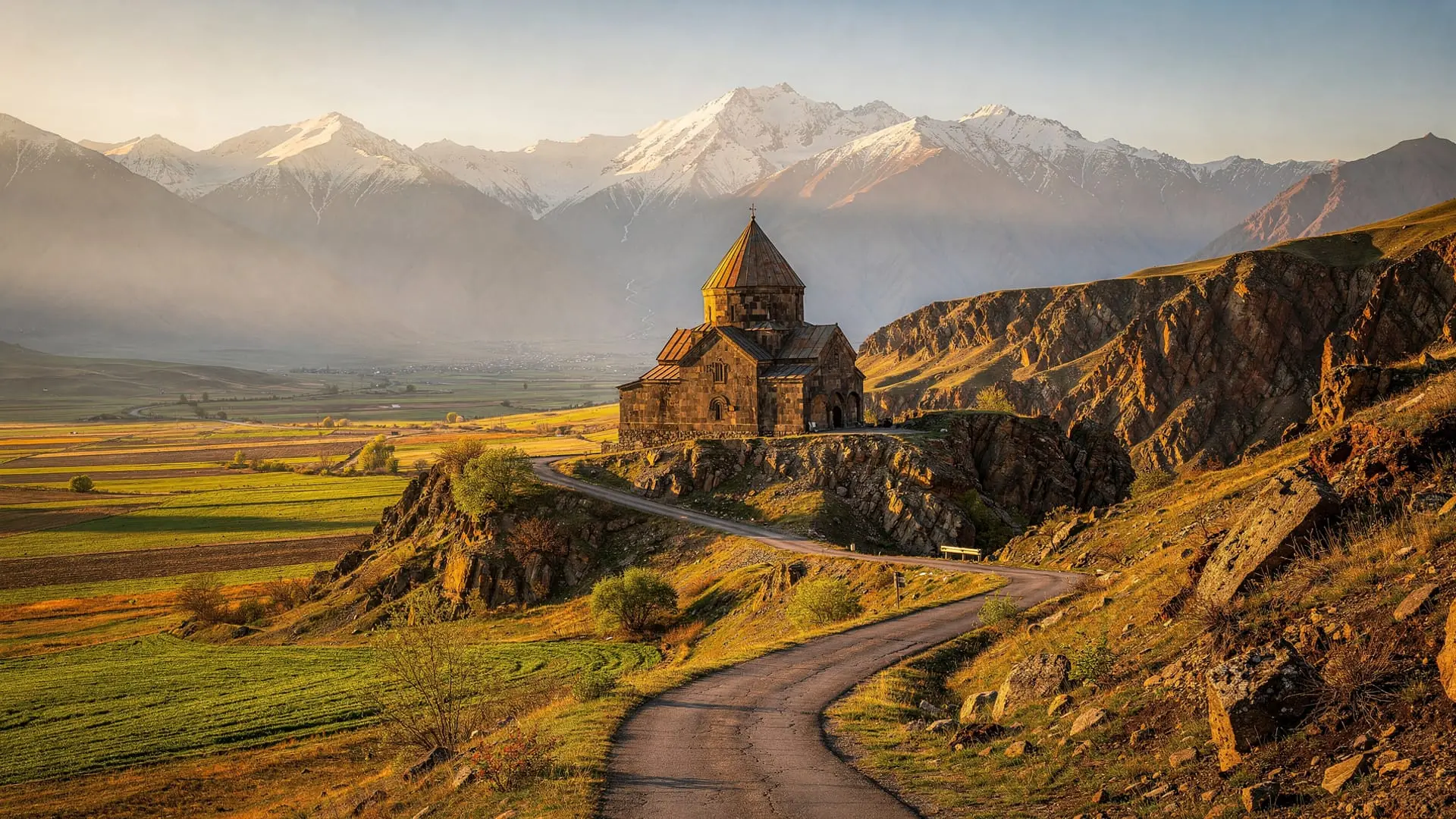
Armenia’s blue pearl — mountain lake and ancient monasteries
Gegharkunik is the province that Armenians simply call “Sevan” — the name of the great alpine lake that dominates it. Lake Sevan is Armenia’s most cherished natural feature: 1,240 square kilometres of deep blue water at 1,900 metres altitude, ringed by mountains that rise to 3,500 metres on the northern shore. On a clear summer day, with the lake impossibly blue and the Geghama mountains catching clouds to the south, it is one of the most beautiful places in the Caucasus.
The lake has been under ecological pressure for decades — Soviet-era water diversion lowered the water level significantly, and efforts to restore it are ongoing. Its shores are now more accessible than they were a generation ago, and summer brings Yerevanites in their tens of thousands to the beaches, particularly around Sevan town and Tsaghkadzor on the western shore.
But Gegharkunik is more than a beach destination. Sevanavank monastery, perched on a former island now connected to the shore by a narrow isthmus, is one of the most-visited sites in Armenia. The Noratus khachkar cemetery — a field of over 900 medieval cross-stones on a hillside above the lake — is arguably the finest collection of khachkars in existence. Hayravank, a smaller monastery further along the southern shore, is quieter and often overlooked. And through the lake district runs the Sevan–Dilijan tunnel (3.4 km), a quick route connecting Lake Sevan to the forested Tavush province beyond.
| Where | Gegharkunik province, around Lake Sevan, ~65 km from Yerevan |
| Cost | Sevanavank and Hayravank free; Noratus admission modest, boat trips priced separately |
| Time needed | 1–2 days |
| Getting there | Car (~1h15) or marshrutka from Yerevan to Sevan town |
| Best time | Jun–Sep for swimming; Sep–Oct for light and fewer crowds |
Geography and getting there
By car: Sevan town is 65 km from Yerevan on the M4 highway, approximately 1 hour 15 minutes. Gavar (provincial capital) is 1 hour 20 minutes further around the lake. The lake circuit road (M10) rings most of the shore and is generally well-surfaced.
By marshrutka: regular services from Yerevan to Sevan town (approximately 1,200–1,500 AMD, 1.5 hours). Connections around the lake are less frequent.
Via Dilijan tunnel: the 3.4 km Sevan–Dilijan tunnel connects the western shore of Lake Sevan to the town of Dilijan in Tavush province in minutes — making the combination of Lake Sevan and Dilijan a logical single-day or overnight trip.
What to see in Gegharkunik
Lake Sevan
The lake itself — walk the shore, take a boat trip, swim in summer (water is cold even in July, around 18–20°C). The western shore around Sevan town and the Sevanavank peninsula has the most accessible beaches and tourist facilities. The northern shore is wilder and less visited. See /destinations/lake-sevan/.
Sevanavank monastery
Two 9th-century churches on a rocky promontory jutting into Lake Sevan — the main Arakelots church and the smaller Astvatsatsin. The monastery was founded in 874 AD. The view from the church terrace over the full sweep of the lake is exceptional. A steep flight of steps (approximately 120) leads from the road to the monastery. Open daily; no entry fee. See /destinations/sevanavank/.
Noratus khachkar cemetery
A hillside cemetery above the village of Noratus, 20 km south of Sevan town, containing over 900 medieval cross-stones (khachkars) in various states of preservation. Khachkars are carved stone stelae unique to Armenian culture — each design is different, each a piece of individual artistry executed in basalt or sandstone. The cemetery spans roughly 400 years of medieval production. The UNESCO description of khachkars as “an expression of the Armenian identity” is borne out here in extraordinary concentration. See /destinations/noratus-cemetery/.
Hayravank monastery
A small, quiet monastery on a rocky headland on the southern shore, easily combined with Noratus. Less visited than Sevanavank — you may have it to yourself. The lakeside setting, with the water directly below the monastery garden wall, is beautiful. See /destinations/hayravank/.
Sevan trout (ishkhan)
The indigenous Sevan trout (ishkhan, “prince” in Armenian) is a protected species and cannot be caught commercially. However, farmed ishkhan is available in restaurants around the lake and is considered one of Armenia’s great culinary experiences — lightly smoked, grilled over charcoal, or simply poached. Restaurants in Sevan town are among the best places to try it.
Best base
Sevan town has the most accommodation and services and is the most practical base for a lake-centred visit. Several mid-range hotels and guesthouses within walking distance of the Sevanavank peninsula. Dilijan (via the tunnel) is an excellent base for combining lake and forest.
How long to spend
One day from Yerevan: Sevanavank in the morning (crowds arrive around 11:00 — be there by 09:30), Noratus cemetery and Hayravank in the afternoon, optional boat trip or Sevan trout lunch.
Two days: add Noratus and the northern shore on day two. With a car, the full lake circuit (130 km) passes multiple small monasteries and viewpoints. Combine with Dilijan via the tunnel for the ideal two-day itinerary.
Sample 2-day plan
- Day 1: Yerevan → Sevanavank (09:30, before crowds) → Sevan town lunch (ishkhan) → Noratus khachkar cemetery → Hayravank → overnight Sevan
- Day 2: lake circuit drive → Dilijan tunnel → Dilijan town and forest walk → Haghartsin monastery → return Yerevan
Gegharkunik’s seasons compared
| Season | Lake temperature | Crowds | Best for |
|---|---|---|---|
| Jun–Sep | Up to ~20–22°C (still cold to some) | Peak in Jul–Aug weekends | Swimming, beaches, boat trips |
| Sep–Oct | Cooling, no swimming | Fewer, golden light | Photography, Noratus, quiet Sevanavank |
| Nov–Mar | Cold, sometimes frozen shore ice | Lowest | Monasteries only; dress warmly |
The western shore vs the northern shore
Most visitors only see the western shore, around Sevan town and the Sevanavank peninsula — it has the beaches, the restaurants, and the easiest access from Yerevan. The northern shore, by contrast, is far less developed: quieter beaches, fewer facilities, and villages that see relatively few foreign visitors. For travellers who have already done the standard Sevanavank–Noratus circuit and want a second, quieter day at the lake, driving the northern shore road is a worthwhile detour, particularly with a rental car. See our renting a car in Armenia guide for logistics.
Combining with Tsaghkadzor
Tsaghkadzor, Armenia’s main ski resort town, sits about 30 km west of Sevan on the far side of a mountain pass, making it a natural third stop for travellers with a car and a bit more time — a Sevan–Tsaghkadzor combination works well either as a summer day (cable car up the mountain for the view) or as a winter pairing (skiing plus the frozen lake). See our Tsaghkadzor and Sevan day combo guide for a suggested itinerary.
Tours covering Gegharkunik
For a group tour with a boat trip included: group tour to Lake Sevan with Sevanavank, boat trip, and leisure .
For a private tour adding Noratus and Hayravank: private tour to Lake Sevan, Noratus, Hayravank, and Sevanavank .
Frequently asked questions about Gegharkunik
Is Lake Sevan safe to swim in?
Yes — the water is clean and the lake is popular for swimming in summer. Water temperature peaks at around 20–22°C in August; it can feel cold even then for those used to warmer seas. The best beaches with sandy or pebble shores are on the western and southern shores around Sevan town. No sharks, no jellyfish, no dangerous currents — just cold, clear mountain water.
How many steps lead up to Sevanavank?
Approximately 120 steps connect the road-level car park to the monastery church terrace. The climb takes 5–10 minutes and is straightforward for most visitors. The view from the top over the lake is the reward.
What is a khachkar?
A khachkar (literally “cross-stone” in Armenian) is a carved stone stele unique to Armenian culture. Each is different — a central cross elaborated with geometric interlace, pomegranate motifs, and individual artist invention. They served as memorial stones, commemorative markers, and objects of veneration. The Noratus cemetery’s 900-plus specimens span from the 9th to the 17th centuries. UNESCO inscribed the art of khachkar craftsmanship on its Intangible Cultural Heritage list in 2010.
Can you eat Sevan trout?
Farmed Sevan trout (ishkhan) is widely available in restaurants around the lake and in Yerevan. The wild variety is protected and cannot be legally sold. Farmed ishkhan is excellent — similar in taste to wild trout but fed on the lake water, which gives it a clean, subtle flavour. Grilled simply with herbs and lemon, it is one of Armenia’s best dishes.
What is the Sevan–Dilijan tunnel?
A 3.4 km road tunnel completed in 2006 connecting the western shore of Lake Sevan directly to the Dilijan valley in Tavush province. Before the tunnel, the road over the Selim-area pass was an additional hour of mountain driving. The tunnel reduces the drive to 5 minutes, making Lake Sevan and Dilijan logical combination stops on the same day.
Is the northern shore of Lake Sevan worth visiting?
For travellers with a car and more than one day, yes — it’s quieter, less developed, and gives a different sense of the lake than the busier western shore around Sevan town. For a first, time-limited visit, prioritise the western shore (Sevanavank, Noratus, Hayravank) since it covers the essential sites most efficiently.