Armenia on a budget: daily costs 2026
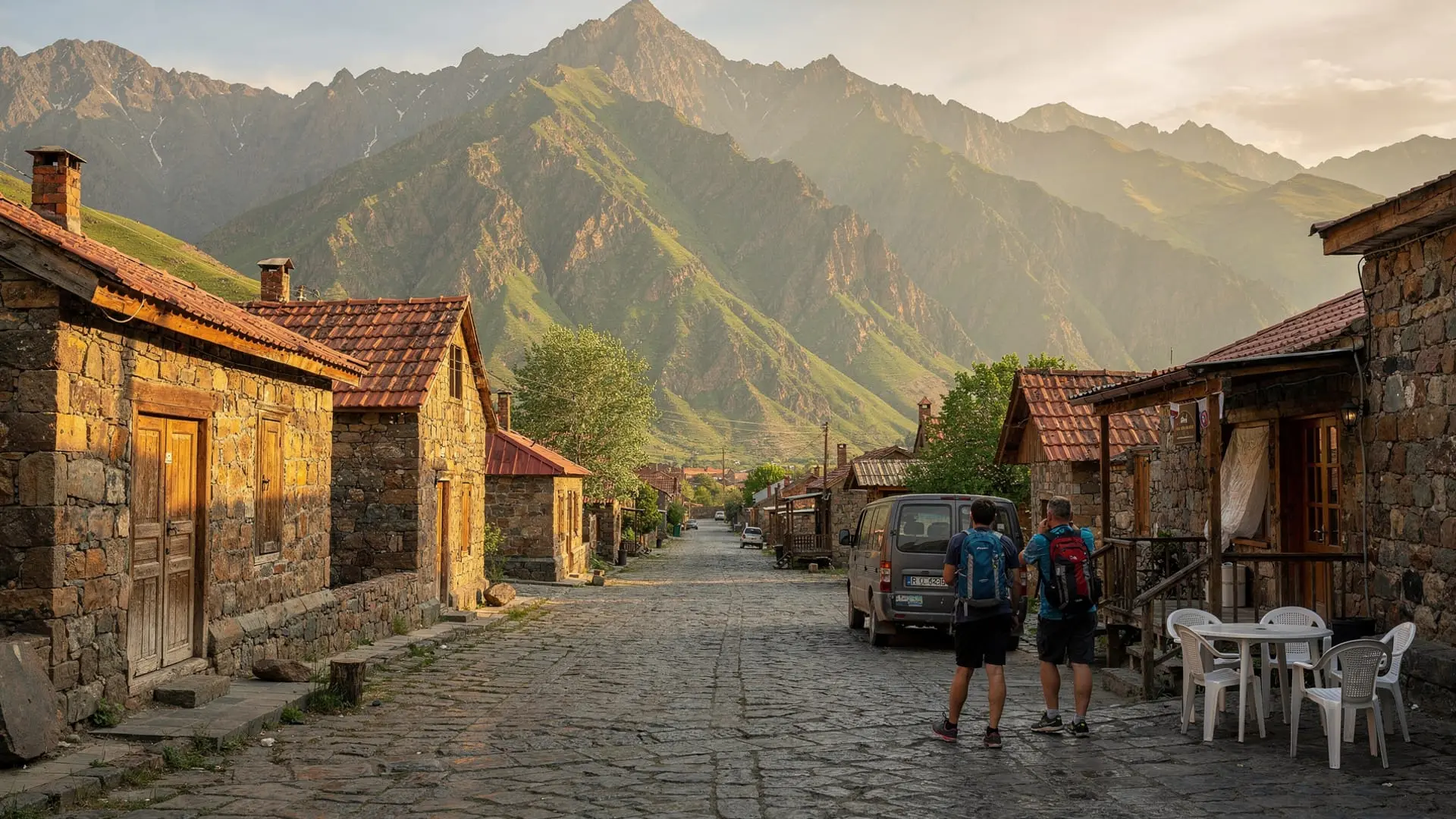
Armenia is excellent value for money
Armenia consistently surprises travellers with how far their money goes. The country sits in the same UNESCO monastery and Caucasus-mountain category as Georgia, but with notably lower prices for accommodation, food, and local transport. A budget traveller can experience genuinely excellent food, comfortable guesthouses, and world-class sights for a fraction of what a comparable trip in Western Europe would cost.
All prices in this guide use April 2026 exchange rates: 1 EUR = approximately 410 AMD. Prices are also quoted in USD where relevant (1 USD = approximately 385 AMD as of April 2026). These rates fluctuate — treat them as snapshots.
Daily budget tiers at a glance
| Tier | Daily budget | What it gets you |
|---|---|---|
| Backpacker | 25–35 EUR / 27–38 USD | Hostel dorm, marshrutkas, local restaurants |
| Mid-range | 60–90 EUR / 65–97 USD | 3-star hotel, mix of taxis and tours, varied restaurants |
| Comfort | 120–200+ EUR / 130–215+ USD | 4-5-star hotel, private driver, high-end dining |
Accommodation costs
Hostel dorms in Yerevan run 5,000–8,000 AMD per night (12–20 EUR). Options are clustered near the centre — Yerevan has developed a reasonable backpacker scene with a handful of well-reviewed hostels. Outside Yerevan, dorms are rarer but guesthouses fill the gap.
Budget guesthouses — a private room in a family-run guesthouse in Dilijan, Goris, or near Tatev — cost 15,000–25,000 AMD per night (37–61 EUR for two people). These often include breakfast and local advice that no guidebook matches.
3-star hotels in Yerevan run 25,000–45,000 AMD (61–110 EUR). This gets you an en-suite room, air conditioning, and sometimes breakfast. The Yerevan hotel market is competitive and quality has improved steadily since 2020.
4-5-star hotels start at 60,000–80,000 AMD in Yerevan (146–195 EUR) and can reach 200,000+ AMD at the top end. The Marriott Yerevan, Radisson Blu, and several boutique hotels position themselves at the luxury tier. In the countryside, Tufenkian heritage hotels (Avan Dzoraget in Lori, Old Dilijan Complex in Tavush) offer premium experiences at prices still below comparable European rates.
Tip: Booking directly with smaller guesthouses (email or WhatsApp) often gets you a better price than booking platforms. The platform commission is typically passed to the guest as a higher listed price.
Food and drink costs
Armenian food is one of the great under-appreciated cuisines of the world, and eating well in Armenia is very affordable.
Street food and bakeries: A fresh lavash flatbread costs 200–300 AMD (0.50–0.75 EUR). Cheese-filled boerek from a corner bakery: 400–700 AMD. A simit (sesame ring): 200 AMD. A quick lunch at a lavash-based place — stuffed bread with cheese, herbs, and egg — runs 1,500–2,500 AMD (3.65–6 EUR).
Local restaurants and “bistros” (often called yelakaner or casual café-restaurants): A full lunch with soup, main course of khorovats or tolma, bread, and a soft drink costs 3,000–5,000 AMD (7.30–12 EUR). These are where most Armenians eat daily, and the quality is high.
Mid-range restaurants in Yerevan: A proper dinner with appetisers, mains, and house wine at a place like Lavash restaurant or Sherep — both excellent, both honest about their pricing — runs 12,000–20,000 AMD per person (29–49 EUR). For Armenian and international food to a high standard, this tier is well worth the spend.
Tourist-trap restaurants to avoid: Restaurants with white tablecloths around Republic Square (Hanrapetutyan Hraparak) typically charge 20–40% more for mediocre food. Stick to the side streets. Sayat-Nova, Gusto, Sherep, Tavern Yerevan, and Achajour all offer excellent food at honest prices.
Coffee: Specialty coffee in Yerevan has exploded since 2022. An espresso at a good café costs 800–1,200 AMD (2–3 EUR). Armenian coffee (soorj) in a traditional café is 400–600 AMD.
Wine: A glass of local wine in a mid-range restaurant costs 1,500–3,000 AMD. A full bottle of a respected Armenian producer (Zorah, Voskevaz, Hin Areni) in a restaurant runs 8,000–18,000 AMD. The same bottle from a supermarket is 4,000–8,000 AMD.
Supermarkets: SAS and Yerevan City are the main chains. A week’s worth of breakfast supplies (bread, cheese, fruit, yogurt) costs 8,000–12,000 AMD. Fresh produce at GUM market is cheaper still.
Transport costs
Marshrutkas (minibuses): The backbone of budget travel in Armenia. Departures from Kilikia bus station in Yerevan serve all major destinations. Sample fares:
- Yerevan → Lake Sevan: ~1,200 AMD (3 EUR), 1 hour 15 min
- Yerevan → Dilijan: ~1,500 AMD (3.65 EUR), 1 hour 45 min
- Yerevan → Gyumri: ~1,500 AMD (3.65 EUR), 2 hours
- Yerevan → Goris: ~3,500 AMD (8.50 EUR), 4–5 hours
- Yerevan → Etchmiadzin: ~300 AMD (0.73 EUR), 30 min (minibus 106 from Gai station)
No reservation is needed on most routes. You pay on the bus. Marshrutkas fill and depart, so early arrival at the bus station helps for popular routes.
GG Taxi (Armenia’s equivalent of Uber): The app is essential. A ride within central Yerevan runs 600–1,200 AMD (1.50–3 EUR). A taxi to Garni from Yerevan: 4,000–5,000 AMD one-way. Always use the app or negotiate before getting in if hailing a street taxi — meters are not standard. Never accept rides from touts at Zvartnots Airport.
Shared taxi (avtobus): For routes without frequent marshrutkas, shared taxis depart when full from specific spots near Kilikia station. These are faster than marshrutkas and cost 2–3x more.
Rental car: Budget around 30–50 EUR per day for a basic hatchback, 60–80 EUR for a 4WD (recommended for Aragats, Jermuk, and remote areas). Road conditions vary significantly — the highways are generally good, but rural roads to monasteries can be rough. An international driving licence is technically required alongside your national licence, though enforcement is inconsistent. See our renting a car in Armenia guide for details.
Airport transfer: Zvartnots Airport is 12 km from central Yerevan. GG Taxi from the airport runs 2,500–3,500 AMD (6–8.50 EUR). Pre-booked private transfers via GYG offer fixed-price certainty, especially useful on late-night arrivals.
Activities and entrance fees
Armenia’s entrance fees are low by international standards.
| Site | Entry fee |
|---|---|
| Garni Temple | 1,500 AMD (3.65 EUR) |
| Geghard Monastery | Free (donations welcomed) |
| Tatev Monastery | Free |
| Wings of Tatev cable car (return) | 7,000 AMD (17 EUR) |
| Matenadaran manuscript museum | 3,000 AMD (7.30 EUR) |
| Erebuni Museum and Fortress | 2,500 AMD (6 EUR) |
| Tsitsernakaberd Genocide Memorial and Museum | Free (museum) |
| Khor Virap | Free |
| Noravank | Free |
| Haghpat and Sanahin monasteries | Free |
| Lake Sevan beach areas | Some beaches charge 500–1,000 AMD for parking |
Guided tours: A shared day tour from Yerevan (Garni, Geghard, Symphony of Stones) runs 15,000–25,000 AMD per person (37–61 EUR). Private tours cost more — typically 50–100 EUR per person for a small group. Tours via GetYourGuide often include transport from your hotel and a local guide, which represents good value versus organising independently.
Garni Temple, Geghard Monastery & Symphony of StonesBudget breakdown: sample daily costs
Backpacker day (27–35 EUR)
- Hostel dorm: 15 EUR
- Breakfast at bakery: 2 EUR
- Lunch at local restaurant: 7 EUR
- Marshrutka transport: 3 EUR
- Dinner at local bistro: 7 EUR
- Coffee: 2 EUR
- Entrance fees: 0–4 EUR
Mid-range day (60–90 EUR)
- 3-star hotel (per person): 30 EUR
- Breakfast included or café: 5 EUR
- Lunch at mid-range restaurant: 15 EUR
- GG Taxi/shared tour: 15 EUR
- Dinner at good restaurant: 20 EUR
- Wine with dinner: 8 EUR
- Entrance fees: 5 EUR
Hidden costs and money-saving tips
ATM fees: Use Inecobank, Ameriabank, or ACBA ATMs. Avoid third-party ATMs at tourist sites — they charge higher fees. Many ATMs give AMD only. Withdraw enough cash before heading to rural areas.
Airport currency exchange: The exchange desks at Zvartnots Airport offer rates 5–10% worse than Yerevan banks and “Match” exchange counters in the city. Change only what you need for your taxi and use a proper bank or ATM in Yerevan.
Negotiation: For crafts at Vernissage market, negotiation is expected. Always ask for a price, then counter-offer. Do not negotiate for food in restaurants — prices are fixed.
Ararat brandy at Vernissage: The market sells many bottles labelled “Ararat” that are counterfeit. If you want genuine Ararat brandy, buy at the Yerevan Brandy Company, SAS supermarket, or Yerevan City. Do not buy cognac from pavement sellers.
Seasonal pricing: November through February (excluding New Year) is the cheapest period. Hotels offer 20–40% discounts. July and August command premium prices, especially in Yerevan and Dilijan.
Frequently asked questions about Armenia travel costs
Is Armenia cheaper than Georgia?
Generally yes — accommodation and food costs in Armenia run 15–25% lower than in Tbilisi and comparable Georgian tourist destinations. The main exception is Yerevan’s luxury hotel sector, which has grown rapidly and now matches Tbilisi pricing at the top end.
Can I use credit cards in Armenia?
In Yerevan and larger towns, yes — Mastercard and Visa are widely accepted at hotels, restaurants, and shops. Outside Yerevan (at monasteries, village guesthouses, rural marshrutkas), cash is essential. Always carry AMD when venturing beyond the capital.
How much should I tip in Armenia?
Tipping is not historically obligatory but is increasingly common in tourist restaurants. A 10% tip in Yerevan restaurants is appropriate. Guides expect 5–10% of the tour price. See our dedicated tipping guide for Armenia for the full breakdown.
Is it possible to do Armenia on 20 EUR per day?
Possible but uncomfortable. At 20 EUR you would be sleeping in the cheapest hostel dorms, eating primarily street food and self-catering, and skipping paid activities. Armenia can be done on 25–35 EUR per day in a sustainable and enjoyable way — below that, you are making significant compromises.
Are day tours good value in Armenia?
Yes. For destinations like Tatev (4+ hours from Yerevan), a guided tour that includes transport, the cable car ticket, and a local guide is often comparable in price to organising everything yourself, and eliminates logistical stress. For closer sites (Garni, Etchmiadzin), self-organisation by marshrutka is cheaper and equally easy.
Should I choose a private tour or marshrutka to save money?
It depends on the destination. For single, well-connected sites (Garni, Etchmiadzin, Khor Virap), marshrutka is clearly cheaper. For multi-stop days (Tatev, Haghpat-Sanahin, Aragats), a shared group tour is often cheaper per person than piecing together multiple marshrutka legs and local taxis yourself, and it removes the risk of missing a return connection. The private tour vs marshrutka comparison breaks down the trade-offs route by route.
Is a rental car worth the cost for a budget trip?
Usually not for a first-time budget traveller. Between fuel, insurance, and the daily rental fee, a car costs more than marshrutkas and the occasional taxi or tour for most itineraries, and rural road conditions mean you gain less flexibility than the price suggests. A rental car earns its cost mainly for travellers combining Armenia with a Georgia road trip, or those short on time who want to cover the most ground in the fewest days. See the renting a car in Armenia guide for the full cost breakdown.
Budget vs mid-range vs luxury: a week in Armenia
To make the daily estimates concrete, here is what a 7-night trip realistically looks like across the three tiers. These figures assume a solo traveller; couples divide accommodation costs.
| Expense | Backpacker (EUR) | Mid-range (EUR) | Comfort (EUR) |
|---|---|---|---|
| 7 nights accommodation | 84–140 | 210–315 | 420–560 |
| 7 days food | 98–147 | 245–350 | 420–560 |
| Internal transport | 35–50 | 90–140 | 200–350 |
| Activities / entrance fees | 20–40 | 80–140 | 200–350 |
| SIM card (10–20 GB) | 5–10 | 5–10 | 5–10 |
| 7-day total | 242–387 | 630–955 | 1,245–1,830 |
| Daily average | 35–55 | 90–136 | 178–261 |
The backpacker column assumes marshrutkas, dorm beds, and mostly local restaurants. The mid-range column adds 3-star hotels, one or two guided day tours, and restaurant dinners. The comfort column assumes private drivers, 4-star hotels, and fine dining several nights.
Hidden costs: the ones travellers miss
The big four known costs (accommodation, food, transport, activities) get most of the attention. These ones catch people by surprise:
SIM card: A local SIM from Beeline or Ucom at Zvartnots Airport or a Yerevan phone shop costs 3,000–5,000 AMD (7–12 EUR) and includes 20–30 GB of data. Avoiding it and relying on hotel Wi-Fi or an international roaming plan is significantly more expensive. Buy the SIM on arrival — Armenian mobile data is fast (4G almost everywhere) and cheap.
Yerevan: Armenia eSIM Roaming Mobile Data PlanTipping: Not obligatory but increasingly standard at tourist-facing restaurants in Yerevan. Budget a 10% tip at mid-range restaurants — roughly 400–600 AMD per meal (1–1.50 EUR). For guides, 5–10% of the tour price per person is appropriate. Marshrutka drivers: no tip expected. GG Taxi: optional, rounding up is fine. See our tipping guide for Armenia for the cultural context.
Wings of Tatev cable car: Often overlooked in budget planning, the round-trip costs 7,000 AMD (17 EUR) per person, the single highest individual activity cost in the country. It is absolutely worth it, but include it in your planning if Tatev is on your itinerary.
Water: Tap water in Yerevan is safe to drink (Armenian tap water is mountain-sourced and clean). Buy a reusable bottle and fill it — this cuts out 1,500–3,000 AMD per day that tourists spend on bottled water.
Exchange rate losses: Changing money at the airport, at tourist-area exchange desks, or at hotel receptions typically costs you 5–10% versus ATM rates. On a 10-day budget trip spending 300 EUR total, that difference is 15–30 EUR — half a day’s accommodation.
Photography at monasteries: Entry is usually free but some sites (Tatev, Noravank) have unofficial requests for 500–1,000 AMD for “photography permits” at the entrance. These are unofficial; you are not legally obligated to pay. Most travellers give a small donation to the church anyway.
Five money-saving moves that actually work
1. Eat where locals eat, at lunch time. Many Armenian restaurants and bistros offer a fixed-price lunch menu (usually called business lunch — the Soviet terminology stuck) for 2,000–3,500 AMD including soup, main, and sometimes a drink. The same restaurant charges 2–3x at dinner. Lavash, Sherep, and Sayat-Nova all have lunch menus.
2. Take the metro where possible. Yerevan’s metro (10 AMD, roughly 0.025 EUR, per ride) is one of the cheapest in the world and covers the main north-south corridor. Kombat to Yeritasardakan gets you from the railway station area to the Cascade district. For cross-city routes the metro cannot cover, GG Taxi is still cheap.
3. Buy wine at supermarkets, not restaurants. A bottle of Areni native from a well-regarded producer (Voskevaz, Zorah, Old Bridge) costs 5,000–9,000 AMD at SAS or Yerevan City supermarket. The same bottle in a restaurant runs 12,000–20,000 AMD. Armenia’s wine is genuinely excellent; buying retail and drinking with a picnic at Lake Sevan or overlooking the Ararat Valley is one of the best value experiences in the country.
4. Self-organise day trips to close sites. Garni, Etchmiadzin, and Khor Virap are all reachable independently by marshrutka for under 1,200 AMD round-trip. Tours add value for Tatev, Haghpat-Sanahin, and sites requiring multiple connections — but for the Ararat Valley triangle, the bus is fine.
5. Travel November–February (except New Year week). Off-season hotel discounts of 30–40% are common. Monasteries are quieter, often just you and a handful of pilgrims. Tsaghkadzor is actually peak season (ski). The downside is cold and occasional road complications; the upside is that a mid-range Yerevan hotel becomes a budget one.
Amazing Yerevan: 3 hours tour to the main sightsBudget by region: Yerevan vs the regions
Costs are not uniform across Armenia. Yerevan carries a modest premium over the regions for accommodation and mid-to-high-end dining, driven by demand from both tourists and the growing digital-nomad and business-travel segments. Once you leave the capital, guesthouses in Dilijan, Goris, and Vayots Dzor tend to undercut Yerevan 3-star hotel prices while offering a more personal, often family-run experience, and local restaurants in smaller towns rarely reach even Yerevan’s mid-range dinner prices. The main regional exception is Tsaghkadzor and Jermuk, both spa and ski destinations that command Yerevan-level or higher prices in peak season (winter for Tsaghkadzor, year-round for Jermuk’s wellness hotels). If your itinerary spends more nights in the regions than in the capital, your realistic daily average will land toward the lower end of the ranges quoted above rather than the midpoint.
Building your own budget from this guide
The fastest way to turn these figures into a real trip budget is to work backwards from your total nights and your preferred tier. Multiply your chosen daily-average figure by trip length, add a buffer of 10–15% for the inevitable extra coffee, souvenir, or spontaneous tour, and treat the Wings of Tatev cable car and any 4WD-dependent day trips as separate line items rather than folding them into your average daily spend, since they are lumpy one-off costs rather than smooth daily expenses. For itinerary-specific budgeting, cross-reference this guide against a fixed-length plan such as the Armenia classic 7 days itinerary or the Armenia comprehensive 10 days itinerary, both of which map specific days to specific regions and let you apply the regional cost differences above more precisely than a flat national average can.
What money cannot buy in Armenia
Budget travel guides can become purely transactional. This one ends with something that costs nothing.
Armenia’s most extraordinary experiences do not show up in cost columns. Geghard Monastery is free to enter, and on a weekday morning in October, you may be the only visitor in the inner chambers when a lone Armenian priest lights candles in the rock-cut chapel. The sound of the chant bouncing off stone hewn 900 years ago is not something you pay for. Khor Virap at 6:00 am in late April, with Ararat catching the first light above the vineyard mist: also free. The view from Erebuni’s citadel walls, looking north across 2,800 years of Yerevan: 2,500 AMD.
What money does buy is access to more of it, more comfortably, and more efficiently. But the irreducible core of why people come to Armenia — the monasteries, the mountains, the food, the remarkable warmth of the people toward foreign visitors — is accessible at any budget tier. A traveller spending 30 EUR per day in Armenia can have a genuinely transformative experience. The spending-per-day number is not the point; the days themselves are.