Finding your ancestral village in Armenia
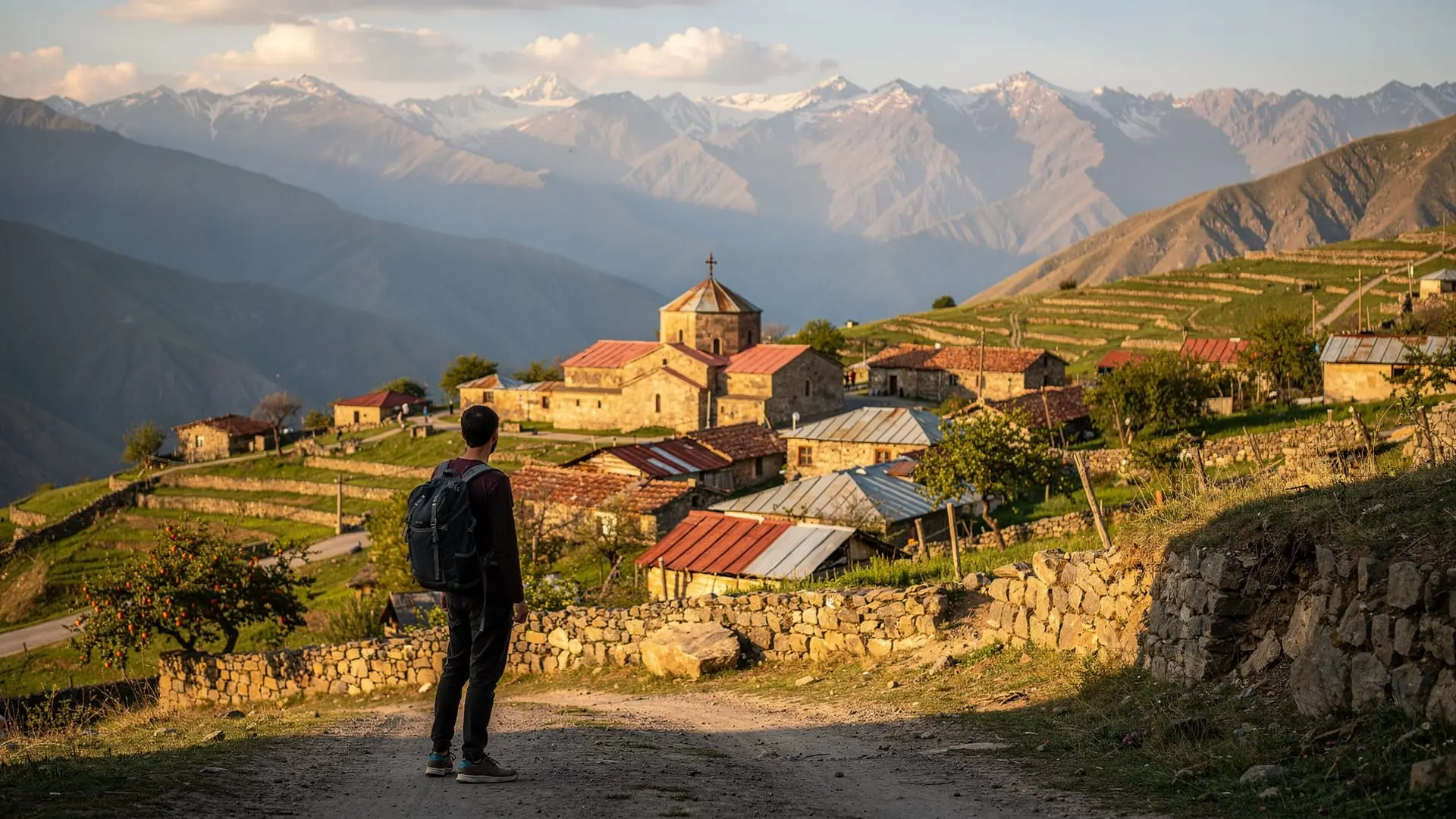
The geography of loss
| Where to start | Family interviews, then Houshamadyan.org |
| Cost | Mostly free online research; National Archives access is free by appointment |
| Time needed | Weeks to months of research before travelling; 1 day for an archive visit in Yerevan |
| Key resource | Houshamadyan.org (Ottoman villages) or National Archives, 1 Khorenatsi St, Yerevan |
| Realistic expectation | Most villages are in Turkey; Armenia holds documentation and living culture |
Before doing anything else — before booking a flight, before contacting relatives, before researching archives — diaspora Armenians seeking their ancestral village need to understand a geographical reality that is both simple and devastating: most pre-1915 Armenian villages are in modern Turkey, not modern Armenia.
The Republic of Armenia is approximately the size of Belgium, occupying a portion of historical Armenia that was under Russian Imperial rule from 1828. The vast majority of the Armenian population lived in the Ottoman Empire, in what is now eastern Turkey. The 1915 Genocide targeted this population. The survivors fled westward to Syria, Lebanon, Egypt, and Greece; eastward to the Russian Caucasus; and later to North and South America, France, and Australia. Their villages — Kharput, Van, Erzurum, Bitlis, Diyarbakir, Marash, Aintab, Adana — are in modern Turkey.
Modern Armenia — the 29,743 square kilometres of the republic — was the Soviet Armenian Republic, formally independent since 1991. It was not the heartland of the Armenian population displaced in 1915.
This does not make a heritage trip to Armenia meaningless. Quite the opposite: Armenia is where the living culture survived, where the language is spoken daily, where the Apostolic Church has its headquarters, where 2.8 million Armenians live. But it is not the geographical site of most diaspora families’ origins.
Understanding your family’s origin region
The first step in any ancestral village research is identifying the historical region. The main origin areas for diaspora Armenians:
Eastern Anatolia (Ottoman Empire, now Turkey)
The six Armenian provinces (often called the “six vilayets”) were the demographic heartland of Ottoman Armenia:
- Van (now Van province, Turkey): A major Armenian city on the shores of Lake Van. Van’s Armenian community was almost entirely wiped out in 1915.
- Kharput / Harput (now Elazığ, Turkey): A significant Armenian cultural centre, home to Euphrates College.
- Erzurum (now Erzurum, Turkey): One of the largest Armenian communities in Anatolia.
- Bitlis (now Bitlis, Turkey): Armenian population formed the majority in many areas.
- Diyarbakir (now Diyarbakir, Turkey): Mixed Armenian, Kurdish and Turkish town, with a large pre-1915 Armenian population.
- Sivas (Sebastia) (now Sivas, Turkey): Known for the large Armenian community and the Sivas massacre of 1914–15.
Cilicia (now Adana and Mersin provinces, Turkey)
Cilicia was a historical Armenian kingdom (11th–14th century) in south-eastern Anatolia. By 1915, the Cilician Armenian community was concentrated in Adana, Mersin, Tarsus, Marash (Kahramanmaraş), Aintab (Gaziantep) and Sis (Kozan). Cilician Armenians were deported in 1915 and again in 1920–21 when the region was returned to Turkey from the French mandate. Many ended up in Syria, Lebanon, and later the wider diaspora. For Syrian-Lebanese diaspora Armenians in particular, Cilician roots are very common — see also the Kessab and Aleppo roots guide.
Pontus (Black Sea coast, now Turkey)
Greek and Armenian Pontus, along the Black Sea coast, had significant Armenian communities around Trabzon (Trebizond) and Samsun.
Western Anatolia (now Turkey)
Smyrna (now Izmir) and Istanbul (Constantinople) had large Armenian communities. The Istanbul Armenian community was not deported in 1915 but suffered other forms of persecution; a small community remains today.
What is actually in modern Armenia
The Republic of Armenia was populated primarily by Armenians from three sources:
- Eastern Armenian population resident in the Russian Empire before 1828 and after (present-day Yerevan, Gyumri/Alexandropol, and surrounding areas).
- Refugees from the 1915 Genocide who fled into Russian Armenia.
- Repatriates from the Soviet-era repatriation programmes (1940s–1950s and post-1991).
If your family came from the Russian Armenian region — from the Yerevan basin, the Aragats slopes, the Sevan area — your ancestral village may genuinely be in modern Armenia, and you may be able to visit it.
If your family came from Van, Kharput, Erzurum, Marash or any Cilician city, your ancestral village is in Turkey.
How to research: where to start
Step 1: Interview family members and gather documents
Before any archive search, exhaust family knowledge. Ask about:
- Village name (in Armenian transliteration, not the modern Turkish name)
- Province or vilayet
- Religion and denomination (Apostolic, Catholic, Protestant)
- Any surviving documents: baptismal records, church letters, photographs with inscriptions
Write everything down. Record elderly relatives if they’re willing — these recordings have historical value beyond genealogy.
Step 2: Use the Houshamadyan project
Houshamadyan.org is the single most valuable online resource for researching Western Armenian village history. It documents Armenian community life in Ottoman towns and villages before 1915, with searchable records, photographs, maps and testimonies. Start here for any Ottoman Armenian village.
Step 3: Armenian Genealogical Society and church records
The Armenian Genealogical Society (armeniangenealogy.info) maintains databases and can advise on sources. Many Apostolic Church baptismal records for communities in the Russian Empire (including what is now Armenia) are in the National Archives of Armenia (Hayastani Azgayin Arkhiv) in Yerevan. These can be accessed in person or, increasingly, through remote research.
For Cilician and Western Armenian communities, church records that survived are often held by community organisations in the diaspora — the Armenian Patriarchate of Jerusalem, the Catholic Armenian Patriarchate of Cilicia (now based in Bzoummar, Lebanon), or local community archives in Beirut, Aleppo, or Los Angeles.
Step 4: The National Archives of Armenia (Yerevan)
The archives hold records from the Soviet period and from the Russian Empire period. They are searchable by appointment and some staff speak English. For diaspora visitors in Yerevan, a one-day visit to the archives can be productive if you have specific names and locations to search.
Address: Yerevan, 1 Khorenatsi Street. Open weekdays.
If your village is in Turkey
Visiting a village in eastern Turkey is possible — Turkey is open to Armenian diaspora visitors, though the emotional and political complexity is real. The village may no longer carry its Armenian name (most Armenian place names in Turkey were changed in the 20th century). The church may be a mosque, a ruin, or in some cases preserved by Kurdish communities who now live there. The cemetery may or may not have survived.
This guide does not cover Turkish travel logistics in detail, but it is honest about the fact that for many diaspora Armenians, the ancestral village visit requires a trip to Turkey, not Armenia. The two trips can complement each other.
If your village is in what is now Armenia
If your family comes from the Russian Armenian region, your village is almost certainly still there. The villages of the Aragatsotn plateau, the Ararat valley, the Lake Sevan basin, the Lori highlands and the Syunik mountains are populated and accessible.
Asking a local guide to take you to a specific village, finding the old church (often still standing, sometimes restored, sometimes converted), and walking the streets your grandparents walked is entirely possible. The experience is different from a Western Armenian village visit — there is continuity here, people who have been in this place for generations, an unbroken thread.
For finding the specific village within Armenia, the network of local guides in Yerevan (try Repat Armenia at repatarmenia.org) can often help, particularly for villages in regions they know well.
Yerevan as a research base
For diaspora Armenians spending time in Yerevan as part of a heritage trip, several institutions are valuable:
Matenadaran (Manuscript Museum, Mashtots Avenue): While primarily a museum, the Matenadaran’s research department has connections to archival resources and can point researchers toward relevant sources.
Institute of History of the National Academy of Sciences: Relevant for historical research into Armenian communities.
Armenian Genocide Museum-Institute (Tsitsernakaberd): The museum attached to the Tsitsernakaberd memorial holds testimonies, photographs, and records relating to the 1915 Genocide. The research library is open to registered users.
AGBU (Armenian General Benevolent Union) Yerevan office: Can advise diaspora visitors on genealogical resources.
Yerevan: Walking Tour with a Local GuideThe psychological dimension
For many diaspora Armenians, the village research is not primarily about producing a genealogical chart. It is about recovering a sense of place, of origin, of belonging to a specific somewhere rather than the generalised diaspora nowhere. Understanding that the specific somewhere may be a town in eastern Turkey — a place you can visit but which no longer carries your family’s name on its streets — is important to absorb before beginning.
The Republic of Armenia offers something different but equally important: a place where you are not the minority, where the language is spoken on every corner, where the church is your church, where the apricot trees bloom in April exactly as your grandmother described. This is a form of homecoming even when the specific village is elsewhere.
Making the most of what modern Armenia holds
Even if your specific ancestral village is in Turkey, Armenia holds significant sites connected to your family’s history in ways that may not be immediately obvious.
Tsitsernakaberd Genocide Memorial: The museum documents the geography of the Genocide province by province, city by city, village by village. If your family came from Kharput, Van, Erzurum or any other identified community, the museum’s documentation covers those places specifically. This is as close as most diaspora visitors will get to the documented record of their specific community’s fate.
The Matenadaran: The great manuscript library holds texts that were brought to safety from Western Armenian communities before and during the Genocide. Some manuscripts came from the very libraries of Van, Kharput, and other cities that were destroyed. Reading the provenance notes of specific manuscripts can be a form of research contact with destroyed communities.
St. Karapet monastery (Mugni, near Etchmiadzin): The monastery of Mugni holds an icon of St. John the Baptist said to have been venerated in historical Western Armenia. For diaspora families with Apostolic roots in certain communities, there are specific church dedications that link their home community to this or similar sites.
The Armenian diaspora communities in Yerevan itself: Yerevan is now home to communities originally displaced from Kars (ceded to Turkey in 1921), from Nakhchivan, from Karabakh, and from Syria. The diversity of displaced Armenian communities living in Yerevan means that diaspora visitors may find people in the city who share origin regions, who carry the same place-memory even if they came by different routes.
Specific research tips for common origin cities
Van (now Van, Turkey): The pre-1915 Armenian population of Van was the largest of any Anatolian city. Van Armenians were largely from the Apostolic church. Houshamadyan has extensive Van documentation. Lake Van (still in Turkey) is visually famous from the Akhtamar Church island — a beautiful Armenian church that still stands and is occasionally open for services.
Kharput / Harput (now Elazığ, Turkey): American missionary presence (Euphrates College) at Kharput means that more surviving records exist for this community than for many others. Yale University’s archive holds Kharput-related American missionary documentation.
Aintab / Gaziantep (Turkey): Aintab was a large Armenian centre in northern Cilicia. Many Aintab Armenians ended up in Syria and Lebanon, then in the broader diaspora. The Armenian community of Gaziantep today is minimal, but the city’s museum acknowledges its Armenian history.
Marash / Kahramanmaraş (Turkey): Another major Cilician Armenian centre with a well-documented pre-1915 community. Marash Armenians dispersed heavily into Syria (particularly Aleppo) and later into the wider Middle Eastern and Western diaspora. Community associations descended from Marash Armenians remain active in several diaspora cities and maintain their own informal archives worth contacting directly.
Visiting the National Archives in Yerevan
For diaspora visitors who want to conduct primary archival research during their trip, the National Archives of Armenia (Hayastani Azgayin Arkhiv) at 1 Khorenatsi Street, Yerevan, is accessible by appointment. Staff speak Armenian and Russian; English communication is possible with patience. Bring as much specific identifying information as you have: full names, dates, places of origin or emigration.
The archives are most productive for families with connections to the Russian Armenian region (families that were in the Yerevan guberniya or Tiflis guberniya before the Soviet period) and for families with Soviet-era administrative records. For Ottoman Armenian records, the Houshamadyan project and the Zoryan Institute’s databases will be more productive than the National Archives.
See the diaspora heritage trip planning guide for the broader journey framework, and the diaspora 5-day itinerary for a structured route. Both resources are worth reading before your trip rather than during it, since the archival stage of research generally produces better results when it precedes travel rather than competing with it for time once you’re on the ground in Yerevan.
Frequently asked questions about finding your Armenian village
What is the difference between Western Armenian and Eastern Armenian?
Eastern Armenian is the dialect spoken in the Republic of Armenia, developed in the Russian Imperial and Soviet periods. Western Armenian is the dialect of the diaspora, originating in the Ottoman Armenian communities. They are mutually intelligible with effort but have significant vocabulary and pronunciation differences. The distinction also reflects a cultural divide within the diaspora — families who know which side they’re from often feel it as an important identity marker.
Can I find my family name in Armenian records?
Armenian family names (surnames) in the diaspora often end in -ian or -yan (meaning “son of”). In Turkey, many surnames were changed in the 20th century under Turkification policies. In the Republic of Armenia, the -yan ending is standard. Searching for -ian variants in diaspora records and -yan variants in Armenian records often connects the same family across the name change.
Are Ottoman Armenian church records digitised?
Partially. Several archives have digitisation projects underway, but coverage is incomplete. The Houshamadyan project has the broadest community-by-community documentation. The Zoryan Institute and the Armenian Assembly of America maintain additional databases.
What if my family was from Constantinople (Istanbul)?
Istanbul’s Armenian community was not deported in 1915 but experienced later emigrations, particularly after 1955 (Istanbul pogrom) and through the 20th century. A small Armenian community remains in Istanbul today, centred on the Kumkapı and Beyoğlu districts. Istanbul Armenian church records are held by the Armenian Patriarchate of Constantinople.
Is it possible to find living relatives in Armenia?
It is — particularly for families whose branch emigrated from the Russian Armenian region in the 20th century (Soviet-era emigrations, post-independence emigrations). Social media networks within the Armenian community, Repat Armenia (repatarmenia.org), and direct contact through churches are all productive channels.
How much research should I do before travelling, versus figuring it out once I’m in Armenia?
Do as much as possible before travelling. Village names, provinces, and family documents are far easier to track down from home with time to search Houshamadyan, contact diaspora community organisations, and interview elderly relatives without the pressure of a limited trip. Arriving in Yerevan with a specific village name, region, and any surviving documents turns a single day at the National Archives or with a local guide into something productive, rather than an open-ended search.
Should I bring a genealogist or researcher with me, or is this realistic to do independently?
Both approaches work, depending on budget and how far your research has already progressed. Independent research is entirely realistic for the interview and online-database stages (Houshamadyan, family record-gathering). A local researcher or guide familiar with the National Archives becomes more valuable once you’re trying to access physical Yerevan archives in person, given the language and institutional-access barriers involved — a half-day with a knowledgeable local researcher can save what might otherwise take several frustrating days alone.
Research realism: what to expect at each stage
| Stage | Realistic outcome |
|---|---|
| Family interviews | Village name, province, maybe a photograph or document |
| Houshamadyan.org | Community history, sometimes photographs, rarely individual family records |
| National Archives (Yerevan) | Strong results for Russian Armenian region families; weak for Ottoman Armenian families |
| Church/diaspora archives | Baptismal or community records if the community’s records survived and were preserved |
| A village visit itself | Emotional connection to place; rarely direct genealogical proof on-site |