Planning a heritage trip to Armenia: a diaspora guide
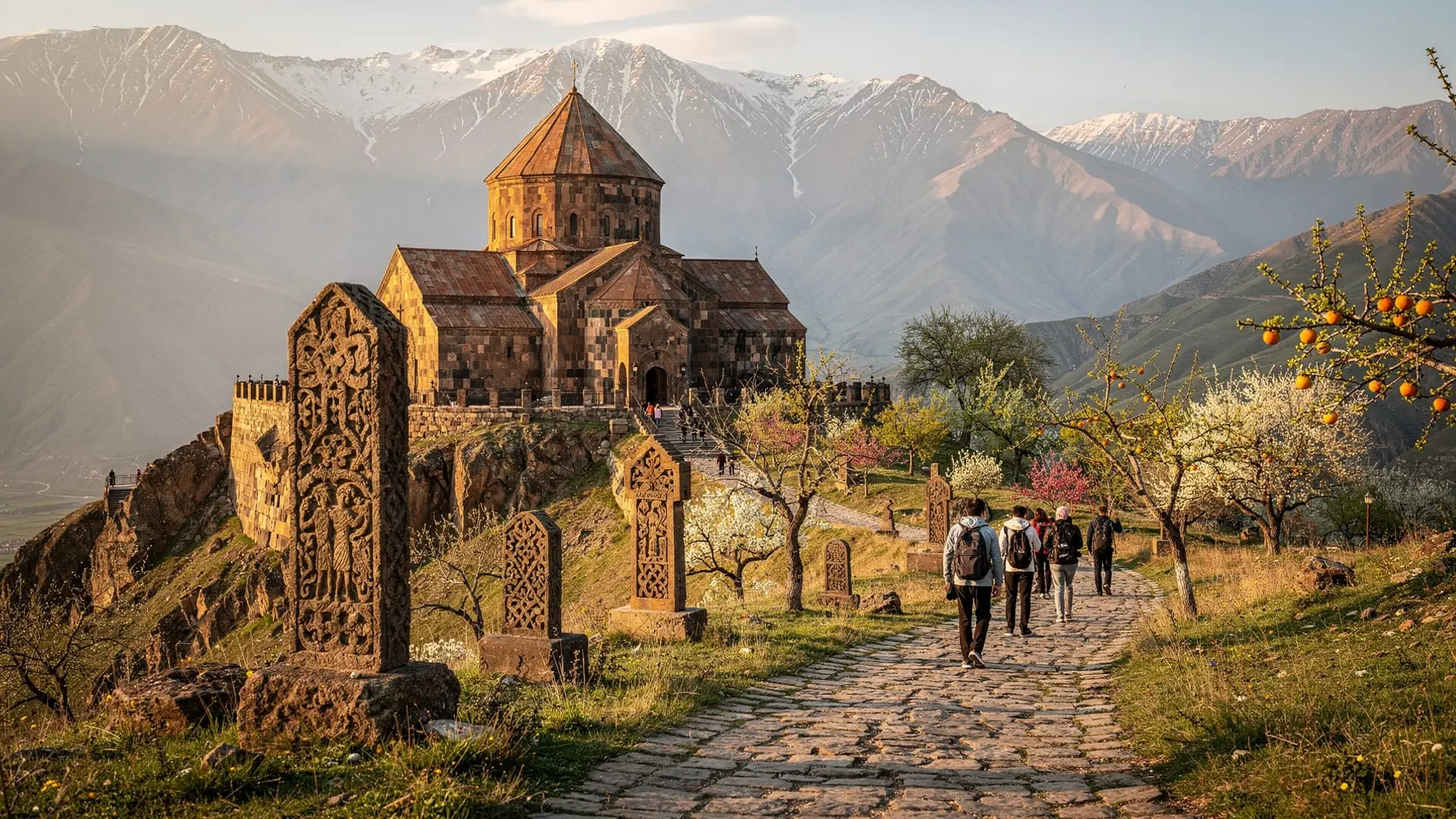
Coming home to a country you may never have visited
For diaspora Armenians — whether from Los Angeles, Paris, Beirut, Sydney or Buenos Aires — the first trip to the Republic of Armenia is rarely just a holiday. It carries layers of meaning that accumulate over generations: family stories told in fragments, photographs of people and places you can’t quite locate, a language learned from grandparents that sounds different here than it did in the living room. The country you are visiting exists partly in physical reality and partly as a long-constructed idea of what Armenia means.
This guide tries to be honest about both. The Republic of Armenia is a real, present-tense country of 2.8 million people working through the realities of independence, regional conflict, and rapid modernisation. It is not a museum of historical Armenia, and it shouldn’t be experienced as one. But it is also, genuinely, a place where the living thread of Armenian civilisation — the language, the church, the food, the khachkar tradition, the music — is more concentrated and immediate than anywhere in the diaspora.
Plan your first trip carefully. Give it enough time. Come prepared to be surprised in ways you didn’t expect.
| Minimum time | 7 days (Yerevan, Tsitsernakaberd, Etchmiadzin, one monastery circuit) |
| Recommended | 10–14 days (adds Tatev or Lori, Gyumri, unstructured time) |
| Essential stop | Tsitsernakaberd Genocide Memorial — budget a separate half-day |
| Currency | Armenian dram (AMD), cards widely accepted in Yerevan |
| Getting around | GG Taxi in Yerevan; pre-booked driver for day trips |
How long does a heritage trip need?
The answer is: longer than a standard tourist trip to the same destination. The reason is not that there is more to see (though there is) but that there is more to process.
Minimum: 7 days. This allows Yerevan (3 nights), Tsitsernakaberd, Etchmiadzin, at least one major monastery circuit (Garni/Geghard or Khor Virap/Noravank), and a day in the regions.
Recommended: 10 days. Add Tatev or the Lori monasteries (Haghpat, Sanahin), an evening in the GUM market, time to sit in a café without an agenda.
Deep heritage: 14 days or more. At this length you can incorporate the Syrian-Armenian community in Nor Norq, a visit to Gyumri (the second city, with its own traumatic 1988 earthquake history), and time for the quieter emotional processing that a heritage trip demands.
If you have elderly relatives who want to visit simultaneously, be realistic: 7–10 days is often the practical maximum for older travellers managing jet lag and emotion.
Before you leave: research and preparation
The preparation for a heritage trip is different from standard travel research.
Document gathering: Collect what documents you can — birth certificates, naturalisation papers, photographs, letters. The National Archives of Armenia (Hayastani Azgayin Arkhiv) holds records from the Soviet period. For pre-1915 records, understand that most original village records are either lost or held in Turkish archives. The finding your ancestral village guide explains in detail what is and isn’t accessible.
Language: Even basic Armenian — hello (barev), thank you (shnorhakalutyun), you’re welcome (khndrem) — is received with genuine warmth. Consider a language class before arriving; see the Armenian language classes guide for Yerevan-based options.
Family contacts: If you have relatives in Armenia, contact them before you arrive. Armenians take hospitality seriously — arriving unannounced is possible but planning ahead shows respect. See the meeting relatives guide for cultural protocol.
Genocide Memorial: Allow time to visit Tsitsernakaberd in emotional space, not squeezed between attractions. See the Tsitsernakaberd pilgrimage guide for a full visit plan.
Yerevan: the starting point
Yerevan is the right place to begin. The capital is where Armenian identity in the Republic is most articulated — in the Matenadaran’s manuscript treasures, the opera house, the Parajanov Museum, the café debates that can last until 2 am. It is also a genuinely pleasurable city to spend time in: walkable, architecturally distinctive (the pink tuff stone buildings), and with a food culture that connects directly to the dishes your grandparents cooked.
First morning: Walk slowly. There is no itinerary requirement on your first morning. Walk from your hotel toward Republic Square. Sit in a café. Listen to the language around you. Order coffee (soorj) and see it arrive in a copper cezve, thick and sweet or bitter depending on your order. This is where Armenia starts.
Republic Square and the Cascade: The centre of the city orients itself around these two axes — the formal Soviet-era square with its dancing fountains (summer evenings), and the staircase Cascade rising to the northwest. Both are free, both reward slow exploration.
Matenadaran: The manuscript museum holds over 23,000 Armenian manuscripts — illuminated books from the 9th century onward, representing one of the greatest collections of medieval scholarship and art in the world. For diaspora visitors, the Matenadaran is often the first moment that the abstract pride in Armenian civilisation becomes tangible and overwhelming. Allow 1.5 to 2 hours; go on your second or third day, not your first.
Genocide Memorial (Tsitsernakaberd): Budget a separate half-day, ideally not combined with other sightseeing on the same day. The emotional weight of the visit requires space before and after. See the dedicated pilgrimage guide.
Yerevan: Walking Tour with a Local GuideThe Etchmiadzin question
Etchmiadzin (officially Vagharshapat) is the spiritual capital of the Armenian Apostolic Church — the oldest national church in the world, established 301 AD. For diaspora Armenians, visiting the Mother Cathedral is not optional: it is the geographic and theological centre of the faith that has been central to Armenian identity for 1,700 years.
The cathedral is currently undergoing major restoration work (as of 2026) but remains accessible. The Etchmiadzin museum holds relics that span the length of Armenian Christian history. The adjacent churches of St Hripsime and St Gayane are both UNESCO-listed and among the finest examples of 7th-century Armenian ecclesiastical architecture.
Plan a half-day at minimum. Visit on a weekday to avoid weekend crowds and to have a better chance of experiencing a quiet moment in the cathedral itself.
Note on the Armenian Apostolic Church: The church is Oriental Orthodox — distinct from Eastern Orthodox (Russian, Greek, Serbian) and distinct from Roman Catholicism. It has been autocephalous (self-governing) since its founding and is in communion with the Coptic Church of Egypt, the Ethiopian Orthodox Church, and others in the Oriental Orthodox communion.
The monasteries and what they mean
For diaspora Armenians, visiting the monasteries is not simply tourist heritage appreciation — it is contact with the physical survival of Armenian civilisation through repeated invasions, occupation, and genocide. The monasteries are still standing because Armenian communities of every era protected them. Some, like Tatev, were repeatedly sacked and rebuilt. Others, like the monasteries of Lori, survived because they were sufficiently remote.
Geghard: The cave monastery near Garni is one of the most atmospheric sites in the country. The cave chambers carved from living rock in the 12th century have a quality of ancient devotion that is immediately legible, regardless of your personal religious orientation. See the complete Geghard guide.
Tatev: In the south of the country, 250 km from Yerevan, Tatev monastery perches above the Vorotan gorge — one of the most dramatic monastic settings in the world. The Wings of Tatev cable car reaches it from the gorge bottom. A genuinely moving site for diaspora visitors who have heard of it all their lives. Allow a full day; consider staying overnight in Goris.
Khor Virap: The monastery closest to Mount Ararat, where Gregory the Illuminator was imprisoned for 13 years before converting Armenia to Christianity. For diaspora Armenians, the view of Ararat — rising from the plain across the closed Turkish border — is its own form of historical weight. The mountain is in Turkey, not Armenia. The fact that Armenians can see it but not legally reach it carries meaning that photographs don’t fully capture.
Where to stay: family-run vs international hotels
For a heritage trip, choosing family-run guesthouses outside Yerevan when you venture into the regions supports local communities in a direct way that matters. See the diaspora contribution guide for more on this.
In Yerevan: The Republica Hotel (mid-range, central) and the Ani Plaza Hotel (reliable, Republic Square area) are solid choices. For an emotionally appropriate atmosphere, some diaspora travellers prefer the smaller boutique hotels in the old Kond neighbourhood where some 19th-century architecture survives.
In Dilijan: Hotel Old Dilijan Complex for the most historically grounded experience.
In Goris (near Tatev): The Mirhav Hotel Goris is comfortable and locally owned — a good base for Syunik province explorations.
Managing the emotional weight
A heritage trip to Armenia, particularly for second- and third-generation diaspora Armenians, can be emotionally intense in ways that are difficult to anticipate. The gap between the country you imagined from family stories and the country as it actually is — present, complicated, different from both expectations — can be disorienting. Give yourself permission to feel this.
Practical suggestions:
- Don’t over-schedule the first two days. Leave space for unplanned wandering.
- The Tsitsernakaberd visit should have clear time before and after it — not squeezed between a monastery and a restaurant lunch.
- If you are visiting relatives, manage your expectations: relatives in Armenia live different lives from diaspora relatives, and the gaps in shared experience can be larger than you expect. See the meeting relatives guide.
- Consider a local guide for at least one or two days — a thoughtful Armenian guide who understands the diaspora experience can significantly enrich a heritage trip.
Beyond Yerevan: the regions every heritage visitor should consider
A heritage trip limited to Yerevan alone misses the Armenia that lives in stone and landscape, in the monasteries and mountain provinces that have been the physical anchor of Armenian identity across invasions and centuries.
Gyumri: Armenia’s second city, 120 km north-west of Yerevan (2 hours by road, 3 hours by train). Gyumri suffered a devastating earthquake in 1988 that killed an estimated 25,000 people. The city has been slowly rebuilding for nearly four decades, and the combination of 19th-century Russian Imperial architecture in the Black Fortress area, the earthquake memorial, and the resilient cultural scene makes it a deeply meaningful stop. The train from Yerevan is comfortable and recommended.
Lori province (Haghpat and Sanahin monasteries): The two UNESCO World Heritage monasteries of northern Lori — Haghpat and Sanahin, both 10th century — sit above the Debed River canyon 200 km from Yerevan. Sanahin was one of the great medieval Armenian universities; Haghpat is architecturally among the finest Bagratid buildings in existence. They represent Armenian ecclesiastical architecture at its peak. A day trip or overnight in Lori is worthwhile for any diaspora visitor with time.
Areni and Vayots Dzor: The wine-producing region south of Yerevan holds Noravank monastery in its red-cliff canyon and the Areni wine country where Armenian winemaking was practised 6,000 years ago. The autumn grape harvest (late September–October) connects modern Armenian agriculture to an unbroken tradition. For diaspora visitors travelling in September or October, the wine festival at Areni is a genuinely joyful event.
Tatev: In Syunik province, 250 km south, Tatev monastery perches above the Vorotan gorge — one of the most dramatic monastic settings in the world. The Wings of Tatev cable car (5.7 km, the longest in the world at its opening) reaches it from the gorge bottom. Staying overnight in Tatev village gives you the dawn at the monastery to yourself. Allow a full day or, ideally, one night.
Practical Armenia: what the first-timer needs to know
Currency: The Armenian dram (AMD). Approximately 410 AMD = 1 EUR as of April 2026. ATMs are plentiful in Yerevan (Ameriabank, ACBA, and Inecobank are most reliable). Cards accepted in major Yerevan hotels and restaurants; cash needed everywhere else.
SIM and connectivity: Buy a local SIM at the airport arrivals (VivaCell-MTS and Ucom both have kiosks). A 10-day tourist SIM with data costs approximately 3,000–5,000 AMD. eSIM downloaded before departure also works.
Getting around: GG Taxi (the local ride-hailing app) replaces Uber in Armenia and is the standard way to move within Yerevan. For day trips outside the city, pre-book a private driver through your hotel or a tour operator. Marshrutkas (minibuses from Kilikia station) connect Yerevan to all major cities but don’t accommodate the emotional flexibility a heritage trip needs.
English: Widely spoken in Yerevan’s tourist areas and among those under 40. Outside Yerevan and among older generations, Russian is more useful than English.
Safety: Armenia is safe by regional standards. Standard travel precautions apply. The border with Azerbaijan is closed; do not approach the eastern border zone. The border with Turkey has been closed since 1993. The Georgian border is open and crossable.
The full heritage itinerary
For a structured 5-day heritage focus, see the Armenia diaspora heritage 5-day itinerary. For a longer 10-day circuit incorporating the regions, see the Armenia comprehensive 10-day itinerary. If Georgia also has diaspora or family relevance to your trip, the Armenia and Georgia combined trip guide covers how to extend a heritage journey across the border.
Frequently asked questions about heritage trips for diaspora
Do diaspora Armenians need a visa for Armenia?
Citizens of most diaspora countries (USA, France, Canada, UK, Australia, Argentina, Lebanon and most EU countries) enter Armenia visa-free for up to 180 days per year. No advance application required. See the Armenia visa guide for full details.
Is it safe to travel to Armenia as a diaspora visitor?
Armenia is safe for tourists and diaspora visitors. Street crime affecting visitors is uncommon. The border with Azerbaijan has been closed since 1991; the border with Turkey has been closed since 1993. There is no currently active conflict zone accessible to tourists within the Republic of Armenia. Follow standard travel precautions.
Can I find English-speaking guides who understand the diaspora perspective?
Yes — Yerevan has a good supply of English-speaking guides, some of whom are diaspora returnees or repatriates themselves, with an intuitive understanding of the emotional register of a heritage trip. Repat Armenia (repatarmenia.org) can provide referrals.
Is there a diaspora community centre or resource in Yerevan?
Several. The Repat Armenia organisation (repatarmenia.org) operates as the main resource for diaspora considering relocation or doing heritage research. The Armenian General Benevolent Union (AGBU) has a Yerevan presence. The Birthright Armenia programme places diaspora youth in volunteer placements.
What if my ancestral village is not in modern Armenia?
Most ancestral villages from before 1915 are in eastern Turkey (Eastern Anatolia), not the Republic of Armenia. This is an important and often painful reality. The finding your ancestral village guide addresses this fully.
How do I connect with other diaspora Armenians during my visit?
Repat Armenia (repatarmenia.org) organises regular networking events for diaspora visitors and returnees in Yerevan. These are a good way to meet people navigating the same experience. April 24 (Genocide Remembrance Day) brings thousands of diaspora Armenians to Tsitsernakaberd — while very crowded, it is a significant community event.
Should I consider investing or relocating after a heritage trip?
Many diaspora visitors find the question surfaces naturally once they’ve spent time in the country. It’s worth separating the two: a heritage trip is about connection and understanding, while investment or relocation decisions deserve their own research timeline. The diaspora investment and tourism guide covers what repatriation and investment actually involve without conflating it with trip planning.
Is Gyumri worth the extra day for a heritage trip?
For most diaspora visitors, yes. Gyumri’s 19th-century Russian Imperial architecture, the 1988 earthquake memorial, and its distinct cultural identity (proudly separate from Yerevan) give a fuller picture of Armenia beyond the capital. The train journey itself is comfortable and scenic. If your trip is under 7 days, though, Yerevan and Etchmiadzin should come first.