The quiet hub of Armenia’s wine country
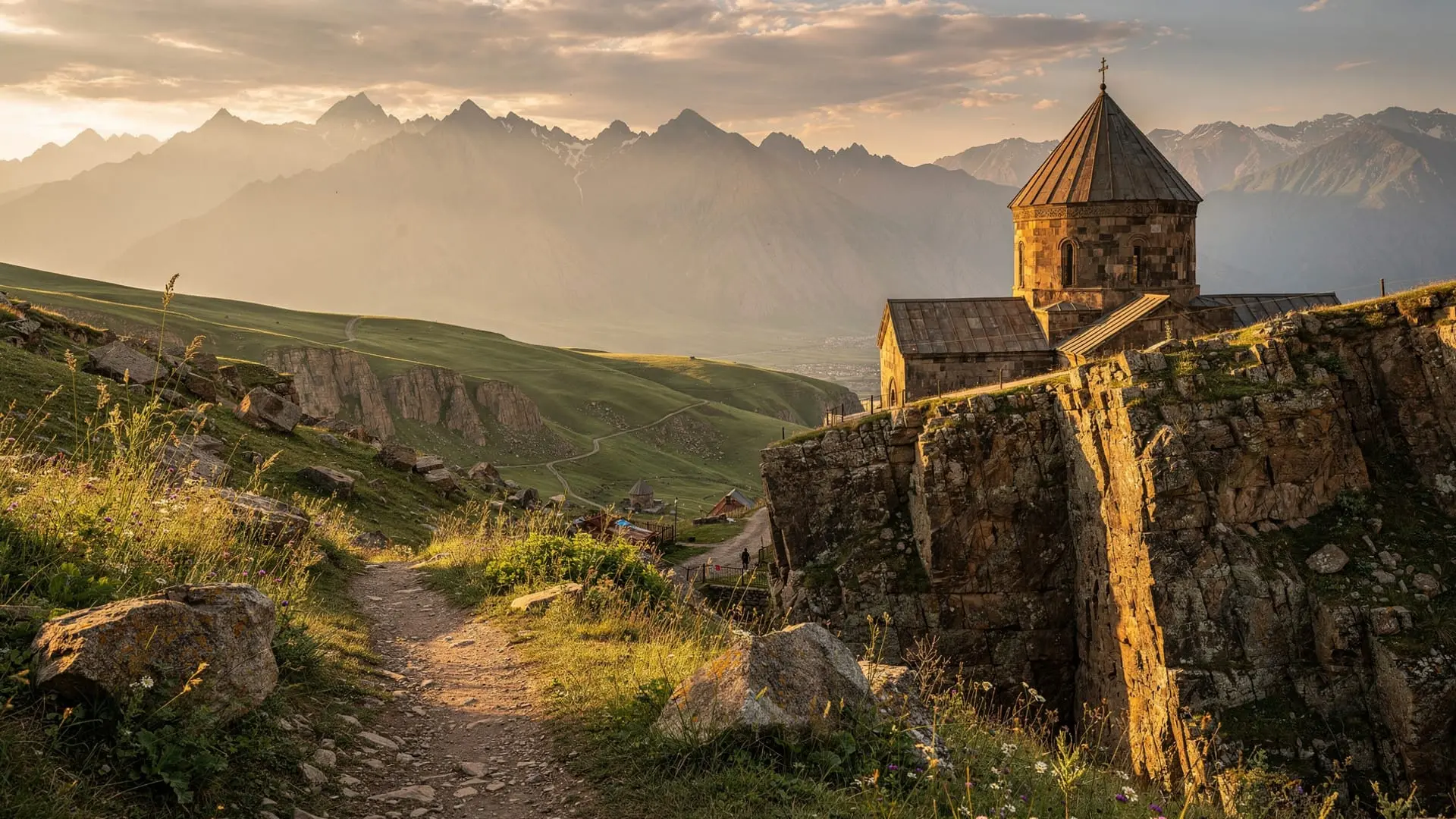
Yeghegnadzor is not a destination that makes it onto most Armenia itineraries as a headline attraction. It is a mid-sized provincial town of about 8,000 people, nestled in the Vayots Dzor gorge where the Arpa River runs between steep canyon walls. Yet its location makes it one of the most strategically useful overnight bases in southern Armenia — and for travellers who slow down, the surrounding area rewards exploration.
| Where | Vayots Dzor province, 130 km (2h30) from Yerevan |
| Cost | Guesthouses 10,000–20,000 AMD/night — cheaper than Yerevan |
| Time needed | 1 day; base for a 2-day Vayots Dzor circuit |
| Getting there | Self-drive via M2, or marshrutka from Kilikia Station (~3h) |
| Best time | May–June for blossom; Sept–Oct for the wine harvest |
Vayots Dzor is Armenia’s premier wine-producing province. The Areni grape — a dark-skinned variety found almost nowhere else in the world — produces structured red wines from vineyards at 1,000 to 1,500 metres altitude. The world’s oldest known winery, dated to approximately 4100 BCE, was excavated at the Areni-1 cave complex near the village of Areni, 22 km west of Yeghegnadzor. This deep history of winemaking is palpable in the landscape: small family vineyards line the gorge roads, and the grape harvest in September and October turns the surrounding hills golden.
Yeghegnadzor itself is a pleasant, unhurried town. The market operates daily, the food is unpretentious and good, and accommodation is notably cheaper than Yerevan. From here, a driver can reach Areni (22 km), Noravank monastery (35 km), Jermuk (40 km), and the Selim caravanserai (30 km) within an hour — making it an efficient hub for the Vayots Dzor circuit. It’s also the natural overnight stop for travellers continuing south toward Syunik and Tatev.
Getting there from Yerevan
By car: 130 km via the M2 highway through Ararat province. Allow 2 hours 30 minutes. The road is well-surfaced throughout, climbing gradually as it enters Vayots Dzor through a narrow gorge entrance near the village of Areni. This approach is itself scenic — the gorge walls narrow dramatically before opening out near Yeghegnadzor.
By marshrutka: regular departures from Yerevan’s Kilikia Station to Yeghegnadzor (about 2,500 AMD, 3 hours including stops). Services run several times daily. Marshrutkas back to Yerevan typically depart early morning and early afternoon — confirm times locally.
Onward from Yeghegnadzor: local taxis and shared transport to Jermuk (40 km, 1 hour, 1,500–2,000 AMD), Areni (22 km, 30 min), and Vaik (onwards to Syunik). For Noravank, you need a private taxi or tour (35 km via a canyon road — no public transport).
What to see
Selim caravanserai
The finest surviving medieval caravanserai in Armenia stands at 2,410 metres altitude, 30 km east of Yeghegnadzor along the road to Martuni and Lake Sevan. Built in 1332 on the orders of the regional governor (according to the inscription above the entrance), it served Silk Road traders crossing this high pass between eastern and western Armenia. The interior is a vaulted stone hall, dark and cool even in summer, with stone mangers along the walls where horses and camels were tethered. The building is intact and open — no entry fee, no facilities, no crowds. The drive up the pass is exceptional.
Areni village and wine caves (22 km west)
The village of Areni sits at the confluence of the Arpa and Arpa rivers below terracotta-coloured cliffs. The Areni-1 cave, a short walk above the village, contains the remains of the world’s oldest confirmed winery — leather wine vessels, fermentation vats, and a wine press all dated to the Chalcolithic period. The cave is open to visitors. Areni Wine Festival (held annually in late September or early October) is one of Armenia’s best seasonal events. See Areni.
Noravank monastery (35 km)
The red-cliff canyon leading to Noravank is among the most photographed landscapes in Armenia. The 13th-century monastery — with its famous double-staircase facade on the Church of St John — sits at the end of a narrow canyon carved into rose-red limestone. No public transport; a private taxi from Yeghegnadzor costs approximately 5,000–8,000 AMD return. See Noravank monastery.
Yeghegnadzor town itself
The town has a small ethnographic museum, a 5th-century basilica on the outskirts (Spitakavori Vank), and a lively covered market. Walking the main street takes 30 minutes. It is not a sight-heavy destination, but the canyon setting and the relaxed local atmosphere make it pleasant to base yourself here for a night.
Continuing to Jermuk or Tatev
Yeghegnadzor’s usefulness extends beyond Vayots Dzor’s immediate sights. Jermuk, the spa town with its thermal waters and waterfall, is 40 km east — a natural add-on for a second night if you want a soak after the wine route. Further south, the road continues into Syunik province toward Goris and Tatev monastery, making Yeghegnadzor a logical halfway stop on a longer southern Armenia loop rather than a there-and-back trip from Yerevan. For the fuller regional picture, see the Vayots Dzor wine route guide and the Armenia wine country overview.
How to shape a slow Vayots Dzor circuit
The temptation with Yeghegnadzor is to treat it as a pit stop, but the area rewards a slower rhythm. A well-paced circuit lets you spend a morning at one site, linger over a long lunch, and still reach your bed before dark. Keep the first day for the places closest to the town and save the high pass for a day when the weather is clear.
A sensible first day starts early with the red cliffs of Noravank, when the light is soft and the canyon is quiet. If photography is your priority, the Noravank monastery red cliffs guide explains where the best angles are. From there, drop down toward Areni for lunch and an afternoon among the vineyards, then return to town for the evening. If you would rather come out from the capital on a single long day, the Khor Virap and Noravank day trip shows how those two highlights are normally paired, and the Khor Virap page covers the monastery with the view of Mount Ararat that most visitors stop at on the way in.
The second day can then be given to the Selim pass, or to a hike if your legs are willing. The Smbataberd fortress hike climbs to a ruined hilltop fortress with long views over the valley, and suits travellers who want something more active than wine tasting. The Trinity Canyon vineyards guide is the better pick for a gentler day built around the landscape and the glass in your hand.
Wine, caves and what to taste
Wine is the thread that ties this province together, and it is worth understanding a little before you arrive. The Areni-1 cave guide tells the story of the ancient winery in more detail than a short visit can, and the Areni noir grape guide explains why the local variety tastes the way it does and what to look for on a label. For a tasting that is easy to arrange, the Hin Areni winery tour is a good example of a family-scale cellar that welcomes walk-in visitors.
Do not feel obliged to taste at every stop. One or two unhurried visits, where you actually talk to the people who make the wine, are worth far more than a rushed line of cellars. Ask what is made from local fruit besides the red wine; fruit wines and home-made spirits often appear on the table alongside the grape wines. If you are driving, arrange a designated driver or spread the tastings across two days, and remember that mountain roads are not forgiving after an afternoon of tasting.
Choosing the season
The character of the town changes a great deal across the year. Spring brings blossom and cool mornings that suit walking, while the heat of high summer is easier to bear up on the passes than down in the valley. Autumn is the headline season: the autumn vendanges guide describes what the harvest looks like on the ground, and the Areni wine festivals guide helps you plan around the main celebration. For a first-hand account, read the blog post on the Vayots Dzor harvest. If you want mild weather with fewer visitors, the shoulder season guide lays out the trade-offs between the early and late ends of the travel window.
Getting around once you are here
The valley is spread out, and the sights are not linked by public transport in any convenient way. Self-driving gives you the most freedom, and the car rental guide covers what to know before you pick up the keys. If you prefer not to drive, the marshrutka guide explains how the shared minibuses work, and the private tour versus marshrutka comparison helps you decide when paying for a driver is worth it. A hired driver is especially sensible for the canyon road, where waiting time at the monastery is part of the deal.
Where to go next
From Yeghegnadzor you can fold the town into a longer trip in several directions. For a full programme built around vineyards, see the five-day wine route itinerary. To continue south, the Khndzoresk and Tatev southern loop picks up where this page leaves off, passing through Goris and on toward the cave village of Khndzoresk. If a soak appeals more than another cellar, the Jermuk spa guide describes the thermal side of the region. Sisian is another useful stop for travellers who want to break the long drive south into shorter stages.
Tours and tickets
For the Vayots Dzor wine circuit with tasting included, the best-organised option is the dedicated wine route tour: Vayots Dzor wine route day tour, discovering Areni’s wineries .
For a two-day experience combining wine, brandy, and overnight stay in the area: 2-day wine and brandy tour with tastings, departing from Yeghegnadzor .
Practical tips
- Accommodation: Yeghegnadzor has several small guesthouses and one or two mid-range hotels. Prices are 10,000–20,000 AMD per room — significantly cheaper than Yerevan. Book ahead in September–October when wine tourism peaks.
- Food: the market has fresh fruit, bread, and local produce. Several restaurants on the main street serve Armenian standards; look for places advertising home-made tasting menus during harvest season.
- Selim pass in winter: the road to the Selim caravanserai is often snowed in from November to April. It may be passable with a 4WD in a mild winter, but verify locally before attempting.
- Wine shopping: family wineries around Areni sell direct. Prices are lower than Yerevan shops. Most welcome visitors who arrive at the winery gate and ask to taste.
- Currency: ATMs are available in town. Carry cash for restaurants and smaller guesthouses.
Frequently asked questions about Yeghegnadzor
Is Yeghegnadzor worth visiting on its own?
As a standalone destination with a half-day, there is limited to see in the town itself. Its value is primarily as a base for the surrounding area — Areni, Noravank, Jermuk, and the Selim caravanserai are all within 40 km. If you are driving through, it makes an excellent lunch stop and an efficient base for an overnight.
How do I get from Yeghegnadzor to Noravank?
There is no public transport to Noravank. The most practical option is a taxi from Yeghegnadzor — negotiate a round-trip price of 5,000–8,000 AMD including waiting time at the monastery (budget 1.5–2 hours there). Tour operators in Yeghegnadzor can also arrange this. Alternatively, join a guided tour from Yerevan that includes Noravank.
What is the Selim caravanserai?
A superbly preserved 14th-century roadside inn built to shelter Silk Road merchants and their animals on the high mountain pass between Yeghegnadzor and Lake Sevan. It is one of only a handful of intact medieval caravanserais in Armenia and the finest in the country. The pass road (2,410 m altitude) is stunning even without the building.
When is the Areni wine festival?
Usually the first weekend of October, held in and around Areni village, 22 km from Yeghegnadzor. Entry is free. Wineries, home producers, and food vendors set up stalls; Armenian folk music plays throughout. One of the most enjoyable annual events in the country.
Is Yeghegnadzor a good base for both Vayots Dzor and a Tatev trip?
Yes — it sits roughly halfway between Yerevan and Goris, making it a sensible overnight whether you’re focused purely on the wine route or continuing further south to Tatev monastery. Travellers doing a 3-day southern loop often sleep in Yeghegnadzor or Areni on night one, then push on to Goris the following day.
Should I stay in Yeghegnadzor or Areni village?
Areni is smaller and puts you directly among the vineyards, which suits travellers focused specifically on wine tasting. Yeghegnadzor has more services — a wider choice of guesthouses, restaurants, an ATM-equipped main street — and is the better choice if you want a functional base with slightly more comfort. Both are within 30 minutes of Noravank and the wine route.
2-day wine and brandy tour with tastings, departing from Yeghegnadzor