Is Armenia safe? Travel safety guide 2026
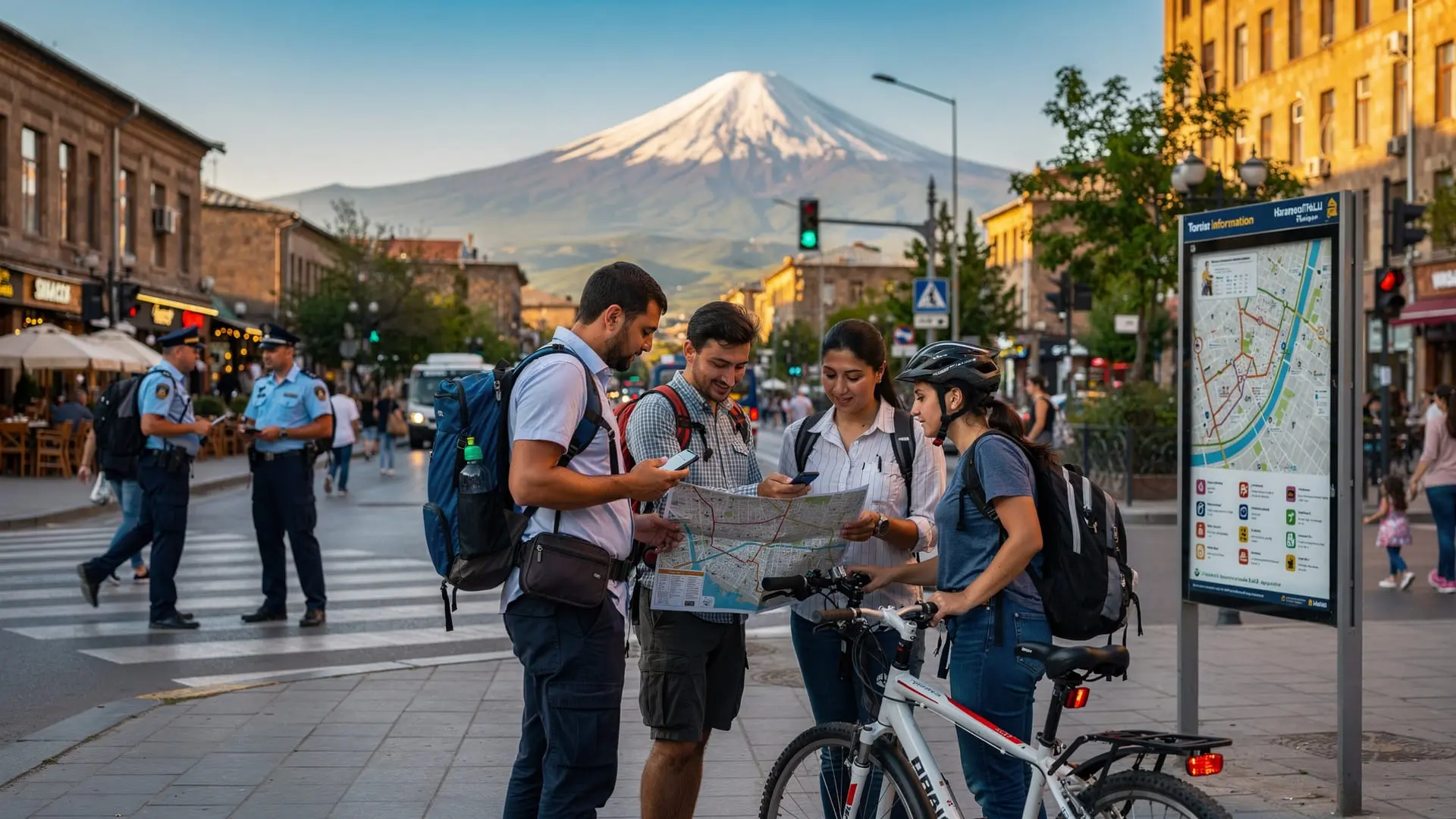
The safety picture in plain terms
Armenia consistently ranks as one of the safer destinations in the broader Caucasus and Middle East region. The Global Peace Index, Numbeo crime index, and traveller reviews across platforms point to the same conclusion: Yerevan and Armenia’s main tourist destinations are safer for tourists than the majority of Western European cities. Petty crime exists but is not a defining feature of the travel experience. Violent crime against tourists is rare.
That said, “safe” is never absolute, and some areas and situations require awareness. This guide covers the realistic picture.
| Overall risk | Low — comparable to a mid-sized Southern European city |
| Main concerns | Petty theft in crowds, taxi/currency scams, mountain roads |
| Areas to avoid | Azerbaijan border zone, former Nagorno-Karabakh (inaccessible) |
| Emergency number | 911 (unified); Police 102, Ambulance 103 |
| Insurance | Recommended, with medical evacuation cover |
Crime: the honest assessment
Petty theft: Pickpocketing occurs in crowded areas — the Vernissage market, public transport (particularly the Metro), and busy streets around Republic Square during peak hours. Keep phones and wallets in front pockets or a crossbody bag. The risk level is comparable to any mid-sized Southern European city.
Scams: The main tourist scam in Armenia involves taxi drivers who approach arrivals at Zvartnots Airport offering rides at inflated prices. Solution: always use the GG Taxi app (available on iOS and Android), which shows the fare upfront and uses GPS tracking. The app is reliable, cheap, and eliminates negotiation anxiety entirely.
Counterfeit alcohol: Counterfeit Ararat brandy is sold at the Vernissage market and from pavement sellers near tourist sites. Buy spirits only from the Yerevan Brandy Company directly, SAS supermarkets, or Yerevan City supermarkets. Never buy cognac or spirits from street vendors.
Currency exchange scams: Do not exchange money with unlicensed street changers. Use bank branches or licensed “Match” exchange counters. See our currency guide for details.
Restaurant overcharging: Restaurants on Republic Square with white tablecloths are known to charge tourists significantly more than comparable food elsewhere in Yerevan. Stick to the side streets and recommended establishments like Lavash, Sherep, Sayat-Nova, and Achajour, which are honest about their pricing.
Night safety
Yerevan has an active nightlife and is generally safe to walk at night in the central districts (Republic Square, Northern Avenue, Cascade area, Abovyan Street). Street lighting is good in these areas. The outlying districts after midnight warrant the same caution you would apply in any city at night.
Women travelling alone at night: Central Yerevan is comfortable for solo female night travel. Using GG Taxi for late-night journeys (rather than walking unfamiliar streets) is the sensible approach, as in any city.
Political and security context
Regional tensions: the short version
Armenia’s security landscape was significantly altered by the 2020 Nagorno-Karabakh war and events of September 2023. As of April 2026:
- The area formerly known as Nagorno-Karabakh / Artsakh is fully under Azerbaijani control and is not accessible to tourists and has not been since September 2023. This area is outside the scope of this guide and should not be considered as a destination.
- The border with Azerbaijan is closed and militarised. Do not approach border areas in Gegharkunik, Vayots Dzor, or Syunik provinces near the Azerbaijani boundary. Signs, military checkpoints, and local knowledge will guide you. Do not attempt to cross into Azerbaijan from Armenia.
- The border with Turkey is also closed (since 1993) and there is no crossing point.
- The Syunik corridor (Zangezur): Some media coverage discusses road access through Syunik. For tourists, the main roads through Goris and to Kapan are open and accessible. Do not venture into areas explicitly marked as military zones.
Day-to-day political situation in Yerevan
Armenia has been going through significant political transitions since 2018. Occasional demonstrations occur in Yerevan, particularly around Republic Square. These are generally peaceful. If you encounter a protest, observe from a distance rather than engaging, and take a different route if access is blocked.
Political sensitivities to be aware of:
- The Genocide of 1915 is a subject Armenians feel deeply about. Engaging with thoughtful, informed curiosity is appropriate. Expressing scepticism or minimisation is not.
- Nagorno-Karabakh: Armenians have strong and painful feelings about this. The 2023 events are recent history. Be a thoughtful listener, not a commentator.
Roads and driving safety
Armenian roads present the most concrete safety concern for travellers who drive independently:
- Mountain roads: Many routes to monasteries involve narrow, hairpin roads without guardrails. Geghard, Noravank, Tatev, and especially Aragats all involve sections that require careful, slow driving.
- Winter driving: From November through March, roads above 1,500 metres can ice over without warning. The road to Geghard from Garni and the approach to Tatev from Goris can be treacherous after snow. Check conditions locally before driving.
- Other drivers: Driving in Armenia requires defensive awareness. Traffic laws are observed inconsistently; lane discipline, particularly in Yerevan, is loose. City driving follows intuitive rather than regulatory logic.
- Speed cameras: Armenia has deployed speed cameras on main highways. Speed limits are generally 60 km/h in towns, 90 km/h on rural roads, 110 km/h on motorway sections.
If you are not an experienced mountain driver or not comfortable with challenging road conditions, hiring a private driver through a tour operator is the safer and significantly less stressful option. See our Armenia budget guide for cost comparisons between self-drive and guided transport.
Health and medical
Healthcare in Yerevan: The capital has several private hospitals and clinics with English-speaking staff. Erebuni Medical Centre and Astghik Medical Centre are among the better-regarded facilities. Medical care is affordable by Western standards.
Outside Yerevan: Medical facilities drop in quality and availability in rural areas. For serious injuries or emergencies, evacuation to Yerevan is standard.
Travel insurance: Essential. Standard travel insurance covering medical evacuation is recommended for any trip to Armenia, particularly if you plan hiking, skiing (Tsaghkadzor), or remote area travel.
Tap water: Tap water in Yerevan is generally safe to drink and is considered high-quality mountain spring water by locals. In rural areas, bottled water is advisable.
Food safety: Armenian food is generally safe. Exercise standard caution with raw meat dishes and unpasteurised dairy products bought from informal sellers.
Sun: Yerevan and the Ararat Valley in summer (July–August) hit 35°C+ with intense UV. Sun protection — hat, sunscreen SPF 50+, hydration — is genuinely important for outdoor sightseeing.
Altitude: Mount Aragats (3,879–4,090 m) presents mild altitude risk for those unacclimatised. Headache, fatigue, and shortness of breath are common above 3,000 m. Ascend slowly, stay hydrated, and descend if symptoms worsen.
LGBTQ+ safety
Armenia is a conservative country with respect to LGBTQ+ visibility. Same-sex relationships are legal but not recognised in law. Public displays of affection between same-sex couples attract unwanted attention in most contexts, including in Yerevan. A small but active LGBTQ+ community exists in the capital and there are some discreet venues, but this is not an openly progressive environment in the way that Western European cities are.
Practical advice: same-sex couples travelling in Armenia can have an excellent experience if they exercise the same discretion that local LGBTQ+ Armenians do in public.
Practical digital safety
Using public Wi-Fi: Yerevan cafés and hotels have good Wi-Fi. Use a VPN if you are accessing sensitive accounts (banking, work) on public networks — standard advice for any destination.
Phone security: Armenia’s cities are safe for phone use in public, but keep your phone in a front pocket on crowded metro carriages and at the Vernissage market. Petty phone theft is not a major issue but is not zero.
Geo-blocking and VPN: Some international streaming services may be geo-blocked in Armenia. A VPN on your device handles this routinely.
Scam patterns to know about
Beyond the taxi scam mentioned above, a few other patterns worth awareness:
The “carpet dealer” at Vernissage: A friendly approach offering to show you “antique” carpets with claims of family provenance. While some Vernissage dealers are genuine, the “antique” claim is often exaggerated. If you want genuine Armenian carpets, go to the Megerian Carpet Factory showroom or Yerevan Carpet company — both sell authenticated pieces at clear prices.
“Tour guide” offering cheaper rates: Unofficial guides approaching at popular sites like Garni or Khor Virap occasionally offer tours at prices below booked options. Quality and reliability are variable. Using a vetted guide through a booking platform provides a clear complaint mechanism if something goes wrong.
Fake police: Extremely rare in Armenia but occasionally reported in some CIS countries: individuals in unofficial-looking “police” attire asking to check passports and wallets. Real Armenian police carry clear identification. If approached, you can politely ask for identification and request that any discussion happen at the nearest police station.
Insurance: what you need
Medical coverage: The most important element. Medical evacuation from remote areas (Syunik province, for example, in the case of a hiking injury) can be expensive. Cover of at least EUR/USD 100,000 for medical expenses and EUR/USD 500,000 for emergency medical repatriation is standard.
Activity coverage: If you plan skiing at Tsaghkadzor, hiking above 3,000 m on Aragats, or adventure activities like zip-lining at Yell Extreme Park in Yenokavan, confirm your policy covers these. “Standard” travel insurance often excludes skiing and activities above certain altitudes.
Travel disruption: Given Armenia’s regional context and the occasional need to reroute travel (e.g., if a border situation changes), travel disruption coverage provides useful flexibility.
For budget travel, World Nomads and similar specialist adventure travel insurers are recommended. Standard annual European travel insurance policies (AXA, Allianz) often cover Armenia but verify the specific terms.
Safety by region: a quick comparison
Not every part of Armenia carries the same risk profile. This is a rough guide, not a substitute for checking current advisories:
| Area | Risk level | Main precaution |
|---|---|---|
| Yerevan city centre | Low | Standard pickpocket awareness in crowds |
| Lake Sevan / Dilijan / Gegharkunik | Low, but border-adjacent | Stay away from the Azerbaijan boundary east of Sevan |
| Syunik province (Goris, Tatev, Kapan) | Low on main roads | Do not leave marked roads near the border |
| Aragats / high-altitude hiking | Low crime, moderate physical risk | Altitude and weather, not crime |
| Former Nagorno-Karabakh | Inaccessible | Not open to tourists since September 2023 |
Families and children
Armenia is a genuinely comfortable destination for family travel. Monasteries, markets, and restaurants are welcoming to children, and Armenians are typically warm toward travelling families — expect unsolicited attention and affection toward kids, especially from older generations. The main practical concerns are the same as for any country: car seats are not always available with rental cars or drivers (request in advance), pavements in Yerevan can be uneven for strollers, and rural medical facilities are limited, so keep the nearest private clinic in mind if travelling outside the capital. See the Armenia family itinerary and kid-friendly monasteries guide for planning specifics.
Recent safety context (2026)
The security situation in Armenia proper has remained stable through 2025 and into 2026, with the peace process between Armenia and Azerbaijan continuing in fits and starts. For day-to-day travel around Yerevan, Dilijan, Lake Sevan, Tatev, and the wine regions, nothing about the political situation changes the practical safety picture described above. The one constant piece of advice: check your government’s travel advisory before departure, and register with your embassy if travelling to Syunik province near the border. For border logistics and the current state of crossings, see the Bagratashen border crossing guide and the Georgia–Armenia combined trip guide, both of which include up-to-date practical notes.
Natural hazards
Earthquakes: Armenia sits in a seismically active zone. The 1988 Spitak earthquake devastated the north. Minor tremors are not uncommon. In the event of an earthquake while inside a building, standard earthquake safety guidelines apply: shelter in a doorway or under a solid table, away from windows.
Flash floods: In spring (April–May), heavy rainfall can cause flash flooding in gorges and valleys. If hiking or driving through a river gorge after heavy rain, exercise caution.
Emergency contacts
- Police: 102
- Ambulance: 103
- Fire: 101
- Unified emergency number: 911
Keep your accommodation address and your country’s embassy contact information saved on your phone.
Frequently asked questions about safety in Armenia
Is it safe to travel solo in Armenia?
Yes. Solo travel in Armenia is comfortable for both men and women. Yerevan is compact and walkable, public transport is functional (though limited after midnight), and Armenians are generally helpful to travellers who ask for directions or assistance. Rural Armenia requires more self-sufficiency but is not dangerous.
Are there any areas I should avoid entirely?
Yes: the border with Azerbaijan in Gegharkunik, Syunik, and Vayots Dzor provinces. These are militarised zones and access is restricted or dangerous. Stay away from border markers and military installations. The former Nagorno-Karabakh area is completely inaccessible and should not be attempted.
Is it safe to hike alone in Armenia?
The popular trails (Aragats southern summit, Dilijan National Park, Jermuk waterfall) are fine for solo hiking with reasonable preparation. Remote trails on the Transcaucasian Trail in less-travelled areas require more caution — inform your accommodation of your route, carry a local SIM with data for navigation, and do not attempt unmarked routes without a guide.
What is the situation regarding the conflict with Azerbaijan?
The conflict over Nagorno-Karabakh concluded militarily in September 2023. As of April 2026, a peace process is ongoing between Armenia and Azerbaijan. The situation in Armenia proper is stable for tourists. The border region near Azerbaijan remains tense and should be avoided. For updated advice, consult your country’s foreign ministry travel advisory.
Is Armenia safe for Black travelers?
Armenia is predominantly ethnically homogeneous. Black travellers may encounter stares and curiosity, particularly in rural areas where international visitors are rare. Reported incidents of racially motivated aggression are uncommon, but microaggressions and overt curiosity are possible. The LGBTQ+ and general minority travel community has documented largely positive experiences in Yerevan’s cosmopolitan centre.
Do I need travel insurance to visit Armenia?
It is not a legal entry requirement, but it is strongly recommended. Medical evacuation from Syunik, Tavush, or high-altitude areas like Aragats can be expensive, and rural medical facilities are limited. A policy covering at least EUR/USD 100,000 in medical expenses, plus activity cover if you plan hiking or skiing at Tsaghkadzor, is the sensible baseline.
Is renting a car safer than using drivers or marshrutkas?
Not necessarily. Self-driving gives flexibility but exposes you to Armenia’s mountain roads, inconsistent lane discipline, and winter ice above 1,500 metres, all covered above. A private driver or organised tour removes that risk entirely, and marshrutkas, while basic, are a genuinely low-risk way to move between towns. See the private tour vs marshrutka comparison for the trade-offs.