Armenian public holidays and festivals calendar
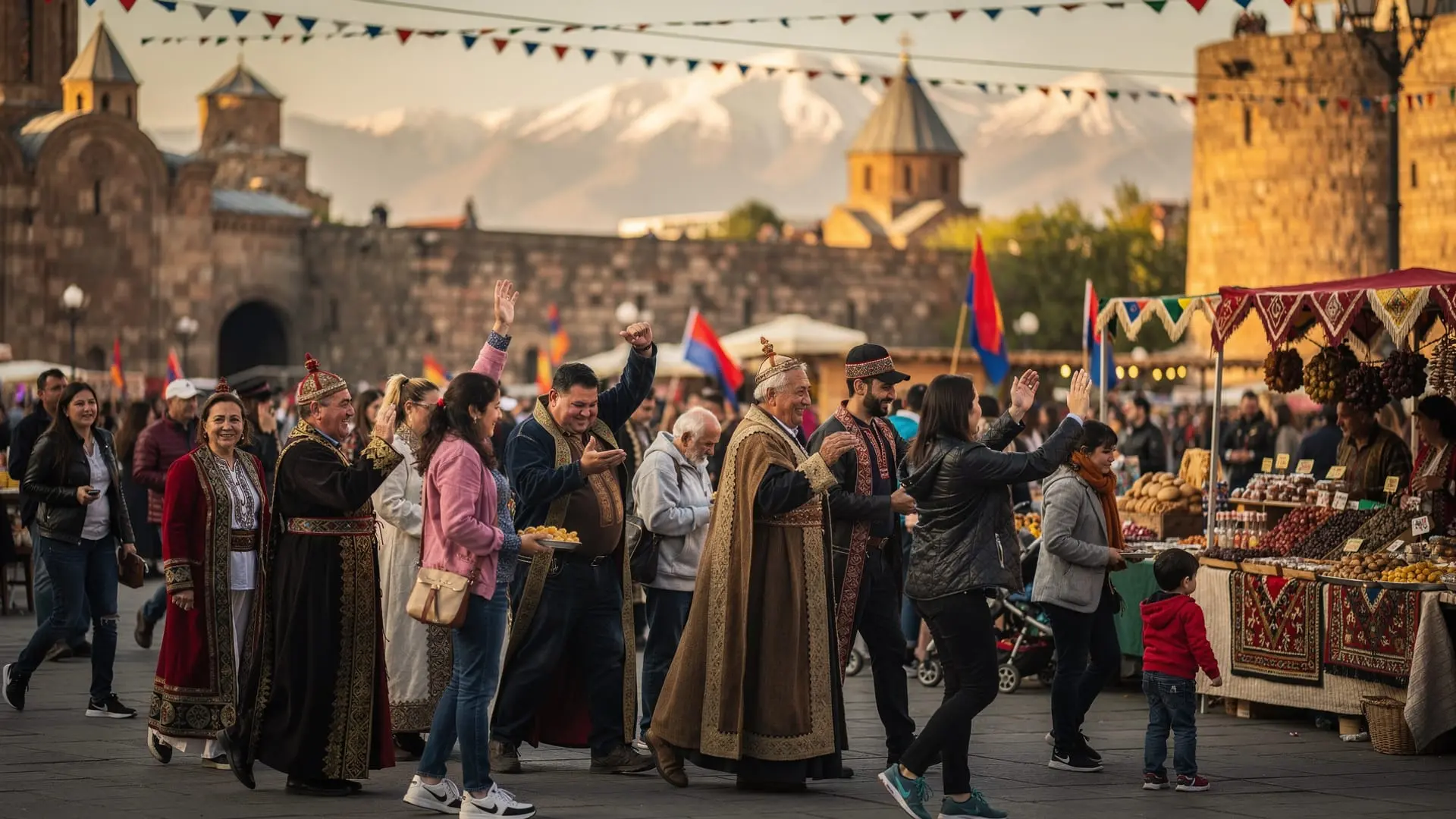
Understanding Armenian public holidays
Armenia’s public holiday calendar reflects its unique position at the intersection of Christian heritage, Soviet history, and modern national identity. Several dates that are ordinary working days elsewhere carry enormous significance in Armenia — particularly April 24 (Armenian Genocide Remembrance Day), which draws hundreds of thousands of people to Yerevan from across the diaspora.
For travellers, knowing the holiday calendar helps with three things: planning around business closures, scheduling visits to specific events and ceremonies, and understanding the emotional and cultural atmosphere you may encounter.
| Public holidays | 13 official dates, plus a de facto Jan 1–7 closure week |
| Biggest closures | New Year/Christmas week (Jan 1–7), April 24 |
| Best festival for visitors | Areni Wine Festival, first weekend of October |
| Banks/ATMs | Banks close on holidays; ATMs keep working |
| Museums | Usually closed on official public holidays — check ahead |
Complete list of Armenian public holidays
January 1–2: New Year (Nor Tari)
New Year is the major celebration in Armenia. December 31 through January 1 is an event — Republic Square fills with fireworks, families gather for elaborate midnight meals, and the city feels festive. The celebrations blend secular Soviet-era traditions (Grandfather Frost / Ded Moroz, New Year tree) with Armenian family hospitality.
Practical impact: Banks, government offices, many shops, and most businesses close January 1–2 and often stay closed through January 6 in a combined holiday week. Tourist restaurants in Yerevan tend to stay open. Stock up on cash before December 31.
January 6: Armenian Christmas (Surb Tsnund)
One of the most distinctive features of the Armenian calendar is that Christmas falls on January 6, not December 25. This is not a quirk — it is theologically significant. The Armenian Apostolic Church, one of the oldest Christian denominations in the world, did not adopt the December 25 date that Roman Catholicism and most Protestant churches use. January 6 was the original date for Theophany in the early church, combining the celebration of Christ’s nativity and baptism.
The eve of Christmas (January 5): The Khostan candlelight ceremony takes place at Etchmiadzin Cathedral and Armenian Apostolic churches nationwide. Families attend evening mass with candles.
Christmas Day (January 6): Morning church services are attended by large congregations. The traditional Christmas meal features trout, rice pilaf with raisins, gata (sweet bread), dried fruits and nuts, and wine. Families gather at home.
Western Christmas (December 25): Not an Armenian national holiday. Shopping malls and Western hotel restaurants may offer December 25 menus catering to international visitors, but it is not a public holiday and most Armenians work.
For the full guide to this unique celebration, see Armenian Christmas (January 6): traditions for travelers.
January 28: Army Day (Banak Orinats)
Commemorates the establishment of the Armenian Army in 1992. Military parades and official ceremonies in Yerevan. Some businesses close; government offices definitely close.
March 8: International Women’s Day
A public holiday with deep roots in the Soviet period — still widely celebrated across the post-Soviet world. Flowers are given to women, restaurants are busy, and there is a festive atmosphere. Most businesses close.
April 24: Armenian Genocide Remembrance Day (Tseghaspanutyan Zoherin Hishataki Or)
The most emotionally significant date in the Armenian calendar. The 1915 Genocide perpetrated against Armenians in Ottoman Turkey is commemorated with a mass march to Tsitsernakaberd memorial in Yerevan. This is not a tourist event — it is a profound national day of mourning and remembrance. Hundreds of thousands of Armenians and diaspora visitors walk together carrying flowers (usually forget-me-nots and red carnations).
For travellers: If you are in Armenia on April 24, participating in or respectfully observing the march is a moving and historically significant experience. Dress conservatively. Do not photograph individuals in obviously emotional moments without consent.
Practical impact: Most businesses close. Museums and cultural institutions have specific commemorative events. The Tsitsernakaberd complex and museum are open with extended hours.
See our guide to visiting Tsitsernakaberd Genocide Memorial.
May 1: Labour Day (Ashkhatavorutyan Or)
Standard international Labour Day. Government offices and banks close. Most shops and restaurants open.
May 9: Victory and Peace Day (Hatstanutyan yev Khaghaghutyan Or)
Commemorates the victory over Nazi Germany in World War II and (since 1994) the victory in the first Nagorno-Karabakh war. Military ceremonies in Yerevan. Banks and government offices close.
May 28: Republic Day (Hanrapetutyun Or)
Commemorates the establishment of the First Republic of Armenia in 1918 — Armenia’s brief period of independence before Soviet annexation. Parades, cultural events, and patriotic gatherings in Yerevan.
July 5: Constitution Day (Sahmanadrutyun Or)
Marks the adoption of the Armenian Constitution in 1995. A national holiday but less emotionally significant than others. Most businesses close.
September 21: Independence Day (Ankaxutyun Or)
Celebrates Armenia’s independence from the Soviet Union, declared on September 21, 1991. Fireworks over Republic Square in Yerevan, military parade, concerts, and popular celebrations. One of the more festive national holidays.
For travellers: The September 21 independence day celebrations in Yerevan are a genuine spectacle worth attending if you are in the country.
Major cultural and seasonal festivals
Areni Wine Festival (first weekend of October)
The most important single tourism event on the Armenian calendar. Held in the village of Areni in Vayots Dzor province, surrounded by vineyards, the festival brings together producers from across Armenia for a weekend of tastings, local food, music, and grape-stomping. Armenia is considered one of the oldest wine-producing regions in the world, and the festival celebrates this heritage.
When: First Saturday and Sunday of October
Where: Areni village, approximately 120 km south of Yerevan (about 2 hours by car)
Attendance: Growing each year — book accommodation in the Areni/Noravank area or Yeghegnadzor well in advance for festival weekend
Vardavar (Summer water festival)
A uniquely Armenian midsummer festival — part pagan, part Christian (officially celebrating the Transfiguration). The defining tradition is that anyone, anywhere, can soak any stranger with water. The festival falls 98 days after Easter, typically in late July. Yerevan’s streets become scenes of cheerful water warfare.
For travellers: Genuinely fun to participate in. Pack nothing you do not want soaked.
Yerevan Jazz Festival (October)
A growing music event attracting regional and international jazz acts to venues across Yerevan, including Malkhas Jazz Club.
Golden Apricot International Film Festival (July)
Yerevan’s prestigious annual film festival, showing Armenian and international cinema. Screenings at Moscovian Cinema and outdoor venues.
Navasard (Armenian New Year, August 11)
The traditional Armenian New Year as calculated by the ancient Armenian calendar. A lesser-known celebration outside Armenia, but increasingly observed as a cultural event.
Erebuni-Yerevan Festival (late September)
Celebrates Yerevan’s 2,800-year founding at the Erebuni fortress site. Cultural performances, historical re-enactments, and the fort itself open for special events.
Tsaghkadzor Winter Season (December–March)
Not a single-day festival but a season-long draw: Armenia’s main ski resort, an hour from Yerevan, comes alive with families and skiers once snow settles on the Teghenis range. New Year week is the busiest stretch on the slopes, mirroring the capital’s holiday calendar. See the Tsaghkadzor ski resort guide for lift passes and timing.
Festival calendar by month
| Month | Event | Where | Note |
|---|---|---|---|
| January | New Year & Armenian Christmas | Nationwide, Etchmiadzin | Biggest closures of the year |
| March | International Women’s Day | Nationwide | Restaurants busy, flowers everywhere |
| April | Genocide Remembrance (Apr 24) | Yerevan, Tsitsernakaberd | Solemn, not a festival |
| May | Republic Day, Victory Day | Yerevan | Parades and patriotic events |
| July | Golden Apricot Film Festival, Vardavar | Yerevan-wide | Water fights citywide on Vardavar |
| August | Navasard, grape blessing (Matnakhash) | Areni, Noravank | Harvest season begins |
| September | Independence Day, Khachverats, Erebuni Festival | Yerevan, monasteries | Shoulder season, festive |
| October | Areni Wine Festival, Yerevan Jazz Festival | Areni, Yerevan | Best single tourism event of the year |
| December | Tsaghkadzor ski season opens | Tsaghkadzor | Runs through March |
For a broader read on when to fold these dates into a trip, see the best time to visit Armenia guide and the Armenian wine festivals overview.
How holidays affect travel planning
Banking and money: Banks close on all official public holidays. Plan to have sufficient AMD cash before major holiday weekends. ATMs remain active.
Marshrutkas and transport: Most public transport runs on reduced schedules on major holidays (January 1–2, April 24, September 21). GG Taxi operates year-round.
Museums: National museums (Matenadaran, Erebuni, History Museum of Armenia) are typically closed on official public holidays. Check individual museum websites before planning a visit on or near a holiday.
Monasteries: Armenian Apostolic monasteries remain open on all public holidays — many are especially active and atmospherically beautiful during church holidays (Christmas, Easter). Some charge a small donation during major services.
Restaurants and tourism businesses: Tourist-facing restaurants and guesthouses in Yerevan are open on almost all holidays. Rural and local businesses may close.
Easter in Armenia
Armenian Easter (Zatik) is the most important religious holiday of the Armenian Apostolic Church, calculated on the Armenian calendar. It falls 1–5 weeks after Western Easter (itself variable). Services at Etchmiadzin Cathedral and churches across Armenia draw large congregations. Easter is not an official public holiday in the civil calendar, but it is treated as one culturally.
Red-dyed hard-boiled eggs are the traditional Easter symbol in Armenia, echoing the story of Mary Magdalene presenting an egg to Emperor Tiberius. The colour red symbolises the blood of Christ.
Planning your trip around Armenian holidays
Turning closures into features
Most travellers initially worry about business closures during Armenian public holidays. The right frame is the opposite: certain holidays make Armenia more interesting to visit, not less.
April 24 as a travel feature: Witnessing the Genocide Remembrance march — hundreds of thousands of Armenians and diaspora members walking together in quiet solidarity toward Tsitsernakaberd — is one of the most powerful experiences a traveller to Armenia can have. Plan to be in Yerevan, participate respectfully (bring flowers, walk with the crowd), and understand that you are witnessing something historically significant.
Armenian Christmas (January 6) as a feature: Attending the Etchmiadzin Christmas Eve candlelight service or the morning Christmas liturgy puts you inside a 1,700-year-old Christian tradition that most Western travellers have never encountered. The combination of Classical Armenian liturgy, incense, and candlelight in an ancient cathedral is unforgettable.
Independence Day (September 21) as a feature: Fireworks over Republic Square, military parade, concerts, and a genuinely festive atmosphere. Late September is already shoulder season in Armenia; Independence Day weekend adds a celebratory dimension at no extra cost.
Holidays to plan around (rather than embrace)
New Year week (January 1–7): If you are coming to Armenia primarily for museums, cultural institutions, or restaurant exploration, the extended January 1–7 closure period is genuinely disruptive. Schedule museum visits for the days before December 31 or from January 8 onwards.
January 6 at Etchmiadzin: The site is extraordinarily crowded on Christmas Eve (evening of January 5) and Christmas morning (January 6). If attending the service, arrive at least 90 minutes before the scheduled start. If visiting Etchmiadzin purely as a tourist site, January 7 is a better day — post-celebration quiet, site still decorated, vastly fewer people.
Religious festivals throughout the year
Beyond the public holidays, the Armenian Apostolic Church observes a liturgical calendar with numerous feast days. For travellers interested in religious heritage, several of these produce notable events:
Easter (Zatik): The most important religious feast. Variable date (April–May). Services at all Armenian Apostolic churches, with Etchmiadzin hosting the centrepiece liturgy.
Feast of the Holy Transfiguration: The Christian origin of the Vardavar water festival (July, 98 days after Easter). Churches hold services; the popular tradition of water-throwing takes over the streets.
Feast of the Holy Cross (Khachverats): Third Sunday of September. A particularly important feast for a country whose monks invented the khachkar (cross-stone). Special services at cross-bearing monasteries including Geghard, Khor Virap, and Haghpat.
The Blessing of Grapes (Matnakhash): A harvest blessing ceremony at churches in wine-producing regions, typically in late August or early September. At Noravank and churches in the Areni area, this ceremony is atmospheric and worth attending if you are in the region.
For the complete guide to Armenian religious heritage and the significance of specific feast days, see our Armenian Apostolic Church explained guide.
Etchmiadzin and Zvartnots day tour from YerevanPacking and planning around festival season
If your trip lands on a festival date, pack accordingly. For Vardavar (late July), bring nothing that cannot get soaked and consider a dry bag for your phone. For the Areni Wine Festival (October), warm layers help once the sun drops behind the Vayots Dzor hills, and comfortable shoes matter more than anything else since the festival grounds are unpaved. For Armenian Christmas Eve services at Etchmiadzin, dress conservatively and modestly — shoulders and knees covered — as you would for any working cathedral. Our seasonal packing list covers the specifics month by month, and families travelling around a holiday date may also want the Armenia family itinerary for pacing tips.
Beyond Yerevan, several regional towns run their own festival calendars worth building a trip around. Gyumri, Armenia’s self-declared cultural capital, hosts art and theatre events tied to its 19th-century architecture, particularly lively in late spring and early autumn. If jazz is more your evening than a wine festival, Malkhas Jazz Club in Yerevan runs live sets year-round and pairs naturally with an Independence Day or New Year visit.
Frequently asked questions about Armenian holidays and festivals
When is Armenian Easter?
Armenian Easter is calculated using the Armenian Apostolic calendar and can fall anywhere from April to early May, typically 1–5 weeks after Western Easter. In 2026, check the Armenian Apostolic Church’s official calendar for the exact date.
Is there a Santa Claus tradition in Armenia?
Armenia has a figure called “Dzmer Papik” (Winter Grandfather) — essentially the same concept as Father Christmas or Ded Moroz, associated with New Year (January 1) rather than Christmas (January 6). The gift-giving tradition in Armenia is tied to New Year, not Christmas Day.
What happens at Etchmiadzin on Armenian Christmas?
Etchmiadzin Cathedral — the mother church of the Armenian Apostolic Church, located 25 km from Yerevan — holds the most significant Christmas liturgy in Armenia on January 6. The service attracts thousands of worshippers and is broadcast nationally. Visiting Etchmiadzin on Christmas Day is a remarkable experience for anyone interested in Christian heritage. See our Etchmiadzin guide for visitor information.
Are there any holidays in Armenia that foreign visitors should particularly avoid?
April 24 is not a holiday to avoid — quite the contrary, it is deeply moving and worth experiencing. However, be aware that the atmosphere is solemn. Business operations are largely suspended. January 1–7 is the period with the most widespread closures, so avoid arriving in Armenia expecting to conduct business or access all services during this week.
Is Armenia a good destination for New Year’s Eve?
Yes. Yerevan puts on a genuine celebration — fireworks over Republic Square, street parties, restaurants packed with multi-course menus. The city is animated and festive. Accommodation books up in advance; make reservations 2–3 months early if you plan to be there December 31.
Do I need to book anything in advance for the Areni Wine Festival?
Yes, if you want to stay overnight nearby. The festival draws growing crowds to a small village, and the handful of guesthouses in Areni and nearby Yeghegnadzor sell out weeks ahead. A day trip from Yerevan avoids the accommodation squeeze entirely, since Areni is only around two hours away by car.
Can I still visit monasteries when Armenia is on a public holiday?
Almost always yes. Armenian Apostolic monasteries — Khor Virap, Geghard, Tatev, Noravank and the rest — stay open on public holidays, and church feast days often mean more activity, not less. It is civic institutions (banks, government offices, some museums) that close, not the monasteries.