Armenian brandy (cognac): a complete tasting guide
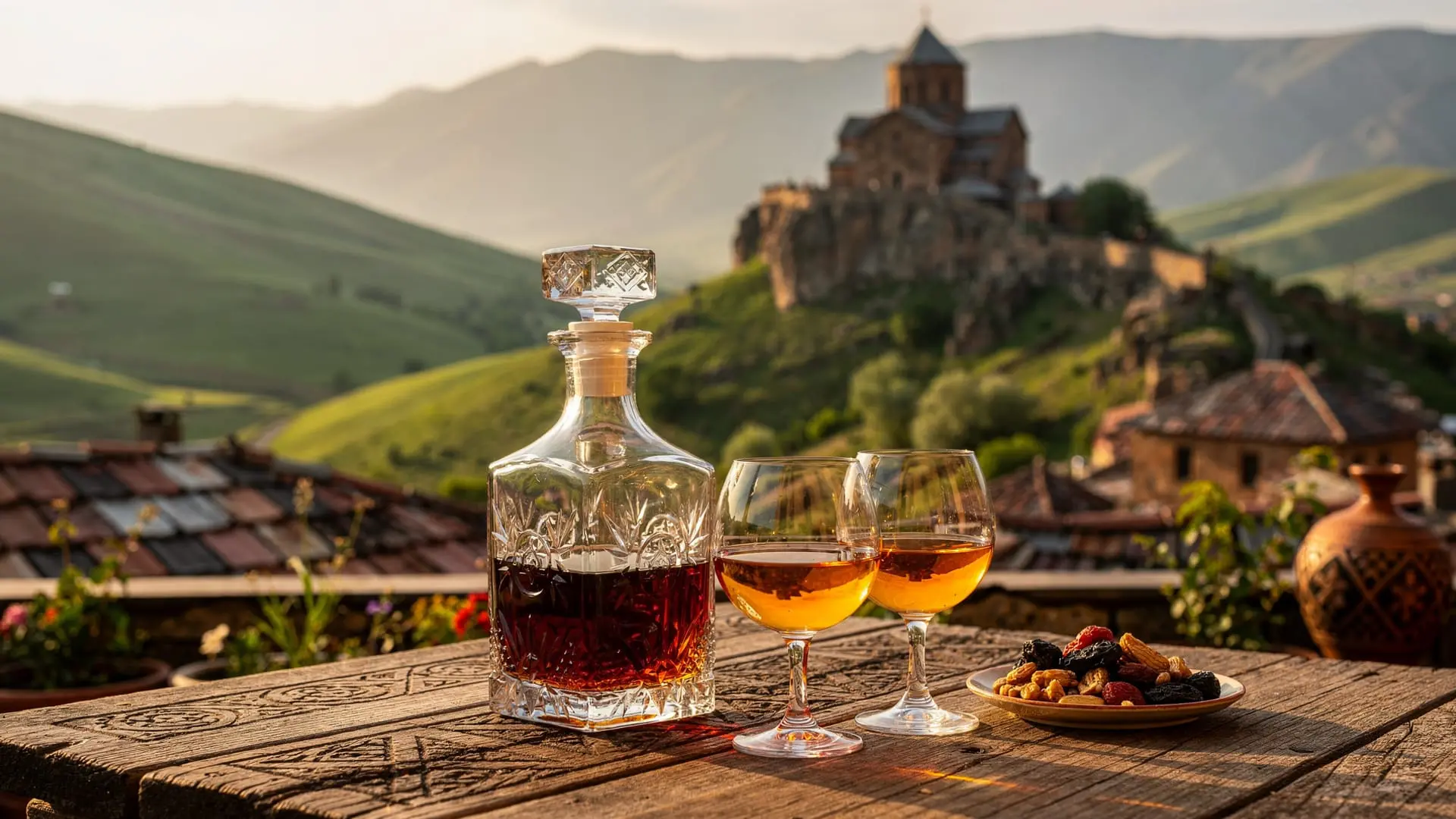
The spirit that confused Churchill — and delighted him
In February 1945, at the Yalta Conference, Winston Churchill was served a glass of Armenian brandy by Joseph Stalin. Churchill, already well acquainted with the best of French cognac, was reportedly astonished. He later told Stalin it was the finest brandy he had ever tasted and requested a case. Stalin, who was himself of Georgian origin but who knew Armenia’s brandy heritage well, is said to have obliged.
The story — which has passed into Armenian cultural lore and is repeated at every tasting room and tour — illustrates two things simultaneously: the genuine quality of Armenian brandy at its best, and the historical entanglement between the words “brandy” and “cognac” in Armenian usage. For most of the twentieth century, Armenian brandy was known internationally as “cognac arménien” — a label that caused enormous diplomatic friction with France after the Second World War, when Cognac producers sought to protect their geographical designation with legal force.
Today, the legal position is clear: cognac can only come from the Cognac region of Charente, France. Armenian brandy, however magnificent, is not cognac in any legal sense. But the word persists in everyday Armenian usage, in menus, in conversation, and in the self-presentation of older generations for whom “cognac” simply means the amber spirit produced in Yerevan since 1887.
This guide untangles the history, explains the production, identifies the aged expressions worth seeking, and tells you where to taste properly.
| Where | Yerevan Brandy Company, Marshal Baghramyan Avenue |
| Cost | Around 4,000–7,000 AMD ($10–17) for entry-level; 12,000–35,000 AMD ($29–85) for aged expressions |
| Time needed | 1–1.5 hours for a tasting and cellar tour |
| Booking | Recommended in advance, especially for group tours |
| Best for | Digestif-style tasting; pairs with dried apricots and walnuts |
Age comparison at a glance
| Expression | Age | Approx. price (500ml) | Character |
|---|---|---|---|
| Y / A / V | 3–5 years | 4,000–7,000 AMD ($10–17) | Light, fresh dried fruit, young oak sweetness |
| Akhtamar | 10 years | 12,000–15,000 AMD ($29–37) | Dried apricot, vanilla, toffee, gentle warmth |
| Nairi | 20 years | 28,000–35,000 AMD ($68–85) | Rancio, dried rose, prune, long dry finish |
| Dvin | 50+ years | 150,000 AMD+ ($366+) | Prestige blend, historical artefact of Soviet-era production |
A brief history: from 1887 to Ararat
The Yerevan Brandy Company — now producing under the Ararat brand name — was founded in 1887 by Nerses Tairyan in what was then the Russian Empire’s Transcaucasian region. The timing is significant: the 1880s saw Russian nobles and the Imperial court develop a taste for high-quality spirits, and the cognac-style brandy produced in Yerevan, using local grape varieties and aged in Limousin oak, quickly gained a reputation.
When the Bolsheviks nationalised the distillery in 1920, production continued under Soviet state management. Paradoxically, Soviet-era investment — particularly during the 1930s and 1940s — expanded the production facility and increased the quality of the aged expressions. The distillery became a prestige showcase for Soviet industry, its long-aged brandies distributed as gifts to foreign dignitaries and Communist Party officials.
The Churchill moment at Yalta was the zenith of this prestige — and also, in retrospect, a spur to the French cognac industry’s legal campaign against the use of the word. The post-war international trade agreements that gradually restricted “cognac” to its French designation were, in part, a response to Armenian brandy’s reputation.
After Armenian independence in 1991, the Yerevan Brandy Company was privatised and eventually acquired by the French spirits group Pernod Ricard, which continues to operate it today under the Ararat brand. The Churchill association remains central to the marketing; the quality of the aged expressions remains — genuinely — the reason to visit.
How Armenian brandy is made
The production method closely follows the double-distillation pot still approach used in Cognac, though the grape varieties and climate are entirely different.
Grapes: the primary varieties used for distillation are white wine grapes grown in the Ararat Valley — mainly Kangun, Mskhali, and Lalvari. These are harvested for high yield and relatively neutral flavour profile; the character of the brandy comes primarily from distillation, blending, and oak ageing rather than from the grapes themselves. Armenian wine grapes (Areni Noir, Voskeat) are generally not used for brandy production.
Distillation: base wine made from the harvest grapes is double-distilled in copper pot stills — the same apparatus used in Cognac — to produce a colourless spirit at approximately 70% ABV. The double distillation creates a spirit with considerable flavour complexity.
Oak ageing: the new spirit is placed in barrels of Limousin or Armenian oak (the Caucasian oak species Quercus petraea is used for some expressions) and aged in cellars at Yerevan Brandy Company’s main facility on the banks of the Hrazdan River. The ageing period determines the age statement: “Y” (3 years), “A” (5 years), “V” (5 years, an alternative 5-year expression), Akhtamar (10 years), Nairi (20 years), and Dvin (50+ years, a prestige blend).
Blending: like cognac, Armenian brandy is a blend of spirits of different ages and barrel origins. The master blender (in Armenian, the “Maestro”) determines the final expression. This tradition of blending is central to the style’s consistency across decades.
The aged expressions: what to order
Understanding the age statements helps navigate the Ararat range (and equivalent brandies from other Armenian producers).
Three to five years (Y, A, V)
The entry-level expressions — young, relatively light, with fresh dried-fruit character and the caramel sweetness of young oak ageing. Good in cocktails or as an everyday sipper. In Armenia these are ubiquitous at restaurants and are what you receive when you order brandy without specifying an age. Retail price in Yerevan: approximately 4,000 to 7,000 AMD (10 to 17 EUR) per 500ml bottle.
Ten years (Akhtamar)
Named after the island monastery on Lake Van (in present-day eastern Turkey), Akhtamar is where Armenian brandy begins to show its full character. Also visit the walled monastery at Akhtala in Lori for its renowned Byzantine frescoes. Ten years in oak brings dried apricot, vanilla, toffee, a hint of tobacco, and a warming length on the finish. This is the expression that most closely matches Churchill’s reported enthusiasm. Retail price: approximately 12,000 to 15,000 AMD (29 to 37 EUR) per 500ml.
Twenty years (Nairi)
Named after the ancient Armenian kingdom, Nairi is a serious brandy by any standard. Two decades in oak produce remarkable complexity: rancio notes (the characteristic slightly nutty, oxidative quality of long-aged spirits), dried rose and violet from the high-altitude grape spirit, beeswax, prune, and a long, dry finish with hints of clove and cinnamon. This is the expression to seek out if you are a genuine brandy enthusiast. Retail price: approximately 28,000 to 35,000 AMD (68 to 85 EUR) per 500ml.
Dvin and prestige expressions
Dvin, the flagship of the Ararat range, is a blend of brandies aged fifty years or more. It is extremely expensive (150,000 AMD / 366 EUR and above) and produced in tiny quantities. Primarily of interest as a historical artefact of Soviet-era prestige production. More accessible prestige expressions (20 to 30-year blends under special labels) are occasionally released and are well worth trying at the tasting room in Yerevan.
Other Armenian brandy producers
While Ararat/Yerevan Brandy Company dominates the market, several other producers are worth knowing.
Proshyan: a mid-sized producer offering competitively priced brandy across the range from three to twenty years. The 10-year expression offers excellent value compared to the equivalent Akhtamar.
Noy: a quality-focused independent producer with a range of aged expressions and a dedicated following among domestic consumers who prefer its somewhat drier, more austere style.
Tigran: a smaller operation with interesting older expressions produced in very limited quantities; harder to find but worth asking for at specialist bars.
All of these can be found at Yerevan’s main supermarkets (SAS, Yerevan City) and wine shops. Prices for these smaller producers generally undercut Ararat at equivalent ages, which makes them worth a taste-test comparison if you’re building a small home collection rather than a single showcase bottle.
Where to taste Armenian brandy
Yerevan Brandy Company tasting room
The Yerevan Brandy Company on Marshal Baghramyan Avenue operates a tasting room and cellar tour experience that is one of the most popular visitor attractions in the capital. See the full Yerevan Brandy Company guide for opening hours, tour details, and booking. The Armenian brandy tasting at the Yerevan Brandy Company is bookable directly through GetYourGuide.
The brandy tasting experience at Ararat factory
The Brandy tasting at Yerevan’s renowned Ararat factory is a popular tour that includes a guided walk through the ageing cellars and a seated tasting of four to five expressions from young to old.
Walking tours with brandy tastings
Several Yerevan city tours incorporate brandy tastings at multiple points. The Walking city tour with 10-year brandy and five wines combines a walking overview of Yerevan’s main sights with tastings at local bars and the brandy company.
Tourist traps to avoid
The Vernissage flea market in central Yerevan sells what appears to be Ararat brandy at unusually low prices. Many of these bottles are counterfeit — the liquid inside does not match the label. This is one of the most common tourist traps in Armenia. Always buy brandy from the Yerevan Brandy Company’s own shop, SAS or Yerevan City supermarkets, or established wine and spirits retailers. If the price seems too good to be true, it is. Genuine Ararat bottles have a capsule seal, a QR code on the label, and consistent bottling quality.
Armenian brandy in Armenian culture
Brandy holds a different cultural position in Armenia from wine. Wine (especially Areni Noir) is about regional identity and ancient roots; brandy is about a more complicated twentieth-century history — Soviet prestige, the Churchill story, the complex dance between Armenian national identity and Russian imperial culture.
At a traditional Armenian toast (a “barekendran”), brandy is the spirit of choice for the tamada (toastmaster). The first glass is typically offered with a toast to the motherland; subsequent glasses follow toasts to family, guests, and the future. Refusing the first toast is considered impolite; accepting and sipping (rather than downing) is universally understood.
The role of brandy in Armenian diasporic culture is equally significant. In Lebanese, French, and American Armenian communities, a bottle of Ararat is often the gift brought home from a trip to the homeland — as recognisable an ambassador of Armenian identity as a string of pomegranate seeds or a khachkar.
For the wine side of Armenia’s fermented culture, the Armenia wine country overview is the companion guide, and the Areni Noir grape guide goes deeper into the variety that anchors it. For the complete experience — wine in Vayots Dzor followed by brandy in Yerevan — the 2-day wine and brandy tour with tastings from Yeghegnadzor is the most efficient structured option. To pair a brandy evening with the food it’s designed to close, the Armenian food essential dishes guide covers the dried fruit, walnuts, and dark chocolate that traditionally follow a meal alongside a glass of Akhtamar or Nairi.
Frequently asked questions about Armenian brandy
Can I bring Armenian brandy home in my luggage?
Standard airline liquid allowances apply: 100ml in carry-on, unlimited quantities (within reason) in checked luggage provided bottles are properly packed. The Yerevan Brandy Company sells wooden gift boxes specifically designed for airline travel. Check your destination country’s alcohol import rules before purchasing large quantities. Zvartnots Airport’s duty-free shops also stock the main Ararat range, useful as a last-minute option if you run out of time in the city, though prices are marginally higher than at the Brandy Company shop itself.
What is the best Armenian brandy to buy as a gift?
The Akhtamar (10-year) is the most universally appreciated gift — old enough to be complex and impressive, accessible enough to be enjoyed without needing specialist knowledge. The Nairi (20-year) is the choice for serious spirit enthusiasts. Both are available at the Yerevan Brandy Company shop and major Yerevan supermarkets.
Is there a non-alcoholic Armenian equivalent to brandy?
Non-alcoholic versions of traditional Armenian drinks include mulberry juice, pomegranate juice, and various herbal infusions. There is no direct non-alcoholic equivalent to brandy as a category. Good pomegranate juice, particularly freshly pressed at the GUM market or juice vendors on Abovyan Street, is the best Armenian alternative for non-drinkers.
Does Armenian brandy pair well with food?
Armenian brandy is typically served as a digestif, after a meal rather than with it. The traditional pairing is with dried fruits — particularly dried apricots, which echo the stone-fruit notes in the spirit — and walnuts. The Akhtamar and Nairi are also excellent with dark Armenian chocolate and with aged local cheese.
What is the alcohol content of Armenian brandy?
Standard Armenian brandy is bottled at 40% ABV, in line with global minimum standards for aged spirits. Some prestige cask-strength expressions are bottled at higher proof (42 to 45%), but 40% is the norm for commercial releases.
How does Armenian brandy compare to Georgian chacha?
They are not really comparable products despite both being Caucasus spirits. Chacha is a Georgian pomace brandy, typically clear or lightly aged, distilled from grape skins and stems left over from winemaking — closer in style to Italian grappa, often much higher proof, and rarely aged for decades. Armenian brandy is a wine-based, oak-aged spirit built specifically for long maturation, closer in structure and intent to French cognac. If Georgian chacha is a rustic, immediate spirit, Armenian brandy is a deliberately slow one.
The grape connection: brandy and wine in the same valley
One of the often-overlooked connections in Armenian spirits culture is the geographic overlap between the country’s finest wine region (Vayots Dzor, home of Areni Noir) and the sourcing grounds for its brandy production (the Ararat Valley). They are separated by only 50 to 80 km of highway, and both draw on the same fundamental resource: Vitis vinifera vines cultivated in the South Caucasus for over 6,000 years.
The distinction is in variety and purpose. Armenian brandy is made primarily from neutral white wine grapes — Kangun, Mskhali, Lalvari — that are high-yielding and low in flavour compounds, allowing the distillation and oak ageing to shape the spirit’s character. Armenian wine (Areni Noir, Voskeat, Karmrahyut) is made from varieties selected over millennia for their specific flavour and aromatic qualities, which translate directly into the glass.
The two traditions represent different relationships with the same raw material — one emphasising transformation through fire and wood, the other emphasising the direct expression of grape and terroir. Understanding both enriches the appreciation of each, which is why the ideal Armenian spirits itinerary combines a visit to Vayots Dzor’s wine estates with a factory tour and tasting at the Yerevan Brandy Company.
Armenian brandy and the international wine cognac dispute
The post-war legal battles over the word “cognac” were genuinely consequential for the Yerevan Brandy Company. The 1958 Lisbon Agreement on protection of appellations of origin was a key instrument; subsequent TRIPS (Trade-Related Aspects of Intellectual Property Rights) provisions under the WTO extended these protections globally.
For the Yerevan Brandy Company, which had been labelling its exports “Armenian Cognac” for decades, the transition required reformulating marketing, redesigning export labels, and — most delicately — communicating to domestic consumers and diaspora buyers that the product was unchanged even as the label changed. The company navigated this by maintaining the colloquial use of “cognac” within Armenia while ensuring all export-destined bottles carried “Armenian Brandy” as the legal designation.
The resentment lingered among some Armenians who felt that superior quality should have granted an exception — that Armenian brandy had earned the name “cognac” by producing spirits that matched or exceeded the best of Charente. This argument is understandable but legally untenable; geographical indications function by protecting the place of origin rather than by rewarding quality.
The modern resolution is straightforward: call it “Armenian brandy” in formal contexts, understand that “Armenian cognac” means the same thing in casual usage, and focus on the liquid itself rather than the terminology.
Armenian brandy in cocktails
While the aged expressions are best appreciated neat as a digestif, the entry-level Y/A/V range has a genuine second life in cocktails, and several Yerevan bars have built menus around it. The most common local serve is brandy with a splash of pomegranate juice and ice — simple, and it works because the pomegranate’s tartness balances the young spirit’s sweetness. Some contemporary Yerevan bars also use young Armenian brandy in riffs on classic cognac cocktails (sidecars, brandy sours), swapping in Ararat’s Y or A grade in place of French VS-level cognac at a fraction of the price, with results that hold up well. If you’re curious rather than committed to neat tasting, ordering a brandy cocktail at a Cascade-neighbourhood bar is a lower-stakes way to try the spirit before investing in an aged bottle.
Buying Armenian brandy responsibly: a checklist
Given the counterfeit problem documented in Yerevan’s tourist markets, here is a simple checklist for purchasing genuine Armenian brandy:
- Buy from the Yerevan Brandy Company shop on Admiral Isakov Avenue for guaranteed authenticity.
- Buy from major supermarkets (SAS chain, Yerevan City chain) — these have secure supply chains.
- Buy from established wine and spirits shops on Abovyan Street and in the Cascade neighbourhood.
- Inspect the seal: a genuine Ararat bottle has a capsule that is continuous from the cap down the neck, with no evidence of resealing. The QR code on the label should scan to a genuine Ararat verification page.
- Check the price: Akhtamar (10-year) should cost 12,000 AMD or more for a 500ml bottle at any legitimate retailer. Significantly lower prices suggest either counterfeits or bottles with tampered labels.
- Avoid the Vernissage flea market for brandy specifically. The market is excellent for khachkar carvings, carpets, and jewellery; it is not a safe source for spirits.
The five-star brandy experience: Nairi in context
Visitors who have drunk the Akhtamar (10-year) and enjoyed it should seek out the Nairi (20-year) before leaving Armenia. The price difference is significant — roughly double — but the qualitative leap is even larger.
Twenty years in oak does something to Armenian brandy that no younger expression achieves: it creates rancio. Rancio is the French word for the nutty, slightly oxidative quality that develops in very long-aged spirits and in some aged wines (particularly Spanish fino sherry and old white Burgundy). It is unmistakable once you know it: a quality of dried walnut, slightly savoury, that underlies all the fruit and wood notes and gives the spirit a depth that is literally irreplaceable by any other means.
The Nairi also shows, more clearly than any other expression in the Ararat range, the quality of the base spirit — the clean, fine distillate that the Soviet-era Maestro produced and left to mature in oak. Twenty years of ageing does not compensate for inferior base spirit; it reveals it. The fact that Nairi is consistently impressive is a testament to the quality of production decisions made decades ago.
Tasting Nairi at the Yerevan Brandy Company’s tasting room, ideally as the conclusion to the cellar tour, is one of the genuinely memorable sensory experiences available to visitors in Armenia.
Where to keep drinking afterwards
A brandy tasting works well as the start of a Yerevan evening rather than its conclusion. Malkhas Jazz Club, a short taxi ride from the Brandy Company, pours Ararat expressions by the glass alongside live jazz and is one of the more atmospheric ways to keep the evening going. For a broader survey of where Yerevan drinks after dark, the Yerevan nightlife guide covers bars and clubs across the city centre and Cascade neighbourhood, while the Yerevan café culture guide is the daytime counterpart for anyone pacing themselves before an evening tasting.