Repat Armenia: resources for diaspora returnees
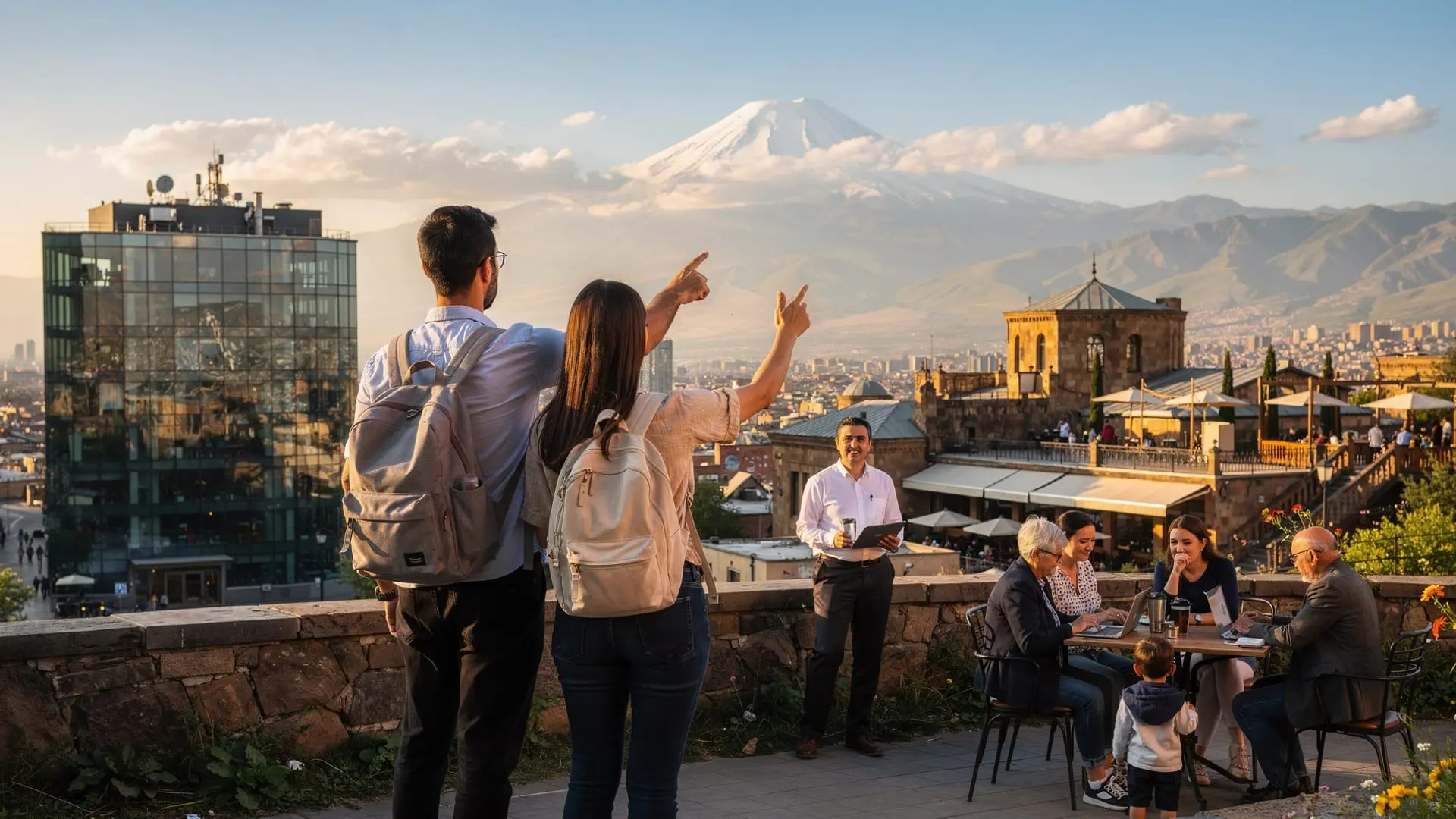
What it means to repat
Repatriation — “repat” in Armenian diaspora shorthand — is the act of a diaspora Armenian choosing to relocate permanently or semi-permanently to the Republic of Armenia. The movement has existed in various forms since independence in 1991, but gained significant momentum after 2018 (the Velvet Revolution) and again after 2020–2023 as geopolitical events reshaped what it meant to be an Armenian outside the homeland.
“Repat” is not a single experience. Some come for a year, fall in love with the country, and stay for ten. Some come intending to stay permanently and return to Los Angeles or Paris or Beirut after two years, having contributed something real and taken something back. Some are second-generation diaspora who came for a gap year and discovered they felt more Armenian here than anywhere else in their lives. The Repat Armenia organisation exists precisely because no two repat experiences are the same and most people need practical, individualised support to navigate the transition.
| Where | Repat Armenia office in Yerevan; consultations also available online |
| Cost | Free or low-cost advisory services, networking events and referrals |
| Time needed | One initial consultation (online or in person); ongoing support as needed |
| Getting there | Book via repatarmenia.org before or after arrival |
| Best time | Any time of year; many repats time a 3-month trial stay to include a winter |
Repat Armenia: the organisation
Repat Armenia (official website: repatarmenia.org) is a non-governmental organisation founded in 2013, based in Yerevan. It describes itself as an organisation that “welcomes diaspora Armenians and supports them in their journey of returning to the homeland.”
Services are free or low-cost:
Individual advisory consultations: One-on-one meetings (in person in Yerevan, or online for those still abroad) with staff who have navigated the repat process themselves. Topics covered include: registration and legal residency, employment market overview, housing search guidance, school enrolment for children, banking, healthcare navigation, tax considerations for dual residents.
Networking events: Repat Armenia organises regular social events in Yerevan for diaspora visitors and recent arrivals — dinner gatherings, cultural events, professional networking sessions. These are genuinely useful because the repat community in Yerevan is international in origin (American-Armenians, French-Armenians, Lebanese-Armenians, Argentine-Armenians, Australian-Armenians) and tends to cohere naturally.
Language class referrals: Repat Armenia can connect you with appropriate Armenian language programmes — both Eastern Armenian (spoken in Armenia) and bridging resources for Western Armenian speakers. See the Armenian language classes guide for the full programme overview.
Housing guidance: The Yerevan rental and purchase market has grown rapidly since 2018. Repat Armenia can point you toward reputable real estate agents who understand the diaspora situation (documentation, foreign bank accounts, remote purchasing) and away from those who don’t.
Employment and business: Repat Armenia maintains connections with employers actively seeking diaspora skills (particularly in technology, finance, healthcare and education) and with entrepreneurs who can advise on starting a business in Armenia.
Who repats?
The repat community in Yerevan as of 2026 is diverse in origin and motivation:
Young professionals (late 20s to 40s): Often from tech or creative industries, attracted by the lower cost of living compared to the US or France, the sense of contributing to a country rebuilding itself, and the quality of life. Yerevan has a growing tech sector (several large tech companies have substantial Armenia operations) that actively recruits diaspora engineers and managers.
Retirees: Some diaspora Armenians choose to spend retirement in Armenia, drawn by the low cost of living and the desire to connect with their roots in their later years. Yerevan’s private healthcare has improved significantly.
Families: Bringing children to be raised in an Armenian-language environment is a significant motivation for some diaspora parents. Armenian schools in Yerevan teach in Eastern Armenian, which differs from Western Armenian — a learning curve, but manageable.
Post-conflict arrivals: Following the 2020 Nagorno-Karabakh war and the 2023 displacement of Armenians from Karabakh, there was both a wave of new arrivals and a wave of diaspora volunteers and supporters who came to help and sometimes stayed.
Syrian Armenians: Following the Syrian civil war (2012 onwards), approximately 25,000–30,000 Syrian Armenians — most from Aleppo — relocated to Armenia. Many settled in the Nor Norq district of Yerevan. This community has its own relationship with repat, distinct from the diaspora-to-Armenia trajectory: they are returnees from a community that itself only existed because of the 1915 Genocide displacement. The Aleppo-Armenian community in Yerevan has brought its own food traditions, dialect, and cultural life that has enriched Yerevan significantly. See the Kessab and Aleppo roots guide for more on this community’s history.
The practical realities: what repats should know before arriving
Language barrier: Eastern Armenian and Western Armenian are different enough that diaspora Armenians who grew up speaking Western Armenian (most of the Lebanese, Syrian, American and French diaspora communities) will need an adjustment period. Eastern Armenian speakers (some Russian-Armenian diaspora, some Iranian-Armenian) face less friction. English is increasingly functional in Yerevan’s professional world, but not universally so.
Bureaucracy: Armenia’s bureaucratic systems have improved significantly but require patience. Registration (obtaining a residence permit), tax identification, and banking all require physical presence in government offices. Repat Armenia staff know the current procedures and can save you significant time.
Healthcare: Yerevan has decent private healthcare (Nairi Medical Center, MC Erebouni are the main international-standard private hospitals). State healthcare is rudimentary. Most repats use private insurance or pay out of pocket for private clinics.
Cost of living: Yerevan has become noticeably more expensive since 2022, when an influx of Russian and other foreign residents drove up rents and prices. As of 2026, a comfortable mid-range apartment in a central Yerevan neighbourhood costs approximately 400–700 USD per month in rent. By North American or Western European standards this is still affordable; by pre-2022 Yerevan standards it is significantly elevated.
Safety: Armenia is safe by regional standards. The conflict with Azerbaijan is formally over as of the September 2023 ceasefire and the end of Armenian presence in Nagorno-Karabakh, though the political situation remains complex and subject to change. The border with Turkey remains closed. Follow current news and government travel advisories.
Other diaspora organisations in Yerevan
Birthright Armenia: A programme placing diaspora youth (aged 20–32) in 3-month to 1-year volunteer placements in Armenia. Programme covers housing, stipend, and Armenian language instruction. A gateway to the repat experience for younger diaspora. Website: birthrightarmenia.org.
AGBU (Armenian General Benevolent Union): The largest Armenian non-profit in the world has a significant Yerevan presence. Runs educational programmes, cultural events, and social services.
Armenia Fund (Hayastan All-Armenian Fund): The major diaspora fundraising organisation for infrastructure in Armenia. Not a relocation resource, but an important channel for diaspora financial contribution. See the diaspora contribution guide.
IDeA Foundation: Innovative Development for Armenia — runs a range of programmes including youth education and technology development. Of interest to diaspora professionals in relevant fields.
Choosing the right first step
Diaspora Armenians exploring a move rarely need the same starting point. The table below is a rough guide to which organisation or programme fits which situation — treat it as a starting conversation rather than a strict rulebook, since Repat Armenia’s own advisors can redirect you if your circumstances span more than one category.
| Situation | Best first step |
|---|---|
| Curious, no firm plans yet | Repat Armenia online consultation |
| Aged 20–32, want a structured trial period | Birthright Armenia |
| Career professional considering full relocation | Repat Armenia + employer-specific tech/finance networks |
| Retiree exploring Armenia for later life | Repat Armenia housing and healthcare guidance |
| Family with school-age children | Repat Armenia school referrals + Arabkir neighbourhood research |
| Wanting to contribute financially without relocating | Armenia Fund or AGBU |
What repat Yerevan actually looks like
For diaspora visitors who are curious but uncommitted, understanding what daily repat life looks like in Yerevan is useful. The repat community is diverse, but some patterns emerge.
The Cascade neighbourhood: The area around the Cascade Complex — Tamanyan Street, Abovyan Street, the streets running north toward the Opera House — has become something of a repat hub. Coffee shops where diaspora accents are common, co-working spaces with bilingual signs, bars where English is as normal as Armenian. The neighbourhood has a specific energy: it’s where the intersection of local Armenia and diaspora Armenia is most visible.
Northern Avenue (Hյusisayin Prospect): The pedestrianised boulevard built in the 2000s is lined with apartments that attracted many early repats for their newness and central location. It has a slightly impersonal feel but is convenient.
Suburbs for families: Repat families with children often gravitate toward the quieter residential neighbourhoods of Arabkir, Ajapnyak, or the Nor Norq area (also home to the Syrian-Armenian community) where apartment sizes are larger and rents slightly lower.
Remote work: A significant proportion of recent repats are in technology roles, often working remotely for companies in the USA, France, or elsewhere. Armenia’s time zone (UTC+4) allows reasonable overlap with European working hours and less overlap with US hours but manageable for West Coast US. This model — Armenia-based life, globally-distributed income — is the economic backbone of many repat situations.
Social life: Repats often describe the social warmth of Yerevan as one of the most unexpected and significant aspects of the experience. The city is small enough that communities form quickly. Armenian social culture — the café that turns into a long conversation, the dinner that extends into the night — suits people who prioritise human connection over professional efficiency.
Winters: A recurring theme in honest repat accounts is that the first Yerevan winter is the real test. Central heating varies by building age and quality, some older apartments are poorly insulated, and the emotional adjustment of a grey, cold season without the familiar comforts of a home country can be harder than the summer honeymoon period suggests. Repats who time a trial stay to include at least part of winter tend to make more grounded long-term decisions than those who only visit in the warmer months.
Is repat right for you?
The honest answer: most people who consider repat don’t do it. The barriers — career interruption, children’s schooling, family separation, language adjustment, housing logistics — are real. But the barriers are navigable with preparation and support, and the Repat Armenia organisation exists precisely to help with that.
If you are seriously considering a move to Armenia — even for a year — the right first step is a consultation with Repat Armenia before booking a one-way ticket. Book an online consultation from wherever you are; the staff will give you a realistic assessment based on your specific situation.
If you are visiting Armenia for the first time as a heritage trip, attending one of Repat Armenia’s social events in Yerevan will connect you with people who have made the journey and can speak honestly about what it involves.
For a broader sense of how to make a heritage trip meaningful, see the Armenia heritage trip guide. For cultural preparation for meetings with relatives, see the meeting relatives guide. For language preparation, see the Armenian language classes guide.
Yerevan: Highlights and Culture Walking Tour with TastingsFrequently asked questions about repat and relocation to Armenia
Does Armenia offer any citizenship or residency programmes for diaspora?
Armenia’s citizenship law provides that ethnic Armenians (as defined by the law) can apply for Armenian citizenship after one year of legal residency. Diaspora Armenians who can document Armenian ethnicity may be eligible for facilitated naturalisation. The Armenian embassy or consulate in your country of residence can advise on current procedures.
Can I maintain my existing citizenship while taking Armenian citizenship?
Armenia allows dual citizenship. Most diaspora countries of origin (USA, France, Canada, UK, Australia, Lebanon) also allow their citizens to hold additional nationalities, though you should verify this for your specific situation.
What is the cost of living in Yerevan compared to Western cities?
As of 2026, Yerevan is materially less expensive than Paris, London, New York, or Sydney, but more expensive than it was 5 years ago. Monthly costs for a couple renting a central apartment, eating out regularly, and maintaining a comfortable lifestyle typically run to 1,200–2,000 USD per month.
How are children’s schools for repat families?
Yerevan has good private schools with strong academic programmes. The language of instruction is Eastern Armenian, which requires a transition period for Western Armenian speakers. Several schools have experience with diaspora children. AGBU runs a school in Yerevan with international experience. Repat Armenia can advise on school options.
Is there a supportive expat and repat community in Yerevan?
Yes, and it’s larger than most newcomers expect. Yerevan has a well-developed network of diaspora returnees across the American, French, Lebanese, Syrian and other communities. The monthly Repat Armenia networking events and the diaspora café culture (particularly in the Cascade area) make it relatively easy to find community.
What documentation do I need to bring for the initial Repat Armenia consultation?
For an initial online consultation, no documentation is required. For an in-person consultation focused on legal residency or employment, bring your passport, any Armenian-heritage documentation you have (your own or parents’ birth certificates, church records), and any professional qualifications. Repat Armenia staff will tell you what specific documentation the registration process requires.
How long do most diaspora Armenians stay before deciding whether to repat permanently?
There is no standard period, but a common pattern among those who ultimately relocate is: a 1–2 week heritage trip, followed by a 3-month stay (often through Birthright Armenia or a remote-work sabbatical), followed by a definitive decision. The 3-month period is long enough to experience the daily reality — winters included, if timed correctly — rather than the rose-tinted version of a short visit. Many repats describe the 3-month stay as the decisive experience.
Is there Armenian diaspora representation in Yerevan politics or public life?
Yes, increasingly. Several diaspora Armenians have taken roles in government, business, and civil society in Armenia since independence. The post-2018 Velvet Revolution government was notably more open to diaspora expertise and participation. Diaspora Armenians in technology, medicine, law, and education have contributed at senior levels.
What’s the best neighbourhood in Yerevan for a diaspora family just arriving?
The Arabkir district (north-west of the centre) is consistently recommended by repat families — larger apartments, good schools, relatively quiet streets, and close enough to the centre to walk. The Cascade area is more expensive but convenient. Nor Norq (home to the Syrian-Armenian community) is excellent for Western Armenian speakers who want linguistic and cultural proximity. Discuss your specific needs with Repat Armenia during your consultation.
Does Repat Armenia help with finding work, or only with the logistics of moving?
Both. Beyond housing and registration, Repat Armenia maintains relationships with employers actively recruiting diaspora talent, particularly in technology, finance, healthcare and education, and can make direct introductions. For entrepreneurs, staff can also connect you with the small but active community of diaspora-founded businesses and start-ups already operating in Yerevan, which is often the fastest way to understand the real regulatory and practical landscape for starting a company.
Is it possible to do a short trial visit before committing to a longer repat stay?
Yes, and it is the most commonly recommended approach. A heritage trip of 1–2 weeks gives a first impression, but most people who go on to relocate describe a longer trial — often 3 months, sometimes through a remote-work sabbatical or a Birthright Armenia placement — as the point where the decision actually crystallises, because it includes the unglamorous daily realities that a short visit does not surface.