Yerevan dining 2026: what's new, what's gone
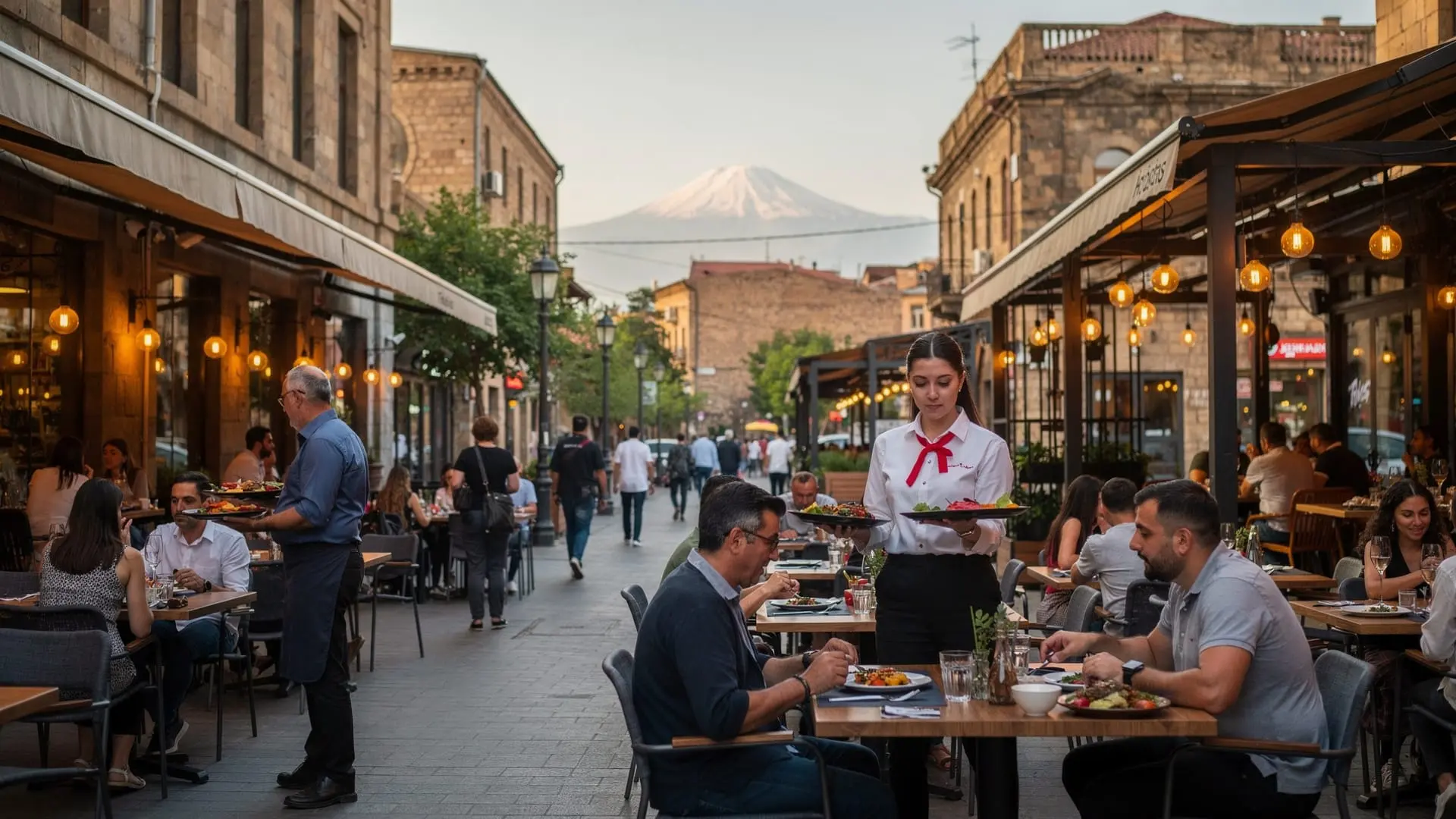
An October 2025 dispatch on Yerevan’s fast-moving dining scene — new openings worth knowing, closures worth mourning, and the trends (natural wine, coffee-shop lunches, fast-casual) reshaping how the city eats.
| Mid-range main course | Around 2,500–4,000 AMD |
| Book ahead for | Lavash, Nane |
| No booking needed | Yerb Yerb, most coffee-shop lunches |
| Best breakfast window | 7:00–10:00am at Abovyan Street bakeries |
| Skip | Republic Square restaurants — location premium, mediocre kitchens |
The scene that keeps shifting
Yerevan’s restaurant landscape has been moving quickly for the past several years, and the pace hasn’t slowed. The combination of a growing expat population (Russian and other post-Soviet professionals), returning diaspora Armenians, and an increasing volume of European visitors has created demand for a range of food that the city’s restaurateurs are working to meet. Some of what they’ve opened is excellent. Some of it is the kind of place that exists because demand exists, not because anyone has something genuinely worth saying with food. And some good things have gone.
This is a dispatch from October 2025, based on visits and conversations over the past year. Think of it as a working document rather than a definitive guide — the best Yerevan restaurants guide is updated more regularly.
What’s opened and worth knowing
Nane (Northern Avenue area): Opened in early 2025 and quickly established as one of the more interesting new arrivals. The kitchen works with Armenian culinary heritage in a way that’s serious rather than decorative — old recipes reconstructed from manuscript sources, seasonal ingredients from village cooperatives in Gegharkunik and Aragatsotn, a wine list that concentrates on small Armenian producers. The space is calm and considered. Reserve ahead.
Apricot (Abovyan Street): A wine bar with a small but precise food menu. The strength here is the wine curation — a genuinely knowledgeable list of Armenian and Georgian natural wines, with occasional bottles from Lebanon and Iran. The food is designed to accompany rather than star: cured meats, aged cheese from an Ararat Valley producer, excellent bread. Good for late evenings.
Yerb Yerb (Cascade area): A fast-casual concept serving Armenian street food — lahmacun, khorovats wraps, herb flatbreads — done with better sourcing than the genre usually implies. Open late, good for a quick meal before or after something at the Opera or the Malkhas Jazz Club.
What’s been lost
Some closures matter more than others and it would be dishonest to write a dining update without acknowledging the losses.
Gusto Café on Sayat-Nova closed in mid-2025 after ten years as one of the most reliably good lunch spots in central Yerevan. The cooking was Italian-Armenian fusion that sounds terrible and was in practice consistently excellent — pasta made in-house, vegetables from local markets, a small but thoughtful wine list. The building has been repurposed for something retail; I find it hard to look at without mild grief.
Sherep, the contemporary Armenian restaurant on the Cascade side, went through a significant kitchen change in early 2025 that resulted in a noticeably different menu and, in my visits, a noticeably less compelling one. It may recover; the space and the concept are still there. I include it here because the version that many people know from earlier years is not quite the version operating now.
Breakfast and the morning culture
One dimension of Yerevan eating that deserves more attention than it usually gets is breakfast. The Armenian breakfast tradition — brekfast in local parlance, which is a Russian-Armenian hybrid word — is substantial and specific: lavash or pita, a spread of cheeses (often salty white brined cheese), olives, fresh vegetables including tomato and cucumber regardless of season, eggs in some form, and a glass of tea. The version you get in a proper Yerevan café or guesthouse breakfast room is markedly better than the hotel buffet interpretation.
Several of the newer cafes in Yerevan have taken the breakfast moment seriously. Nane serves a breakfast that draws from the traditional spread but adds precision: house-pickled vegetables, eggs from identified suppliers, bread baked in the morning. Apricot opens at 8:30 a.m. and has a simple breakfast menu that is worth arriving for specifically.
The best breakfast experience in Yerevan, in my experience, is the one you have in the apartment of someone who knows how to shop at the GUM market and assemble things properly: fresh madzoon from a clay jar, honey from Lori, dried figs, good bread still warm. This is the platonic version. Everything else is an approximation, with some approximations being better than others.
What remains essential
The institutions that have survived these years of churn deserve acknowledgement:
Lavash (Tumanyan Street) continues to be the standard by which contemporary Armenian cooking is measured. The herb-heavy, sourness-attentive, seasonal approach that Ararat Sargyan and his team brought to the space when it opened has not been diluted by success. There is still a wait if you don’t book.
Tavern Yerevan is still the right place for a properly traditional Armenian meal: the setting (a converted merchant’s house in the old city), the food (lavash baked on the premises, a full spread of mezze, excellent khorovats), and the general atmosphere of a restaurant that knows exactly what it is and does it well.
Sayat-Nova (the restaurant, not the street it’s on) remains a reliable mid-range choice for Armenian classics — the ishkhan trout when it’s good, the tolma, the cold vegetable dishes. Not revelatory, consistently decent, well-located.
| Category | Example | Price level | Booking |
|---|---|---|---|
| Special occasion | Lavash | High | Essential |
| Traditional/mezze | Tavern Yerevan | Mid | Recommended |
| Wine bar evening | Apricot | Mid | Walk-in usually fine |
| Fast-casual street food | Yerb Yerb | Low | Not needed |
| Coffee-shop lunch | Lumen, Calumet | Low–mid | Not needed |
The trends shaping the scene
Natural wine is now mainstream in Yerevan. Two years ago, ordering an orange wine or a skin-contact white at a Yerevan restaurant got you a puzzled look. Now three or four wine bars and a dozen restaurants list Armenian natural wines as a matter of course. The Areni Noir grape, handled with minimal intervention and fermented in clay kvevri, makes a wine that’s winning international converts, and Yerevan is finally showing that wine off properly.
Vegetarian and vegan options are expanding, if unevenly. Armenia has a deeply meat-centred food culture, and many traditional dishes are naturally plant-based (the mezze spreads of fried aubergine, walnut paste, bean salads, and pickled vegetables are often outstanding). But the vegetarian experience has historically been hit-or-miss when you moved past the starters. The newer restaurants are better about this; some, like Nane, make it a point of distinction.
Delivery and fast-casual are eating into the mid-range. The mid-range sit-down restaurant (2,500-4,000 AMD per main course) is under pressure from well-designed delivery apps and a growing number of fast-casual concepts that offer comparable quality at lower overhead. This is pushing some mid-range operators to either improve significantly or drift toward tourist-oriented positioning, with the associated price inflation and quality compromise.
Republic Square dining still underperforms. This is a recurring theme. The restaurants with views of the famous dancing fountains and pink tuff buildings are, with a couple of exceptions, expensive and mediocre. The location premium is real and it subsidises lower kitchen standards. Walk two blocks in any direction and you will eat better for less money.
The coffee shop crossover
The specialty coffee scene and the restaurant scene in Yerevan have been converging. Several of the best cafes now serve food that is serious enough to constitute a meal — not just pastry and sandwiches but proper plates — and a few of the better restaurants have invested in espresso equipment and trained baristas in a way that would have been unusual three years ago.
This matters for visitors because it expands the options for informal eating. A Yerevan specialty coffee shop at lunchtime often has better food than a midrange restaurant, at lower prices, with a more interesting atmosphere. Lumen on Pushkin Street serves a rotating lunch menu that uses good seasonal produce; Calumet’s menu has grown into something that warrants a proper meal rather than just a coffee stop; several smaller places in the Mashtots and Moskovyan area have made similar moves.
For a visitor with limited time and a preference for the kind of place that feels genuinely contemporary rather than tourist-oriented, the coffee shop lunch circuit is consistently underrated. The Yerevan café culture guide covers the current landscape.
The market and bakery circuit
The best food in Yerevan is not all in restaurants. The GUM market on Mashtots Avenue — a covered market that has operated since the Soviet period — is the place to understand the Armenian pantry in its unprocessed state. Dried fruits and nuts from Aragatsotn and the Ararat Valley, spices including the distinctive combination of coriander seed and fenugreek used in basturma, fresh cheeses, preserved vegetables in enormous jars, smoked fish, and the season’s produce at prices that reflect actual value rather than tourist premiums.
Spending a morning at the GUM market before lunch makes any subsequent restaurant meal more legible. You understand where the ingredients come from and why the sour notes, the herb quantities, and the walnut presence in Armenian cooking are what they are. The market is also a good place to assemble a picnic if you’re heading out on a day trip to Garni or Khor Virap.
The Abovyan Street corridor has several bakeries that open early and sell fresh lavash, gata (the Armenian sweet bread with a layered walnut and butter filling that is the right breakfast on any morning), borek (filo with cheese or herbs), and various local pastries. The best time to visit is between 7:00 and 10:00 a.m. before the racks empty out. No tourist map shows these places because they are simply where Yerevantsees buy their bread; ask your accommodation host for the nearest good one.
The wine bar situation
The growth of Armenian wine bars in Yerevan deserves specific mention because it has been rapid and is now a genuine part of the visitor experience rather than a niche interest. Three or four dedicated wine bars and another eight to ten restaurants with serious Armenian wine lists have appeared in Yerevan in the past two years, and the quality of the curation at the best of them is comparable to what you’d find in wine-progressive European cities.
The Areni Noir from Vayots Dzor is the anchor for most lists: the indigenous red grape with its distinctive dried pomegranate and mountain herb character, made in a range of styles from fresh and light to aged and structured. Alongside it, the white Voskehat grape (clean, citrus-forward, underrated), the skin-contact amber wines that have attracted international attention, and a small but growing production of sparkling wines from highland grapes.
Visiting a wine bar in Yerevan in the evening is now a realistic alternative to a full restaurant dinner, and for visitors who are drinking more than eating, it’s often the better option. The conversation is better, the staff are more focused and knowledgeable, and you’re likely to taste something genuinely surprising.
A practical guide for visitors
For a first visit to Yerevan with limited meals: Lavash for a special dinner (book ahead — it fills quickly), Tavern Yerevan for the traditional experience, and one of the newer wine bars for an evening of Armenian wines. That covers the range from contemporary to traditional without repetition.
For visitors with more time: add a meal at Nane if reservations are available, breakfast at one of the Abovyan Street bakeries, and an afternoon at the GUM market followed by lunch assembled from what you find there. The food tour option below is the fastest way to be shown these places by someone who knows them.
The full Yerevan restaurant guide is updated quarterly and has current pricing and reservation notes for each establishment, including whether advance booking is required and what to order. For a broader sense of how the scene has evolved, the Yerevan restaurant scene 2026 update tracks changes across a longer period.