Getting around Armenia by marshrutka
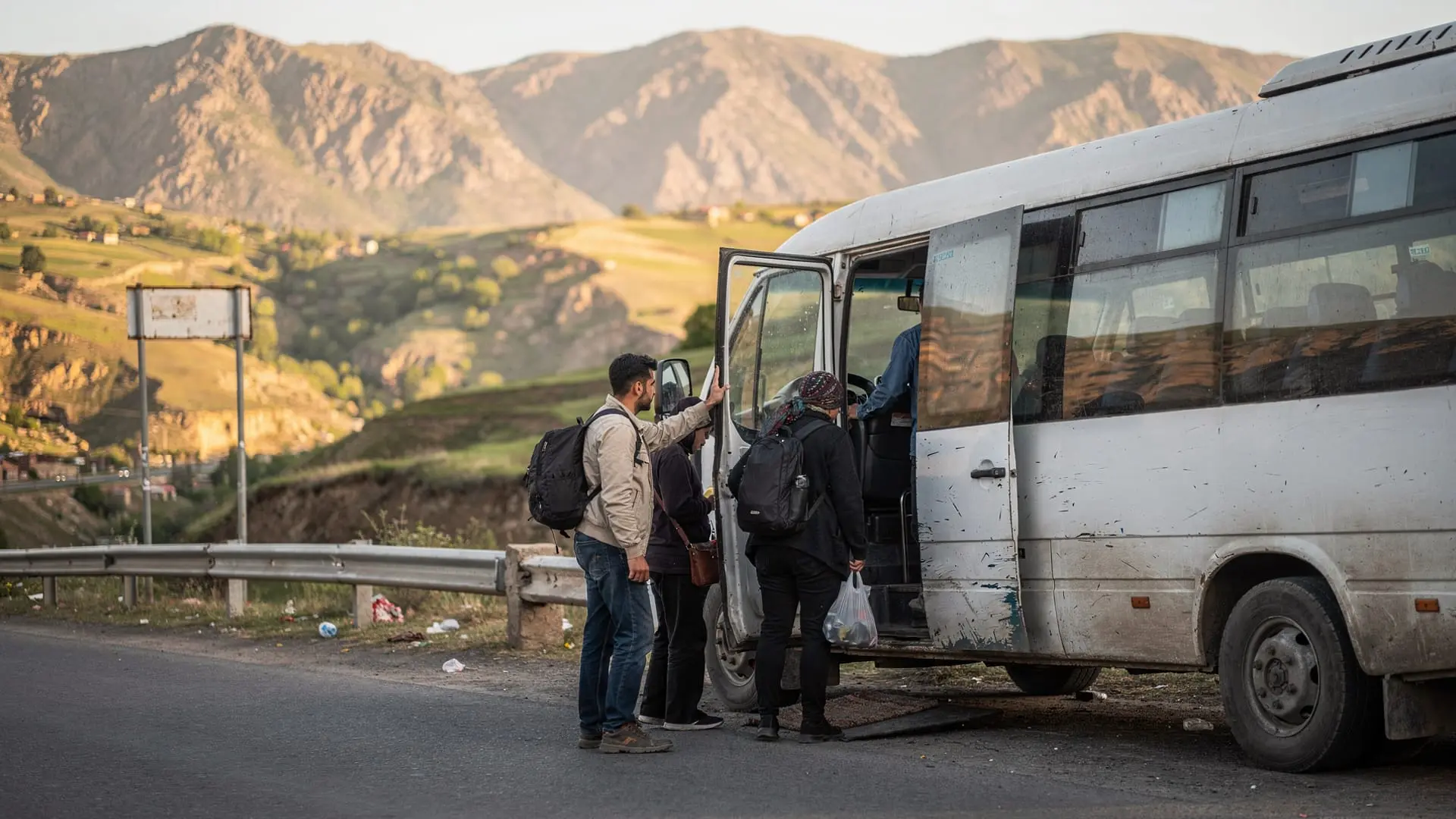
Armenia’s minibus network: cheap, authentic, and a little chaotic
The marshrutka — from the Russian word for “route taxi” — is the beating heart of Armenian public transport. For travellers willing to embrace its rhythms, it opens up the entire country for less than the cost of a coffee back home. For travellers who need to catch a tour at 09:00, it can be a source of frustration.
Understanding how marshrutkas work will help you decide when to use them and when to book a private tour or hire a car instead.
| What it is | Shared minibus, fixed route, departs when full |
| Cost | Around 400–9,000 AMD depending on distance |
| Where from | Mostly Kilikia Avtokayan terminal, Yerevan |
| Booking | Not possible — first-come, first-served, cash only |
| Best for | Simple point-to-point routes with flexible timing |
What is a marshrutka?
A marshrutka is a minibus — typically a Gazelle van or Soviet-era Mercedes sprinter holding 10–18 passengers — that runs a fixed route between two points. Unlike city buses, marshrutkas for intercity routes do not run on a timetable. They leave when every (or almost every) seat is taken.
This “departs when full” system is the single most important thing to understand about marshrutkas in Armenia. If you arrive at the terminal at 09:00 for the Goris marshrutka and only three other people want to go, you might wait two hours. During summer peak season, marshrutkas to popular destinations fill quickly. In winter or on weekdays to less-visited towns, waits can be long.
That said, the main routes (Yerevan–Dilijan, Yerevan–Lake Sevan, Yerevan–Gyumri) run frequently enough that you rarely wait more than 45 minutes.
The Kilikia bus terminal: your base in Yerevan
Almost all long-distance marshrutkas from Yerevan depart from Kilikia Avtokayan (the Kilikia bus terminal), also called the Gai terminal by older locals. It is located on Tigranashen Street, near the Sasuntsi Davit metro station in Yerevan’s south. Take the metro to Sasuntsi Davit (red line) and walk about 8 minutes, or take a GG Taxi directly.
The terminal is not a glamorous place — it is an outdoor courtyard of minibuses, with drivers shouting destinations and touts offering to find your vehicle. Despite appearances, it is safe, functional, and navigable even with no Armenian. Look for a minibus with your destination written (usually in Armenian script) on a board in the windscreen, ask other travellers, or simply say the city name and someone will direct you.
What to bring: Cash only (AMD), your luggage, and some patience. There is a small café inside for while you wait.
Note on destinations:
- South and central: Noravank, Areni, Jermuk, Goris, Tatev (via Goris), Sisian — all depart from Kilikia.
- North: Dilijan, Lake Sevan, Haghpat/Sanahin — also from Kilikia.
- Tbilisi (Georgia): also from Kilikia, though some operators use a different spot nearby.
The Yerevan northern bus terminal near Vahagni covers some northern routes (Gyumri, Vanadzor for some operators), so double-check for your specific destination.
Key routes and prices
All prices below are approximate for April 2026 and subject to change.
| Route | Approximate fare | Approximate journey time |
|---|---|---|
| Yerevan → Lake Sevan | 1,500 AMD | 1h 15min |
| Yerevan → Dilijan | 2,000 AMD | 1h 45min (via Sevan tunnel) |
| Yerevan → Gyumri | 2,000 AMD | 2h 30min |
| Yerevan → Etchmiadzin | 400 AMD | 40min |
| Yerevan → Goris | 4,000 AMD | 4h 30min |
| Yerevan → Jermuk | 2,500 AMD | 3h |
| Yerevan → Tbilisi | 9,000 AMD | 6h (border crossing included) |
| Yerevan → Vanadzor | 1,500 AMD | 2h |
Tatev does not have a direct marshrutka from Yerevan. You travel to Goris (4,000 AMD) and then take a local taxi or arrange onward transport for the last 30 km. The Tatev monastery guide covers the logistics in detail.
How to use a marshrutka: step by step
1. Find your marshrutka
At Kilikia, wander through the bays or ask a driver. For popular routes, the destination is written in Armenian on a card in the windscreen. Phonetic Armenian place names are fairly close to their English equivalents (Dilijan is Դիլիջան, Goris is Գորիս, Tbilisi is Թբիլիսի).
2. Claim your seat
Simply get on and take a seat — window seats fill first. There is no assigned seating. Put your luggage on the overhead rack or under your feet; the boot is sometimes used for large bags (ask the driver).
3. Pay the driver or conductor
Pay when you board or when the driver asks (usually at the start of the journey). The fare is fixed — there is no negotiation required. Have small-denomination AMD ready.
4. Tell the driver your stop
On routes with intermediate stops, tell the driver your destination. For fixed point-to-point routes (Yerevan to Goris, for example), the endpoint is obvious.
5. Depart when full
The marshrutka leaves when every (or nearly every) seat is filled. This could be 10 minutes or 2 hours. Early morning is usually the best time to catch marshrutkas headed to popular destinations — most depart between 09:00 and 11:00.
The Kilikia terminal in detail
Arriving at Kilikia for the first time can feel chaotic. Here is a more detailed orientation:
The terminal entrance is on Tigranasheni Street. Inside the gate, you find an outdoor courtyard with minibuses parked in informal rows. There is no centrally-displayed timetable — operations are managed informally by drivers and touts who know the routes.
Finding your marshrutka:
- Look for a minibus with a sign in the windscreen (Armenian script, sometimes with a Roman-alphabet transliteration).
- Ask a driver — say the city name clearly. Even with no shared language, “Dilijan?” or “Goris?” with a questioning tone works.
- Other travellers are often the most helpful resource. If you see a group loading luggage into a particular vehicle, ask if they are going your direction.
- There is typically a separate zone for Tbilisi-bound vehicles — drivers or terminal staff can point you there.
Facilities at Kilikia:
- A small café/kiosk selling sandwiches, coffee, and snacks is usually open from early morning.
- Toilets exist inside — basic, with an AMD coin charge.
- No formal left-luggage, but drivers sometimes watch bags briefly for a tip.
Getting to Kilikia: From central Yerevan, the most reliable option is GG Taxi (1,200–1,800 AMD). The Sasuntsi Davit metro station (red line) is about 8–10 minutes’ walk from the terminal. Any Yerevan local can point you toward “Kilikia Avtokayan” or “Gai kayan.”
Marshrutkas within Yerevan
Within Yerevan, the marshrutka network covers most city routes. Fares are 100–150 AMD (a flat rate per journey). The city also has a metro (4 stations on one line, also 100 AMD), and a growing number of modern buses. For getting between neighbourhoods, GG Taxi is usually faster and more comfortable — see the GG Taxi guide for how to use the app.
Marshrutka vs private tour: when to choose which
The marshrutka is the cheapest option by a wide margin, but it has real limitations:
Where marshrutkas shine:
- Simple point-to-point routes: Yerevan to Dilijan, Yerevan to Gyumri by train (recommended over marshrutka — see Armenia’s train network guide), Yerevan to Lake Sevan.
- If you have time and flexibility and no specific tours booked.
- If you want to travel the way Armenians do — a genuinely immersive experience.
Where a private tour or hired driver wins:
- Multi-stop day trips (Khor Virap + Noravank + Areni in one day is awkward by marshrutka — there is no direct link between them).
- Tatev: the combined journey from Yerevan is 5–6 hours each way by marshrutka+taxi vs. a 4-hour drive by car.
- Any site where the marshrutka drops you 2–3 km from the entrance (common with monasteries).
- If you want English commentary, flexibility on stops, or to travel with a group.
The private tour vs marshrutka comparison guide breaks down the cost difference for each major route.
Tbilisi by marshrutka or shared taxi
The Yerevan–Tbilisi route is one of the most popular in the Caucasus. Marshrutkas and shared taxis depart Kilikia from about 08:00 onwards; the journey takes 5.5–7 hours including the Bagratashen–Sadakhlo border crossing. Shared taxi drivers sometimes offer a faster and more flexible option at a higher price.
The Yerevan to Tbilisi overland guide covers all options including the night train — the best choice for comfort.
Practical tips
Luggage: There are no luggage fees on marshrutkas, but space is tight. Large backpacks or suitcases can be difficult. A day pack for day trips, with larger luggage stored at your accommodation, is the practical approach.
English: Very few marshrutka drivers speak English. Having your destination written in Armenian on your phone (Google Translate Armenian handwriting recognition works reasonably well) is helpful.
Women travelling solo: Perfectly normal and safe. Marshrutkas are used by everyone — families, elderly locals, students. You may get curious looks but no hassle.
Food and water: Buy provisions before boarding. There are no services on the vehicle and stops are infrequent on longer routes.
Smoking: Technically not permitted inside, but practice varies. If this bothers you, sit near the front.
Timing for day trips: For Dilijan, Lake Sevan, or Gyumri, an 08:30–09:30 departure from Kilikia gives you comfortably 4–5 hours at the destination before the return. The last marshrutka back from most destinations leaves by 16:00–17:00.
Marshrutkas vs. taxis vs. the train: a quick comparison
Not every route is best served by marshrutka. For the Yerevan–Gyumri corridor, the passenger train is a genuinely better option than the marshrutka — more comfortable, scenic, and on a fixed schedule; see the Armenia train network guide for timetables and fares. Within Yerevan and for short hops, GG Taxi is usually faster and only modestly more expensive than a marshrutka, especially split between two or more people. For multi-stop day trips to monasteries or wine country, a private driver or organised tour removes the awkward last-mile problem that marshrutkas create when they drop you kilometres from the actual site.
| Option | Cost | Flexibility | Best for |
|---|---|---|---|
| Marshrutka | Lowest | Low (fixed route, no schedule) | Simple point-to-point trips, budget travel |
| GG Taxi | Low–medium | High | Within Yerevan, short hops, groups of 2–3 |
| Train (Gyumri route) | Low | Medium (fixed schedule) | Yerevan–Gyumri specifically |
| Private tour/driver | Highest | Highest | Multi-stop days, monasteries, Tatev |
What a marshrutka journey actually feels like
For first-timers, the marshrutka experience is worth describing beyond the logistics. Expect a full vehicle, close quarters, and a driver who knows every curve of the road from memory — mountain routes like Yerevan–Dilijan through the Sevan tunnel or the descent toward Goris involve real elevation change and switchbacks. Music, usually Armenian or Russian pop, often plays from the driver’s phone or a small speaker. Fellow passengers are frequently happy to help an obviously lost tourist find their stop, even without a shared language — pointing, nodding, and a bit of goodwill go a long way. It is not a luxury experience, but it is an authentic slice of how most Armenians actually travel between cities, and many independent travellers count it among their most memorable transport experiences in the country.
Frequently asked questions about marshrutkas in Armenia
Do marshrutkas have a schedule?
No fixed schedule. Intercity marshrutkas depart when the vehicle is full (or nearly full). At Kilikia terminal in Yerevan, most major routes have frequent enough demand that you rarely wait more than 1–2 hours. Popular routes (Dilijan, Gyumri) often run from early morning until midday.
Can I reserve a seat on a marshrutka?
No. Marshrutkas are first-come, first-served. For very early departures on busy routes in peak season (July–August), simply arrive at Kilikia by 08:00–08:30.
Are there marshrutkas to Tatev monastery directly from Yerevan?
There is no direct marshrutka to Tatev. You take a marshrutka to Goris (4,000 AMD, about 4.5 hours) and then arrange local transport from Goris to the Wings of Tatev cable car station at Halidzor (about 30 km, 30–40 minutes by taxi). Many travellers use a private tour for this day trip given the distances involved.
What happens if the marshrutka breaks down?
This is rare but possible with older vehicles. Drivers usually manage to get another vehicle or arrange a shared taxi to finish the journey. It is part of the experience.
Are there marshrutkas to the airports?
Bus 201 connects Zvartnots airport with Kilikia/Gai terminal. It runs roughly every 15–20 minutes during the day (fare: 100 AMD). A GG Taxi to the airport from central Yerevan costs about 4,000–5,000 AMD — see the airport transfer guide.
What is the most useful marshrutka route for tourists?
Yerevan–Lake Sevan (1,500 AMD, 1h15) is the best introduction to marshrutka travel: the route is short, the destination is beautiful, and returns are frequent. Yerevan–Dilijan (2,000 AMD, 1h45) is the second most useful for independent travellers.
Are marshrutkas safe?
Armenia’s road safety standards are lower than Western Europe, and some drivers are enthusiastic overtakers on mountain roads. That said, marshrutkas run these routes daily without incident in the vast majority of cases. Seat belts may or may not be present and functional — this is Armenia’s bus network, not Swiss Railways. If a driver’s style makes you uncomfortable, get out at the next stop.
Should first-time visitors use marshrutkas or book tours?
Both have a place. For a simple, low-stakes route like Yerevan–Lake Sevan or Yerevan–Dilijan, a marshrutka is a great first experience and saves real money. For multi-site days (Khor Virap, Noravank, and Areni in one trip, for example) or Tatev, a private tour or driver is far more efficient — see the private tour vs marshrutka comparison for a route-by-route breakdown.
Can I bring a bicycle or large sports equipment on a marshrutka?
Small folding bikes sometimes fit in the boot space if the vehicle is not full, but there is no guarantee, and drivers can refuse if space is tight. For a bicycle-heavy trip, a private driver with a roof rack or a dedicated transfer is more reliable than depending on marshrutka boot space.