Yerevan's best museums ranked
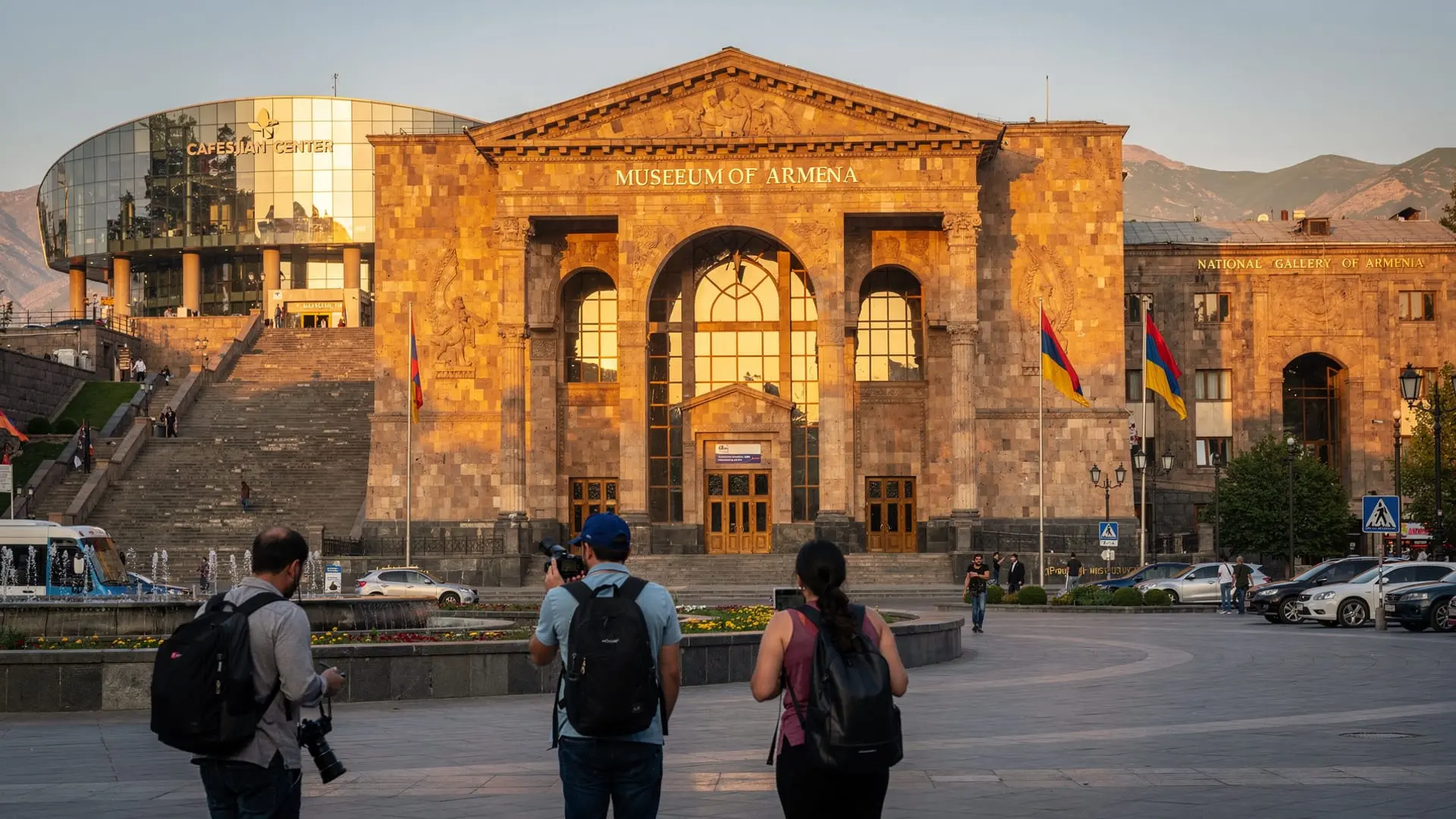
Seven museums, one city, limited time
Yerevan is a compact city with a surprisingly concentrated collection of serious museums. The problem for a visitor with three or four days is not finding things to do — it is choosing between institutions that each merit a full morning. This guide ranks the seven main cultural museums honestly, by the quality of the visitor experience they offer, with practical information on admission, timing, and what to prioritise if you cannot visit all of them.
| Must-see | Matenadaran — 90 min–2 hrs, ~1,500 AMD |
| Best for context | History Museum — 2–3 hrs, Republic Square |
| Most unique | Parajanov Museum — 1.5–2 hrs |
| Most atmospheric | Erebuni fortress & museum — 2 hrs |
| Total budget (all 7) | ~9,000–12,000 AMD (~22–29 EUR) with audio guides |
The ranking is based on: uniqueness of collection (does it exist anywhere else in the world?), quality of presentation, accessibility for non-specialist visitors, and the overall experience of visiting. Price is not a significant differentiator — most charge between 1,000 and 2,500 AMD (roughly 2.50–6 EUR at April 2026 rates).
1. Matenadaran (Mesrop Mashtots Institute of Ancient Manuscripts)
Verdict: The most important museum in Armenia. Non-negotiable.
The Matenadaran houses over 23,000 ancient Armenian manuscripts — the largest collection of medieval Armenian manuscripts in the world, and a collection that matters to the entire history of human knowledge (some Greek texts survive only in Armenian translation). The building, on a hill above Yerevan, is dramatic and well-designed; the permanent exhibition is informative without being overwhelming; the illuminated gospels and the story of Mesrop Mashtots’ alphabet creation in 405 AD are compelling for any visitor who gives them attention.
Best for: Anyone interested in history, civilisation, religion, or the history of writing. The visual quality of the medieval illuminations makes it accessible to those primarily interested in art.
Time needed: 90 minutes to 2 hours with audio guide.
Admission: ~1,500 AMD. Audio guide extra.
Practical: Tuesday–Saturday, 10 am–5 pm. 20-minute walk from Republic Square or short GG Taxi.
2. History Museum of Armenia
Verdict: The encyclopaedic foundation. Essential for context.
The History Museum on the north side of Republic Square covers Armenian history from the Palaeolithic to the 20th century across four floors. The Urartu collection — bronze weapons, ceremonial armour, gold jewellery from the Iron Age kingdom that preceded Armenia — is exceptional and rivals anything in the major international museums for quality. The early medieval period rooms and the extensive ethnographic section are also strong.
The presentation is somewhat old-fashioned (text-heavy, minimal interactivity) but the material is so compelling that this rarely matters. For understanding the long arc of Armenian civilisation, this is the necessary complement to the Matenadaran.
Best for: Those wanting a comprehensive overview of Armenian history before visiting archaeological sites (Erebuni, Garni).
Time needed: 2–3 hours.
Admission: ~1,500 AMD.
Practical: Tuesdays–Sundays, 11 am–6 pm. On Republic Square.
3. National Gallery of Armenia
Verdict: Strong Armenian art collection; excellent Saryan room.
The National Gallery shares the building on Republic Square with the History Museum but has a separate entrance and focuses on fine art rather than history. The collection spans 17th–20th century European and Armenian painting. The Armenian section is the stronger half: Vardges Sureniants’ romantic historical canvases, Hakob Kojoyan’s illustrations, and — most memorably — Martiros Saryan’s room of vivid, almost fauve-intensity paintings from the 1910s–1960s.
Saryan (1880–1972) is the most important Armenian visual artist of the 20th century and one of the most underrated painters of his era internationally. His Armenian landscapes and portraits use colour with a confidence and independence that would stand comparison with Matisse or Gauguin. The Saryan room alone justifies a visit.
Best for: Art lovers, particularly those interested in how European modernism was absorbed and transformed by an Armenian painter who bridged Russia, Europe, and the Armenian world.
Time needed: 1–2 hours.
Admission: ~1,500 AMD. Combined ticket with History Museum available.
Practical: Same building as History Museum; separate entrance on Republic Square.
4. Erebuni Historical-Archaeological Museum and Fortress
Verdict: The most atmospheric site in Yerevan; the founding story of the city.
The Erebuni museum and fortress sit on a hill in southeastern Yerevan, 8 km from the centre. Erebuni fortress was founded in 782 BCE by the Urartu king Argishti I — a fact documented by the founding inscription displayed in the museum — and its name is the origin of “Yerevan.” The museum houses the objects excavated from the site: the basalt founding stele, Urartu bronze weapons and ceramics, and fragments of the wall frescoes that decorated the palace.
The hilltop citadel above provides reconstructed walls, visible foundation plans, and views over modern Yerevan that make the 2,800-year span of the city’s history physically tangible. Erebuni is less visited than the central museums, which makes it one of the more relaxed and enjoyable experiences in the city.
Best for: Anyone interested in ancient civilisations, Urartu, or the physical experience of standing on an archaeological site.
Time needed: 2 hours (museum + hilltop).
Admission: ~1,500 AMD.
Practical: GG Taxi from centre (10–15 minutes, ~1,000 AMD). Tuesday–Saturday.
Yerevan City Tour: Discover an Old and New Yerevan5. Parajanov Museum
Verdict: The most unique museum experience in Yerevan. Essential for art and film lovers.
The Parajanov Museum is dedicated to Sergei Parajanov (1924–1990), the visionary Soviet Armenian filmmaker whose experimental films — “The Color of Pomegranates” (1969), “The Legend of Suram Fortress” (1985) — were so unclassifiable that the Soviet authorities imprisoned him on fabricated charges rather than permit his continued work.
The museum displays Parajanov’s personal art: hundreds of collages, assemblages, and visual constructions made during and after his imprisonments, using found materials (buttons, fabric, wire, photographs, dolls) to create dense, surreal, deeply personal images. The museum is housed in a restored traditional Armenian courtyard building and designed to feel like entering Parajanov’s mind. It is among the most singular museum experiences anywhere in the Caucasus.
Best for: Anyone interested in film, visual art, Soviet cultural repression, or Armenian artistic identity.
Time needed: 1.5–2 hours.
Admission: ~1,500 AMD.
Practical: 10 minutes east of Republic Square on foot.
6. Armenian Genocide Memorial and Museum (Tsitsernakaberd)
Verdict: Necessary. Emotionally different from the other museums.
Tsitsernakaberd — the Genocide Memorial complex on a hill southwest of central Yerevan — includes both a memorial monument and a dedicated museum documenting the Armenian Genocide of 1915. The museum is professionally presented, with historical documents, photographs, survivor testimonies, and international diplomatic correspondence tracing the events of 1915–1923.
This is not a cultural museum in the same sense as the others on this list — it is a memorial institution. The experience is sombre and demands a different kind of attention. But it is important. No understanding of Armenian identity, diaspora experience, or modern Armenian history is complete without it. The memorial itself — a circular basalt structure with an eternal flame — is architecturally significant and the view of Mount Ararat from the hill is the best in the city.
Best for: Anyone wanting to understand modern Armenian history and identity. Particularly important for diaspora visitors.
Time needed: 2–3 hours.
Admission: Museum free.
Practical: GG Taxi from centre (15–20 minutes). Open daily.
7. Cafesjian Center for the Arts (Cascade)
Verdict: World-class glass collection in an extraordinary building. Best combined with the outdoor sculpture.
The Cafesjian Center, housed inside the Cascade Complex, ranks last on this list only because it is the most internationally standard of the Yerevan museums — a high-quality art collection of the kind you could find in a contemporary art museum in any major European or North American city. What makes it exceptional is the combination with the Cascade’s outdoor sculpture garden (free, with Botero bronzes and Lynn Chadwick pieces) and the extraordinary building it occupies.
The indoor collection — strong in studio glass, solid in contemporary sculpture — is genuinely world-class in the glass section. The temporary exhibitions have been variable.
Best for: Contemporary and modern art enthusiasts; architecture lovers; those who want a museum experience that connects to the international art world.
Time needed: 1.5–2 hours for galleries; additional time for the outdoor sculpture.
Admission: ~1,500–2,500 AMD for galleries. Outdoor sculpture free.
Practical: Base of the Cascade on Tamanyan Street. Tuesday–Sunday.
Museum-by-museum practical details
Good curatorial experiences are ruined by arriving at a closed door or missing the audio guide desk. Here is the full practical breakdown for each institution.
Matenadaran — practical details
Hours: Tuesday–Saturday 10:00–17:00. Closed Sunday and Monday. Tickets: Adults ~1,500 AMD; students ~700 AMD; children under 7 free. Audio guide (English, French, Russian) ~1,000 AMD extra. Staff-guided English tours available by advance booking.
Photography: Permitted without flash in permanent galleries; follow posted signs for display cases. Languages: English labels throughout; English audio guide strongly recommended.
Shop: Reproduction prints, manuscript art books, postcards. No café on site — nearest options on Mashtots Avenue (5 min downhill). Accessibility: Ramp entrance, elevator to upper floors, main galleries wheelchair-accessible. Kids: Ages 8+ engage well with the illuminated manuscripts; the outdoor Mesrop Mashtots statue is a good stop for younger children.
History Museum of Armenia — practical details
Hours: Tuesday–Sunday 11:00–18:00. Closed Monday (ticket desk closes 17:30). Tickets: Adults ~1,500 AMD; combined ticket with National Gallery (same building) ~2,500 AMD — saves queuing twice.
Photography: Permitted throughout. Languages: Some English labels; audio guide exists but coverage is uneven. Advance-booked English guided tours available.
Café/shop: Basement café; museum shop with books and maps. Accessibility: Elevator access; step-free Republic Square entrance. Kids: High — the Urartu bronze armoury (helmets, weapons, ceremonial armour) consistently engages children of primary-school age.
Parajanov Museum — practical details
Hours: Tuesday–Sunday 10:30–17:30. Closed Monday and some public holidays.
Tickets: Adults ~1,500 AMD. No concessions advertised for children, though family rates may apply — ask at the desk.
Photography: Permitted. The dense, tactile nature of the collages makes close-up photography rewarding; the staff are accustomed to art-photography visitors and generally do not restrict it.
Languages: English labels on most exhibits. A small English-language guide booklet (~500 AMD) provides curatorial context for the main collections. No formal audio guide. Staff frequently speak basic English and are enthusiastic about explaining the collection.
Café and shop: A small shop sells Parajanov-related publications, reproduction prints, and postcards. No café on site; the Saryan Street and Tumanyan Street area nearby has multiple café options.
Accessibility: The museum occupies a historic courtyard building with some steps and narrow passages. Wheelchair access to the ground floor is possible; upper levels are not fully accessible. Confirm current access with the museum before visiting.
Kid-friendliness: Variable. Children under 10 are unlikely to engage with the complexity of the collages. Teenagers with an interest in surrealism, film, or visual art often find the museum one of the most compelling stops in Yerevan.
Erebuni Historical-Archaeological Museum and Fortress — practical details
Hours: Tuesday–Saturday 10:00–18:00. Closed Sunday and Monday.
Tickets: Museum + hilltop fortress: ~1,500 AMD combined. The museum entrance includes access to the hilltop.
Photography: Permitted throughout museum and at the fortress. The basalt founding inscription of 782 BCE — the earliest written reference to “Erebuni” — is the object most worth photographing with care.
Languages: English information panels at the fortress site. The museum interior has some English labels. A small English-language guide booklet is available at the desk.
Transport: GG Taxi from central Yerevan is recommended — approximately 1,000–1,200 AMD each way, 10–15 minutes. Bus routes serve the general neighbourhood but the walk from the bus stop to the museum entrance is poorly signed.
Kid-friendliness: High for older children (10+). The concept of a 2,800-year-old city beneath the modern city, the fortress walls, and the elevated views of Yerevan consistently interest children in ways that indoor display cases do not.
Armenian Genocide Memorial and Museum — practical details
Hours: Museum open Tuesday–Sunday 11:00–18:00. The memorial monument (outdoor) is open daily, 24 hours. On April 24 (Genocide Remembrance Day), the site sees extremely high visitor numbers; expect long queues.
Tickets: Museum admission free. Donations are welcomed.
Photography: Permitted at the memorial monument. The museum interior has restrictions on flash photography and on photographing specific survivor documents — follow posted signs and staff guidance.
Languages: Museum content in Armenian, Russian, and English. The presentation quality of the English-language documentation is high.
Accessibility: The hilltop approach has a paved road accessible by vehicle. The memorial monument area is step-free. The museum building has elevator access.
Emotional preparation: This is not a recreational museum. The documentation of the Genocide — photographs, survivor testimony transcripts, diplomatic cables — is graphic and disturbing in the way that accurate documentation of mass atrocity must be. Visiting with children under 12 requires parental judgement about preparedness.
Suggested itineraries
One-day museum itinerary
09:30 Matenadaran opens — arrive at opening to avoid queues and to have the manuscript galleries to yourself. Spend 90 minutes with the audio guide.
11:15 Walk 20 minutes downhill to Republic Square, or take GG Taxi.
11:30–13:30 History Museum — focus on the Urartu bronze collection (ground floor) and the early medieval section. Skip the later Soviet-era galleries if time is short.
13:30–14:30 Lunch on Republic Square or nearby Tamanyan Street.
14:30–16:00 National Gallery — Saryan room is the priority; allow 45 minutes minimum there.
16:30 GG Taxi to Parajanov Museum — 10 minutes from Republic Square.
17:00–18:30 Parajanov Museum (closes 17:30 — confirm current hours; arrive by 16:45).
Evening: Walk to Cascade from Parajanov (20 minutes) — the outdoor sculpture in evening light is free and one of the best walks in Yerevan.
Two-day museum itinerary
Day one as above.
Day two: Morning at Erebuni Museum and Fortress (GG Taxi there and back; 2 hours on site). Return to centre for lunch. Afternoon: Genocide Memorial (GG Taxi; 2–3 hours). Evening: return to Cascade for indoor galleries if not visited Day One.
Group Tour: Yerevan Highlights, Erebuni Museum & FortressHow to plan your museum days
One day: Matenadaran in the morning (with audio guide), History Museum in the afternoon, Republic Square and National Gallery at end of day.
Two days: Day one as above. Day two: Parajanov Museum morning (10 am–noon), lunch on Saryan Street, Erebuni afternoon (GG Taxi both ways).
Three days: Add the Cascade and Genocide Memorial. The Cascade works well as an evening visit; the Genocide Memorial requires its own half-day and is best visited on a separate morning with time to reflect.
Yerevan: Walking Tour with a Local GuideFrequently asked questions about Yerevan museums
Are Yerevan museums open on Mondays?
Most are closed on Mondays. The Genocide Memorial is open daily. Erebuni, Matenadaran, and most others are closed Monday. Check current hours before visiting, especially around Armenian public holidays.
Do Yerevan museums have audio guides in English?
The Matenadaran and History Museum have English audio guides (nominal additional fee). The Parajanov Museum has English labels and a small English-language guide booklet. The Cafesjian Center has some English interpretation. Erebuni has English-language information panels on site.
Can I visit multiple museums in one day?
Two museums in a day is comfortable; three is possible but tiring. The History Museum and National Gallery share a building and can be combined easily. The Matenadaran and Cascade are 15 minutes apart on foot and make a good pairing. Erebuni requires a dedicated taxi trip.
Which museum is best for children?
The History Museum has physical objects — helmets, weapons, ceramics — that engage children of school age. Erebuni’s hilltop setting and the idea of a 2,800-year-old fortress are often compelling for older children. The Parajanov Museum is complex for younger children but deeply interesting for teenagers. The Cascade outdoor sculpture (Botero bronzes) works for all ages.
Is the Genocide Memorial Museum different from the Genocide Monument?
Yes. The memorial monument (eternal flame in a circular basalt structure) is free and always accessible. The museum is a separate building below the monument, with a permanent exhibition on the Genocide. The museum is also free. Both are on the Tsitsernakaberd hill southwest of central Yerevan.
Is there a museum pass or combined ticket for Yerevan museums?
A formal city-wide museum pass does not exist as of 2026. However, the History Museum and National Gallery offer a combined ticket (~2,500 AMD) that saves time and money. The Genocide Memorial Museum is free. The Matenadaran, Erebuni, and Parajanov Museum must each be ticketed separately. Total spend for all seven museums on this list is approximately 9,000–12,000 AMD (~22–29 EUR) including audio guides.
Is the Sergei Parajanov Museum better than the Parajanov display at the Cafesjian Center?
They serve different purposes. The Parajanov Museum is the authoritative institution — it holds the largest collection of his personal artworks, collages, and assemblages, and the building itself is designed around his personality. The Cafesjian Center has hosted Parajanov-themed exhibitions and has some related works, but it is not a Parajanov museum. A serious Parajanov enthusiast visits both; a visitor with limited time prioritises the dedicated museum.
Do any Yerevan museums offer wheelchair access?
Most major Yerevan museums have made some accessibility improvements, but the quality varies. The History Museum and National Gallery have elevator access on Republic Square. The Matenadaran has a ramp and elevator. Erebuni’s hilltop fortress involves uneven terrain; the museum building itself is accessible. The Parajanov Museum’s historic building has limitations on upper-floor access. The Genocide Memorial Museum has accessible routes. Confirm specific accessibility requirements with each institution before visiting.
Which museum should I skip if I only have limited time?
The Cafesjian Center at the Cascade ranks last on this list precisely because it’s the most replaceable — the outdoor sculpture garden is free and worth a walk-through, but the indoor galleries are the most skippable if you’re choosing between museums under time pressure. Skip it before skipping any of the top five.
Is it worth visiting Yerevan museums if I’m only spending one full day in the city?
Yes, but choose one, not several. The Matenadaran is the strongest single choice — it justifies the whole morning and sets context for everything else you’ll see in Armenia, including the Areni-1 cave and the medieval monasteries. If your one day includes a day trip like Garni & Geghard, fit the Matenadaran into the remaining half-day rather than trying to add a second museum.
Museums beyond the top seven
A handful of smaller Yerevan institutions don’t make the main ranking but reward visitors with specific interests. The Sergei Parajanov house museum’s rotating exhibitions occasionally spotlight loaned works from other Soviet-era Armenian artists — check current listings if you’re a return visitor to the main collection. The Armenian Genocide Museum-Institute’s research library, adjacent to the main Tsitsernakaberd museum, is of interest primarily to genealogists and diaspora visitors researching family history — the diaspora heritage trip guide covers how to make the most of it. Specialist visitors researching Armenian carpets, coins, or ecclesiastical objects should ask museum staff about smaller collections not on the standard visitor route — several institutions hold study collections accessible with advance notice.
Museums for specific traveller interests
Diaspora visitors researching family history: start with the History Museum for broad context, then the Genocide Memorial and Museum, and finally the research library adjacent to it if pursuing specific family records. The diaspora heritage trip guide has a fuller framework for this kind of visit.
Art and design travellers: the National Gallery’s Saryan room and the Parajanov Museum are the two essential stops, in that order — Saryan for painting, Parajanov for the more experimental, assemblage-based work that followed. Add the Cafesjian Center’s glass collection if time allows.
Travellers focused on ancient history: the History Museum’s Urartu collection and Erebuni fortress form a natural pair — visit the museum first for the objects, then the fortress site itself, so the founding-stele inscription and the excavated bronze weapons have physical context when you stand on the hilltop where they were found.
Families with children: the History Museum’s Urartu armoury and Erebuni’s hilltop fortress are the two most reliably engaging stops for school-age children. The Matenadaran works well for children 8 and older who respond to the illuminated manuscripts; younger children tend to find it less engaging than the more tactile, physical spaces of Erebuni.
Solo travellers on a tight schedule: the Matenadaran and History Museum are both walkable from Republic Square and can be combined in a single morning-into-afternoon session without needing transport. Erebuni requires a dedicated taxi trip and is best treated as its own half-day rather than squeezed into a packed itinerary.
Combining museums with Yerevan’s other attractions
Museum mornings pair naturally with the rest of central Yerevan. The Matenadaran sits at the top of a hill with Mashtots Avenue running downhill toward the centre — walk down afterward rather than taking a taxi, and you pass cafés and shops that make a natural lunch stop. The History Museum and National Gallery share Republic Square with the Vernissage flea market (weekends only) — a Saturday combining the History Museum in the morning and Vernissage in the afternoon is one of the most efficient uses of a Yerevan weekend day. The Cascade’s Cafesjian Center sits a short walk from Yerevan’s best café cluster on Saryan Street, making it easy to end a museum day with a coffee rather than rushing to the next stop.