Armenia in winter: snowy monasteries and Tsaghkadzor
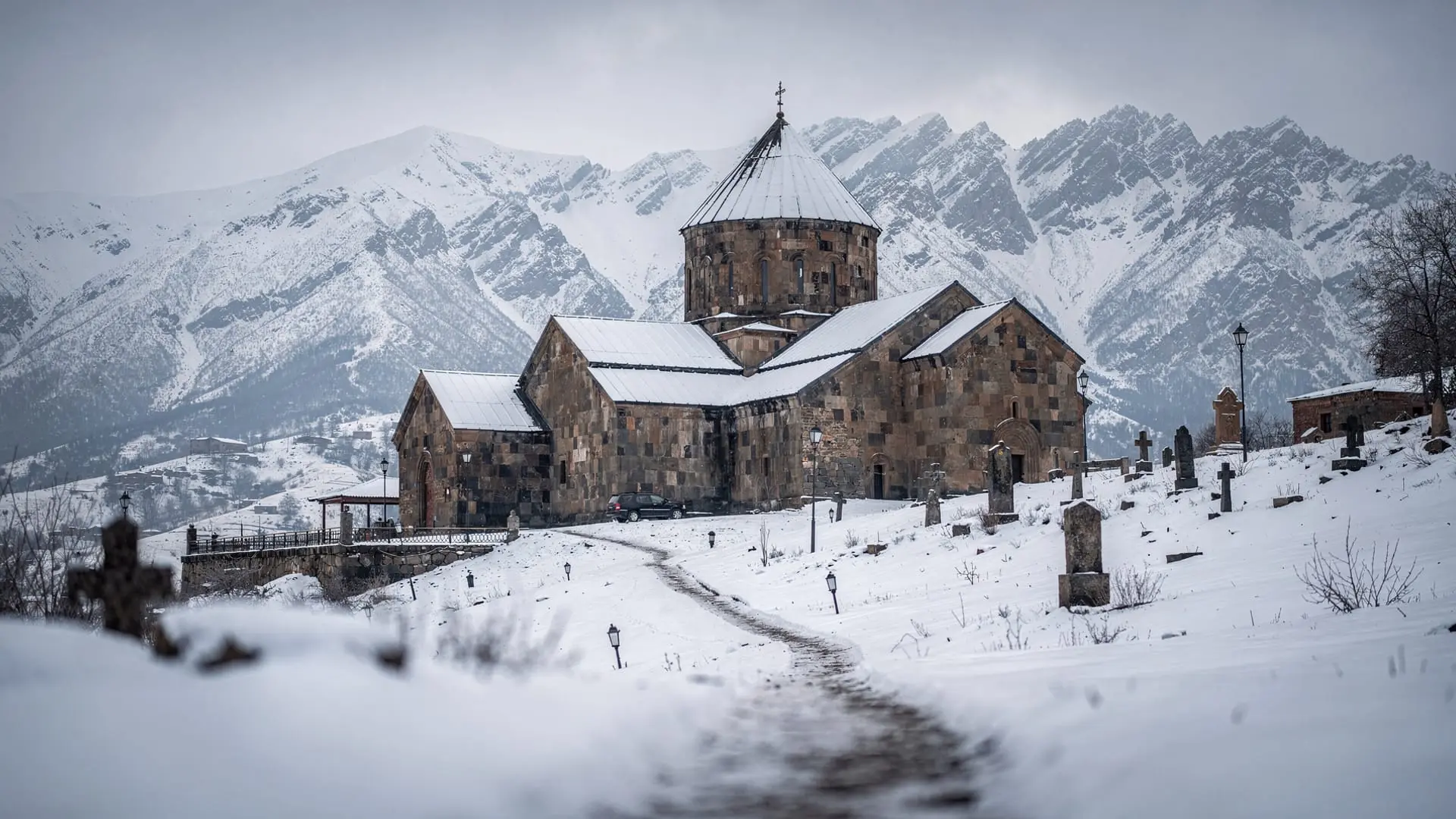
Winter in Armenia: a different kind of travel
Armenia in winter is not for everyone — and it is not trying to be. This is not a winter-sun destination, and the monasteries do not pivot to hosting après-ski brunches. What winter Armenia offers is something rarer: the country’s extraordinary landscape stripped to its essentials, monasteries standing in silence under snow, the best skiing in the Caucasus outside Georgia’s Gudauri, and a version of Yerevan that belongs to Armenians rather than tourists.
For the right traveller — one who is comfortable with cold, who appreciates uncrowded sites and low prices, who wants to see a culture in its own mode rather than its summer-tourism performance — winter Armenia is one of the most rewarding experiences the Caucasus offers.
| Where | Yerevan, Tsaghkadzor, Khor Virap, Tatev, Haghpat/Sanahin |
| Cost | Ski rental around 10,000–15,000 AMD/day; low season hotel prices |
| Time needed | A weekend for Tsaghkadzor + Yerevan; 4–5 days to add Tatev and Lori |
| Getting there | Rental car, marshrutka (limited winter schedule), or a guided winter tour |
| Best time | December–March for snow and skiing; check road conditions before remote monastery visits |
Winter month by month
| Month | Yerevan | Tsaghkadzor | Notes |
|---|---|---|---|
| December | -2°C to 7°C, occasional snow | Season opens, early snow can be thin | Christmas markets and lights from late December |
| January | -1°C to 5°C, coldest | Most reliable snow, -5°C to -15°C on the mountain | Armenian Christmas Jan 6; Geghard road can ice |
| February | -1°C to 5°C | Peak ski conditions | Coldest month alongside January |
| March | 3°C to 12°C | Season winds down, still skiable | Snow starts melting at lower elevations |
Winter weather across Armenia
Yerevan
Temperatures: -2°C to 7°C (December), -1°C to 5°C (January–February coldest), 3°C to 12°C (March)
Yerevan receives occasional snow — perhaps 5–10 significant snowfall events per winter — but it rarely settles for long in the city centre. Cold, clear, dry days are more common than persistent snow and grey skies. Frost is common in December through February.
Practical: Central Yerevan is walkable in winter with appropriate clothing. Roads are treated. Public transport operates normally. GG Taxi functions year-round.
Tsaghkadzor (1,960 m base elevation)
Season: December through March (peak January–February)
Tsaghkadzor, Armenia’s primary ski resort in the Kotayk province, 65 km north of Yerevan, receives consistent snowfall and maintains 14 km of ski runs served by three chairlifts and a gondola. This is not a Chamonix-scale resort, but it is a genuine, well-maintained ski destination with night skiing, ski rental, and a range of accommodation options.
The mountain (Mount Teghenis at 2,819 m) holds snow reliably from December through late March. Early season (December) can be thin; January and February are the most reliable months.
Northern provinces (Lori, Tavush)
Haghpat, Sanahin, and Akhtala monasteries in Lori province are surrounded by forests and gorges that accumulate snow more reliably than Yerevan. A January visit to Haghpat in fresh snow — the monastery’s stone walls frosted, the gorge completely silent — is one of the most striking scenes in Armenia.
The road from Alaverdi to Haghpat is steep and can ice over. Drive with winter tyres or hire a 4WD if conditions are uncertain.
Southern provinces (Syunik, Vayots Dzor)
Tatev in winter has a particular drama. The Wings of Tatev cable car typically operates through winter (though it may undergo maintenance in November before the winter season). The monastery on its basalt promontory above the snow-filled Vorotan gorge is extraordinary.
Jermuk (2,080 m) has a reduced winter season — its spa hotels stay open but some outdoor activities are limited. The waterfall is dramatically lit by ice formations in January–February.
Tsaghkadzor: the ski destination
The mountain
Tsaghkadzor (the name means “Valley of Deer” in Armenian) offers:
- 14 km of groomed runs across three main areas
- Vertical drop: approximately 850 m
- Lifts: 3 chairlifts + 1 gondola from the base village
- Night skiing: available on main runs
- Snowpark: small terrain park for freestyle skiers
- Altitude: base at 1,960 m, summit runs at 2,820 m
The resort village
Tsaghkadzor is a functional resort village, not a purpose-built ski town. It has:
- Multiple hotels ranging from basic to comfortable 3-star
- Restaurants, cafés, and bars
- Ski rental shops (reasonably priced — expect 10,000–15,000 AMD per day for full equipment)
- Ski school with English-speaking instructors available
The nearby Kecharis monastery (11th century, three linked churches) is one of the best winter monastery experiences in Armenia — accessible from the village on foot, beautiful under snow, and almost never crowded in January.
Getting to Tsaghkadzor
From Yerevan: approximately 65 km north, 1 hour by car. Marshrutkas run from Yerevan’s Kilikia station to Tsaghkadzor, though the schedule can be limited in winter — confirm before travelling. Many travellers use GG Taxi or book a transfer. Several tour operators offer Yerevan–Tsaghkadzor ski day packages.
Winter tour: Lake Sevan, TsaghkadzorTsaghkadzor vs Gudauri (Georgia)
Gudauri in Georgia is the more developed international ski resort in the region, with higher altitude (2,200–3,300 m), longer runs, and more après-ski infrastructure. Tsaghkadzor is better suited to:
- Budget-conscious skiers
- Beginners and families
- Those already visiting Armenia who want a ski day without crossing to Georgia
- People who want a quieter, less touristy ski experience
For a direct comparison, see our Tsaghkadzor vs Jermuk winter guide.
Armenian Snow Delight: 2-Day Winter Getaway to TsaghkadorMonasteries in winter: what to expect
Khor Virap in snow
Khor Virap monastery in the Ararat Valley — with Mount Ararat rising directly behind it — is one of the most iconic winter images in the Caucasus. On clear days after snowfall, the combination of white monastery, snowy plain, and the massive snow-capped Ararat (the summit holds snow year-round, but lower flanks snow up dramatically in winter) is extraordinary.
Winter practicalities: The road to Khor Virap (35 km from Yerevan, paved highway) is open year-round. The monastery is always accessible. Cold mornings (-5°C possible in January) make early visits bracing — bring warm layers.
Tatev in winter
Tatev monastery above the Vorotan gorge is dramatic in all seasons, but winter adds a specific atmosphere: the gorge fills with low cloud, the monastery walls are frosted, and the Wings of Tatev cable car ride crosses an entirely different landscape than the summer green. The 12-minute crossing in winter feels more like an adventure.
Winter practicalities: The cable car typically operates through the ski season. The road from Yerevan to Goris (250 km, 4 hours) is generally open but can be challenging in serious snowfall — check conditions if driving yourself. The road from Goris to the Halidzor cable car station is steeper and can ice.
Haghpat and Sanahin (Lori)
The UNESCO monasteries of Lori province are superb in winter. The Haghpat monastery complex — built on a plateau above a forested gorge — surrounded by snow, completely silent in January, is an image that rewards the 200 km journey from Yerevan.
Winter practicalities: The Lori gorge roads can be treacherous in severe winter. Drive with winter tyres. Alternatively, the Yerevan–Tbilisi highway passes relatively close to Alaverdi (the nearest town) — accessible by train (Yerevan–Alaverdi takes about 3 hours) if you prefer not to drive.
Geghard monastery: the winter caveat
Geghard, Armenia’s cave monastery carved into rock, is one of the country’s most visited sites. It is technically open year-round, but the access road from Garni (9 km on a narrow mountain road) can ice over and become dangerous after heavy January or February snowfall.
Before visiting Geghard in January–February: check road conditions with your Yerevan accommodation or locally. If conditions are uncertain, defer the visit or ensure you have a 4WD vehicle with winter tyres.
Yerevan in winter
Yerevan in winter is an authentically local experience. The tourist crowds of summer are absent, the city moves at its own rhythms, and the cultural calendar fills up with what Armenians actually want to do: concerts at the Opera, cinema, gallery openings, and intense café culture.
The Opera House: The Armenian National Academic Theatre of Opera and Ballet offers a winter season of opera and ballet performances. Attending a production at this Soviet-era architectural gem is an atmospheric winter evening in Yerevan.
Museums: All major museums (Matenadaran, Erebuni, National Gallery, History Museum, Parajanov Museum) are open through winter with their normal hours. No crowds.
Restaurants and bars: Yerevan’s best restaurants are as good in January as in July — book ahead for Lavash, Sherep, and Sayat-Nova on weekends. The winter menu at Armenian restaurants typically emphasises hearty dishes: spas (sour soup with lamb), harissa (wheat porridge with chicken), and warming stews.
New Year atmosphere: Late December and early January (through January 6 Armenian Christmas) give Yerevan its most festive atmosphere. Lights on Northern Avenue, the decorated Christmas tree on Republic Square, and the general warmth of New Year preparations make December 27 to January 2 a pleasant time to be in the city.
Winter packing
A proper winter kit for Armenia:
- Down jacket: essential. Yerevan can drop to -10°C in cold snaps; Tsaghkadzor is colder.
- Waterproof winter boots with insulation: critical for snow days and icy pavements
- Thermal base layers: for monastery visits in unheated churches
- Warm hat, gloves, scarf: non-negotiable
- Ice-grip attachments (Yaktrax): for hiking to winter monasteries
- Ski equipment: can be rented at Tsaghkadzor at reasonable rates
Full winter packing details in our Armenia packing list by season.
Winter food and hospitality
Armenia’s winter food culture is one of its least-discussed pleasures. The country’s cuisine has always had a winter dimension — hearty, warming, generous:
Spas (sour soup): The quintessential Armenian winter soup — made with soured matsun (yogurt), egg, wheat, and either lamb or vegetables. It appears on menus throughout winter and is deeply restorative on a cold day. Every Armenian grandmother has a version, and every Armenian restaurant has a different take.
Harissa (wheat and chicken porridge): A slow-cooked preparation of cracked wheat and chicken that reaches its most resonant form in winter. Harissa is the food of solidarity in Armenian tradition — it was cooked en masse to feed survivors after the Musa Dagh resistance in 1915, and it remains a dish with particular cultural weight. Some Yerevan restaurants serve it year-round; others treat it as specifically seasonal.
Homemade preserves and pickles: Winter in rural Armenia is when the summer’s preserved fruits and vegetables become the daily table: pickled cabbage, pickled garlic, dried apricots, walnut-stuffed dried fruits. Guesthouses in Dilijan and Goris put these on the breakfast table as a matter of course.
Restaurants in Yerevan in winter: The tourist-facing restaurants are fully open. Lavash, Sherep, Sayat-Nova, and Achajour all operate through winter. Reservations become easier to obtain compared to summer peak. The atmosphere in a candlelit Yerevan restaurant on a cold January evening — wine on the table, the last of the outdoor lights glowing — has a quality of its own.
January 6 in winter: the Christmas overlap
For visitors in Armenia in early January, the combination of winter atmosphere and Armenian Christmas (January 6) creates a unique experience that is impossible at any other time. The churches, the candlelight services on the evening of January 5, the family tables on January 6, and the winter landscape connecting everything — this is Armenian culture at its most concentrated.
For the full Christmas guide, see Armenian Christmas (January 6): traditions for travelers.
Photographing Armenia in winter
Winter light in Armenia has a clarity that summer haze rarely matches — cold, dry air tends to produce sharper distant views, which is precisely why Ararat is often more visible from Yerevan in January than in July. A few practical notes for photographers: shoot Khor Virap early morning when the light is low and warm against the snow-covered plain, and check the forecast for clear days immediately after snowfall, when the air is at its cleanest. Batteries drain faster in cold temperatures, so keep spares in an inside pocket rather than a camera bag left in the cold. At Haghpat and Sanahin, the contrast between dark basalt stone and fresh snow photographs particularly well in overcast light, which softens the shadows on the carved khachkar stones without losing detail.
Cross-referencing with other planning guides
Winter planning intersects with several other Armenia guides:
- Visa and entry: No winter-specific visa changes. All standard visa-free and e-Visa rules apply. See Armenia visa requirements 2026.
- Budget in winter: November–February (excluding New Year week) is the cheapest period for accommodation. See Armenia budget travel guide.
- Packing for winter: A comprehensive winter packing checklist is in our Armenia packing list by season.
- Seasonal overview: For context on how winter fits the full year, see best time to visit Armenia.
Frequently asked questions about winter in Armenia
Is Tsaghkadzor worth visiting for non-skiers?
Yes. Non-skiers can use the gondola for mountain views, snow-walk in the forested hills, visit Kecharis monastery, and enjoy the village atmosphere. Many couples and families visit for a winter weekend combining outdoor walks with hot meals and spa time at the better hotels.
How cold does Armenia get in winter?
Yerevan can drop to -10°C in severe cold snaps but more typically sits at -2°C to 5°C through January–February. Tsaghkadzor ski resort typically records -5°C to -15°C on the mountain in January. The north and south of the country can be colder or milder depending on geography.
Is it possible to see Khor Virap and Ararat from Yerevan in winter?
Yes — Mount Ararat is visible from Yerevan on clear winter days, particularly from higher vantage points like the Cascade terrace or Tsitsernakaberd hill. The clearest views tend to follow snowfall or rain that clears the air.
Is Dilijan worth visiting in winter?
Dilijan in winter is quiet, forested, and atmospheric — but not as dramatic as its autumn or spring forms. If you specifically enjoy quiet, snow-covered forests and do not mind that most tourist activity is reduced, it is lovely. Haghartsin monastery under snow is worth the trip.
What should I not do in winter in Armenia?
Avoid the Aragats summit (inaccessible), long hiking routes in high elevations, and driving on mountain roads at night without winter tyres. Do not assume Geghard is easily accessible in January without checking road conditions first. The Aragats winter snow experience guide has more on what is and isn’t feasible on the mountain during the cold months.
Is a dedicated winter ski trip worth planning around Tsaghkadzor?
Yes, if you want a compact, low-cost winter break rather than a full Armenia tour. Our 3-day Armenia winter ski itinerary builds a short trip specifically around Tsaghkadzor and Yerevan, useful for travellers who want the ski and monastery combination without committing to a longer visit. For the wider Khor Virap monastery and Haghpat and Sanahin sites described above, both are covered in more depth in their own dedicated guides if you want the full visiting details rather than the winter-specific notes here. A day combining Lake Sevan with Tsaghkadzor also works well in winter, since Sevanavank under snow is one of the most atmospheric versions of that site.