Lake Sevan & Dilijan: the lakes-and-forest day
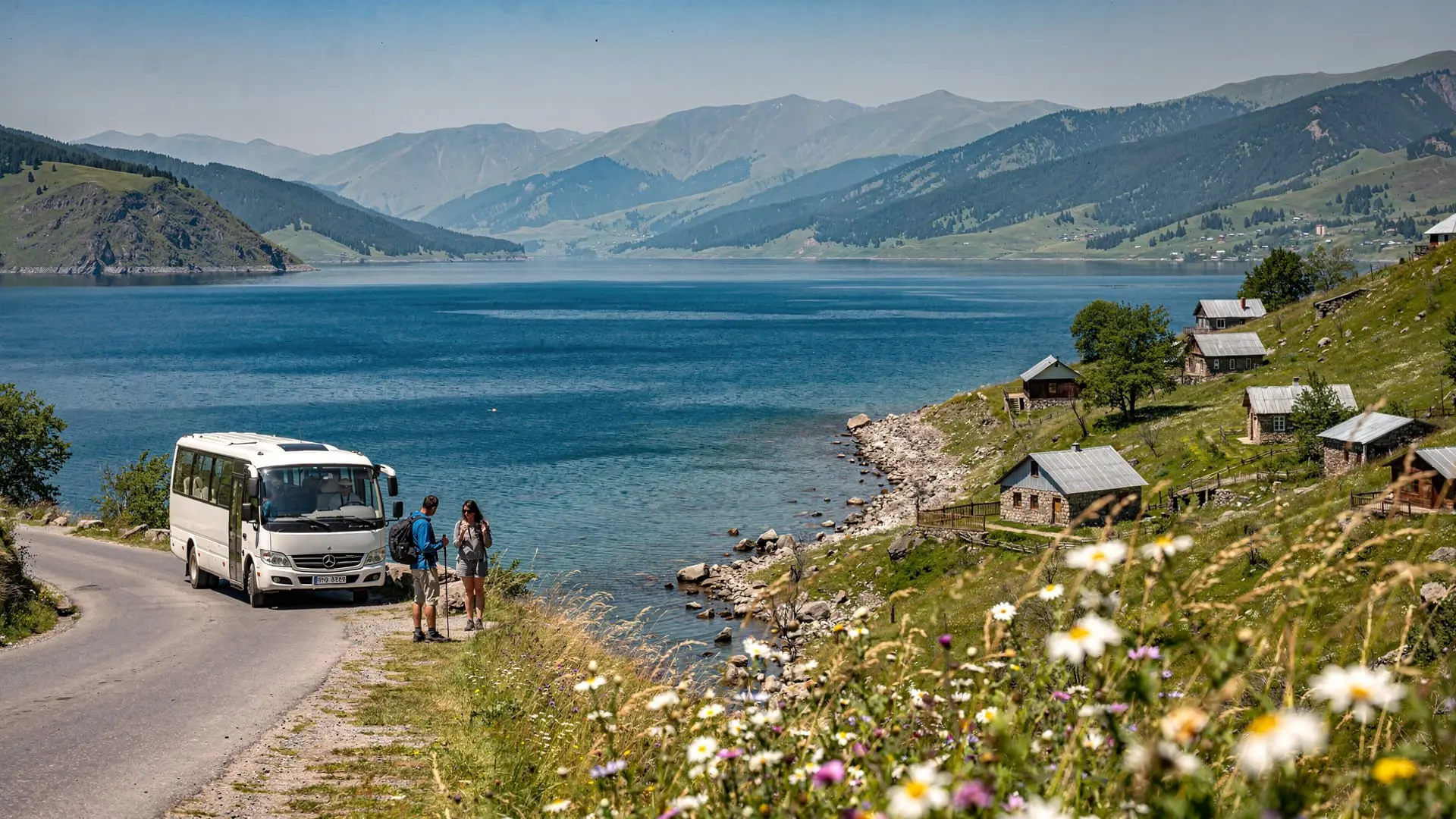
Two of Armenia’s most celebrated landscapes happen to sit within an hour of each other in the country’s north-east, connected by a mountain tunnel that cuts through the Sevan Pass. Lake Sevan — 1 900 metres above sea level, bluer than most postcards make it look — occupies the morning slot perfectly. By afternoon, when the light softens and the lake develops an afternoon shimmer, you’ve moved on to Dilijan: a spa-town of wooden 19th-century mansions half-swallowed by oak and hornbeam forest, earning its nickname of “Armenian Switzerland.”
The combination works so well that it has become one of the standard day-trip routes from Yerevan — offered by dozens of tour operators and equally manageable independently. This guide explains the logic behind the ordering, the specific stops that make the day memorable, and the practical details that most brief tour descriptions omit.
At a glance
| Where | Lake Sevan (Gegharkunik) then Dilijan (Tavush), north-east of Yerevan |
| Cost | 8,000–15,000 AMD/person on a group tour; fish lunch 4,000–8,000 AMD |
| Time needed | Full day, roughly 8:30am–7pm from Yerevan |
| Getting there | Private car, GG Taxi, or an organised day tour |
| Best time | September–October for colour and quieter roads |
Why Sevan in the morning and Dilijan in the afternoon
The sequencing is important for two reasons: light and temperature.
Lake Sevan: The high-altitude lake sits in an open basin exposed to the full sky. In the morning (roughly 8am–noon), the water is an intense ultramarine — the colour that appears on every Armenian promotional photo. By early afternoon in summer, atmospheric haze and the angle of the sun flatten this to a greyer, less vivid blue. Photography, open-water swimming, and the experience of standing on the Sevanavank peninsula are all better in the morning. The light is also cooler and more comfortable for walking the exposed headland.
Dilijan: The old town’s cobblestoned Sharambeyan Street and the surrounding forest lanes are pleasant at any hour, but the shaded streets feel relief after a hot morning at altitude. The golden afternoon light that filters through the deciduous canopy from around 3–5pm (especially in September and October) gives the town a particularly lovely atmosphere. Restaurants fill up for evening meals, and the hotel Old Dilijan Complex’s courtyard opens its terrace for sunset drinks.
Drive times: Yerevan → Sevanavank (65 km) takes 1 hour 15 minutes. Sevanavank → Dilijan (30 km) takes about 35–40 minutes through the Sevan–Dilijan tunnel, or slightly longer on the scenic road that skirts the northern lake shore.
What to do at Lake Sevan
Lake Sevan is the largest lake in the Caucasus and among the largest high-altitude lakes in the world. Its centrepiece for visitors is Sevanavank monastery, a pair of 9th-century churches atop a rocky peninsula that was originally an island (lake levels dropped by several metres during Soviet irrigation projects). The climb takes about 5–10 minutes; the views from the top — lake on three sides, distant mountains behind — are among the finest in Armenia.
After the monastery, options depend on season:
- June–August: Swimming is popular at the sandy beaches on the Sevan peninsula’s south shore. The water is cold (18–22°C) but refreshing.
- All seasons: Boat trips on the lake run in summer from the main pier near Sevanavank.
- Lunch: Sevan trout (ishkhan, a species endemic to the lake) is the essential food experience here. Several restaurants near the pier serve it fresh — grilled, fried, or in a local fish soup (ishkhan khorovats). Budget 4 000–8 000 AMD for a fish lunch.
Book a Lake Sevan and Dilijan full-day tour from Yerevan
If you want to spend more time at the lake — exploring the quieter north shore, visiting Noratus cemetery (the largest khachkar cemetery in the world), or walking the shore trail from Sevanavank — the Lake Sevan complete guide covers all of these in detail.
What to do in Dilijan
Dilijan is Armenia’s most livable small town and the only one that genuinely merits the “spa resort” label it was given during Soviet times. The national park begins at the edge of town, offering easy walking trails through dense deciduous forest to Lake Parz (a 45-minute walk or short drive into the park).
The town’s historic core — Sharambeyan Street — was carefully restored in the 2010s and now presents a row of 19th-century craftsmen’s houses converted into studios, workshops, and small museums. The street is short (about 300 metres) but genuinely charming and not heavily commercialised. Plan 45–60 minutes to walk it and browse.
Lake Parz (meaning “clear lake”) is a small, forest-ringed lake 7 km from the town centre, reachable by a pleasant forest walk or a short drive. It’s much smaller and quieter than Sevan — a completely different character. In summer it has a small outdoor recreation area; in autumn the surrounding beeches turn amber and gold.
Haghartsin monastery, one of the most beautiful medieval monasteries in northern Armenia, sits 18 km from Dilijan — a worthwhile addition if you have 90 extra minutes. The Haghartsin forest monastery guide covers it fully.
Lake Sevan, Dilijan & Lake Parz day trip with lunch
Getting there from Yerevan
By organised tour: The most efficient option. Multiple operators run this route daily, typically departing 8–9am. Group tours run 8 000–15 000 AMD per person. Private tours offer earlier departure and more flexibility.
By GG Taxi: A round trip with waiting time at both locations costs approximately 30 000–40 000 AMD. Shared between two people this is comparable to a tour price with far more freedom.
By rental car: Straightforward driving — the M4 motorway east from Yerevan, then the direct road via the Sevan–Dilijan tunnel. Standard passenger cars handle the route comfortably year-round.
By public transport: A marshrutka runs from Kilikia terminal to Sevan town (1 hour 15 minutes). Connections from Sevan to Dilijan involve a change at Ijevan junction — workable but time-consuming. Not ideal for a day trip.
Suggested itinerary
| Time | Location | Activity |
|---|---|---|
| 8:30am | Depart Yerevan | — |
| 9:45am | Sevanavank peninsula | Monastery, views (60 min) |
| 11:00am | Sevan beach/pier | Boat trip option, coffee |
| 12:00pm | Sevan lakeside restaurant | Ishkhan trout lunch |
| 1:30pm | Drive to Dilijan | 35–40 min |
| 2:15pm | Sharambeyan Street | Craft shops, old quarter (60 min) |
| 3:30pm | Lake Parz or Dilijan forest walk | Optional (60–90 min) |
| 5:00pm | Begin return to Yerevan | 1 h 45 min |
| 6:45pm | Arrive Yerevan | — |
For the extended version adding Haghartsin monastery, add 90 minutes and plan a slightly later return.
Practical notes
Sevanavank steps: The climb to the monastery is 175 steps — short but steep. Good for all fitness levels; challenging in icy conditions (December–February).
Dilijan altitude: 1 500 metres. Noticeably cooler than Yerevan in all seasons — bring a layer even in summer.
Swimming at Sevan: The lake is cold by most standards but refreshing in summer. The main beach at the Sevan peninsula has basic facilities. For cleaner, less crowded swimming, continue to one of the small coves on the north shore.
What not to skip: The ishkhan trout at Sevan. If you eat only one thing on this day trip, make it that.
Combining this day with other routes
- Tsaghkadzor as a morning stop: Tsaghkadzor ski resort sits 10 km off the main Yerevan–Sevan road, adding 30–45 minutes for a coffee stop at the ropeway base. The full Tsaghkadzor + Sevan combo is covered in the Tsaghkadzor & Sevan day guide.
- Ijevan extension: From Dilijan, the road to Ijevan continues 40 km east into the Tavush hills — feasible if you leave Yerevan early and are prepared for a long return.
Eating and drinking on this day trip
At Lake Sevan
The lakeside restaurants clustered near the Sevanavank pier are the main food attraction of the day. Every restaurant on this strip serves ishkhan (Sevan trout) as its headline dish — fresh, not frozen, typically 300–500 grams per portion, grilled over charcoal. The flavour is mild and clean, better than most freshwater fish most visitors have eaten.
Beyond trout, expect: fresh herb salads (tarragon, dill, coriander), lavash, matsun, cucumbers and tomatoes from local market gardens, and cold local beer (Kilikia is the main Armenian brand). A full fish lunch for two with drinks runs about 8 000–14 000 AMD (20–35 EUR) — excellent value.
Avoid the restaurants with laminated picture menus and persistent touts — these tend to have lower fish quality and higher prices. Choose a place with a hand-written menu and tables already occupied by Armenians.
In Dilijan
Dilijan’s food scene has grown since the town’s restoration. On Sharambeyan Street, several small cafés serve Armenian coffee (soorj — thick, unfiltered, served in small cups with cardamom) and pastries. For a proper meal:
- Old Dilijan Complex hotel restaurant: The courtyard restaurant here is the most atmospheric option, using locally sourced ingredients. Mid-range prices (4 000–8 000 AMD per main).
- Achajour restaurant: A short walk from the town centre, known for traditional Armenian dishes and fresh produce from their own garden.
- Cafés on the main square: Several places serve good Armenian coffee and light food.
The Sevan–Dilijan tunnel and why it matters
The road from Lake Sevan to Dilijan passes through the Sevan–Dilijan tunnel — a Soviet-era mountain tunnel about 3 km long that punches through the Sevan range and drops into the Dilijan valley. Without the tunnel, the mountain crossing would add an hour and significant elevation gain to the route.
The tunnel is dark, narrow, and somewhat atmospheric in its functional Soviet way. It is fully paved and safe but has limited lighting. Slow down and use headlights. The toll is minimal (about 100 AMD per vehicle in 2026, paid at a booth at the eastern end).
A scenic alternative is the older road that goes over the Sevan pass — slower but with good views of the lake. This works beautifully in clear weather and adds about 45 minutes.
Why September and October are the best months
Every season has merits on this route, but September and October deserve special mention:
Lake Sevan in September: The water is warmest (19–22°C) and still swimmable through mid-September. The light becomes distinctly amber in quality — the electric blue of the water contrasts against the surrounding brown and gold hills in a way that’s uniquely Armenian. Tourist crowds thin out sharply after the first week of September.
Dilijan in October: The deciduous forest that surrounds the town turns extraordinary — hornbeam, oak, and ash in amber, ochre, and rust. The forest walk to Lake Parz is at its most beautiful. Hotel prices drop, the town becomes very local, and the quality of the light in the afternoon hours is what photographers specifically seek out in the Armenian autumn.
The Armenian autumn guide covers the full case for visiting in September–October across the whole country.
Connecting to the Tavush wine region
Dilijan sits at the western edge of Tavush province, which has a developing wine and gastronomy scene centred on the area around Ijevan (40 km east of Dilijan). If you’re interested in craft wine, local cheeses, and berry spirits — the Tavush equivalent of Vayots Dzor — the Ijevan and Tavush wine culture is an add-on worth knowing about.
Frequently asked questions about the Lake Sevan and Dilijan day trip
How long does the drive from Yerevan to Sevan take?
65 km via the M4 motorway takes 1 hour 15 minutes in normal traffic. The road is fast and well-maintained.
What is ishkhan trout and where should I eat it?
Ishkhan is a species of trout endemic to Lake Sevan, now farmed to supplement wild populations. It has a mild, delicate flavour. Restaurants directly on the Sevan pier — visible from the Sevanavank parking area — serve it fresh. Order it grilled (khorovats) for the best result. Budget 3 000–6 000 AMD for a fish main.
Is Lake Sevan good for swimming?
Yes, in June through August. The water reaches 20–22°C at peak summer. The main beach below Sevanavank has pebbly shores and basic facilities. The lake is at altitude (1 900 m), so sun protection is essential even when air temperatures feel moderate.
Is Dilijan suitable as a day trip or should I stay overnight?
Both work. As a day trip it gives you Sharambeyan Street and a forest walk. Overnight in Dilijan (Hotel Old Dilijan Complex is excellent) lets you walk into the national park properly and visit Haghartsin at dawn. If you have a week or more in Armenia, one night in Dilijan is worth it.
Can you do Lake Sevan and Dilijan by public transport?
It’s possible but fiddly. Marshrutkas from Kilikia to Sevan town run regularly. From Sevan to Dilijan requires a change. For a comfortable day trip, a tour or hired car is strongly recommended.
Is there anything to do at Dilijan National Park?
The national park has well-marked trails of varying difficulty starting near the Dilijan visitor centre. The walk to Lake Parz (about 4 km one way through forest) is the most popular. The Haghartsin monastery trail is longer but rewards with one of Armenia’s finest medieval complexes.
What’s the best season for this day trip?
September and October are exceptional — Lake Sevan reflects autumn skies brilliantly, and Dilijan’s forests turn amber and gold. June–August is peak tourist season but perfectly pleasant if you start early. April–May offers wildflowers and fewer crowds.
Making the day work with limited time
If you only have six or seven hours rather than a full day, trim the itinerary rather than rushing both stops. The honest priority order: Sevanavank monastery first (it’s the shorter, more essential visit), then either Dilijan’s Sharambeyan Street or Lake Parz, not both. Trying to fit the monastery, a boat trip, a full Dilijan walk, and Lake Parz into under eight hours usually means arriving somewhere with 15 minutes left before you need to turn back — better to see two things properly than four things rushed. See the Lake Sevan complete guide for what to prioritise if this is your only lake visit of the trip.
Combined Lake Sevan boat trip and Dilijan afternoon from Yerevan