Armenia for photographers: 7 days of golden light
Who this itinerary is for
Armenia is a photographer’s destination that has barely been discovered by serious photographers. The combination of extraordinary light (high altitude, dry air, low pollution), dramatic landscapes (volcanic plateaus, river gorges, alpine lakes), and ancient stone architecture (monasteries in every possible setting from cliff edges to forest valleys) is remarkably underexplored outside the photography community.
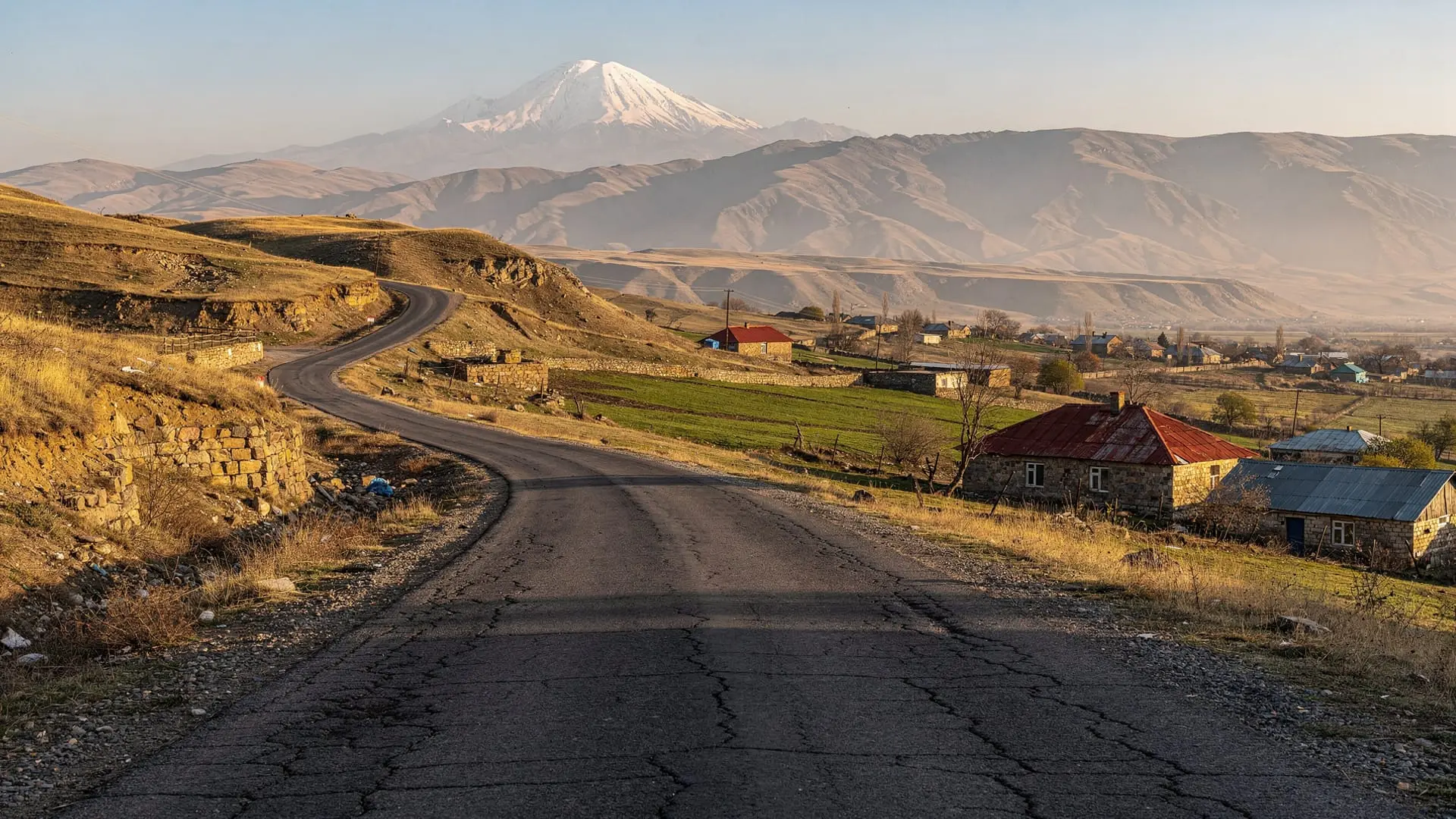
This 7-day itinerary is structured around light — specifically the golden hours (sunrise and the hour before sunset) at the locations where Armenian light is at its most extraordinary. Dawn at Khor Virap when Mount Ararat glows in the first light. Sunset at Tatev when the gorge fills with shadow from the east. The blue hour at Lake Sevan when the mountains reflect in still water. Late afternoon light in Noravank’s red limestone gorge.
A car is essential: photography in Armenia requires early starts and late finishes, and public transport does not run at 05:00 for the dawn shots. You also need to move quickly between locations to catch light windows.
Recommended camera equipment: wide-angle lens for landscapes and monastery interiors (16-24mm), telephoto for compressing the Ararat-Khor Virap relationship (100-200mm), and a sturdy tripod for blue hour and long exposures. The light in Armenia tends toward warm amber tones — sunrise and sunset are genuinely spectacular and longer in duration than at lower altitudes.
The best months for this itinerary: September-October (autumn colour in Tavush and Dilijan, clear air, golden light; this is the definitive photography season) and April-May (spring wildflowers on Aragats, pink and white apricot blossom, monasteries without summer crowds).
| Where | Yerevan, Khor Virap, Noravank, Tatev, Lake Sevan, Aragats, Dilijan, Etchmiadzin |
| Cost | Around 1,085-1,715 EUR mid-range for 7 days, car rental included |
| Time needed | 7 days for the full light-chasing circuit |
| Getting there | Self-drive is essential; public transport can’t make the dawn windows |
| Best time | September-October (autumn colour, clear air) or April-May (blossom, spring light) |
Quick overview
| Day | Locations | Key light | Overnight |
|---|---|---|---|
| Day 1 | Yerevan city | Sunset from Cascade, blue hour Republic Square | Yerevan |
| Day 2 | Khor Virap + Noravank | Pre-dawn Ararat, late afternoon Noravank gorge | Areni area |
| Day 3 | Tatev | Sunrise, morning monastery light, gorge afternoon | Goris |
| Day 4 | Lake Sevan | Dawn lake reflections, Sevanavank midday, blue hour | Yerevan |
| Day 5 | Aragats + Amberd | Sunset at Aragats plateau, Amberd afternoon | Yerevan |
| Day 6 | Dilijan + Haghartsin | Forest light (autumn), monastery afternoon | Dilijan |
| Day 7 | Etchmiadzin + Zvartnots | Morning light UNESCO sites, departure afternoon | — |
Day 1: Yerevan — urban photography
Golden hour at the Cascade
Arrive early enough to photograph the late afternoon light on Yerevan’s tuff stone buildings. The pink and honey-coloured stonework glows in the hour before sunset — the colour temperature matches the stone almost exactly, creating a seamless warmth.
The Cascade Complex terrace at sunset: position yourself at the upper terrace (45-60 min before sunset) and photograph the rooftop cityscape with Mount Ararat in the background. The mountain appears in the frame if you shoot southwest with a 50-100mm lens. Evening haze in summer often obscures Ararat; September-October mornings give the cleanest views.
Blue hour at Republic Square
Republic Square’s fountain complex is lit from beneath after dark — a predictable blue-hour subject. Position yourself at the square’s edges (southeast or northwest corners) for compositions that include the Armenian government buildings’ illuminated facades. The fountains synchronise with music after 21:00; long exposures during the fountain sequences give interesting motion blur.
The Kond quarter: narrow alleyways lit by single overhead bulbs at dusk. Challenging low-light environment (ISO 3200+) but the textures of old stone and peeling plaster are photographically exceptional. Best with a fast prime (50mm f/1.8 or wider).
Day 2: Khor Virap at dawn and Noravank gorge
Pre-dawn departure
Depart Yerevan at 04:30 — this is non-negotiable if you want the pre-sunrise light at Khor Virap with Mount Ararat. Arrive at the monastery parking area before 05:30. Set up on the hill to the east of the monastery for a composition that includes the fortified church silhouette with Ararat rising behind it.
The sequence:
- Astronomical twilight (05:30 in summer, later in autumn): deep blue sky, black monastery silhouette, Ararat barely visible
- Civil twilight: Ararat’s snow-caps begin to glow pink (alpenglow), blue-purple sky
- Sunrise (about 06:00 in September): direct warm light from the east illuminates the church while Ararat is still in that first pink light
The Ararat-Khor Virap composition is most powerful with a 100-200mm lens that compresses the perspective and brings the mountain closer to the monastery visually. A wide angle shot shows the scale but loses the relationship between the mountain and the church.
Private Tour to Khor Virap with Mt Ararat ViewAfternoon: Noravank gorge
Drive south to Noravank via the wine country (120 km, 2h from Khor Virap). Arrive at Noravank gorge around 15:30 — the afternoon light enters the canyon from the west and turns the red limestone walls a burning orange-red. This light window lasts about 90 minutes.
The 14th-century church has a double staircase on the exterior — a natural frame for shooting upward to include the cliff walls. The narrow canyon walls in the background provide depth and context that you lose in morning or midday light.
From Yerevan: Khor Virap, NoravankOvernight in Areni village or Yeghegnadzor for the Tatev drive tomorrow.
Day 3: Tatev — the gorge and the monastery
Sunrise from the monastery
Drive from Areni to Tatev village (1h30). The Wings of Tatev cable car opens at 10:00, so arrive on the walking/driving road to the monastery for the sunrise (the alternative road exists alongside the gorge). Tatev village at 05:30, sunrise drive up the access road, arrive at the monastery ridge before the sun clears the eastern mountains.
Tatev Monastery at sunrise: the eastern façade catches the first light while the gorge is still in deep shadow. The contrast between illuminated stone and black gorge depth is extreme — bracket exposures carefully.
From Yerevan: Tatev Monastery and Wings of Tatev TourMorning: cable car crossing
The Wings of Tatev cable car crossing offers unique aerial photography — shoot through the cabin window with a telephoto (avoid camera shake with high shutter speed at 1/500s or faster). The gorge 320m below, the monastery visible behind, and the far side of the canyon ahead are all within the shot.
The view from the Wings of Tatev lower (village) station platform looking back toward the monastery and gorge is one of the classic Armenian landscape shots — a 16-24mm wide angle captures the full drama.
Afternoon: gorge light study
The Vorotan gorge below Tatev: hike down the path from the lower cable car station to the gorge floor (about 45 min each way). The basalt formations at the gorge bottom and the reflections in the river catch afternoon light well.
Overnight in Goris (25 min from Tatev village). Goris to Yerevan is 4h tomorrow — an early start to catch Sevan dawn.
Day 4: Lake Sevan — the alpine mirror
Dawn reflections
Depart Goris at 05:00 for Lake Sevan (3h drive). Arrive at the lake at approximately 08:00 — still excellent morning light. Position yourself on the southeastern shore (Tsovagyugh or the quiet bays near Vardenis) where the Gegharkunik mountain range reflects in the water.
The Sevan light is best with overcast conditions diffusing the harsh summer sun — a thin cloud layer dramatically improves landscape photography by reducing contrast. In September-October the morning air is often misty, giving atmospheric depth to telephoto shots.
Sevanavank monastery from the water: the peninsula with the two 9th-century churches is most dramatically photographed from a boat or from the far western shore of the peninsula, where a 100mm lens brings the monastery and its reflection into a single frame. The organised boat trips depart around 10:00.
Lake Sevan Sevanavank Monastery Private TourAfternoon
Drive back to Yerevan via the Sevan-Dilijan tunnel (1h15). Late afternoon in Yerevan for a second round of urban photography — the light on the pink tuff stone buildings is always different from the evening before.
Day 5: Aragats — the volcanic plateau at sunset
Midday drive
Drive from Yerevan to Aragatsotn (1h via the M3 north) and up the mountain road toward Lake Kari (2,070m). The plateau landscape above 2,000m is open and windswept — treeless, volcanic, with Aragats’ four peaks visible in all directions.
Amberd Fortress (2,300m): the 10th-century fortress and 11th-century church on a rocky promontory is best photographed in the afternoon when the light comes from the west. The fortress against the backdrop of Aragats’ slopes is a classic Armenian landscape shot.
Armenia: Amberd Fortress and Lake Kari, Aragats MountainSunset at Lake Kari
Lake Kari (2,070m, at the base of Aragats’ summit ridges): position yourself on the eastern shore of the lake from about 90 minutes before sunset. The reflections of the Aragats peaks in the lake are the shot — especially with any clouds that catch the sunset colour.
At this altitude the sunset light is noticeably more vivid than in the valleys — low humidity, less atmosphere to diffuse the light. The transition from golden to crimson to purple takes about 30 minutes and each phase is usable.
Return to Yerevan after sunset (1h drive in the dark — take care, the mountain road has no lighting).
Day 6: Dilijan — the forest monastery circuit
Golden hour in the beech forest
Drive to Dilijan (95 km, 1h45). In autumn (late September through October), the beech forests above Dilijan turn extraordinary shades of gold, amber, and orange — the best forest colour in the South Caucasus outside Georgia’s Borjomi. Morning light through the canopy at 07:00-09:00 is the defining Dilijan autumn shot.
Haghartsin Monastery (10 km from Dilijan): approached through forest, the monastery is at its most atmospheric in the golden morning light or in late afternoon. The interior light — the gavazan’s carved stone against the warm exterior — is excellent for monochromatic work.
Afternoon: Goshavank and forest paths
Goshavank (15 km from Dilijan) in the afternoon: the monastery grounds have a dense collection of medieval khachkars that photograph beautifully in diffused afternoon forest light. The carved surfaces on khachkars require indirect light to reveal their relief detail — harsh midday light flattens them completely.
Lake Parz (2 km from Dilijan): a small forest lake that acts as a mirror in calm morning conditions. The birch trees at the edge are particularly photogenic in autumn colour.
Overnight in Dilijan at the Hotel Old Dilijan Complex.
Day 7: Etchmiadzin and Zvartnots — departure day
Morning light UNESCO sites
Drive from Dilijan to Etchmiadzin (2h). Arrive at the cathedral complex by 09:00 for the morning light on the UNESCO precinct. The Cathedral of Holy Etchmiadzin faces east — the morning light enters the main portal directly, creating excellent backlit conditions for interior photography.
The Zvartnots ruins (5 min from Etchmiadzin): the circular configuration of columns is best photographed with a wide angle that shows the full ring. The early morning light from the east creates dramatic shadows within the ruins. Mount Ararat is visible from the site on clear mornings.
Photography in Armenian churches: photography is generally permitted in Armenian Apostolic Church buildings. During services, ask discretely before shooting. Candles are almost always lit and provide excellent ambient light for available-light photography.
Departure afternoon
Return the car at Zvartnots Airport (15 min from Etchmiadzin). The airport shop has decent prints and postcards for comparison with your own work; the artistic standards of Armenian photography books are high.
Post-processing and light logistics on the road
Armenia’s light rewards planning more than gear. Download offline maps and a sun-position app (SunCalc or PhotoPills) before you leave Yerevan — mobile data coverage drops out in the Vorotan gorge near Tatev and in parts of Aragatsotn above 2,000m, exactly where you need to know sunrise timing to the minute. Cross-reference sunrise/sunset times daily: Armenia is far enough east in its time zone (UTC+4 year-round, no daylight saving) that actual sun events run noticeably later than the clock time a Western European traveller instinctively expects.
Battery management matters more here than in temperate destinations. Dawn shoots at Khor Virap and Aragats start in near-freezing temperatures even in September, and cold drains batteries fast — keep spares in an inside jacket pocket, not the camera bag. Backup storage is worth planning too: with seven days of golden-hour shooting, you will fill cards faster than expected; a laptop or a portable SSD for nightly backups avoids the nightmare of a corrupted card losing days of shooting.
For post-processing on the road, most mid-range Yerevan hotels (including the Republica) have reliable wifi suitable for a nightly backup and a quick edit pass, though not for large uploads — save serious editing for after the trip. If you want a local perspective on the current light and access conditions before committing to a pre-dawn drive, several Yerevan-based photography guides run custom shoots and can advise on which locations are worth the early alarm on a given morning.
Yerevan photography walk with a local guideComposition ideas beyond the obvious shots
Beyond the marquee compositions (Ararat behind Khor Virap, the Tatev gorge, Sevan reflections), a few less-obvious angles are worth building into the week. At Noravank, shoot from the gorge entrance road looking back — a wide angle that includes the narrowing red cliffs on both sides tells the geological story better than a tight shot of the church alone. At Geghard, the interior cave chambers reward slow, tripod-based long exposures using only the available candlelight — ask before setting up, as some chambers restrict tripods during busy hours.
Yerevan’s Soviet modernist architecture is an underused subject: the Youth Palace, the Sports and Concerts Complex, and several of the residential blocks around the Cascade have strong geometric lines that suit both black-and-white and minimalist colour treatments. Combine an architecture pass through the city with the Republic Square evening session on Day 1 for a fuller sense of Yerevan beyond its ancient sites.
Where to stay
| Night | Location | Hotel | Price |
|---|---|---|---|
| 1, 4-5 | Yerevan | Republica Hotel Yerevan | 90-130 EUR |
| 2 | Areni area | Local guesthouse | 35-55 EUR |
| 3 | Goris | Mirhav Hotel | 55-75 EUR |
| 6 | Dilijan | Hotel Old Dilijan Complex | 65-90 EUR |
Total budget estimate
| Category | Mid-range/day | Luxury/day |
|---|---|---|
| Accommodation | 75-120 EUR | 150-250 EUR |
| Meals | 35-55 EUR | 70-120 EUR |
| Car + fuel | 35-50 EUR | 60-100 EUR |
| Entries/permits | 10-20 EUR | 10-20 EUR |
| Daily total | 155-245 EUR | 290-490 EUR |
| 7-day total | 1085-1715 EUR | 2030-3430 EUR |
Variations
September priority: If you can only do one Armenia photography trip, make it September. The harvest light, golden Tavush forest colour (late September), clear air for Ararat, and comfortable temperatures combine into the definitive photography season.
April option: April-May brings apricot blossom (pink clouds against stone monasteries, extraordinary if you time it right), wildflowers on Aragats, and the emotionally charged April 24 commemorations that make for extraordinary human documentation.
Add Gyumri: Gyumri’s black tuff stone architecture is uniquely photogenic — replace Day 6 or 7 for a Gyumri day. The city’s 19th-century Kumayri district is one of the best urban photography environments in the region.
Booking tips and GYG tours
The photoshoot tours based in Yerevan provide local guide expertise and planned routes optimised for light — useful if this is your first Armenia photography trip.
The Tatev cable car requires advance booking. Pre-dawn monastery access at Tatev (before the cable car opens) is possible by driving the alternative road — confirm the road status before your visit.
Frequently asked questions about this itinerary
What is the best season for photography in Armenia?
September is the consensus choice among travel photographers: golden autumn light, harvest season colour in Vayots Dzor, forest colour in Dilijan (late September), clear air for Ararat views, and comfortable temperatures. April-May is the second choice for spring colour and blossom.
Are there drone regulations in Armenia?
Drones require registration with the Armenian civil aviation authority before flight. Drones are prohibited within 5 km of military installations and certain border areas. The Tsitsernakaberd area is sensitive. Practically, most travel photographers use drones without incident for landscape photography away from sensitive areas, but compliance with regulations is your responsibility. Research current rules before travel.
Is photography allowed inside Armenian churches?
Generally yes. Photography is allowed in most Armenian Apostolic Church buildings (unlike in some Greek Orthodox churches where flash is prohibited). During an active service, ask discretely and be discreet with your presence. Tripods are sometimes restricted inside buildings — ask permission.
What filters are useful for Armenia photography?
A circular polariser is useful for reducing glare on Lake Sevan and deepening the sky colour over the volcanic plateaus. Neutral density filters are useful for long exposures of waterfalls and rivers. A graduated ND is rarely needed in Armenia — the landscape contrast is usually manageable without it. Bring a lens cloth: the wind at Aragats carries dust.
Where is the best viewpoint for photographing Tatev?
Three strong positions: the approach road from the west (telephoto, monastic complex against the gorge void), the Wings of Tatev station platform (wide angle, full gorge and monastery in one shot), and from the gorge floor looking back up (drone or wide angle, shows the scale of the cliff). The monastery itself also has good views looking east down the gorge.
Can I get a good Ararat shot from Yerevan?
Yes, but conditions are not guaranteed. Morning from the Cascade terrace (before 09:00 in spring, when autumn air is clear) gives the cleanest Yerevan-Ararat shots. Khor Virap gives the most powerful Ararat photographs because the mountain fills more of the frame.
Do I need offline maps and sun-timing apps for this trip?
Strongly recommended. Mobile data coverage is unreliable near the Vorotan gorge around Tatev and on the Aragats plateau above 2,000m — exactly the locations where knowing sunrise or sunset to the minute matters most. Download offline maps and cache your sun-position app’s data for each location before leaving Yerevan each morning.
Is a photography tour guide worth booking for part of the trip?
For a first Armenia photography trip, yes for at least one or two days. A local guide knows current road conditions to Tatev’s pre-dawn viewpoint, which chambers at Geghard allow tripods on a given day, and where seasonal factors (haze, closures, construction) might disrupt a planned shoot — information that can save an entire wasted golden hour.