Armenia in 2026: what's coming for travelers
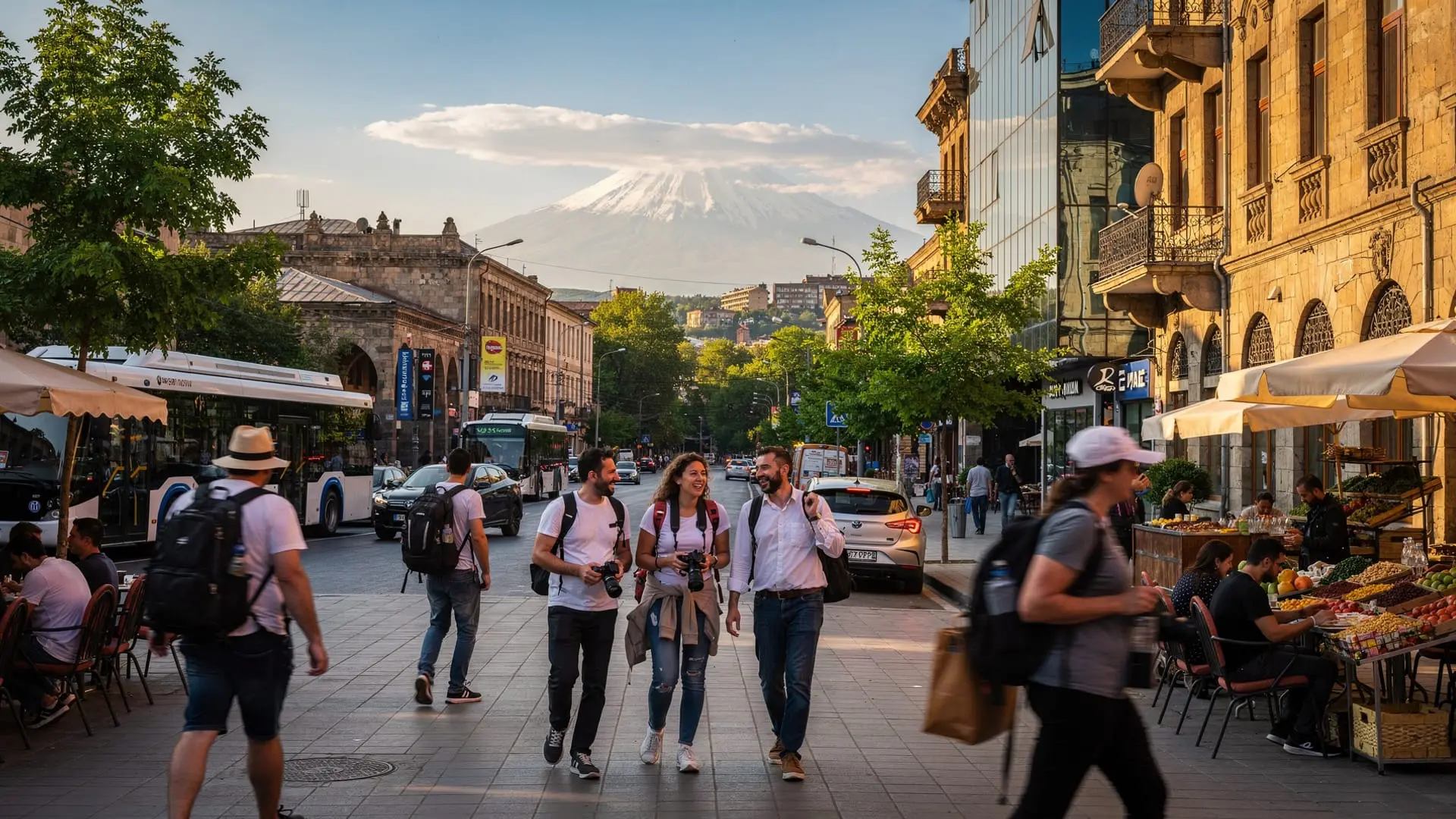
Writing predictions in February
February is the right time to write this. The new year is properly underway. The tourism season — real Caucasus spring travel doesn’t start until April — is still far enough away that predictions feel honest rather than promotional. And the picture for Armenia in 2026, based on everything I can see from early February, is more interesting than it has been in several years.
Let me be clear about what this is: it’s my reading of the signals I can observe, not an official forecast. Some of what follows will prove wrong. I’ll try to say clearly which predictions I’m confident in and which are speculative.
| Signal | Confidence | Direction for 2026 |
|---|---|---|
| European flight capacity | High | Growing, incremental |
| Visa policy | High | Stable, no major change expected |
| Wings of Tatev demand | High | Continued strong, plan around peak summer |
| New low-cost carrier | Low | Possible, unconfirmed |
| Russia route volumes | Low | Unlikely to return to 2022-23 levels |
The baseline to predict from
Before looking forward, a note on where Armenia tourism stands entering 2026, because predictions require a baseline.
The post-2022 period transformed Yerevan’s demographic and economic profile significantly. The influx of Russian professionals and entrepreneurs following Russia’s mobilisation created a sustained demand that the city had not previously experienced. New cafes, restaurants, coworking spaces, and cultural venues opened to serve this population. Some have since closed as the demographic has shifted; others have become permanent parts of the city’s landscape.
Tourism arrivals from Europe grew steadily through 2023 and 2024, with particular strength from France (diaspora-connected), Germany (cultural-heritage focused), and a range of Eastern European countries for which Armenia is a relatively novel destination. The United States Armenian diaspora continues to be a significant source of heritage tourism — visitors who come specifically to trace family histories, visit the Tsitsernakaberd genocide memorial, and make contact with the country their ancestors left.
The overall picture entering 2026: a city and country that has been through an extraordinarily turbulent several years and has emerged with a more diverse, more cosmopolitan character than it had before. The infrastructure has improved. The food scene is better. The international attention is greater. The security situation in Syunik remains a constraint on that province specifically. These are the starting conditions for whatever 2026 brings.
New direct flight routes: cautiously optimistic
The aviation picture for Armenia has been one of the more consequential factors in tourism growth, and the trends visible from early 2026 are positive.
Since the 2022 influx of Russian and post-Soviet emigrants to Yerevan, several European carriers have increased frequency to Zvartnots airport. The routes from Vienna (Austrian Airlines), Frankfurt (Lufthansa and Condor), and Paris CDG (Air France, occasional charter operators) have all grown in seat availability. Amsterdam (KLM) has maintained its route and is reportedly evaluating frequency increases.
What I’m watching for in 2026: a new low-cost carrier on the Vienna or Frankfurt route that brings the price of a European entry ticket below 200 EUR round-trip consistently. The demand is there — the bottleneck is supply, specifically the limited competition on routes that premium carriers have largely owned. Budget flights to Tbilisi (from Ryanair hubs, Wizzair, etc.) have consistently driven Georgian tourism numbers, and the same effect on Armenia would be significant.
The Russian route question is separate and more politically complex. The direct flights between Moscow and Yerevan that operated heavily in 2022-2023 have been reduced as some of those temporary residents returned or moved on. A resumption of pre-2022 Russian flight volumes would likely require a political normalisation that I would not currently predict for 2026. This represents a real constraint on visitor numbers from that market.
Visa policy: no dramatic changes expected
Armenia’s visa situation for European and North American travelers is already very good: citizens of EU countries, the US, Canada, UK, Australia, and many others can visit without a visa for up to 180 days in a calendar year. This policy is not under review and I don’t expect changes in 2026.
The e-visa system (evisa.mfa.am) continues to expand the list of nationalities that can apply online rather than requiring consular visits. As of early 2026, approximately 39 nationalities use the e-visa route; the list has been growing incrementally and will likely continue to do so.
What I would actually watch for in 2026 is not visa liberalisation (already generous) but rather simpler practical improvements: online registration systems for longer stays, better airport information for first-time visa-exempt arrivals, and potentially the launch of a proper digital travel document that replaces the paper entry slip currently issued at Zvartnots.
Full-day tour from Yerevan to Tatev — one of the landmark experiences in Armenian tourismThe Wings of Tatev anniversary wave
October 2026 marks the 16th anniversary of the Wings of Tatev cable car, which opened on 16 October 2010. The 15th anniversary in 2025 was marked by events and increased attention; the 16th will be less symbolically resonant but the momentum continues.
More practically: the Wings of Tatev cable car has been operating for sixteen years and is approaching the kind of tenure where maintenance and possible upgrade discussions become live. The Armenian government and the operator (Armenian Caritas) have made substantial investments in the surrounding infrastructure — the road to Halidzor has been improved, the visitor facilities at the station expanded. Whether 2026 brings any announcements about the next phase of development I can’t say, but the topic is in circulation.
What this means for visitors: the Wings of Tatev remains one of Armenia’s signature experiences and continues to draw serious visitor volumes. Peak summer (July-August) queues can be substantial and I would continue to recommend either early morning arrival or shoulder-season timing. The actual crossing and the monastery remain as extraordinary as they always were.
The restaurant and culinary scene
If you read the Yerevan dining dispatch I wrote in October 2025, you’ll know the broad picture. What I expect in 2026 is a continuation of the professionalisation of the mid-to-upper end of the Yerevan food scene, with more international attention on Armenian wine reaching travelers who wouldn’t previously have thought to visit for vinous reasons.
The Areni Noir grape story is being told in more wine publications and at more international wine events every year. France-based Armenian wine writers, US-based sommeliers with Armenian heritage who are discovering the native grape varieties — there’s a diaspora wine tourism story developing that has the potential to bring a new kind of visitor to Vayots Dzor and Areni.
The infrastructure question
Tourism infrastructure in Armenia outside Yerevan is improving but uneven. The positive trends: road quality on major tourist routes (the A1 to Sevan, the road to Tatev, the Dilijan bypass) has improved meaningfully in recent years. The number of quality guesthouses in secondary cities like Goris, Gyumri, and Vanadzor has grown. The Wings of Tatev anniversary will likely produce another round of infrastructure attention on the Tatev corridor.
The honest caveats: rural accommodation outside the main circuits remains thin. English-language signage at archaeological and natural sites is better than it was but still inconsistent. The marshrutka network, which is how budget travelers move around, is functional but requires local knowledge and tolerance for uncertainty that some visitors find challenging.
The Armenia practical guide covers the transport infrastructure in detail, and the visa and entry guide has the current rules.
The hiking trail story
One aspect of Armenia’s tourism development that I think is genuinely underreported is the Transcaucasian Trail. By mid-2025 the Armenian section had approximately 830 kilometres of marked trail — the Tavush forest section, the Aragatsotn highland section, much of the Syunik gorge country — and the momentum is continuing. In 2026, I expect the TCT to become more prominent in how Armenia presents itself internationally as a hiking destination.
The comparison to Georgia’s Kazbegi region is instructive. Five years ago, Kazbegi was known primarily to experienced adventure travelers. Today it appears in mainstream European travel media as a standard summer activity. Armenia’s mountain and trail offering is comparable in quality — Mount Aragats for altitude, Dilijan National Park for forest hiking, the gorge country around Tatev for drama — and the trail marking has reached the threshold where it’s accessible to non-specialist hikers with some outdoor experience.
What’s needed, and what I think 2026 might begin to provide, is better international marketing of the TCT Armenia section alongside accommodation infrastructure in the key villages along the route. The Dilijan hiking guide and the TCT Armenia section guide have the logistics for visitors who want to get ahead of the curve.
The Caucasus regional picture
Armenia doesn’t exist in isolation as a travel destination, and the regional picture matters for 2026. Georgia has been the dominant Caucasus travel story for several years — Tbilisi’s restaurant and wine scene, Kazbegi, the UNESCO villages of Kakheti, Svaneti for hikers. Armenia has tended to be presented as either a stand-alone destination or a short appendix to a Georgia trip.
What I expect in 2026 is a slow but real shift toward Armenia getting its own first-act status more consistently. The wine story is central to this: Areni Noir is appearing on natural wine menus in Paris, London, and New York in a way that has concrete upstream effects on traveler decisions. When a sommelier in Berlin starts recommending Armenian wine to customers, some of those customers eventually visit Armenia. The diaspora wine trail is becoming a real thing.
The Yerevan-to-Tbilisi overland route and the Caucasus 14-day itinerary remain the natural framing for visitors who want both countries. What’s changing is that more people are doing Armenia first, Georgia second — treating Yerevan as the primary hub and Tbilisi as the secondary one. The night train between the two cities is genuinely good for this: a 10-hour journey that you sleep through, arriving in Tbilisi rested and already knowing what makes Armenia distinct.
What I’m watching but not predicting
Two things I’m watching in 2026 that I’m not confident enough to predict:
The first is whether any airline announces a new direct route between a major Western European hub and Zvartnots that doesn’t already exist. The Milan FCO to Yerevan route was reportedly under discussion with ITA Airways; Rome already operates with Air France connections. Manchester or Edinburgh direct to Yerevan would be significant for the UK market. These things are rumoured but not confirmed.
The second is whether the café-culture and creative scene that has developed in Yerevan since 2022 stabilises into a permanent character of the city or shifts as the Russian emigrant community evolves. The specialty coffee shops, the gallery spaces, the independent bookshops on Abovyan Street — all of these are real and good and have added something to Yerevan’s visitor offer. Whether they persist as the demographic that created them changes is genuinely uncertain.
My overall read
Armenia in 2026 will likely see modest but real tourism growth, driven by European arrivals via improved airlift, continued diaspora heritage tourism, and the growing international reputation of Armenian wine and food. The Tsaghkadzor ski season, the Areni wine harvest in September and October, and the Wings of Tatev anniversary momentum will all contribute positively.
The security situation in Syunik remains something to monitor — it is not currently a deterrent to the majority of the country’s tourism, but prudent awareness is still advisable for the southern province specifically.
The things that make Armenia worth visiting — the monasteries, the mountains, the food, the warmth of the hospitality, the specific quality of the light on pink tuff stone in morning sun — haven’t changed. What’s changing is the infrastructure around them, the international attention, and the breadth of travelers who are finding the country. That is a good trajectory, and this is a good year to be part of it.
What this means for planning your own 2026 trip
None of the above should change how you plan a trip this year — Armenia in 2026 is still fundamentally the same honest, uncrowded destination it’s been, just with slightly better flight options and a bit more international attention. If you’re weighing when to go, the best time to visit Armenia guide and the shoulder season guide are the practical references; if you’re deciding how long, the 7-day classic itinerary or the fuller 10-day comprehensive itinerary both still hold up as sensible frameworks regardless of which predictions above turn out right.
What I got right and wrong in past years’ predictions
Honesty requires a track record. Looking back at similar predictions I’ve written in previous Februaries: I correctly called the growth in European flight capacity and the diaspora wine-tourism trend early, both of which materialised roughly as expected. I was too optimistic about a low-cost carrier entering the Vienna or Frankfurt route — it hadn’t happened by the time I wrote this piece, and I’m repeating a similar cautious hope for 2026 without much new evidence it’s imminent. I also underestimated how quickly the Wings of Tatev would become a bottleneck in peak summer, which is why the shoulder-season timing advice has become a more consistent refrain in my writing over the past two years. Take the confident predictions above more seriously than the speculative ones, and treat both as one informed observer’s reading rather than certainty.
FAQ
Is 2026 a good year to visit Armenia, or should I wait? There’s no strong reason to wait. None of the trends above suggest Armenia will be meaningfully cheaper, less crowded, or more developed a year or two from now — if anything the opposite, gradually. The honest advice is to go when your own schedule allows rather than trying to time a market that’s changing slowly.
Will flights to Armenia get cheaper in 2026? Possibly, but not guaranteed. Seat capacity from Vienna, Frankfurt, and Paris has been growing, which puts some downward pressure on fares, but a genuine low-cost entrant undercutting the premium carriers hasn’t been confirmed. Budget for current prices rather than banking on a fare drop.