Armenia after 2023: what changed for travelers
Writing this two months after September
It is early November 2023. Two months have passed since the events of mid-September that ended the existence of Nagorno-Karabakh as a self-governing entity and sent more than 100,000 Armenian residents — the vast majority of the region’s population — across the Lachin corridor into Armenia proper. I have been watching the questions in my inbox since then. They come from people who had bookings, from people planning trips for spring, from people who read the news headlines and didn’t know what it meant for a visit to Yerevan or Tatev or Lake Sevan.
The questions range from “should I cancel?” to “is it safe?” to “would it be insensitive to come?” to “what will be different?” I want to try to answer all of them as plainly as I can, based on conversations with people in Armenia in October and the information available to me now.
The short version: for the overwhelming majority of tourism in Armenia, nothing has practically changed. The sites are open, the roads are safe in the main tourist areas, and travelers are welcome. The nuances matter and I’ll address them, but the headline is that Armenia as a travel destination is functioning normally in all the areas that visitors typically come to see.
| Region | Status for travelers |
|---|---|
| Yerevan | Unchanged, normal operations |
| Northern Armenia (Lori, Tavush, Aragats, Shirak) | Unaffected |
| Lake Sevan, Dilijan, Vayots Dzor | Unaffected |
| Syunik (Goris, Tatev, Khndzoresk) | Open, but travel with more current awareness |
| Meghri road south of Goris | Avoid for tourism purposes currently |
The context for non-Armenian readers
The events of September 2023 were the conclusion of a process that had been underway for years. The Nagorno-Karabakh region — also known as Artsakh — had been a contested area between Armenia and Azerbaijan since the end of the Soviet Union, with a predominantly Armenian population living under various degrees of self-governance interrupted by two wars (1991-1994 and 2020). The September 2023 Azerbaijani military operation ended this period definitively. The vast majority of the region’s approximately 100,000 Armenian residents left within days, traveling the Lachin corridor into Armenia.
I am not going to try to characterise the September events politically or legally. Different governments and international bodies have used different language. What matters for the purposes of this piece — which is a practical guide for travelers — is that the events happened north of the Iranian border in an area that was not, and has not been, on the standard Armenian tourism itinerary. The sites that travelers come to see in Armenia are in other parts of the country.
I mention this context not to minimise it — 100,000 people were displaced from their homes in a matter of days, and the human weight of that is enormous — but to be clear that the geographic context of September’s events is distinct from the geography of tourism in Armenia. These two things can both be true simultaneously.
The tourist regions: essentially unchanged
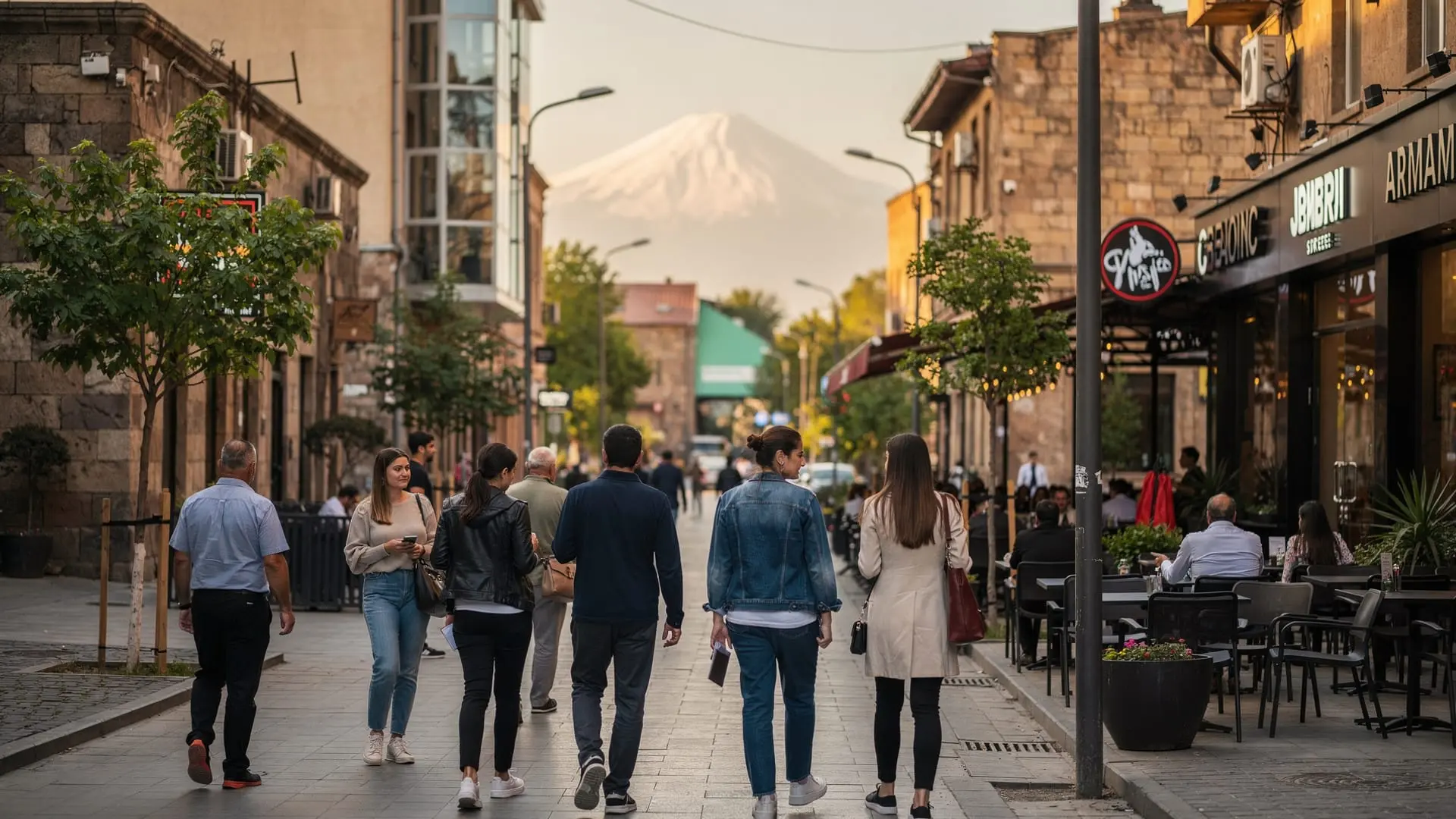
Let me be specific. Yerevan is functioning normally. The restaurants are open. The museums are open. The Republic Square fountain shows continue on schedule. The cafes in and around the Cascade are full on Friday evenings. The Vernissage market operates on weekends as it always has. Flights into Zvartnots airport from Vienna, Paris, Amsterdam, and Athens are running on their normal schedules, and in fact several routes added frequency following the 2022 influx of Russian emigrants to the city.
Tatev Monastery is accessible and the Wings of Tatev cable car is operating. Khor Virap is accessible — the monastery with its view of Mount Ararat is entirely unaffected. Garni and Geghard are accessible, as they always are. Lake Sevan is accessible. Dilijan is accessible. Haghpat and Sanahin in Lori are accessible. Gyumri is accessible.
These are the places that most visitors to Armenia come to see, and not one of them is near the areas affected by September’s events. If your itinerary covers the standard routes — the day trips around Yerevan, the northern monasteries, Lake Sevan, even Tatev — you will not encounter any direct impact from what happened in September.
The humanitarian situation, which is real and ongoing, is centred on Goris and Yerevan, where the vast majority of displaced people arrived. But humanitarian circumstances in a city do not automatically translate into danger or disruption for visitors — that conflation is a mistake that some travel advisories make. In this case, they have not translated into anything that affects tourism activity.
Syunik: still worth visiting, with awareness
Syunik province deserves a specific note, because it is both a major tourism destination and the province closest to the areas of recent events. Syunik is where Goris sits, where Tatev sits, where Khndzoresk and the great cave bridge sit, where Karahunj (the “Armenian Stonehenge”) sits. These are among the most compelling destinations in Armenia.
The main tourist sites in Syunik are operating normally. I spoke with guesthouse owners in Goris in October; they reported bookings continuing, with some cancellations from people who had read alarming headlines but no actual disruption to tourism activity in the town itself. The shops are open, the restaurants are open, the road to Tatev is open.
What I would say is that the situation in Syunik is more dynamic than in the north or west of the country, and that travelers heading there should be more attentive than usual to current conditions. Not alarmed — attentive. Check up-to-date travel advisories from your own government before you go. Have a flexible plan rather than a rigid one. Know basic emergency contacts. None of this should stop you from visiting; it is simply prudent situational awareness for a region that has been close to recent events.
The road between Goris and Tatev passes through terrain that is within some kilometres of the line of contact. The road is open and used regularly by tour operators based in both Goris and Yerevan. I would not suggest driving it at night or without knowing the current situation, which in practice means staying informed and, ideally, using a local guide or tour company whose people have current eyes on the ground.
Guided tour from Yerevan to Goris, Khndzoresk, and Tatev with cable carThe presence of displaced people in Yerevan and Goris
Something that is visible and worth acknowledging: there are substantially more people from Karabakh in Yerevan and in Goris now than there were a year ago. The Armenian government and numerous international and local NGOs — the ICRC, UNHCR, and various diaspora organisations — are working on the logistics of the displacement. Processing centres, temporary housing, and support services are operating in multiple locations. In Goris especially, the humanitarian presence is evident; the town served as the first major stopping point for the September arrivals and has absorbed a significant burden.
As a visitor, this changes the atmosphere somewhat. Yerevan feels more crowded in certain neighbourhoods. Some social services and temporary housing facilities in central areas are visible if you’re paying attention. There is, in certain conversations with locals, a weight that wasn’t there before — a collective grief and exhaustion alongside the usual warmth and hospitality.
None of this means visitors are unwelcome. Armenians, in my experience, have been consistently hospitable across many visits and many difficult moments for the country. The arrival of foreign tourists is seen as positive for the economy and as a normalising presence — a vote of confidence in the country. But I would encourage visitors to be aware of the human context they’re entering and to approach it with sensitivity. The people you’re sharing space with in Yerevan in late 2023 are carrying something considerable. It does not require extraordinary response from a visitor; it simply requires awareness.
What this means practically for planning
Let me translate this into actionable advice, because that’s what the questions in my inbox are ultimately asking for.
Standard Yerevan itineraries: entirely unchanged. The day-trip cluster around the capital — Garni/Geghard, Khor Virap, Etchmiadzin/Zvartnots, Lake Sevan, Dilijan — is as good as it has ever been. The city itself is busy, with a good restaurant scene, excellent specialty coffee shops, and more cultural programming than in previous years. Book accommodation a bit further in advance than usual because the city is somewhat fuller than its pre-2022 baseline.
Syunik (Tatev, Goris, Khndzoresk): I would suggest booking through a local tour operator rather than driving independently, at least for now. This is partly about having current local knowledge and partly about supporting an industry that has been under significant pressure since September. Companies based in Goris know the conditions on the ground; they will tell you if anything needs adjusting in your itinerary.
Northern Armenia (Lori, Tavush, Aragats, Shirak): entirely unaffected and a wonderful option if you want to stay further from the south. Haghpat and Sanahin, Dilijan, Gyumri, Mount Aragats — all excellent and with essentially no change to normal conditions.
The Meghri road south of Goris: I would currently avoid this route for tourism purposes unless you have specific reasons and current local guidance. The road toward the Iranian border through Kapan and Meghri has been complicated by the changing situation in the south of Syunik and is not a standard tourism route under any circumstances.
The economy question
One thing worth stating explicitly: the Armenian tourism economy has been under pressure from multiple directions over the past several years. The hospitality sector in Goris, around Tatev, and in Syunik generally has taken real hits. Small guesthouses, guide operations, and family restaurants in these areas depend on visitor spending.
This is not an argument to visit dangerous places. It is an argument against confusing a dramatic news headline with a situation that prevents normal tourism activity. The tour operators in Goris who are watching their bookings carefully know the difference between the areas that are genuinely complicated and the areas that are perfectly safe; when you book through them, you’re accessing that local knowledge while also contributing to livelihoods that genuinely need the support.
The broader Armenian tourism economy — Yerevan, Sevan, the northern monasteries, Vayots Dzor wines — is entirely mainstream and any spending there is unambiguously normal economic participation.
A personal note on the country
I have been writing about Armenia for several years and I’ve watched it navigate a series of situations that would test any society. What strikes me consistently is that the daily life that makes Armenia rewarding to visit — the food, the monasteries, the mountains, the hospitality, the specialty coffee shops and wine bars that have emerged in Yerevan in recent years, the warmth of conversations with people who are pleased to share their country with interested visitors — continues with a resilience that I find genuinely moving.
Visiting Armenia in this period is not tragedy tourism. It is not insensitive. It is participating in the normal economic and social life of a country that needs, among other things, the revenue and attention that tourism brings. The itineraries work. The guides are updated. The people are there, with all the complexity that implies, and they are generally glad to see you.
Come with awareness, come with flexibility, come without treating the situation as either a deterrent or a spectacle. That seems like the right approach, in November 2023 and beyond.
If you’re still deciding
If you’ve read this far weighing whether to cancel or rebook, the practical answer is straightforward: for a standard Yerevan-and-day-trips itinerary, there is no reason to change your plans. For a Syunik-heavy itinerary, book through a local operator rather than self-driving, and check current advisories close to your travel date rather than relying on headlines from months ago. The Armenia safety and travel tips guide is kept current and is the better reference than any single dispatch, including this one, for exactly this reason.
What guesthouse and tour operators in Goris told me
Beyond the general assessment above, a few specific things guesthouse owners and tour operators in Goris said to me in October 2023 are worth passing on directly. Several noted that international cancellations came disproportionately from people who hadn’t visited Armenia before and were reacting to headline anxiety rather than any specific information about conditions in Goris itself; repeat visitors and people with Armenian connections cancelled far less. Operators running the Goris-Khndzoresk-Tatev loop said road conditions and access were unaffected — their guides simply built in slightly more flexibility around timing and stayed in closer contact with local contacts than usual. None reported being unable to run standard tours during this period.
FAQ
Is it safe to visit Armenia right now? For the standard tourist regions — Yerevan, Lake Sevan, Dilijan, the northern monasteries, Vayots Dzor — yes, conditions are normal. Syunik requires more current awareness, particularly around Goris and the road to Tatev, but remains open to visitors, especially through local tour operators with current ground knowledge.
Will my trip be affected by the presence of displaced people in Yerevan and Goris? Practically, no — sites, restaurants, and hotels are operating normally. You may notice a somewhat fuller city and, in some conversations, an awareness of the humanitarian situation among locals. It doesn’t affect logistics, but it’s worth approaching with sensitivity rather than treating it as background noise.