Armenia road trip: 10 days with a rental car
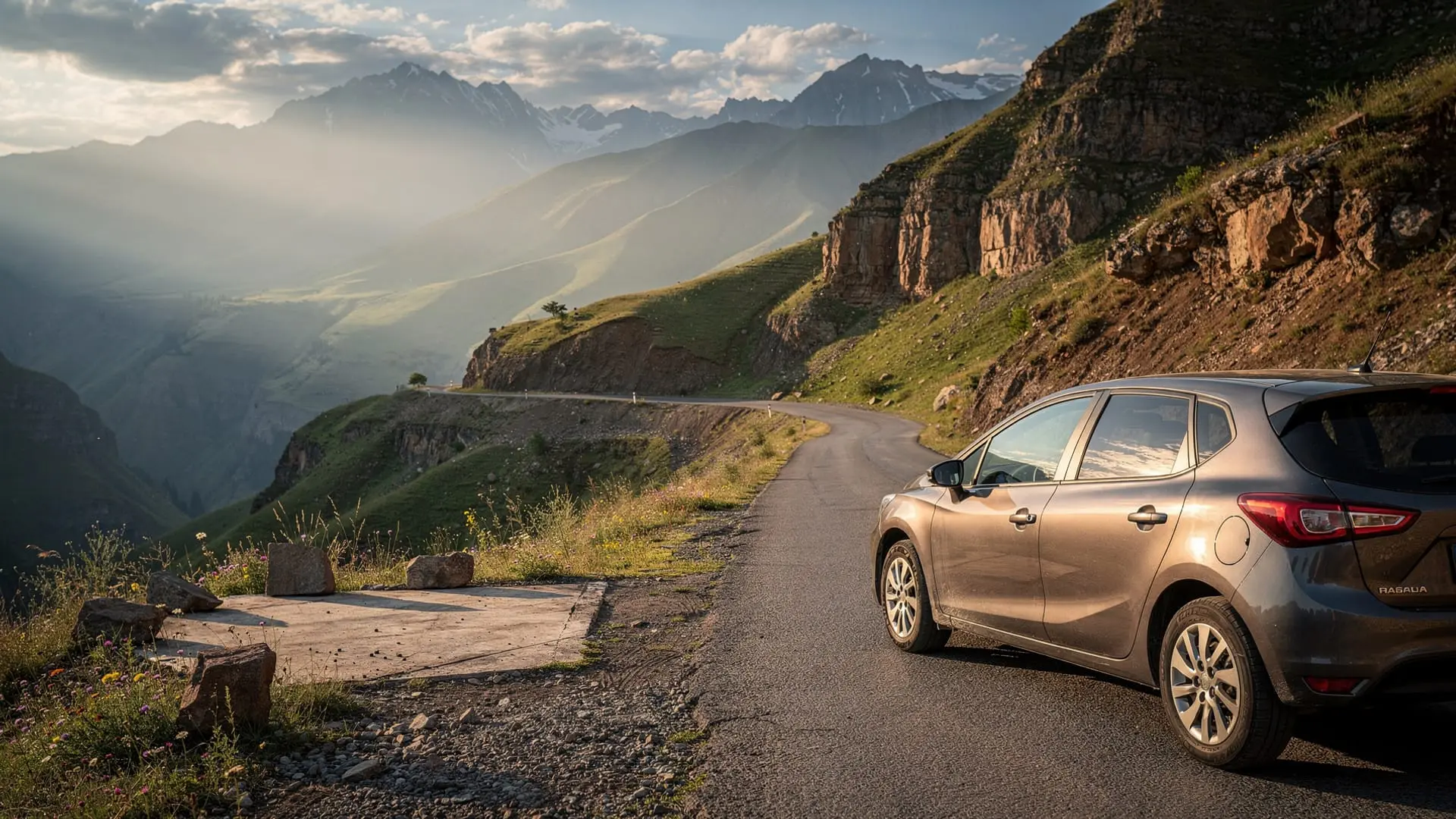
Why drive Armenia rather than take tours
| Route | Yerevan loop: Ararat valley – Vayots Dzor – Syunik – Sevan – Tavush – Lori |
| Distance | ~1,500 km over 10 days |
| Rental cost | 500,000–800,000 AMD (~1,200–1,950 EUR) for 10 days, mid-range with insurance |
| Fuel | ~450–480 AMD/litre; ~90–110 litres for the full loop |
| Best for | 2+ travellers who want timing freedom and unmarked-place access |
The honest answer first: a lot of people do Armenia perfectly well on a combination of marshrutkas and day tours from Yerevan. The public transport network covers the main cities; day tours are well-priced and handle the logistics. If you are travelling on a budget or do not enjoy driving in unfamiliar environments, there is no shame in using marshrutkas and guides.
But a rental car transforms the experience in specific ways that matter.
Timing freedom: The cable car at Wings of Tatev opens at 10 a.m. Arriving with your own car at 9:30 a.m. puts you on the first run, 45 minutes ahead of the tour buses. Khor Virap at 7 a.m. — before the haze and before the coaches — is a different place from Khor Virap at 10 a.m. These timing advantages are only available to drivers.
Access to unmarked places: Noravank’s canyon road, the track to Hayravank monastery, the back approach to Geghard via the Azat River gorge, the switchbacks above Tatev to the old village of Tatev itself — these require a car and remove the tourist conveyor belt entirely.
Pacing: The marshrutka to Goris leaves at a fixed time and arrives at a fixed time. With a car, Goris is a lunch stop, not a destination deadline. You can spend three hours at Tatev instead of one.
Practicality: North-south Armenia (Yerevan to Tatev) by public transport requires at least one connection in Goris and a night’s stay. By car, it is possible (barely) as a single very long day; more sensibly as a two-day loop with one night in Goris or Halidzor.
What follows is the 10-day route that gets the most from self-drive, with honest notes on every road condition, cost, and logistical variable.
Before you leave: rental car logistics in Yerevan
Where to rent
Yerevan has a functional rental car market concentrated around Zvartnots Airport and a handful of city-centre agencies. The main options in 2026:
Sixt Armenia (airport and city centre): international standards, international pricing, decent fleet. A compact car (Hyundai Tucson or similar) runs approximately 60–90 EUR per day with full insurance in peak season, 40–60 EUR shoulder season.
GetCar Armenia (city centre, Arshakunyats Avenue): local operator with lower rates and more flexibility. 35,000–55,000 AMD per day for a reliable car. Used frequently by independent travellers. Their customer service is responsive in English.
National Car Rental / Avis: represented at the airport, reliable, predictable pricing at international rates.
Local agencies: Several small agencies cluster around the Zvartnots airport exit road. Rates can be 20–30% lower than major chains; vetting the vehicle condition carefully before accepting is important.
What to ask for, and what to insist on
Full coverage insurance (CDW + theft): Always. The roads outside Yerevan have hazards (potholes, animals, other drivers) that make partial coverage a false economy. Most reputable agencies include CDW by default; check the fine print for deductible amounts.
Manual or automatic: Most Armenians drive manual. The fleet skews manual. If you only drive automatic, specify this and book early — automatic availability is limited.
Vehicle type: For the standard route (Yerevan–Garni–Khor Virap–Areni–Tatev–Goris–Sevan–Dilijan), a standard sedan works on all paved roads. For off-road monastery approaches (some Lori destinations, Jermuk mountain roads in wet weather), a crossover or compact SUV is more comfortable. A full 4x4 is only necessary for unmarked off-road adventures.
Second driver: Most agencies charge 5,000–8,000 AMD per day for a second driver. Essential if two of you will share driving on a 10-day trip.
Fuel policy: Clarify whether the car comes full and should be returned full (preferred), or on a one-way basis. Full-to-full is cleaner.
GPS / offline maps: The rental car GPS (if included) is often out of date for Armenia. Download Maps.me or Google Maps offline before collection. These are more reliable than built-in navigation for rural routes.
Documents required
Standard international requirements: valid driving licence from your home country (EU licences are accepted directly; non-EU may need an international driving permit — check with your agency before arrival), passport, credit card for deposit. The deposit hold runs 200,000–400,000 AMD (~500–1,000 EUR) on a credit card; debit cards are typically not accepted for deposits.
A loop of 10 days makes the daily rate misleading, so judge each offer by its total for the whole trip, with the insurance you want and any extra driver added. Local agencies near the airport exit road and the city-centre desks quote very differently, and the lowest line often loses its edge once the deposit and fuel terms are counted. For a clear view across both, you can compare rental offers on DiscoverCars for your Yerevan dates.
The route: 10 days
Day 1: Yerevan — settle in, no driving
Collect your car from the airport on arrival or from the city-centre agency on day one morning. If arriving in the evening, pick up the next morning. Day 1 is Yerevan on foot: the Cascade, Republic Square, the Matenadaran, a dinner at Lavash or Sherep. Save the driving for Day 2.
Parking in central Yerevan: most hotels provide it or have a nearby arrangement. Street parking in the centre (Northern Avenue, Republic Square perimeter) requires the YPark app or coins in meters (5–10 AMD per minute, typically first hour free in outer districts). Outside the immediate centre, parking is free. For the hotels below the Cascade and on Abovyan Street, street parking is manageable on weekdays; use your hotel’s arrangement on weekends.
Stay: Yerevan. Republica Hotel (Northern Avenue, 80–130 EUR), Tufenkian Historic Yerevan (50–90 EUR), numerous guesthouses from 25–50 EUR.
Day 2: Yerevan → Garni → Geghard → Khor Virap
Driving: 95 km total, approximately 3 hours driving with stops. Leave by 7 a.m.
The day-trip circuit that anchors most Armenia itineraries, done in the optimal order: Khor Virap first (while morning light hits Ararat from the west), then Garni (midday, the pagan temple is spectacular in direct sun), then Geghard (the monastery stays shaded and dramatic throughout).
Actually, adjust this: Khor Virap in the Ararat valley is 35 km south of Yerevan (50 minutes); Garni is 28 km east (40 minutes). They point in opposite directions. The logical sequence for a driver is:
-
7:00 a.m. — Leave Yerevan south toward Khor Virap. Arrive at 7:50 a.m. The monastery is open at dawn; no tickets required. Ararat is clearest now. Allow 45 minutes.
-
9:00 a.m. — Drive from Khor Virap northeast to Garni, approximately 1 hour via the M2 ring. The Garni temple is a first-century Hellenistic structure; the complex around it includes a partially excavated bathhouse with a mosaic floor. Allow 1 hour.
-
11:00 a.m. — Drive the 9 km from Garni up the Azat gorge to Geghard monastery. The road narrows as you climb; park at the base and walk 10 minutes. The monastery is partially carved from the living rock. Allow 1.5 hours. The Symphony of Stones basalt columns are visible from the canyon below Geghard — a short detour to the riverbed.
-
1:00 p.m. — Drive back to Yerevan (40 minutes) for lunch, or eat at one of the roadside restaurants in Garni village.
Return to Yerevan for night 2. Total fuel this day: approximately 10–12 litres for a compact car.
Stay: Yerevan (same hotel).
Day 3: Yerevan → Etchmiadzin → Areni → overnight Goris
Driving: 220 km, approximately 4.5 hours driving. Full day.
Head west 25 km to Etchmiadzin (30 minutes from Yerevan centre). The UNESCO cathedral complex — the mother church of the Armenian Apostolic Church, built in 301 AD and continuously modified — needs at least 1.5 hours to do properly. The treasury museum is separately ticketed and worth 30 minutes.
From Etchmiadzin, head south on the M2, joining the road toward Ararat and Vayots Dzor. Stop briefly at the road-accessible Khor Virap viewpoint if you did not get the morning visit on Day 2.
Continue south through the Ararat valley to Areni (approximately 1 hour 40 minutes from Etchmiadzin). The village is the entry point to the Vayots Dzor wine country. Stop at Hin Areni or Trinity Canyon Vineyards for a tasting (call ahead or book online — both appreciate notification). Allow 1.5 hours for a proper winery visit with tasting.
From Areni, the road continues 5 km to the junction for Noravank monastery. The canyon road is 12 km on asphalt — narrow, spectacular, requiring care on the switchbacks. Noravank itself requires 45 minutes minimum; the light in the afternoon (3–5 p.m.) is best for the red rock photography.
From Noravank, continue south toward Goris: another 1 hour 20 minutes through Yeghegnadzor and the Vorotan highlands. The road quality is good on the M2; it narrows somewhat past Sisian.
Stay: Goris. Hotel Mirhav (25,000–35,000 AMD, excellent base for Tatev; book ahead in summer). Hotel Anahit Tatev (closer to the Wings, but 30 km from Goris — worth considering for the early morning Tatev start).
Road notes for Day 3: The M2 south of Ararat valley is paved throughout. The Noravank canyon road is single-lane in sections — give way to uphill traffic on the switchbacks. No fuel stations between Areni and Goris; fill up in Areni or Yeghegnadzor.
Day 4: Goris → Tatev → Khndzoresk → Goris or Halidzor
Driving: 90 km with loops, approximately 2.5 hours driving plus activities. Allow a full day.
This is the centrepiece day of the southern route. Drive 20 km from Goris to Halidzor (the upper cable car station). Park in the Halidzor car park (free). Board the Wings of Tatev cable car — 5.7 km descent to the monastery platform, 12 minutes, extraordinary views of the Vorotan gorge. The cable car runs Tuesday to Sunday (closed Mondays), 10 a.m. to 6 p.m. (7 p.m. from May to September); arriving at 9:30 a.m. lets you be at the station before the first official run, though in practice they sometimes start a few minutes early.
Tatev monastery itself deserves 2 hours minimum: the main church, the Gavit, the swinging column (the Gavazan), and the views from the plateau edge. Take the cable car back (included in the round-trip ticket, 9,000 AMD per adult from March to November, lower in winter) or hike down the old road (2–3 hours, very steep, recommended only for experienced walkers).
After Tatev, drive 30 km north to Khndzoresk — the cave village complex with a famous swinging bridge across the gorge. Allow 45 minutes to an hour. Khndzoresk is a slightly other-worldly afternoon stop after the Tatev experience. See the Khndzoresk and Tatev southern loop guide.
Return to Goris for the second night or push 30 km north to Halidzor (if staying at Hotel Anahit Tatev).
Stay: Goris (Hotel Mirhav) or Halidzor (Hotel Anahit Tatev — if you are planning an early Day 5 start).
Day 5: Goris → Jermuk → Sevan → overnight Sevan
Driving: 250 km, approximately 5 hours. The longest driving day.
This is the north-bound transition day. From Goris, reverse north on the M2, passing through Sisian (worth a brief stop for Karahunj/Zorats Karer — the “Armenian Stonehenge,” approximately 20 minutes off the main road). Continue to the Jermuk turnoff.
Jermuk is a Soviet-era spa town at 2,000 metres elevation, 50 km east of Yeghegnadzor. The mineral springs gallery is the classic stop — a long covered promenade where you can sample different mineral waters from taps, which is simultaneously absurd and enjoyable. The Jermuk waterfall is a 20-minute walk from the town centre. Allow 1.5–2 hours total.
From Jermuk, drive north through the Selim Pass (2,410 m, paved but steep; takes about 45 minutes) to Lake Sevan. The descent toward the lake is spectacular — the blue of Sevan suddenly visible below the treeline. The Selim Pass road is paved and reliable in summer; in winter it can be closed (this route is May–October only in its Selim Pass variant; in winter, use the main Yerevan–Sevan highway instead).
Arrive at Sevanavank monastery on the Sevan peninsula for late afternoon. The monasteries here are 9th-century; the lake views are the best in Armenia. Eat ishkhan trout for dinner at one of the Sevan town restaurants on the lakefront.
Stay: Sevan. Lakeside hotels (20,000–40,000 AMD for a double); simpler guesthouses from 12,000 AMD.
Fuel note: fill up in Goris before leaving. Jermuk has one petrol station (unreliable supply in off-peak periods); Sevan town has several. Do not attempt the Selim Pass with less than half a tank.
Day 6: Lake Sevan → Noratus → Dilijan → overnight Dilijan
Driving: 80 km, approximately 2 hours.
A gentle day after the previous long drives. From Sevan, drive 15 km south along the lake shore to Noratus village — the largest field of khachkars (Armenian cross-stones) in the world, several thousand of them, ranging from 10th to 17th century. The field is free to enter and almost never crowded outside of tour-bus timing windows. Allow 45 minutes to an hour.
Continue north via the Sevan-Dilijan tunnel (the 2.3 km tunnel under the Pambak range, 500 AMD toll each way) to Dilijan. The old town of Dilijan has been attractively restored with a craftsmen’s street (Miasnikyan Street) where you can watch a woodworker, a ceramicist, and a carpet weaver in their studios. Haghartsin monastery is 18 km into the forest — one of the best medieval complexes in northern Armenia, rarely crowded, forested setting. Allow 1.5 hours.
Lake Parz is a short walk from Dilijan old town — a small mountain lake in the forest, excellent for an hour’s walk. See Lake Parz and Dilijan getaway guide.
Stay: Dilijan. Hotel Old Dilijan Complex (restored 19th-century building, 35,000–60,000 AMD) or smaller guesthouses (15,000–25,000 AMD). Book ahead in summer.
Day 7: Dilijan → Ijevan → overnight Ijevan or return to Dilijan
Driving: 55 km round trip.
A shorter day built around the Tavush wine experience. Ijevan is 40 km north of Dilijan in the Agstev valley — a small city known for its carpets, wine, and the forests around it. The Ijevan Wine Factory offers tastings of local wines (different from the Areni Noir character — Tavush wines are lighter, more floral). The Dsegh village above Ijevan is the birthplace of the poet Hovhannes Tumanyan and has a museum in his home.
This is also the best base for the Yenokavan zip-line and adventure park if your group includes anyone interested in via ferrata or zip-lining over forest canyons.
Optional: drive the 35 km north of Ijevan toward Yenokavan and the Kirants monastery hike — a forested gorge walk to a remote monastery that sees almost no tourists.
Stay: Dilijan (return) or Ijevan (smaller, simpler accommodation options; guesthouses 12,000–20,000 AMD).
Day 8: Dilijan → Haghpat → Sanahin → overnight Alaverdi or Tufenkian
Driving: 80 km from Dilijan, approximately 1h45.
Head north from Dilijan through Vanadzor (Armenia’s third city; worth a breakfast stop but not a major detour) to Haghpat monastery in Lori province. Haghpat and Sanahin are UNESCO-listed medieval monasteries 10 km apart above the Debed gorge — the two best monasteries in northern Armenia and arguably in the top five in the country. Allow 1.5 hours at each.
From Haghpat, Akhtala monastery is 20 km west — if the Akhtala frescoes are on your agenda, this is the day.
The Tufenkian Avan Dzoraget Hotel sits in the Debed gorge between Sanahin and Haghpat — a beautifully converted traditional building, the best accommodation in northern Armenia. Doubles run 70,000–100,000 AMD. Book well ahead.
Stay: Tufenkian Avan Dzoraget or Alaverdi (budget guesthouses 12,000–20,000 AMD).
Day 9: Lori → Saghmosavank → Yerevan day visit
Driving: 170 km from Alaverdi to Yerevan, approximately 3 hours.
Southbound return to Yerevan via the Kasakh gorge and the monasteries of Aragatsotn. Stop at Saghmosavank monastery (above the Kasakh gorge, extraordinary canyon views) and Hovhannavank monastery (the pair are 5 km apart, both impressive, often combined in a single stop). See Saghmosavank and canyon guide.
The Armenian Alphabet Monument on the Aragats foothills is 20 minutes off the main road — a garden of 39 giant stone letters, oddly moving and better than it sounds. See Armenian Alphabet Monument guide.
Return to Yerevan by afternoon. Spend the evening in the city: a final dinner at a restaurant you did not make time for at the start.
Stay: Yerevan.
Day 10: Yerevan — final morning, return car
Return the rental car according to the agency’s agreed drop-off time. Collect fuel receipts if the full-to-full policy requires a fill-up before return. A morning walk through the Vernissage market (Saturday/Sunday only) or the Cascade grounds, then departure from Zvartnots.
Road conditions: honest assessment
Good asphalt: The M1 (Yerevan–Gyumri–Bagratashen), M2 (Yerevan–Goris), M3 (Yerevan–Vanadzor–Alaverdi), and the main Lake Sevan ring road. These are paved, maintained, and driveable in any passenger car without drama.
Acceptable but attention-required: The Noravank canyon access road (narrow, switchbacks), the Selim Pass road (steep, not suitable in winter or heavy rain), the approach roads to Haghpat and Sanahin (paved but narrow in the gorge sections), the Dilijan–Ijevan road (paved, fine).
Rough but passable with a standard car: Access tracks to Saghmosavank, Hovhannavank, and some of the Aragats foothill monasteries. Generally unpaved but compacted dirt in summer; can be muddy after rain.
4x4 only (not on this route): Mount Aragats tracks above 2,500 metres, the Transcaucasian Trail approach roads, some Syunik valley tracks south of Tatev. These are not on this 10-day route but exist for those extending the trip.
Fuel: where and how
Petrol stations are plentiful in Yerevan and major towns. They thin out significantly in the mountains. Key gaps to plan for:
- Fill up in Areni before driving south toward Goris (no reliable station on the 110 km stretch)
- Fill up in Goris before the Jermuk/Selim Pass route (Jermuk station is there but not always stocked)
- Fill up in Alaverdi before heading south to Yerevan (some stations on the M3 are erratic)
Fuel prices in 2026: approximately 450–480 AMD per litre for 95-octane petrol (roughly 1.10–1.17 EUR). A compact car covering 1,500 km over 10 days uses approximately 90–110 litres, totalling 40,000–53,000 AMD (100–130 EUR) in fuel.
Petrol stations in Armenia typically accept cash only; card readers exist but often are non-functional. Carry AMD.
Police checks
The Armenian traffic police presence is not oppressive but is real. A few notes:
Speed cameras exist on the Yerevan–Etchmiadzin road (near the cathedral approach) and on some sections of the M1. Signs are posted, but not always visible in time. Do not exceed 60 km/h in marked urban zones or 90 km/h on highways.
Police checkpoints are relatively uncommon on tourist routes but do occur, particularly near Etchmiadzin and at some Yerevan exit roads. Officers wave you through on a seemingly random basis; if stopped, have your licence and rental documents ready and be friendly. Officers occasionally speak basic English; most do not.
Do not drink and drive. The legal limit is 0.0% — zero tolerance — and enforcement includes breathalyser checks on the Yerevan–Etchmiadzin corridor specifically. Given Armenia’s wine and brandy culture, this requires planning: if you are tasting at wineries in Areni, have your passenger drive or take a tour.
Parking
Good news: parking is free everywhere outside central Yerevan. At monasteries, at lake shores, at mountain viewpoints, in provincial towns — park on the street or in the lot (if one exists) at no cost.
In central Yerevan (roughly the grid between the Cascade and Republic Square), metered street parking applies during business hours. The rates are nominal (5–10 AMD per minute). Your hotel will have arrangements for guests.
Apps to download before leaving Yerevan
- Maps.me (offline maps, most complete for Armenia’s rural roads)
- Google Maps (download offline Armenia package — backup for urban navigation)
- GG Taxi (for city movement without a car, and for days when you do not want to drive — parking in Yerevan and taking taxis to city sites is sometimes easier)
- WhatsApp (most Armenian restaurants, hotels, and services communicate via WhatsApp)
Cost breakdown for 10 days
| Item | Estimate (AMD) | Estimate (EUR) |
|---|---|---|
| Rental car (10 days, mid-range with insurance) | 500,000–800,000 | 1,200–1,950 |
| Fuel (approx. 1,500 km) | 45,000–55,000 | 110–135 |
| Parking | 0–10,000 | 0–25 |
| Cable car Wings of Tatev (×2 if 2 people) | 7,000–10,000 | 17–25 |
| Monastery entrance fees (most free, some nominal) | 5,000–10,000 | 12–25 |
| Driving cost total (2 people) | 557,000–885,000 | ~1,360–2,160 |
Per person, split between two drivers, the incremental cost of the car over taking tours and marshrutkas is approximately 680–1,080 EUR for 10 days, including fuel. Day tours from Yerevan to Tatev cost approximately 40–80 EUR per person; to Haghpat/Sanahin approximately 50–80 EUR per person. For multiple people, the rental car becomes cost-competitive against private day tours within about 3 days.
When a tour makes more sense than driving
Not every traveller should rent a car. A guided private tour is preferable when:
- You are travelling solo (car cost not offset by shared split)
- You are not comfortable driving on narrow mountain roads
- Your itinerary focuses on one or two destinations rather than a sweep of the country
- You want a guide who can explain what you are looking at in real time
- You are visiting in winter (snow and ice on mountain roads require experience)
For solo or couple travellers who want a driver-guide for specific legs, the best approach is often a rental car for the flatter sections and a hired local driver for Tatev and the Lori monastery circuit. This hybrid is flexible and cost-effective.
For those who prefer guided over self-drive: the Tatev Monastery and Wings of Tatev full-day tour from Yerevan handles all driving and cable car logistics. The private Haghpat and Sanahin monasteries tour — ideal for the Lori circuit if you are not driving north yourself. The Khor Virap, Areni, and Noravank day tour — the southern circuit done with a local driver, useful context for understanding what the self-drive version involves.For the complete guide to renting a car in Armenia, including agency comparisons, insurance details, and seasonal considerations, see renting a car in Armenia. For specific destination context, see the individual destination guides linked throughout this route: Garni, Geghard, Khor Virap, Areni, Tatev monastery, Lake Sevan, Dilijan, Haghpat monastery.
The 10-day itinerary above can be booked into the formal Armenia comprehensive 10-day itinerary for a planned version with day-by-day hotel suggestions, or adapted as a self-directed road trip using this guide alone.
Shortening or extending the route
Not everyone has 10 days. If you only have 5-7 days, the route compresses reasonably well: cut Day 7 (Ijevan/Tavush) entirely and combine Day 6 and Day 8 into a single Sevan-to-Lori push, sacrificing Haghartsin’s forest setting for a tighter loop. The 7-day classic itinerary has a pre-built version of this shorter route if you’d rather not improvise the cuts yourself. If you have more time, the natural extension is adding two days in Syunik beyond Goris — a night in Kapan opens up Mount Khustup and the southern off-road tracks that don’t fit into the standard 10-day loop, though this pushes the car into genuine 4x4 territory rather than the standard-sedan roads used throughout this guide.
Weather contingencies along the route
Build a small amount of slack into the schedule for weather, particularly around the Selim Pass (Day 5) and the Noravank canyon road (Day 3), both of which can be affected by sudden mountain rain outside the July-August dry window. If you’re driving this route in May, late September, or October, check conditions the morning of your Selim Pass crossing rather than assuming it’s automatically open — it’s a seasonal route in its Selim Pass form, and the alternative is the longer but always-open Yerevan-Sevan highway via Sevan pass. A day of genuinely bad weather is also the moment to swap a planned outdoor stop (Khndzoresk’s swinging bridge, the Noratus khachkar field) for an indoor one (the Etchmiadzin treasury museum, a winery tasting room in Areni), rather than pushing through in poor conditions for the sake of the schedule.
Driving culture: what to actually expect
Armenian driving culture takes some adjustment for visitors used to strict lane discipline. Overtaking on blind corners happens, especially on the M2 south of Yerevan; horn use is frequent and mostly informational rather than aggressive; and marshrutka drivers in particular treat lane markings as suggestions. None of this is unusually dangerous once you calibrate to it — drive defensively, expect the unexpected from oncoming traffic on narrow mountain roads, and don’t take it personally when overtaken on a straightaway you’d have preferred they waited for. Village roads move at village pace: livestock, pedestrians, and children playing near the road are common in Areni, Goris, and the Lori villages, and speed should reflect that regardless of the posted limit.
Mobile data and offline navigation
Mobile coverage is generally reliable in Armenia along the main routes covered by this itinerary, including the M2 to Goris and the Sevan-Dilijan corridor, but it thins noticeably in the Vorotan gorge approach to Tatev and in the deeper Lori valleys around Haghpat and Sanahin. A local SIM (available at Zvartnots arrivals or in central Yerevan for a few thousand AMD) with a data package is the practical solution for most of the route, but don’t rely on it completely — download your offline Maps.me tiles for the whole country before leaving Yerevan, not just for the day you’re driving, since coverage gaps don’t always align conveniently with where you happen to need directions. The Armenia eSIM and data guide covers the current SIM and eSIM options in detail if you want to sort connectivity before you land rather than at the airport queue.
Frequently asked questions about Armenia road trip
Is a 10-day self-drive road trip realistic for a first-time visitor to Armenia? Yes, provided you’re comfortable driving mountain roads and are travelling as at least two people to share both the driving and the cost. First-timers should stick to the route as laid out above rather than improvising detours in Syunik’s more remote valleys, where mobile signal and fuel are less reliable.
Do I need a 4x4 for this route? No. The 10-day loop as described uses paved roads and compacted-dirt monastery access tracks that a standard sedan or compact crossover handles fine. A 4x4 only becomes necessary if you extend into Aragats’s high tracks, the Transcaucasian Trail approach roads, or the remote valleys south of Kapan.